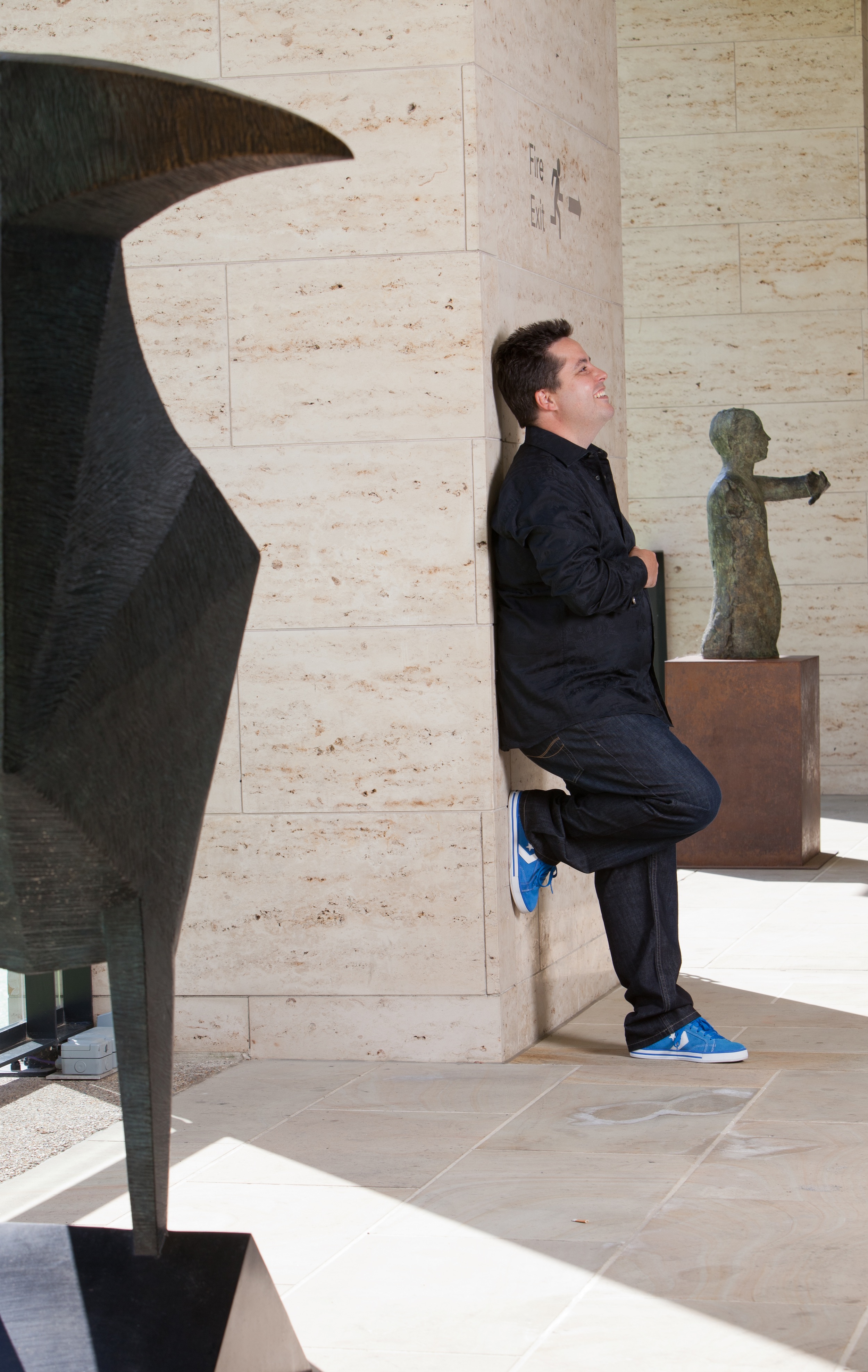
Rika Zayasu (Image credit: Laura Cortes)

Who or what inspired you to take up the piano and make it your career? 

My grandmother taught music at school and my aunt is a pianist, so I was familiar with the piano, but it was presented as something of importance and treated as such, so I didn’t have much access to it. And I didn’t even know what it was called! Then my mother asked me if I wanted to take piano lessons. I said ‘yes’ because the name sounded somehow pretty and magical to me and I expected something – I was 3 or 4. I’m glad I said yes then! And all followed accordingly as I continued playing. There were few moments of difficulties but I’m glad to be where I am now. Playing he piano is my job but it is also my way of life, a form of being musician.

Who or what are the most important influences on your playing? 

I had truly great teachers who taught me how to be not only a better musician and pianist but also a better human being. But my greatest influences have been always of my fellow musician friends.

What have been the greatest challenges of your career so far? 

Everyday practice.

What are the particular challenges/excitements of working with an orchestra/ensemble? 

It depends on the orchestras and ensemble, and also the pieces you are playing. Sometimes, the lack of rehearsal time, but this could also be an exciting factor.

Which recordings are you most proud of?  

Well, my first commercial CD featuring Debussy and Takemitsu will be released on Claudio Records at the end of October! Claudio developed their cutting edge new recording system especially for these two composers and the venue, St Bartholomew’s in Brighton, and we had a wonderful instrument to play on too. The result is quite amazing, and we are very proud.

Do you have a favourite concert venue? 

I don’t know many prestigious venues, which I I’m sure I could have listed here. But so far, the Wigmore Hall and Salle Gaveau in Paris are two of my favourite venues to perform in. Both halls provide the right balance between intimacy and distance, which allows both audience and performers to concentrate on the musical communication. I think for a live concert, you don’t necessarily need the perfect acoustics or instruments to achieve this.

Who are your favourite musicians? 

I am a big fan of the conductor Esa-Pekka Salonen! I also admire the piano playing of the late Vlado Perlemuter. In fact it was he who encouraged me to come to Paris when I played Chopin’s 3rd Ballade for him when I was very young. I didn’t actually study with him, but stayed there in my formative years for nearly 7 years before settling in London, so it was important event and I have always liked his music since then.

What is your most memorable concert experience? 

I would like all my concerts to be memorable and I remember every single performance I have given so far, as most of performers do, I believe. There is no storage limit for this kind of memory.

What is your favourite music to play? To listen to? 

Debussy. I also love the sound of the oboe d’amore, so tend to get recordings which feature the instrument.

What do you consider to be the most important ideas and concepts to impart to aspiring musicians/students? 

To inspire and get inspired. Because I think inspiration is one of the most powerful ways of communication. I wouldn’t say ‘there is no inspiration’ as some of the greatest composers used to say.

What are you working on at the moment? 

Scriabin Piano Sonatas for the next Claudio CD. Also Christian Mason’s ‘On Love and Death’ for soprano sax and piano.

What do you enjoy doing most? 

I have recently started pastel drawings, mainly the portraits of my musician friends. It makes you realise so many things and you learn so much from it.


Born in Tokyo in 1972, Rika began playing the piano at the age of five, inspired by her pianist aunt Yoshiko Ogimi and encouraged by her mother who was an amateur violinist. Following the completion of her study at the Tokyo Metropolitan High School of Music and Fine Arts, she moved to Paris and took private lessons with Michel Béroff and Denis Pascal for three years. She also studied with Louis-Claude Thirion and obtained a 1er prix à l’unanimité (piano) and a gold medal (chamber music) from the Conservatoire de Boulogne-Billancourt.

She moved to London in 1995 and studied with Maria Curcio, the legendary pupil of Artur Schnabel for more than five years. Rika continued her study with Joan Havill and the late Paul Hamburger at the Guildhall School of Music and Drama and obtained her Postgraduate Diploma and Master’s Degree in music performance.

In 2006, she has completed her thesis on the music of Tōru Takemitsu entitled To the Edge of Sound: Tōru Takemitsu’s works for soloist and orchestra at the University of York. Her research interests broadly across the period of global musical exchange since the late 19th century. She is currently undertaking a research on the relation of music to the surrealism.

She is an advocate of new music and gave several world premieres in the UK and abroad. It is her great privilege to have worked with composers such as, Thomas Simaku and John Stringer – but also Evis Sammoutis, Ian Dickson, Christian Mason and many others.

She gave the first performance of her piano transcription of Takemitsu’s Requiem for string orchestra at St. Martin-in-the-fields in London to critical acclaim. Her new album featuring piano works by Debussy and Takemitsu is released on Claudio Records.

Rika Zayasu performs as a recitalist, soloist with orchestras, and chamber musician. Her recent appearances include London, Paris, and Tokyo. During the 2012/13 season, she will make several appearances in the UK, at the venues including St John’s Smith Square in London, West Road Concert Hall in Cambridge, and Sir Jack Lyon’s Concert Hall in York.

She currently lives in London with her husband and a Welsh springer spaniel.

Interview first published October 2012
www.rikazayasu.com

Paul Smith of VOCES8

Who or what inspired you to take up singing and make it your career?

I think everyone in VOCES8 was very lucky to have some amazing music teachers as we grew up. Many of sang in cathedral choirs and 3 of the founding members were choristers at Westminster Abbey. When you get so completely immersed in choral music from such an early age, I think you either fall in love with it or move away from it completely, and we were the former! We’re very lucky to have a full time job making music with VOCES8 – it’s a wonderful career to have!

Who or what are the most important influences on your singing?

With 8 different musicians in the group, there are always plenty of musical influences flying around, and that’s what makes working together as an ensemble so exciting. Where Barney or Charles might revel in our early music, and Emily would probably sing Bach all day long, we also all love different genres of music too – Paul loves jazz, and Dingle has a very eclectic musical palette…. All of this feeds into our music making. While we’re an a cappella group, it also helps that some of us play musical instruments too. Rob is a professional organist whenever he has a spare minute to play.

What have been the greatest challenges of your career so far?

Musically, I think our first couple of recording projects were really challenging, but for different reasons. We recorded ‘Aces High’, an album of jazz, pop and James Bond songs, in 2009 in California, and the process was incredibly challenging for all of us. Then, when we recorded the Bach Motets album in 2010, we were challenged, musically, in an entirely different way. We love both discs, but as we look back on those recordings, I think we’re so proud of them because we know how much effort went into them.

What are the particular challenges/excitements of working with an orchestra/ensemble?

We spend a lot of our time teaching – we work with about 25,000 young people every year! – and last night we were talking with a group of singers about this very topic in Bedford!

Being a full time performer is wonderful, but there’s something special about being part of a small team. I love being onstage with the same group of people each night, sharing with our audience a concert that we’ve spent months piecing together in the rehearsal room.

Having a vibrant rehearsal environment in which we can all share artistic ideas and then bringing that to life on stage is just great fun! In VOCES8 we have 8 very different personalities too, and that can sometimes be a challenge! We’ve been together now for such a long time that any arguments are always resolved, and I suppose we feel rather like one big family! I know I’m lucky to be surrounded by such a talented and passionate group of people!

Which recordings are you most proud of?

Ha ha! I think I’ve answered this one – if I had to choose one, it would be ‘Aces High’. I think, looking back on this in years to come, we’ll realise that we created something completely new with that album, and I don’t think I’ve found another album in that genre that I prefer, which means I must be happy with how it turned out! It was also amazing to be recording in California and working with the most amazing production team you could possibly imagine.

Do you have a favourite concert venue?

In VOCES8 we’ve been really lucky to perform in some fabulous venues…. And while it’s hard to beat some of the top London venues (nothing is ever quite as scary as performing in your home town!), the NCPA in Beijing was just staggering, and the outdoor amphitheatre in Vaison-la-Romaine was a joy to sing in.

Who are your favourite musicians?

So many that I couldn’t even start to name check them all, but I’d go for Miles Davis as one…

What is your most memorable concert experience?

Headlining the first ever classical music festival in Kenya on a huge outdoor stage will live forever in my mind I think! But we’ve had so many inspiring, emotional, spiritual and sometimes simply funny places to sing… every day is different!

What is your favourite music to perform? To listen to?

That depends entirely on my mood. This week in rehearsal we’ve been looking at Byrd, Panufnik, Marcello and Simon and Garfunkel…. All for different upcoming projects, and all great in different ways.

What do you consider to be the most important ideas and concepts to impart to aspiring musicians/students?

Be open to as much as possible, dedicate yourself to what you want to achieve and then work out how you’re going to get there. Don’t every worry about someone telling you that they don’t like what you’re doing. Art is subjective. And in the world that we live in, being as multi-faceted as possible is always going to be helpful for you.

What are you working on at the moment?

We’ve just finished recording the music for the Olympic Mascots with our composer-in-residence, Thomas Hewitt Jones; we’re working on music by Roxanna Panufnik for a recording linked with our publishing house, Edition Peters, next month; we have a recording project in France with our good friend Patrick Ayrton in the summer and then a busy touring schedule to France, Germany, Spain, Taiwan and Italy to keep us on our toes! Oh, and we’re publishing our first VOCES8 Songbook in July too… then throw into the mix all of the education projects that are coming to an end as the school holidays beckon, and you can imagine we’re not getting to sleep very much at the moment!

Where would you like to be in 10 years’ time?

Happy wherever I am!

What is your idea of perfect happiness?

That changes by the day, but feeling like I’m enjoying my life and also able to contribute to the happiness of others.

What is your most treasured possession?

My iPhone and I are pretty inseparable…!

What do you enjoy doing most?

When I’m not making music, I love sport…. And food, wine, films, books…! Hmm.

What is your present state of mind?

I need another coffee!

Like several members of the group, Paul’s musical life began as a treble in Westminster Abbey. His singing continued at Bedford School, where he held a music scholarship, and later at King’s College, Cambridge, during his gap year. Whilst studying PPE at the University of York, he spent much of his time performing musical theatre and jazz, most notably appearing in a production of Candide. At this time he was also a member of the RSCM’s Millennium Youth Choir. Upon graduating in 2004 he embarked upon a successful career in corporate training and events with the New London Orchestra and the Irish Chamber Orchestra. In August 2006 Paul assumed the position of CEO for Voces Cantabiles Music.

Paul’s light baritone has made him the perfect choice for VOCES8′s early repertoire. An experienced performer in jazz and music theatre, he also provides the group with the American twang for the lighter repertoire. A height-based comedic partnership with his fellow bass, Dingle, has amused audiences the world over.

Alongside his singing duties with VOCES8 Paul leads the Hatch My Ideas! initiative run by Voces Cantabiles Music. Paul shines both as a Workshop Leader and Manager, and the projects he and his team have designed have innovated music education in UK.

Visit www.hatchmyideas.co.uk for more information.

VOCES8

The international award-winning octet, VOCES8, has established itself at the forefront of British a cappella. Performing a repertoire ranging from Renaissance polyphony to unique Jazz and Pop arrangements, the group has been praised for stunning performance, exquisite singing and creating a sound that spans the entire range of vocal colour.

Founded in 2003 by ex-choristers of Westminster Abbey, VOCES8’s career has developed both in the classical choral scene and the world of a cappella with an annual touring schedule that takes the group to Europe, the USA, Africa and Asia. Highlights include performances at the Royal Festival Hall, the Wigmore Hall, Tel Aviv Opera House and the National Centre for the Performing Arts in Beijing.

With an ongoing programme of recordings and live broadcasts VOCES8 is heard regularly on international television and radio including Deutschlandradio Kultur, ARTE TV and the BBC.

VOCES8 plays a key role in the education work of the non-profit foundation VOCES CANTABILES MUSIC. The group leads innovative workshops as part of larger outreach projects in two hundred schools throughout the UK and internationally. VOCES8’s education work extends to workshops and master-
classes for people of all ages and abilities with the aim of inspiring creativity through music.

John Reid

Who or what inspired you to take up the piano, and make it your career?

First of all, the piano chose me. And secondly, I’ve always felt myself to be a musician who happens to play the piano. Both of these clichés seem to have more than a grain of truth in them in my case. Music has been at the heart of my life for as long as I can remember, but there was a period of over twenty years between the time my parents would put me in front of the record player or radio to keep me quiet and my first day as a postgraduate student at the Royal Academy. My childhood and formative years were spent in the world of church music; as a cathedral chorister, playing the organ, dabbling in conducting, trying to be a good academic. I was a decent all-rounder.

I made the decision to pursue further piano studies, quite consciously, as an adult. I had always been drawn to the keyboard instruments because I could be self-contained, playing multiple musical lines and harmonies without the need for anyone else to be involved. The irony is that I was compelled, in the end, to concentrate on the piano because I found the organ such a lonely and dauntingly mechanical instrument – and I needed to make colours, dynamics and nuances with my own fingers, in close proximity to other living and breathing musicians.

Who or what were the most important influences on your playing? 

Singing was at the centre of my life as a child. That’s why accompanying singers has always felt the most natural thing in the world to me: my default setting, as it were. I was bitten by the Lieder bug later on and, of course, I’ve had to learn a good deal about the technicalities of playing with singers; but I’ve had to work much harder when taking on other, far less instinctively-felt, roles as a performer. I still tend to think of a vocal ideal when I’m learning all but the most thornily anti-lyrical pieces: how a singer might phrase, or colour, this or that idea.

I’ve been very lucky with my teachers: most have appeared like good angels at exactly the right time for me to absorb their particular ideas and qualities. I also owe a huge debt to the many wonderful colleagues with whom I’ve worked – I’ve learnt something from every single one of them.

What have been the greatest challenges of your career so far? 

When you start out as a musician, nobody will ever tell you that it’s an easy life. And the doomsayers are right, of course! But, if you can rise above the insecurities and uncertainties of what can often seem a cruel and arbitrary profession, then challenges can energise and inspire. Finding a reasonable work-life balance requires constant reappraisal for any freelancer: you’re either too busy, or panicking if the diary looks blank. In terms of performing and preparing for concerts, I tend to find the moments of anticipation the hardest. How will I ever learn this music for this time next week? Will I have the courage to walk out onto the stage (even with the most sympathetic colleague by my side)? Taking the suitcase out from under the bed is never fun. But once I’ve played the first note, or have closed the front door, I tend to be fine.

Which performances/recordings are you most proud of?  

I’ve never listened to my few recordings beyond the final edit. There will be an interesting psychological reason why I have a horror of doing so, I’m sure. I feel very proud of some of my performances, although I suspect that these concerts take on a kind of retrospective glamour in the memory. Generally speaking, the tougher the preparation (for whatever technical or musical reason), the greater the sense of achievement at the end of the performance. This summer, for example, I played the Korngold Suite for piano left hand and string trio at Wigmore Hall: a remarkable piece, but not one I would have ever chosen to learn (for fear of its difficulties). But I accepted the challenge, the months of work paid off, and even my right hand forgave me in the end…

A handful of times, when I have felt totally connected to the music, the adrenaline has kicked in during performance and I’ve thought, fleetingly: Yes! This is why I do it!

Do you have a favourite concert venue to perform in? 

It tends be easy to understand why the prestigious venues develop the reputation that they do. And it’s always a pleasure to play on a wonderful instrument in a hall with a glorious natural sound; indeed, it’s much, much harder to give of your best on a sub-optimal or anodyne piano in an unforgiving acoustic. But, in my experience, it’s the quality of listening from the audience which determines (strongest of all) whether or not a concert might fly; and the most responsive and open audiences are not necessarily to be found at the ‘ideal’ venues.

Favourite pieces to perform? Listen to? 

One of the reasons why I would never wish to concentrate exclusively on one area of expertise or repertoire is that I would miss everything that I wasn’t specialising in: the grass would always be greener on the other side. I would never wish to be without the Mozart concertos on the one hand, or the songs of Schubert and Wolf on the other. Having spent ages not missing playing alone one bit, I now hanker after learning vast tracts of the solo repertoire – and the several lives needed in order to achieve that goal. But I don’t believe in reincarnation, so some music – like the 48 – will almost certainly, and regrettably, remain private practice material, if that.

My listening history, viewed chronologically, would come across as being somewhat quirky; I first became obsessed by Wozzeck when I was sixteen or thereabouts, but I only discovered Traviata and Steely Dan about five years ago. These days, it’s hard to find time to listen to music regularly, but I hope that my tastes are more discerning and wide-ranging in spite of (or as a result of) my relative selectiveness.

Who are your favourite musicians? 

I’m drawn to artists who risk intimacy even in large concert halls, who draw you in, who challenge any preconceived ideas that you might have about the music (or them), and who command your attention from first note to last.

I don’t listen much to piano music, although I hear recordings by Arrau, Gilels, Lupu, Barenboim (also live) Argerich, Nelson Freire and Geoffrey Parsons, hoping that I might absorb something from their playing as if by osmosis – quite a vain thing to do, come to think of it! I listen avidly to singers in all kinds of repertoire. I’ve become fascinated by the string quartet repertoire, largely through my wife who is a wonderful amateur violist and chamber musician. I’ve heard so many evenings of wonderful music making direct from our living room; these players come directly from the office, hungry to play late Beethoven quartets. That’s inspiring!

What is your most memorable concert experience? 

This is an impossible question to answer in brief. Certain experiences from last Autumn, however, will always remain with me: playing Janáček’s The Diary of One Who Disappeared at the King’s Place Festival, and then hearing and seeing (in close succession) Boulez and the Ensemble Intercontemporain in Pli Selon Pli and Abbado and the Lucerne Festival Orchestra in Bruckner 5.

On another note, I could write a book about numerous carry-on style exploits at concerts, especially incidents relating to page-turners: memorable experiences for all the wrong reasons…

What do you consider to be the most important ideas and concepts to impart to aspiring musicians? 

To develop an exceptionally thick skin for the practical side of being a musician, and as thin a skin as you can bear for the creative side. To be open to inspiration from wherever it might come. To find a balance between work and play during the necessary long hours at your instrument. To know your musical values, but to know when and how to be flexible. To go into the profession with aims other than being rich and famous. To develop some long-term objectives, while tearing up the five-year plan. To have integrity.

What are you working on at the moment? 

I’m co-curating a series for the Britten centenary at King’s Place in February 2013. Over the course of three concerts (and a few talks), we’ll be exploring some of Britten’s lifelong preoccupations (his pacifism, his work as pianist, festival director and conductor at Aldeburgh) through his own music and the composers that he championed, alongside a handful of new works from representatives of the post-Britten generations in the UK.

Otherwise, I have a large pile of music by the piano, ready for learning or revising.

What is your idea of perfect happiness? 

Standing on top of a mountain, having climbed it: that moment when the clouds part and you see the view.

John Reid will be performing at the Music at Malling Festival, which runs from 27th-30th September. Further details here.


John Reid’s career to date has shown him to be a pianist of notable versatility and range, with wide experience as an outstanding chamber musician, song accompanist, soloist and exponent of new music. 

Current and recent projects have included a Brahms and Schumann series with The Sixteen in London, Manchester and Bruges; recitals to mark the centenary of Kathleen Ferrier’s birth in Manchester and at The Sage Gateshead with mezzo-soprano Diana Moore, and at Wigmore Hall (in a programme devised by Graham Johnson); and collaborations with Maxim Rysanov (at Kings Place in London) and clarinettist Sarah Williamson (at Wigmore Hall). He is a regular guest with the Northern Sinfonia in the chamber music series at The Sage, and is a principal of the Aurora Orchestra, with whom he has appeared at the major recital venues in London, and at the BBC Proms and BBC Proms Plus series. 

John Reid studied at Clare College, Cambridge and at the Royal Academy of Music with Michael Dussek. As a student, he was the recipient of the Gerald Moore Award and the Kathleen Ferrier and Maggie Teyte prizes. He currently works with Christine Croshaw. 

Thomas Kemp (photo credit Eric Richmond/Gramophone)

Who or what inspired you to take up conducting and make it your career?

Hearing Paul Tortelier play the Dvorak Concerto with the RPO at Chatham Central Hall in Kent made me want to be a musician: I was 5 or 6 years old.

Who or what are the most important influences on your playing?

Everyone as you can learn something from the good, the bad and the ugly!!

What have been the greatest challenges of your career so far?

Studying conducting whilst bringing up a family and working internationally as a violinist. I have always found studying hard – I never felt I was a very good student and it was stressful juggling. I think I have always learnt the most when I have been working rather than studying. Sometimes it is best to get on with it.

What are the particular challenges/excitements of working with an orchestra/ensemble?

Every day has fresh challenges and part of the excitement is to get the best out of the people you are working with. Connecting and empathising is important as well as getting on with the job. Concerts are exciting and feeling the energy from the musicians is exhilarating.

Which recordings are you most proud of?

A Turnage disc that was released on Resonus in January – all world-premiere recordings and superb performances, particularly from the tenor Nicky Spence. I am also proud of the acclaimed collaborations I had with Henrik Gorecki and Arvo Part with my ensemble Chamber Domaine.

Do you have a favourite concert venue?

Wigmore Hall

Who are your favourite musicians?

They are mainly all dead or nearly dead!

What is your most memorable concert experience?

Working with Anish Kapoor at the Brighton Festival: my ensemble, Chamber Domaine played as part of a huge art installation – The Dismemberment of Joan of Ark – in a disused fruit and veg market in Brighton.

What is your favourite music to play? To listen to?

I don’t really have many preferences but I do like listening to Bach and Purcell if I am trying to relax. Most of the listening I do now is work related but I was a recording nerd when I was a student so I have listened to a lot of recordings during a misspent youth.

What do you consider to be the most important ideas and concepts to impart to aspiring musicians/students?

Discipline, realism and knowledge. I teach at the RNCM and I try and be practical first and foremost. Knowing how to balance this with inspiration and encouragement for each individual student or ensemble is key.

Never expect anything back in return as a teacher: you are there to just give.

What are you working on at the moment?

My festival in Kent www.musicatmalling.com. There is a lot of music to learn as well as logistical things to sort out but it is really worthwhile putting something back into the community where I grew up, particularly the schools project that involves hundreds children from local primary schools – many of whom do not have access to music and top class musicians. That, for me, is vital to being a musician.

What is your most treasured possession? My family. Corny, but true.

What do you enjoy doing most? Doing what I do.


Thomas Kemp is the founder and director of Music@Malling Festival in Malling, Kent. The Festival celebrates the work of living composers alongside the classical greats who inspired them. This year’s Festival will mark the 200th anniversary of Dickens’ birth, evoking the recitals which Dickens himself would often host, with a performance by Jonathan McGovern, Matthew Sharp and Chamber Domaine.

This year sees the world-premiere of Judith Bingham’s Waning Moon as well as a selection of the composer’s other works and music by Huw Watkins. Alongside this will be music by some of Dickens’ favourite composers: Mendelssohn, Mozart and Chopin.

For further details, the full programme and to buy tickets, please visit the Music@Malling Festival website.