Who or what inspired you to pursue a career in music and who or what have been the most important influences on your musical life and career?

It was at school that my love for the piano blossomed because I heard it every single day in the school assembly. Also, by chance my teacher in infant school happened to have a piano in her classroom, so the tinkling sound of it just occupied me and I loved to explore it and make sounds.

I had formal training as a Junior at the Royal Welsh College of Music and Drama in Cardiff with my teacher, who I still have, Alison Bowring, who took me back to the technical basics and posture, while also understanding what repertoire would suit me. Alison has been a major influence on my career so far from many difference perspectives.

I also did courses with an organisation called Musicians in Focus, a team who focused on visual impairment, which helped to develop me as a musician.

My greatest influences are listening to opera singers so the idea of singing with the piano is always reinforced. Another influence was being a participant on the North London Piano school every summer. The guest teachers really helped me understand about tone production through physical touch. I had never really experienced that sort of connection before, so that memory will stay with me forever. It made me not only improve as a pianist but gave me ways to connect through performance. Pianistically, I love the physical interaction between keyboard and the body becoming one – it’s an amazing experience.

What have been the greatest challenges of your career so far?

I was diagnosed with Asperger’s syndrome, an autism condition, which affects social and communication skills, so I have support assistance to help build my independence and confidence. I actually find my personal organisation to be more challenging than practising at the piano. I can feel anxious when plans change at the last minute, for example, when a train or flight that I am booked on is cancelled. Being totally blind also affects me when I have to travel for performances, as there is no time to become familiar with new locations and therefore I normally require assistance. Being a member of organisations like the Paraorchestra and RNS Moves, an inclusive ensemble based in Gateshead however, helps me to integrate and develop networks and connections with other disabled and non-disabled musicians.

Which performances/recordings are you most proud of?

Performing the Beethoven Choral Fantasia with the Royal Welsh College Chamber Orchestra and Chorus:

My final year recital for my Bachelor degree was very atmospheric and some people I knew from school also attended.

Performing at St. Martin-in-the-Fields in 2019 was thrilling as I was in an open and resonant space, so I had to adjust myself to both the instrument and the acoustic.

Performing the Scriabin concerto in East Dulwich with Michael Cobb conducting the Lambeth Symphony Orchestra. Unfortunately, I am only able to share the encore, an improvisation on some themes suggested by members of the audience.

Which particular works/composers do you think you perform best?

I have a soft spot for Beethoven’s music because both my grandmothers have developed deafness through ageing, especially my grandmother from Northern Ireland on my father’s side. The amazing thing about Beethoven’s music is that it always feels and sounds fresh, however many times you play the same pieces, especially when playing on different instruments and acoustics.

What do you do off stage that provides inspiration on stage?

I love browsing the internet about background of the pieces and always love looking at history and why repertoire was written for specific instruments of the time, especially when dealing with Baroque or Classical period music. Also, I have a grand piano at home that has a distinctive tone colour, which helps me to transfer intimacy across to my public performances. I find that exercise keeps me moving and agile, while breathing exercises or stretches help me to relax before I go on stage.

How do you make your repertoire choices from season to season?

For a recital programme, my teacher and I like to plan the pieces in advance that will complement each other. We always talk about the relationship between each piece regarding tempo and tonality, as well as realistic timelines for learning.

Do you have a favourite concert venue to perform in and why?

I particularly enjoy St. Martin-in-the-Fields as a venue because the acoustics are unlike any other, and it allows the pianist to draw into themselves so the audience can experience the incredible sound. It’s different to a drier acoustic when it sounds like you’re on the same level with the audience when you can hear every nuance. A cathedral is a celestial atmosphere to perform in, feeling like an out of world experience.

What do you feel needs to be done to grow classical music’s audiences?

I like the idea of pre-performance commentary by the artist involved to help make Classical music more accessible and interesting for younger generations. I also like the idea of museum tours (such as Victoria and Albert Museum in London) to explore the instruments for which music was originally written. This provides essential background as audiences are used to modern instruments as the norm.

What is your most memorable concert experience?

Performing in Japan as one of 90 international artists in the True Colours Festival 2022, organised by the Nippon Foundation and live-streamed around the world. The atmosphere was just incredible and I loved having my hair and makeup done for me so I could just sit back and relax. Also, I had never changed into other outfits between musical items, or played with a headset in a live performance. I loved the variety on offer and working with a range of other musicians.
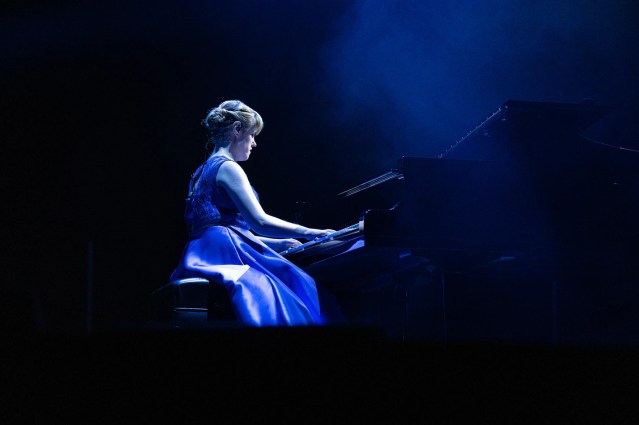
Rachel performing at the True Colours festival in Japan

As a musician, what is your definition of success?

Music is not about competition or who can play the best, it is about connecting and sharing with the audience and developing relationships as they can be vital for the future. Have the right support like a teacher who can understand the way you work, encourage and develop your musical journey.

What advice would you give to young/aspiring musicians?

Embrace every corner or avenue of your instrument from physicality/technique to exploring different music styles, so it becomes a part of you. For example, I love playing Jazz which I believe is interconnected with the classical composers that came before. Patience is always a virtue especially in practicing when you don’t get things right the first time. Keep positive and make the most of every opportunity.

On Saturday 27 May, Rachel Starritt gives a concert by candlelight at the inaugural Ludlow Piano Festival, created by impressionist, comedian and actor Alistair McGowan. Rachel will perform new works by three young composers, written especially for herm, as well as her own improvisations. Info/tickets: https://ludlowpianofestival.com/


Blind from birth, Rachel was born in Bridgend, South Wales in 1994. She has received formal training on the piano since 2006 with Alison Bowring and studied at the Royal Welsh College of Music and Drama (RWCMD) where she recently achieved a distinction in piano performance as a postgraduate student (MMus).

Rachel completed a six month Erasmus placement at the Conservatori Liceu in Barcelona under the tutelage of pianist Alba Ventura.

As a student at RWCMD, Rachel has enjoyed masterclasses with the Labèque Sisters, Stephen Osborne, Peter Jablonski, Angela Hewitt and Valentina Lisitsa. Additionally, she received guidance at the annual NLPS summer course at the Purcell school with renowned professors Dr Michael Schreider (Guildhall), Irina Osipova (Moscow), Irina Berkovich (Israel) and William Fong (RAM).

Rachel’s piano improvisation skills complement her love of jazz and she currently leads a jazz trio ‘The Rachel Starritt Trio’,  which appeared at the Brecon Jazz Festival in 2020 and 2021. At Chetham’s Piano Summer School she studied with Nikki Iles and Douglas Finch and has also received lessons with the renowned Welsh pianist and composer Huw Warren.

Read more

Image credit Daishiro Futakami

Who or what inspired you to pursue a career in music and who or what have been the most important influences on your musical life and career?

When I was 7 years old, my parents told me that I was enrolled in a guitar group at my school.  Back then I didn’t even know what a guitar was, or that you could have a career as a guitarist !  At around 10 years of age, I took part in some guitar events in China where I saw some professional foreign guitarists play concerts and I was told I had the ability to do the same as them.

This is what first put the idea of pursuing a career in music into my head, without really knowing what it entailed.  My youthful enthusiasm took me to the Central Conservatory of Music in Beijing, against the wishes of my family, where I became the very first guitar student in the whole country.  During my ten years there I constantly felt that my instrument was under appreciated and underestimated.  This enhanced my own determination to have a musical career and show everyone what the guitar can do.  I was also so inspired by the great musical environment at the conservatory, and this too strengthened my resolve to become a musician.

What have been the greatest challenges of your career so far?

There have been many challenges on my musical journey.  When I started playing in China, no one in China had taken this path before, so there were no local role models.  The country had no classical guitar tradition.  Looking back, I had to battle against the odds to make my own path. Over the years this took me to the Central Conservatory of Music in Beijing, and later abroad to study at the Royal Academy of Music in London.  It’s not easy for an Eastern person to come to the West and make a career with no familiarity with the environment here.  Especially so when that career is playing a niche Western instrument. Therefore, I am extremely grateful for all the support I have received to come this far.

Which performances/recordings are you most proud of

My recordings are like my children. I like them all, but I am particularly proud of two,  Bach Concertos and Sketches of China. These both contain new repertoire for guitar, so I put a great deal of effort and time to make these happen.  Not only the recording, but sourcing the repertoire, and making the guitar arrangements.

There are also many concerts that I am proud of, but my most recent is actually a highlight. It was called ‘Once Upon a Time in Brazil’ and I played for two consecutive nights at the NCPA in Beijing.  The concert presents a wide selection of Brazilian music from classical to popular style. The program highlighted the central role that guitar has in all this music .  I pushed my own boundaries as a classically trained player.  I felt a revelation performing new musical styles in collaboration with different combinations of chamber musicians.  For example, we had one set with guitar, percussion, and double bass, rather like a jazz trio which worked really well.  The enthusiastic response from the audience on both nights gave me great encouragement and was a welcome reward for the project.

Which particular works/composers do you think you perform best?

I feel particularly at home with lyrical, romantic works.  I consider lyricism as one of my hallmarks.  I am always singing in my head as I play.  Several string players have told me that I phrase as if I have a bow in my hand. That’s a complement I really like and can associate with.

What do you do off stage that provides inspiration on stage?

Travel!  I like travelling to see how people live in different places around the world, and to learn about their culture.  That’s a great source of inspiration when interpreting music from these cultures.  It’s not only an inspiration on stage, but it opens my mind and helps me understand myself and my own cultural background in a broader and deeper way and understand other people more.

How do you make your repertoire choices from season to season?

It’s based on a combination of factors, my own personal tastes and desires, the concert schedule and promoter’s requests, and my recording plans. In general, I try to balance a program to have something for everyone. I also try to feature something familiar and something new, whilst at the same time broadening my own repertoire.

Do you have a favourite concert venue to perform in and why?

I think my overall favourite is Wigmore Hall in London. It has a perfect acoustic for guitar.

What do you feel needs to be done to grow classical music’s audiences?

I think a few factors need to be addressed.  I don’t know if classical music is losing audiences as such, but nowadays people have more choices about how to use their time, so we must compete for their attention.  We need to make the music relevant to them. I also feel there are still elements of elitism in classical music, that make many feel excluded from the circle.  Musical education plays a huge role in this.  For example, in China a vast number of children are learning instruments, and their parents will take them to hear concerts.

What is your most memorable concert experience?

I have many!  Two come to mind.  My first is meeting the composer Rodrigo who came to my Spanish debut concert in Madrid when I was 14!  More recently it was amazing to play on Bastille Day sitting under the Eiffel Tower with the French National Orchestra, performing to a huge live audience on the Champ de Mars, and an even bigger audience via the broadcast on French national television.

As a musician, what is your definition of success?

I think I would consider myself as a success if I could be recognised and remembered for my professional legacy.

What advice would you give to young/aspiring musicians?

There are easier ways to make a living.  It’s often a tough, competitive, and unforgiving profession, even for those who truly have talent.  It’s very easy to be distracted or disillusioned, so I think it’s useful to keep reminding yourself why you are following this path, and never lose the love and enjoyment of the music.

What’s the one thing in the music industry we’re not talking about which you think we should be?

Finding the right business model that allows promoters to balance artistic innovation versus commercial risk.  In economically hard times, there is great pressure on promoters to take commercially safe options in choices of artists, repertoire, and programs.  However, in the long run this is a danger to the health of innovation in the arts. Exciting things happen at the edge of the comfort zone. I hope the industry will regain sufficient financial independence to strike a good balance.

What’s next?

Merry Christmas Mr. Lawrence, the first single from my upcoming digital album X-Culture (released 19th May 2023), was released on Friday 7th April from  It was rather poignant to learn today that the composer of the piece, Ryuichi Sakamoto died earlier this month. I knew he was unwell at the time I was recording his piece; I was actually thinking of his feelings at that time. Reading about his suffering gave me a sense of nostalgia as I recorded the piece.

What is your idea of perfect happiness?

Good health, great loving relationship, and being able to do what I enjoy doing.

What is your most treasured possession?

My guitars.

Xuefei Yang performs in the Image China concert at London’s Cadogan Hall on Thursday 13th April. The programme features celebrated and ground-breaking works by acclaimed Chinese composers Chen Qigang, Tan Dun, Wang Xilin, Zhou Tian, and Fu Renchang alongside Western composers Edward Elgar and John Brunning.

More info/tickets


Xuefei Yang is acclaimed as one of the world’s finest classical guitarists. Hailed as a musical pioneer – her fascinating journey began after the Cultural Revolution, a period where Western musical instruments & music were banned. Xuefei was the first-ever guitarist in China to enter a music school, & became the first internationally recognised Chinese guitarist on the world stage. Her first public appearance was at the age of ten and received such acclaim that the Spanish Ambassador in China presented her with a concert guitar. Her debut in Madrid at the age of 14 was attended by the composer Joaquín Rodrigo and, when John Williams heard her play, he gave two of his own instruments to Beijing’s Central Conservatoire especially for her and other advanced students.

Read more

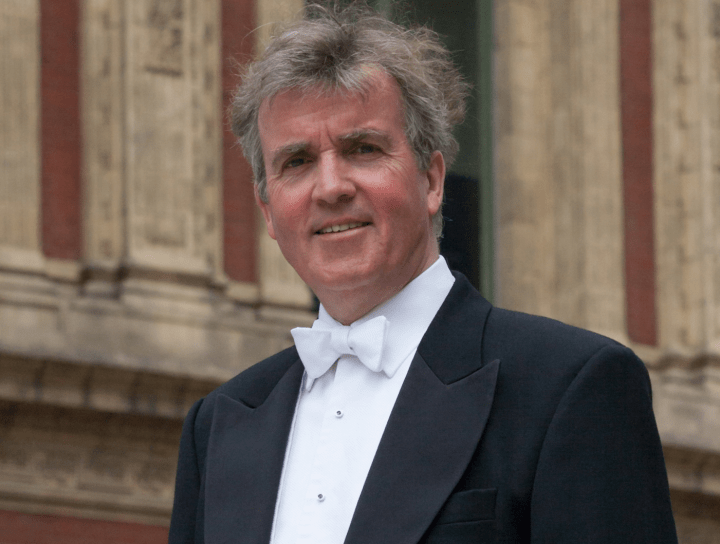
As the Royal Choral Society prepares to sing Handel’s Messiah on Good Friday, one of London’s great Easter traditions, I spoke to conductor Richard Cooke about his influences and inspirations, and how one keeps a work like Messiah fresh and exciting after conducting it for over 25 years.


Who or what inspired you to take up conducting and pursue a career in music?
I was a chorister at St Paul’s Cathedral from the age of 8 to 13. Some pieces we sang as anthems really inspired me, especially Recordare from Mozart’s Requiem, (which we sang in English to a truly terrible translation – *see below). This became my favourite piece of music from the age of 8, and it still is one of them. Also movements from Brahms’ Requiem, which I used to ‘conduct’ whilst listening to my mother’s record player. Seemed like fun.

Who or what are the most significant influences on your musical life?

Those five years at St. Paul’s were massively formative, though the choir was really not good! I could sight-sing music from the age of 11. I then had 4 years in Cambridge singing in King’s under David Willcocks, and after that I was teaching at Tiffin School for seven years. My colleague David Nield who was Director of Music (I was Director of Choral Music) made a huge and transformative impact on my life.

What, for you, is the most challenging part of being a conductor? And the most fulfilling?

My musical life has been choral conducting. The great challenge is to be an orchestral conductor when choirs sing concerts with orchestras. I try to conduct choirs ‘orchestrally’ so that they think that way when it all comes together. The most fulfilling thing is to come away from conducting a great work and feel good. Rare! There is usually something I would wish to have done better – it can be only a moment, but it’s there.

As a conductor, how do you communicate your ideas about a work to the orchestra?

Talk as little as possible. Show them what you want and be faithful to what one considers were the composer’s intentions.

Tell us more about the experience of conducting Handel’s Messiah…..

How do you keep such a well-known, well-loved work fresh for both performers and audience, especially in a large venue like the Royal Albert Hall?

This is the same for any professional. I saw an actor being interviewed about how he felt performing Hamlet 25 times and that was the same. You have to make each performance as unique as it is for the audience. This is easy. I have been fortunate to conduct this concert every year for about 27 years and I tell myself and the choir that it has to reach the audience as if it were brand new each time. The Royal Philharmonic Orchestra is wonderful in this respect too. I feel it has become bigger for me with the passing years.

What for you are the particular pleasures and challenges of conducting Messiah?

One has different soloists to engage with which is (nearly) always a pleasure, and the work slowly rises to its climactic end – particularly so in the Royal Albert Hall. That final 30 minutes is an inspirational and uplifting experience every time.

The main challenge is the choral writing in Part 1 where the choir is exposed to fast semiquaver ‘runs’ without orchestral support. From the beginning of Part 2 to the very end of Part 3, the strings play these demanding passages with the choir, and the support they provide is always reassuring. Mozart ‘solved’ this problem in his re-harmonised version of Messiah by giving all the fast-running sections in Part 1 to the soloists, with the choir joining only at the very end of each chorus. The only real challenge after that is never to coast along on ‘automatic pilot’.

Is there one work which you would love to conduct?

There are several I would like to return to, all of which are hugely expensive, including Berlioz’s Grande Messe des Morts and Damnation of Faust. A work which I wished I had been able to do is Honegger’s Jeanne d’Arc au Bûcher (Joan of Arc at the Stake), but promoters just smile when they see how much it would cost!

Do you have a favourite concert venue to perform in?

I love conducting in the Royal Albert Hall and Canterbury Cathedral, though each has its challenges with the acoustic. I have other favourites – Birmingham, Bridgewater Hall, Liverpool, Gothenburg. A very beautiful venue for concerts is Lund Domkyrkan (Cathedral) in Sweden. I conduct a concert there each summer.

What do you do off stage that provides inspiration on stage?

The direct reply to that has to be preparing the music and how one is going to interpret it, assuming you are not looking for an answer like ‘take a cold shower’ or ‘walk up a Scottish Munro’.

What do you feel needs to be done to grow classical music audiences?

A massive and prolonged revolution in schools. I work with children and it is the most inspirational thing to see how they engage when challenged. Schools are very under-nourished in music, and children are underestimated. Music provision has been declining for decades and there is a misconception that classical music is elitist. Becoming an elite performer does not make it ‘elitist’. There are elite sportspeople. I don’t think Joe Root or Marcus Rashford are elitist but they are elite.

As a musician, what is your definition of success?

Um…..I’m enjoying still being able to do what I do and have done for my whole life. My hobby is my career and whether I am successful or not is for others to judge.

What advice would you give to young or aspiring conductors/musicians?

I don’t presume to advise other than to say that you have always to prepare and work as much as is needed to master in detail whatever you aspire to.

What’s the one thing we’re not talking about in the music industry which you feel we should be?

The inadequacy of classical music provision in state schools and the value and enhancement it brings to children’s lives and well-being.

Where would you like to be in 10 years’ time?

Where I am now. Maybe optimistic!

What is your idea of perfect happiness?

Not sure but I’m perfectly happy

What is your most treasured possession?

Apart from family and friends I don’t really have one, but it feels special when I dig out a great score like Beethoven Missa Solemnis to prepare for another performance.

What is your present state of mind?

Sober

*Final stanza of Recordare from Mozart’s Requiem, early Novello edition:

“In thy favor’d sheep’s position

Keep me from the goat’s condition,

On thy right complete fruition”.

(I’m quite sure that if I had sung these words as an adult, the last word by many around me would have been change to ‘coition’.)

Richard Cooke conducts the Royal Choral Society in Handel’s Messiah on Good Friday, 7th April, at the Royal Albert Hall. The choir, which is celebrating its 150th anniversary, has performed Messiah every Good Friday since 1876. Only the 1940 Blitz and the 2020 Covid pandemic have prevented the performance of one of the UK’s favourite choral works.

Tickets and information


Richard Cooke was appointed Conductor of the Royal Choral Society in 1995, becoming Music Director in 1998, and has appeared with us in many concerts in the Royal Festival and Royal Albert Halls. Most notable of these have been their annual Good Friday performances of Handel’s Messiah, and spectacular Christmas Carol concerts. He has directed concerts with the RCS in the cathedrals of Peterborough, Winchester, Salisbury and Southwark. He has also recorded Orff’s Carmina Burana with the RCS together with the Royal Philharmonic Orchestra.

Read more

Image credit: Kevin Day

One Sunday afternoon I was idly leafing through a copy of Vanity Fair, which I found lying around at the country home of my parents-in-law. On the back page was a revealing interview with A Famous Person, based on the Proust Questionnaire, a set of questions which the French author Marcel Proust answered at different times in his life. Later that day, I thought this might make an interesting addition to my blog – a weekly interview where each respondent answers the same questions. And thus, in April 2012 the Meet the Artist interview series was born.

At this time, I’d been writing this blog for nearly two years. Originally intended as a place where I could record my thoughts about returning to the piano after an absence of some 20-odd years, it had quickly become a kind of online classical music ‘magazine’ with varied content: concert reviews interspersed with articles on piano technique, teaching, and repertoire, and more esoteric ‘think pieces’ on music. More importantly, it now had the beginnings of an established, regular readership, albeit still quite small (today it enjoys c30,000 visitors per month). A series of interviews with musicians seemed a good addition. Classical musicians have an aura of mystique (usually created by audiences and others, rather than the musicians themselves) and there is, I find, a great curiosity about what classical musicians do; not just the exigencies of life on the concert platform – the visible, public aspect of the profession – but, in effect, ‘what musicians do all day’. The Meet the Artist interviews offer a snapshot of other facets of the profession, giving readers a chance to get “beyond the notes”, as it were, and in doing so reveal some fascinating insights.

The willingness and openness with which people respond is refreshing, often unexpected, and largely free of ego. In addition, the interviewees give advice and inspiration for those considering a career in music, and attempt to define “success” in a profession where one’s ability to communicate with and move an audience is placed considerably higher than monetary returns.

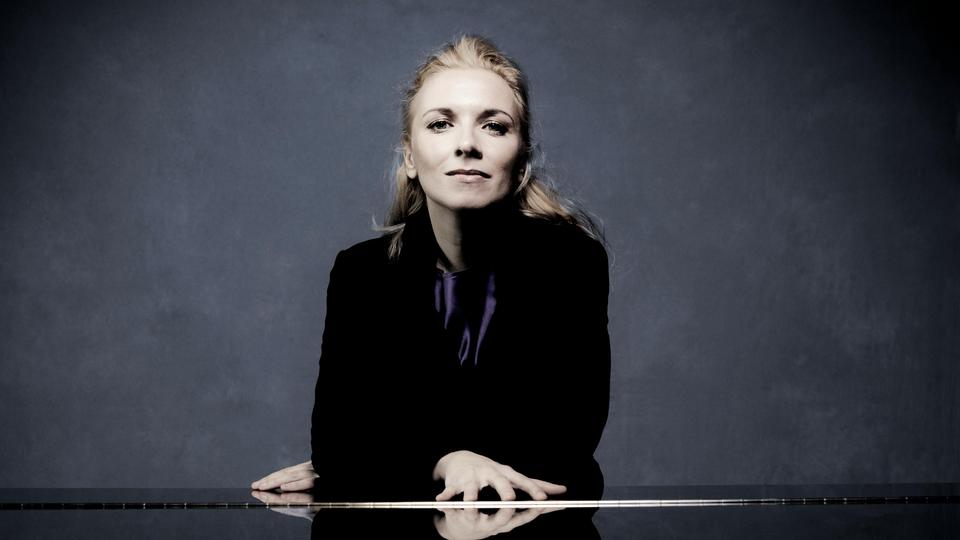
Tamara Stefanovich

I never sought out the “big name” international performers like Angela Hewitt, Ivo Pogorelich, Tamara Stefanovich or Marc-André Hamelin (or indeed prog rock legend Rick Wakeman!), but as the series grew in reputation, so I found these people were happy to be interviewed, either directly (usually by email, occasionally in person) or via their publicists and agents. The series has become not only a valuable compendium of surprising, insightful, honest, humorous and inspiring thoughts from a wide range of artists, but also a platform for young and lesser-known artists in particular to gain exposure in an industry which is highly competitive. Others use the series as a means to promote upcoming concerts, recordings or other events, while also leaving an enduring contribution to audience’s and others’ understanding of how the music industry “works” and what makes musicians tick. It has received praise from the likes of pianists Stephen Hough and Peter Donohoe, both of whom are featured in the series.

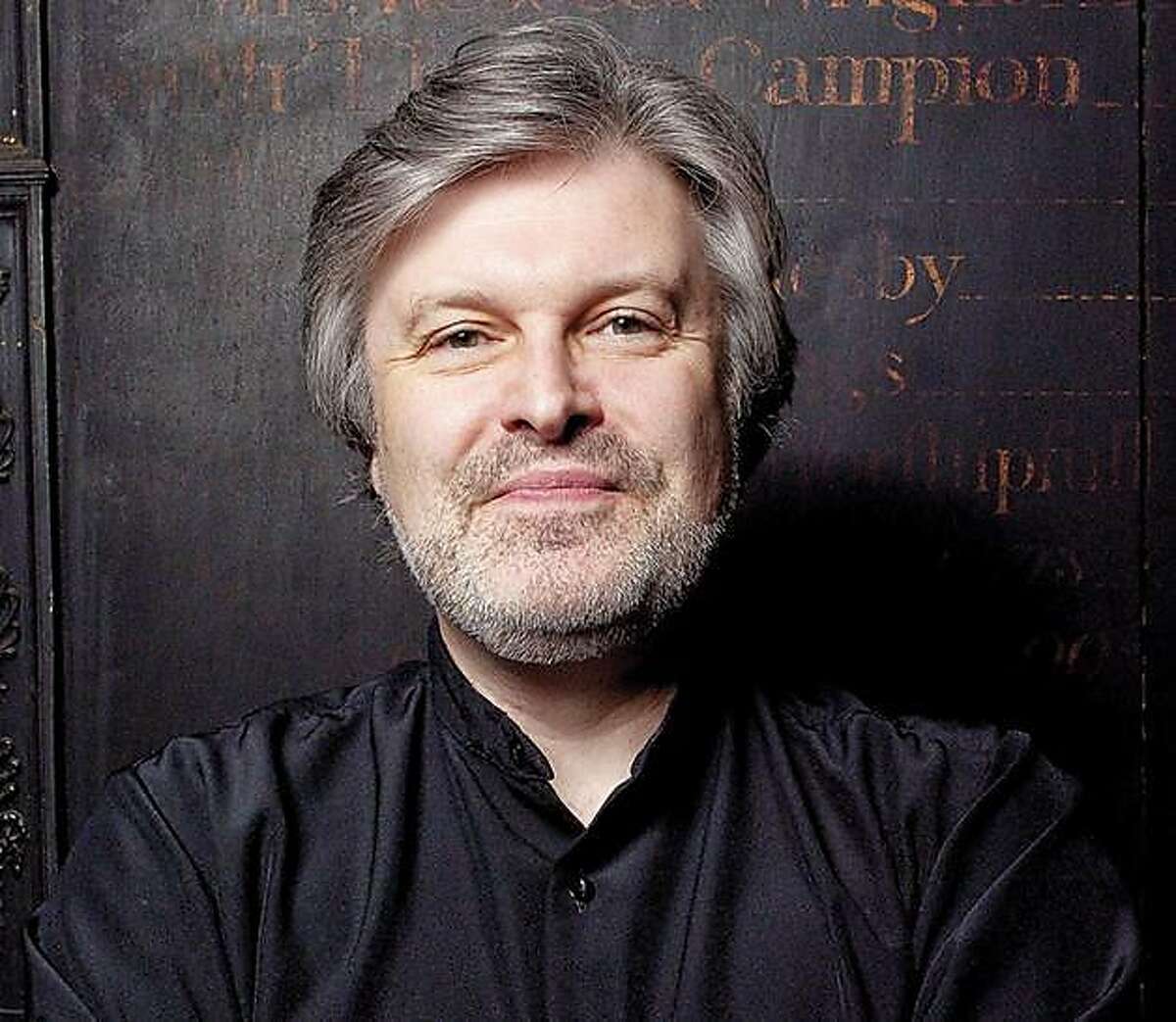
James MacMillan, composer & conductor

From strictly classical artists such as harpsichordist Mahan Esfahani or composer and conductor James MacMillan, two of the earliest interviewees, the series has broadened in its scope over the years and now includes musicians from the world of crossover classical music, folk and jazz. Yet regardless of genre, what these interviews often reveal is how one’s chosen instrument and its literature exert a strong attraction, seducing would-be professionals from a young age and continuing to bewitch and delight, frustrate and excite.

To date, the series features over 1600 interviews from some of our greatest living musicians to young artists poised on the cusp of a professional career. Every single interview has value, and I am immensely grateful to the many musicians who have freely offered their insights, reflections and advice in their interviews.

To all of you who have taken part in the Meet the Artist series to date, THANK YOU.

Frances Wilson, The Cross-Eyed Pianist, April 2022


The Meet the Artist series is ongoing – if you would like to take part, please click here for more information