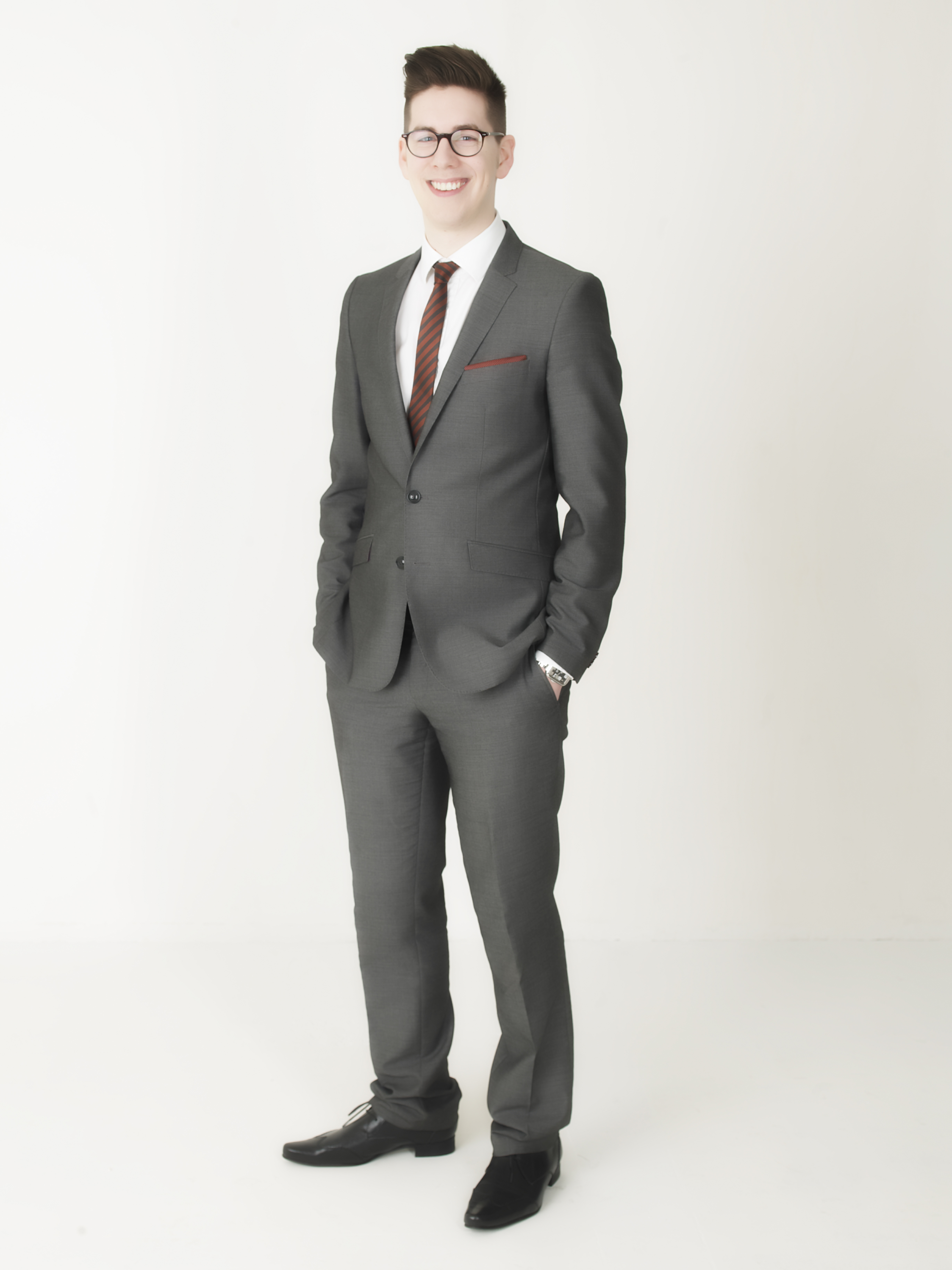
Who or what inspired you to take up the piano and make it your career?

I’m not sure. I wanted to be a dancer but where I was born it wasn’t easy. Then a friend of mine started having piano lessons and I became interested and wanted to take it up. My first teacher was a Polish Jew. She had her concentration camp number tattooed on her arm. My father was musical and my brother is a really good blues and rock guitarist so I guess it was in my blood.

Who or what are the most important influences on your playing?

Besides my teachers, my influences are varied. From visual artists to poets and dancers as well as composers and colleagues and friends.

Someone always close to my heart is Federico Mompou, the great Catalan composer. I love Curzon’s playing as well as Alicia de Larrocha who inspired me to study the great Spanish masters Albeniz , Granados and Falla. I admire Arrau’s honesty, Richter’s melancholy and Brendel’s intellect and scholarship and also like Schiff’s Mozart and and Gould’s originality and personal integrity. But I seldom go to concerts now.

What have been the greatest challenges of your career so far?

Playing well and improving is a perpetual challenge. To keep going is sometimes a challenge. Recording under less-than-ideal circumstances with very limited studio time can be a bit of a challenge too. Dealing with rejection. Working with mediocre producers can also be a bit hairy.

Playing the Tavener piece was a big challenge because it was John’s first piano piece in many years and the stakes and expectations were high. I wanted people to see how great the piece was and not let John down.

What are the particular challenges/excitements of working with an orchestra/ensemble?

Company…..colour, sharing, being enveloped and held by a group of musicians can carry one far afield.

Which recordings are you most proud of?

My first recording including the premiere of Sir John Taveners ‘Ypakoe’, which he wrote for me and my recording of Soler Keyboard Sonatas.

Do you have a favourite concert venue?

I like the Southbank Centre.

Who are your favourite musicians?

Mmmmmm, quite a few colleagues doing their own thing at their own pace whilst juggling mountains…..

What is your most memorable concert experience?

Many, but one that springs to mind was playing Night in the Gardens of Spain with the Simon Bolivar Orchestra in Caracas and opening for the wonderful Cuban pianist Bebo Valdez and El Cigala at the Royal Festival Hall.

What is your favourite music to play? To listen to?

To play early music is a favourite. When I first went to Dartington I met the Dufay Collective and forged a strong friendship with singer Vivien Ellis which fostered my love for this repertoire. I also listen to world and folk including flamenco which was a favourite of my father’s. To play, many but if I had to single out something it would be Mompou.

What do you consider to be the most important ideas and concepts to impart to aspiring musicians/students?

It’s a bit like being a new parent. Trust your intuition and look at your child and be guided by her. Don’t listen to just anyone. Explore, be inquisitive, work, work and work some more. Follow your own path. Hold on to your integrity and to who you are. Choose a teacher and be steadfast. You know the saying: when one is ready the teacher appears.

What are you working on at the moment?

Bach Inventions and inventions by contemporary composers who explored the form for my concert at Sutton House. Latin music with percussionist Adriano Adewale.

What is your most treasured possession?

My daughter. My body.

What do you enjoy doing most?

Having breakfast in bed, playing and swimming with my daughter, doing yoga and having a laugh with friends.

Elena Riu performs at Sutton House, Hackney, east London on Sunday 18th November with the debut of “Inventions”, a fascinating programme juxtaposing Bach’s Inventions with Inventions by contemporary composers including Ligeti, Gubaidulina, Finch and Shchedrin. Further details and tickets here.

Born and bred in El Sistema, Elena’s infectious enthusiasm for “boundary- jumping” (Time Out), and for bringing new music to a wider audience has brought her accolades all over the world.

A leading exponent of the Hispano-American, her CD of Sonatas by Soler was released to great acclaim by the Spanish label Ensayo. She is a regular visitor to the Festival Latinoamericano.
Elena has commissioned, edited, published, performed and recorded over 40 new works giving countless world premieres including Sir John Tavener’s “Ypakoe”, written especially for her. Elena’s efforts on behalf of new music and as a keen educationalist led to the publication by Boosey & Hawkes of ‘Salsa Nueva’ in 2006 – now on its second run and in 2009 ‘Elena Riu’s R’n’B Collection’ and ‘Out of the Blues’ CD.

Elena has toured extensively and has performed in all major concert halls in the UK and abroad.

An eclectic artist, Elena has pioneered collaborative work. She was the brain behind the sell-out multicultural Spanish Plus Series at the SBC and re-launched their Childrens and Families series. Her most recent collaboration: The Adventures of Tom Thumb was awarded a coveted Fringe First Edinburgh Festival Fringe.

Riu studied at Trinity College of Music in London with Joseph Weingarten where she won many prizes ands competitions. She was also a student of Neil Immelman, Maria Curcio and Roger Vignoles. Later, Elena won a scholarship from to travel to Paris for advanced tuition from Vlado Perlemuter in Paris.

www.elenariu.com/

What inspired you to take up the piano, and make it your career?

I loved the sound of the cembalo (harpsichord) very much when I was a child. Having no musical background whatsoever, my parents sent me to a local music school, where I was told that I would need to learn some piano before I could learn the cembalo. I fell in love with the piano immediately and quickly forgot about Bach’s harpsichord concertos!

In my teenage years, playing the piano was the activity I loved most. Nobody had to tell me that I should practice. As soon as I came home from school, I ran to my piano and played for hours. My time at the piano was quite evenly split between playing classical music and improvising or composing my own music. When I was discovered by a manager at age fifteen, I knew already that music would always be my main career, although my role as an interpreter of classical music – mainly of the romantic repertoire – was outweighing my activities as a composer at that time.

After two intensive years of touring and recording, I felt burned out. The growing success as a concert pianist had no positive impact on my happiness at all, quite to the contrary: I felt more and more isolated, and it became clear to me that I could not ignore my need to compose any longer. My manager considered my compositions as some kind of private hobby, but to me it was much more. As much as I love the music by the great masters, and as much as I enjoy playing it, composing (and performing) my own music had to come first. It was a difficult decision, since my possibilities as a soloist seemed to be endless and so many promising opportunities were at my fingertips. But I did what I had to do as an artist: I withdrew from the traditional career as concert pianist and immersed myself into the development of my musical language.

Who or what were the most important influences on your composing?

Being so well acquainted with the romantic repertoire, the music of Chopin, Liszt, Rachmaninov and Scriabin definitely had a strong influence on my early style. But since I am a child of the 20th century, I have also drawn inspiration from pop and rock music, maybe also a little bit from jazz music. When I discovered Keith Jarrett’s solo concerts and Arvo Pärt’s music in the late nineties, I was deeply moved by the sheer beauty that was still “allowed” in our time. My educational background had suggested to me that contemporary music had to be disharmonic, to put it politely, and I never cared for serialism and all the cacophony that followed. So, essentially, I am in constant search for truth and beauty in my music. My love for Gregorian chant, religious choral music and my Catholic faith have a great influence not only on my compositional style, but also on my understanding of music as a whole.

What have been the greatest challenges of your career so far?

When the Cistercian Monks of Stift Heiligenkreuz asked me to compose piano accompaniments for the follow-up of their hugely successful album ‘Chant – Music for Paradise’, I did not want to mess up. They were putting “their” sacred chants into my hands and let me interpret them! In plainchant you have so much freedom and detachment from clearly definable emotions in the sense that have become so accustomed to over the last centuries. It is indeed the most universal and pure musical language on our planet. Putting a piano part underneath it would naturally interpret the chants in some direction. Through hard work and constant rewriting of many passages I found a very personal, yet worthy and unsentimental style for these pieces. The monks liked them so much that they commissioned another four chants for their latest album ‘Chant – Stabat Mater’, which was released  recently.

Which compositions are you most proud of?

Many of my choir pieces are very special to me. Unfortunately, not many of them have been performed so far, which makes me all the more excited that the wonderful Platinum Consort under the direction of Scott Inglis-Kidger will sing the world premiere of my ‘Consecration Prayer’ on 16th November, which is a very personal composition of mine. I am also very happy with my piano piece ‘Obsculta’ and the really beautiful video that my friend Vitùc created for it.

Who are your favorite musicians?

At the moment I am very fond of so many magnificent British choirs: Tenebrae, The Sixteen, Polyphony, Platinum Consort, to name a few. You really are blessed with a unique choral tradition in England!

There are countless pianists that I admire and love, but if I had to pick one, it would be Dinu Lipatti. I love his unpretentious and pure musicianship. I try to follow this role model, and I have never liked musicians who take themselves too seriously and want to be more important than the music. It is the musician’s duty to serve the music, not the opposite.

What is your most memorable concert experience?

I was crying from beginning to the end when I attended my first live performance of Bach’s B minor Mass in Luxembourg ten years ago. I have never been so moved by a piece of music. It was then that I realised that there is no such thing as old or new music. If music is true, it is timeless and will always reveal a glimpse of eternity to us mortal beings.

What do you consider to be the most important ideas and concepts to impart to aspiring musicians?

For the interpreter:

  • Never take yourself too seriously.
  • Always play with open ears and an open heart.
  • Look for the essence behind the notes and remain faithful to the text.
  • Find your personal sound by pursuing meaning rather than virtuosity.
  • Practice hard and value technical exercises and scales. They help you to become better servants of the music you love.

If you’re a composer:

  • Compose with open ears and an open heart.
  • Look for the essence inside your musical ideas and omit what can be left.
  • Let the music write itself by listening as deep as you can.
  • Always question your work. If it can still be improved, don’t shy away from the work.
  • Study the masters, again and again, but be yourself when you compose.

What are you working on at the moment?

I practice Brahms’ Cello Sonata in E minor for a performance with a very special young talent next week. After that I will orchestrate my children’s opera ‘The Little Gnome’ which will be premiered on 19th January in Luxembourg. And I expect the master CD of my new solo album ‘Prayers of Silence’ (which I recorded in August) to be ready any day soon, so I will definitely spend some time with listening and preparing the publication of my most important album so far. In December I will play Beethoven’s Choral Fantasy, a piece that is not in my repertoire yet, so I’ll have to practice a lot in November.

What is your idea of perfect happiness?

Perfect happiness is a gift of the moment and it wouldn’t be special if it were a constant state of being. That being said, I can say that I suffer from failures and bad moments like everyone else, but I am also regularly blessed with happiness when I compose or when I play the piano. But the most blissful moments are those that I spend with my family and especially with my three little children. I should also mention that I find peace in prayer, and it is the hidden driving force of my life.

David Ianni’s ‘Consecration Prayer’ receives its world premiere in a concert by Platinum Consort, under the direction of Scott Inglis-Kidger, on Friday 16th November. Further information and booking here

David Ianni was born in Luxembourg in 1979. He was accepted in the piano class of Daniel Feis in the Conservatoire d’Esch-sur-Alzette at the age of nine. At fifteen, he completed his piano diploma in Luxembourg with a “Premier Prix avec grande distinction”. He continued his studies in London at the Purcell School and later with Tatiana Sarkissova, teacher at the Royal Academy of Music. He also studied with Dimitri Bashkirov, Anatol Ugorski, Radu Lupu and Dirk Joeres. In 2005, he completed his studies with Tonie Ehlen at the Maastricht Conservatory.

After winning a number of prizes in national and international competitions, the sixteen-year-old musician began a career as a concert pianist, performing solo recitals as well as with orchestras in many European countries, India and Japan. His debut CD, with works by Beethoven, Rachmaninoff and Scriabin, was released in 1997. In 1999, the recording ‘Theodor Kirchner: Piano Music’ followed.

Since 1998, David Ianni has increasingly dedicated himself to composing his own works. He has written about 100 works, including the oratorio ‘Abraham’s Children’, ‘Pater Noster’ for piano and orchestra, a children’s opera, a string quartet, chamber music as well as numerous choral and piano compositions, which have been performed in Luxembourg, Germany, Austria, France, Italy, India and Japan.

David Ianni’s album Night Prayers with his own piano compositions was published in 2011.

That same year he composed and recorded the piano accompaniments for the album Chant – Amor et Passio by the Cistercian Monks of Stift Heiligenkreuz, which was awarded a Platinum award in Austria. In 2012 the monks commissioned David to compose and play four chant accompaniments for their album Chant – Stabat Mater.

His new solo album ‘Prayers of Silence’ will be released by Obsculta Music.

http://davidianni.com/

Bridget Cunningham

Who or what inspired you to take up conducting and playing the harpsichord, and make it your career?

Being around other musicians and performing live music from childhood at home, in the church, at music schools and with good teachers inspired me to be a musician. Performing music has always been where I feel most comfortable, and the actual process of communicating with others through music lifts the spirits. When conducting from the harpsichord, the sound of the other instruments in the orchestra and singers around hits the soundboard of the harpsichord which becomes a melting pot where all these sounds go in and magic is made.

Who or what were the most important influences on your playing and conducting?

The most important influence is the music itself from the emotional and dramatic works of Handel, the energy of Vivaldi, the complexity of Bach and Palestrina, the freshness of Mozart, the complex rhythms of Messiaen, the richness of Wagner and much more, have always inspired and influenced me to learn more.

What have been the greatest challenges of your career so far?

The biggest challenge has always been to get funding to put on undiscovered early operas, pasticcios, masses, and other works and material I have researched and to record this material which really deserves a hearing. It is also a learning curve to get the means to make documentaries and films about this music, the history of it and the whole process of music making, which are all fascinating aspect

Which performances/compositions/recordings are you most proud of?

I have just recently conducted a recording for a CD of stunning music, some unrecorded material too which I am pleased about, from the 18th century Vauxhall Pleasure Gardens with London Early Opera, and fabulous producer Chris Alder, which I am eagerly waiting to hear. It was a wonderful process finding the music and putting it all together to recreate a magical night at the gardens.

Do you have a favourite concert venue to perform in?

I have many and love the variety I have performed in from large to the more intimate, including Southwark Cathedral, the Wigmore Hall, Handel House Museum, St George’s Basillica in Gozo, St Cecilia’s Hall, Edinburgh, the Pieta in Venice and Schloss Ambras in Innsbruck.

Favourite pieces to perform? Listen to?

I have always loved conducting Handel operas, Purcell masques, Vivaldi and Mozart operas.. they are all colourful with amazing text, word painting and harmonies. Conducting from the harpsichord centres me with the music in the very heart of the orchestra and the actual score of the work being performed. Again, I enjoy all the later repertoire I conduct from George Butterworth to Bernstein as it is all fabulous repertoire which I enjoy listening to as well.

Who are your favourite musicians?

Barenboim, McKerras, Brabbins, Hogwood, Alsop, Davies, Edwards, many conductors; also the historic Bernstein, and several baroque musicians… Catherine Mackintosh, Robert Woolley… where do we stop…the list goes on…

What is your most memorable concert experience?

Performing Vivaldi in the Pieta in Venice… an amazing place and also listening to Jordi Savall playing French divisions in his viol concert at St Nicholas Church in Galway by candlelight was extremely inspiring

What do you consider to be the most important ideas and concepts to impart to aspiring musicians?

Every new day there is something new to learn and we are always students and must always be open to gaining new knowledge and to aspire to new things. Keep on focusing on where you are going and work hard and practice, practice….

What are you working on at the moment?

I am collating music, parts and scores and taking sectional rehearsals for the next recording project that I am conducting with London Early Opera and following concert tour next year.

What is your most treasured possession?

My glorious harpsichords: one is a double manual Franco Flemish Blanchet copy of a Ruckers – perfect for all kinds of repertoire with a lovely resonance in the bass – and the other is a single manual Italian harpsichord with a real brightness of sound and touch.


Bridget Cunningham is a prizewinning harpsichordist, conductor and early music specialist. Bridget is in demand to conduct choirs, orchestras, festivals and recordings throughout Europe and her performing experience includes conducting London Early Opera and Schola Pietatis Antonio Vivaldi and she conducts regularlyfrom the harpsichord at venues such as St Martin-in-the Fields, Grosvenor Chapel, St James’s Piccadilly and Southwark Cathedral. She has recently recorded a harpsichord album ‘Handel in Ireland’ and performed as a solo harpsichordist to Prince Charles at Buckingham Palace. She also regularly gives lecture recitals and broadcasts at Art Galleries and last year she opened the Watteau exhibition at the Royal Academy of Arts and gave a lecture recital on Handel and Watteau in 18thCentury London. She has recorded and presented BBC documentaries with the Orchestra of the Age of Enlightment and Vivaldi’s Women and the virginal and harpsichord music for the BBC 1 series ‘Elizabeth, the Virgin Queen’, How London Was Built and BBC’s ‘Messiah’. Radio broadcasts include Radio 3 and 4 King James’s Bible. Bridget has also just conducted London Early Opera’s CD Handel in Vauxhall Pleasure Gardens with producer Chris Alder.

www.bridgetcunningham.org.uk

Harry Bennett of Apollo5

Who or what inspired you to take up singing, and make it your career?

My grandfather was the man that gave me the push to explore the full capacity of my voice. He was a keen musician and would organise music festivals in Kent where he lived while bringing up his young family. In his later years he was a committed member of his local choral society. Music was very important to him, and while he only heard me sing a few times, he clearly saw my passion for singing when I was very young. He saw an advert in the Telegraph for choristers at Rochester Cathedral and encouraged my mother and me to apply. Four years later, I bowed out of the choir as deputy head chorister, and I’d had the biggest head start to my singing career I could ever ask for.

Who or what were the most important influences on your singing?

Being in a cathedral choir, you’re repertoire is fine-tuned to a fairly specific genre. There’s no secular music at all, so the biggest influences were certainly the composers whose works I was singing, namely Byrd, Tallis, Stanford, Poulenc, Duruflé, Vaughan Williams to name a few. On the performance side of things, my director of music at Rochester, Roger Sayer, was a huge influence. I learnt all my foundations of singing from him. In more recent times, I’m now a member of the a cappella group Apollo5, and that has opened my eyes and ears to the previously undiscovered world of secular music! We sing a huge variety of genres and composers from Byrd to Broadway. I’ve loved singing the more current repertoire, like Jim Clements’ arrangement of Smooth Criminal. Jim arranges a lot of music for VOCES8 (whom Apollo5 work very closely with), and it’s a real treat to be able to sing such funky harmonies which I missed out on when I was singing in cathedral choirs!

What have been the greatest challenges of your career so far?

There’s one which stands out: I started my undergraduate studies on a Biology BSc course, and while I enjoyed studying science at school, it took me a while to realise that I couldn’t leave music on the back burner. After 1 1/2 years into my biology degree I finally accepted that I wasn’t happy, so I started my undergrad from scratch, but this time I was working towards a Music BA. It was an incredibly tough decision to make because I’m probably the most stubborn person I know, but I was worried that I would be perceived as a failure. It’s now 3 years later, and I’m about to graduate and start working as a workshop leader for the charity which runs Apollo5 and VOCES8, Voces Cantabiles Music (VCM), and I can’t wait to start inspiring people through music. It’s definitely been the best decision of my life.

Which performances/recordings are you most proud of?

In chronological order, one of my favourite recordings was from my days in Rochester. We recorded a disc of Vaughan Williams’ choral works (A Choral Portrait of Vaughan Williams, Lantern Productions- 2000), and that definitely fuelled my love for his music. One of the prominent features on the disc was his Mass in G minor. My solo performance which I’m most proud of is certainly my final undergraduate recital. I chose a programme of Finzi, Fauré and Quilter. What I was most proud of was my delivery of the text; having sung in a cathedral for most of my singing career, I haven’t been used to “acting” my text because your job in a cathedral choir is primarily to aid worship, and the music should not distract the congregation from the main focus of the worship. My final recital was the first time I engaged with the text so much that I almost cried during The Clock of the Years (from Finzi’s Earth and Air and Rain). My favourite performance with Apollo5 has to be last month’s performance at the Royal Albert Hall with Surrey Arts. We do a lot of education work with a variety of clients from businesses like Vodafone to help to further their team building, community choirs to strengthen their passion for singing, and all the way through to schools like Red Balloon centres for severely bullied children which aim to recover them and return them to mainstream education.

Do you have a favourite concert venue to perform in?

Apollo5 loved performing at the Royal Albert Hall with Surrey Arts and Westminster Palace with Red Balloon! But sadly we don’t get the opportunity to perform at these venues every day. We usually perform a series of Christmas concerts at Ham House in Richmond, and we love performing those. You certainly feel the Christmas spirit when you’re rehearsing for these towards the end of September!

Favourite pieces to perform? Listen to?

We are very lucky that one of our Tenors (Matt) happens to be a great arranger. One of our favourite arrangements of his is definitely The Andrews Sisters classic Boogie Woogie Bugle Boy, and this also looks great when our girls are wearing their fabulous Vivien of Holloway dresses!

Who are your favourite musicians?

Personally, I love to get into the Christmas spirit by listening to Bing Crosby. There’s nothing like having a bath with Bing! At other times of the year, I fill my iPhone with recordings by The Consort of Musicke and The Sixteen

What do you consider to be the most important ideas and concepts to impart to aspiring musicians?

If somebody gives you the opportunity to have more experience in something you love, you have to do it. It’s near impossible to improve if you don’t gain experience. Also, the more teachers you see, the better. You don’t have to visit them regularly, but it’s great to get a 2nd/3rd/4th (etc…) opinion on your technique/performance, because what might work for one person may not necessarily work for another. I think of seeing a variety of teachers as getting a pick-n-mix.

What are you working on at the moment?

Right now, I’m preparing to work for VCM on a more permanent basis by observing the workshops that the organisation offers with a view to leading some of these on my own. As a group, Apollo5 are preparing for our appearance at the Tolosa Choral Competition.

What do you enjoy doing most?

I love skiing, it’s something I’ve only recently discovered. I usually go to Alpe d’Huez with members of the choral foundation at Portsmouth Cathedral and we normally try to coincide our trip with a performance at Église Notre-Dame des Neiges.

Harry Bennett has just completed his studies at the University of Southampton and has been studying with David Owen Norris, Ian Caddy and Keith Davis over the last three years. Alongside his studies he is also a Bass Lay Clerk at Portsmouth Cathedral. His extensive choral background stretches back to 1997 when he was a chorister at Rochester Cathedral under the direction of Roger Sayer.

Harry began to explore workshop leading with the Portsmouth SingUp project, a government-led initiative which aims to help primary school children explore the idea of singing, and to consequently help boost their learning, confidence, health and social development. In 2010 he became a founding member of Apollo 5, the a cappella group which has been praised for their eye-catching performances under the Voces Cantabiles Music (VCM) umbrella and will be performing on various dates around Europe this year, and more notably at the Tolosa International Choral Competition. Apollo5 are Ensemble in residence with Surrey Arts and was honoured to headline the sold out celebration concert at the Royal Albert Hall in May 2012. From September this year, Harry will be implementing his skills gained from his SingUp experience in his appointment as a workshop leader for VCM.

As a soloist he has been gaining experience in oratorio and lieder performances, including Handel’s Messiah with Caroline Balding and Elizabeth Kenny in December 2010, and has appeared as Aeneas in Purcell’s opera Dido & Aeneas last June. Over the past year, Harry has been a member of Genesis Sixteen, the new training programme from The Sixteen which aims “to identify the next generation of ensemble choral singers and to give them the opportunity to train at the highest level”.

Apollo5

The stunning vocal quintet Apollo5 was formed in 2010 and has been praised for engaging and lively performances. The professional group has a wide repertoire of jazz, pop, classical and Christmas a cappella and will be touring across the UK and internationally for the first time in 2012.

www.apollo5.co