Gabriel Crouch

Who or what inspired you to take up you singing and make it your career?

My mother is a violinist, and one of my earliest childhood memories involves being asked what I wanted for my 4th birthday. My answer (“A violin!”, or hopefully “A violin, please!”) precipitated more than a decade of torment for everyone within earshot, but it also led me to choir school (for free violin lessons) and from there to singing. Since I first started singing in earnest, I’ve never wanted any other profession.

Who or what are the most important influences on your singing?

As a boy treble I was taught every day by the great Simon Preston. Those of us who grew up under his direction now aspire to make music with the same ferocious energy and personality, however exhausting it may be. Then I fell under the influence of Dr Richard Marlow at Cambridge University and his musical personality could not have been more different – a scholar-musician of great humility who taught his students to place themselves in the service of the music score and allow it to speak for itself. I hope I carry a little of both in me.

What have been the greatest challenges of your career so far?

I would say that learning to adapt to the needs of my American students has presented me with my biggest career challenges and greatest pleasures. I conducted Princeton University’s staging of Britten’s Albert Herring recently, and for someone with zero experience in the world of opera this was absolutely terrifying. The score is mind-bendingly complicated, and when one is attempting to unite two groups of musicians who can’t see each other, and can only partially hear each other… well, I know why opera conductors get the big bucks.

What are the particular challenges/excitements of working with an orchestra/ensemble?

Never mind the clichés – it really is greater than the sum of its parts. My colleagues are some of the best in the field and each one has something to ‘teach’ the group. When the ensemble is socially harmonious, learning from its members, discovering things together, and making wonderful sounds… I don’t know anything that beats it.

Which recordings are you most proud of?

‘Dialogues of Sorrow’ is the recording that defines what I would like our group to be. It involves a little scholarship and a lot of adventure. Much of the music is completely unheard but it’s all ravishing and I hope our love for it comes across. The story behind the music is compelling too…

Do you have a favourite concert venue?

The main hall at the Liszt Academy in Budapest. It’s a beautiful hall and a great acoustic, but that has nothing to do with this answer. I have never felt such warmth from an audience, willing us to give our very very best. They are enlightened and educated, but completely unfettered by any sense of etiquette or propriety. They show their feelings in a way which makes them part of the music-making process. Being on stage there makes me realize what live performance could and should be. It’s been years since I was there so I hope it’s still the same!

Who are your favourite musicians?

I will travel a very long way to watch Martha Argerich play. The late Anthony Rolfe Johnson was the first singer I ever enjoyed listening to as a little boy, and I remain haunted by his singing. Closer to my own field, I love the way Robert Hollingworth talks about, thinks about, and makes music and I rejoice in all his latest crazy schemes. I don’t want to sound like the proverbial Geography teacher at the school disco, but Thom Yorke, Sufjan Stevens and James Blake have all made me wish I was a different kind of musician at various times…

What is your most memorable concert experience?

There are several King’s Singers concerts that stand out. There was the gig in Heidelberg where the audience were so insistent that we deliver that 7th encore that they were still yelling for it when most of us were changed and packed and ready to go. We went out to sing for one last time, and our bass strode out in immaculate jacket and tie, shoes and socks… but no trousers. The audience blew the roof off. At the more serious end, I can remember quite clearly the concert in Calgary where Simon Preston (see above) was in the audience. We knew he was there and were all desperately anxious to win his approval but we couldn’t pick him out in the audience. But towards the end of the concert, after we finished a piece by Byrd, there was a gasp of rapture from the balcony, and the voice was unmistakeably his. I think we were all ecstatic at this moment.

What is your favourite music to play? To listen to?

I’m a terrible pianist but I love Brahms piano music and will often hack away at an intermezzo if nobody is listening. The second part of your question is impossible to answer I’m afraid. I don’t restrict my musical diet at all.

What do you consider to be the most important ideas and concepts to impart to aspiring musicians/students?

As a student (a brash one, with quite an ego) I thought it was all about me imposing my musical will and proving myself. I’m embarrassed to remember all that now, and I try my best to ward my own students away from this approach. Being truly ‘musical’ is not about the concentration of your musical ideas, rather it is about the empathy with which you interpret and deliver the score.

What are you working on at the moment?

Lassus – the ‘Lagrime di San Pietro’. It’s astonishing music – his last work, and what a way to finish.

Where would you like to be in 10 years’ time?

I’ll be nearly 50… perhaps planning my eventual return to England??

What is your idea of perfect happiness?

How embarrassing and worrying that I have no answer to this question! I hope I’ll have worked this out by the time I next have to answer it…

What is your most treasured possession?

My dog, Moses (a pug who came with my fiancée as part of the deal…)

What do you enjoy doing most?

Standing at the counter of Neal’s Yard Dairy in London, taking in the smells and waiting for my first free sample of cheese.

What is your present state of mind?

Well you’ve made me think about cheese now. I’m hungry.
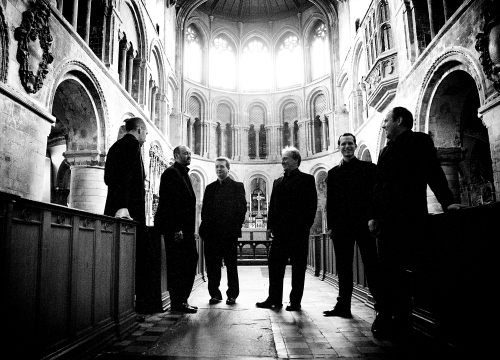
Gallicantus

Gabriel Crouch is a Senior Lecturer in music at Princeton University, USA, and has been musical director of Gallicantus since its inception in 2008. He began his musical career as an eight-year-old in the choir of Westminster Abbey, where he served as Head Chorister and performed a solo at the wedding of HRH Prince Andrew and Miss Sarah Ferguson. After taking up a choral scholarship at Trinity College, Cambridge, he co-founded and directed the male vocal ensemble Henry’s Eight, and was offered a place in The King’s Singers in 1996. In the next eight years he made a dozen recordings with the King’s Singers on the BMG label (including a grammy nomination), and gave more than 900 performances in almost every major concert venue in the world, from New York’s Lincoln Center to the Suntory Hall in Tokyo.

In 2005 Gabriel was appointed ‘Director of Choral Activities’ at DePauw University in Indiana, since when he has maintained an active career on three fronts, as choral conductor, singer and record producer. In the last twelve months he has conducted at Choral Festivals in Washington DC (Chorworks Festival), Illinois (ECICF festival), Oregon, and at the University of Queensland’s Renaissance Choral Festival in Brisbane, Australia. In January 2008, the Gabrieli Choir’s CD The Road to Paradise, which Gabriel produced, was nominated for the title of ‘Best Choral Recording’ in the BBC Music Awards.

About the group

The core of Gallicantus is six highly motivated and skilled singers. Their will to found a specialist six-man group came from many years singing together in ensembles which include The King’s Singers, the choirs of Westminster Cathedral and Westminster Abbey, but above all the virtuoso ensemble, Tenebrae.

GALLICANTUS – ‘COCK CROW’ From the Aberdeen Bestiary – 12th Century

‘The crowing of the cockerel at night is a sweet sound, not only sweet but useful; like a good partner, the cockerel wakes you when asleep, encourages you when worried, comforts you on the road, marking with its melodious call the progress of the night. With the crowing of the cockerel, the robber calls off his ambush; the morning star itself is awakened, rises and lights up the sky; the anxious sailor sets aside his cares, and very often each tempest and storm whipped up by evening winds moderates.’

www.gallincantus.com

Who or what inspired you to take up the piano and make it your career

I remember hearing a tape recording of Beethoven’s Pastoral Symphony in my dad’s car when I was very young, and I simply could not believe how good it was. I couldn’t understand why it wasn’t being played on every radio station! The result of this exposure was that I began to experiment at an old Blüthner piano that we had in my house at the time, and soon began taking lessons with a private teacher when I was about 8 or so. And with regard to making it my career, I think composing and performing has always been such an all-consuming interest for me that I didn’t have a choice!

Who or what are the most important influences on your playing?

If I were to narrow it down to a list of three pianists, they would be Sviatoslav Richter, Murray Perahia and Krystian Zimerman. Richter for his notational precision and incomparable technique, Perahia for his extraordinary clarity, and Zimerman for his delicate phrase endings. I also admire them for their naturalness and dedication to live performance.

What have been the greatest challenges of your career so far?

I suppose one of the main challenges is that very often people tend to think of classical music as a genre or style of music, which it isn’t. I try to encourage people to both appreciate the vastness of the term, which covers many extremely diverse approaches to music making across hundreds of years, and to discover a style period that they find musically engaging, which they inevitably will if they are a curious person and maintain an open mind. I am also a staunch believer that you do not require years of music training to appreciate and enjoy classical music, and this is something else I try to communicate.

What are the particular challenges/excitements of working with an orchestra/ensemble?

I did a recording of some compositions of mine with an ensemble that I brought together last March, and really enjoyed the experience. Irish traditional music represents a major stylistic influence in my work, and so a large part of the instrumentation featured for the recording was traditional instruments such as the Uilleann Pipes, Button Accordion and Irish Harp. I found it very stimulating to work with authentic players from a completely different musical background to my own, and learnt a lot from them, especially with regard to the improvisatory ornamentation that is such an indispensible feature of Irish music.

Do you have a favourite concert venue?

I think the most attractive venue I’ve ever played was the Oak Room in the Mansion House in Dublin. It’s a small, intimate room that seats around 100 or so, with two spectacular chandeliers, as well as an oak-panelled wall decorated with the coat of arms of every Lord Mayor of Dublin since Daniel O’Connell.

Who are your favourite musicians?

A musician that I really admire is Keith Jarrett. His improvisations are always imaginative and evince a wide range of musical sources. And not only is he one of the outstanding improvisers in contemporary Jazz, he is also an accomplished classical performer, and is seemingly just as comfortable playing classical repertoire. Check out his harpsichord recording of Bach’s C-sharp minor Prelude and Fugue (Book 2 of the WTC) on YouTube to see what he is capable of. I copied out this fugue a few years back, and am familiar with many of the technical intricacies as a result; Jarrett absolutely nails them.

What is your most memorable concert experience?

Finishing out the last of my cycle of 12 Études at a concert I gave in July as part of the “10 Days in Dublin” arts festival. It had been a hectic few weeks leading up to the concert, and I had been feverishly working to get all of the music composed on time. I was worried that I had tried to fit in too much in too short a space to time for my brain to subconsciously process everything, and that as soon as I went on stage to play it would all somehow conspire against me. But the first few went reasonably well, and gradually I began to ease into the performance. And then suddenly there I was, with 11 behind me, and it really felt like I had reached the home stretch.

I had been aware during the composition of this last piece that I was not drawing 1 isolated piece to a close, but rather a cycle of 12 pieces. I tried to reflect this sense of gravity technically through the use extensive dramatic pauses in juxtaposition with a sparse, monophonic texture, both of which are salient features of the Sean-Nós singing tradition that inspired much of the cycle. This economy of material lent itself well for improvisation, and allowed me to be spontaneous in the closing moments of the concert in a manner that would have been much harder to achieve if I had continued to compose in strict polyphony.

What is your favourite music to play? To listen to?

I enjoy playing and listening to lots of different styles of music from lots of different periods. Recently I’ve been listening to Handel’s Oratorios a lot, Fantasias by Sweelinck, as well as the Bossa Nova album “Getz/Gilberto”. I hate to use the word eclectic, so I won’t use it.

What do you consider to be the most important ideas and concepts to impart to aspiring musicians?

For musicians generally, try seek self-reward through intrinsic improvements in your craft, rather than improvements in ranking against your competitors.

For performers, when practicing, aim to isolate and focus on the technical and musical areas where you are weakest, and keep run-throughs of an entire piece to a bare minimum.

For composers, firstly try to accumulate a wide array of knowledge about style periods and their composers, secondly compose in imitation of the style of some of these composers, and lastly try to express your own voice and creativity through this absorbed knowledge of craft.

What are you working on at the moment?

I have just finished composing a set of 3 Continuo Songs, which I wrote as a part of collaboration with a friend of mine, Conor Leahy, who is a very talented poet. The songs vary somewhat in style; the Sean-Nós influence is still there, but the continuo harmonies are infused with exotic jazz chords and Bossa Nova-style rhythms. I’m very excited about the project, and we’re getting some of the members of the Trinity Orchestra on board for the performance. Keep an eye out for updates by following Louis Ryan Music on Facebook, or alternatively @louisryanmusic on twitter.

Louis Ryan is a 22-year-old professional composer and pianist based in Dublin. He has just completed a B.A. in music at Trinity College Dublin, where he specialised in composition and attained 1st class hons. Other relevant qualifications include a Licentiateship in piano performance held with Trinity Guildhall School of Music in London, as well as winning 1st place and a prize of 1,000 Euros in an inter-varsity piano competition at the Lord Mayor’s house in Dublin in November 2011. He has given several public recitals across Dublin, the most recent of which was given as part of the 10 Days in Dublin arts festival in the Royal Irish Academy of Music, where he premiered his cycle of 12 Études for solo piano. All 12 are now posted and available to watch on YouTube (see attached links below).

Further videos in the series can be viewed here

John Mills, violinist

Who or what inspired you to take up the violin, and make it your career?

No one individual directly; we were asked in school assembly if we would like to learn the violin and I said yes. Still not sure why! Over time I realised I couldn’t imagine doing anything else and threw myself into it. I was quite a late starter so I felt I had some catching up to do.

Who or what were the most important influences on your playing/composing?

At the start of my career it was my teacher at music college, Rodney Friend. He showed me that any problem can be overcome quickly and easily, he taught me to be my own teacher. He also gave me the confidence to enter a highly competitive environment.

In the profession, working with the English Chamber Orchestra shaped my approach to different kinds of repertoire. It was immediately apparent that it was an orchestra who knew how it wanted to play classical repertoire and beyond. This made it very easy to fit in with and assimilate this stylistic approach.

What have been the greatest challenges of your career so far?

Time management! When you have a lot of work, preparation at home to do and admin/planning/promotion etc. time becomes a valuable commodity. You quickly learn to do all of these things faster.

Which performances/compositions/recordings are you most proud of?

With the ECO there have been many occasions over the years, often tours as you have the opportunity to develop performances over time. We toured Germany at the end of last year, by the end of the tour we were playing a mean Britten Frank Bridge Variations!

I also had the opportunity to lead the orchestra at Kings Place this year where I thought the orchestra sounded terrific.

With my group the Tippett Quartet I’m very proud of our Bernard Herrmann recording for Signum.

Do you have a favourite concert venue to perform in?

This depends on the repertoire and so the size of the orchestra. When it’s the ensemble you simply can’t beat Wigmore Hall. Kings Place also sounds great and is a welcome addition to London’s venues. Our home at Cadogan Hall is a really good venue and an appropriate size for the repertoire we play. A lot of the best halls are out of London though; personal favourites are Symphony Hall Birmingham, The Sage Gateshead and the Royal Concert Hall in Perth.

Favourite pieces to perform? Listen to?

With ECO I have a list! Bartok Divertimento, Britten Frank Bridge Variations, Strauss Le Bourgeoise Gentilhomme, any symphony by Beethoven or Mozart…

On a smaller scale, Schubert string quintet, string quartet Death and the Maiden, anything by Mendelssohn but specifically string quartets Op. 12 & 13 and late Beethoven.

Who are your favourite musicians?

I’ll restrict this to people who have worked with ECO recently or the list is endless! Isabelle Faust, Plamena Mangova, Sergie Krylov, Marianna Thorsen, Lawrence Power and ECO’s own Stephanie Gonley!

What is your most memorable concert experience?

I suffer from a terrible memory and after about a month most things start to blend in together. However, there are a few dates that linger in the memory for different reasons: my first ECO date I was at the back of the 2nd violins and there wasn’t room on stage for me in the piano concerto! I turned pages… We played in Eisenstadt a few years ago where Stephanie played Haydn C major violin concerto in the home of Haydn live on radio. She turned an average piece into a masterpiece. My first concert leading the orchestra is also a very fond memory.

With the quartet it is playing Beethoven Op. 131 in Wigmore Hall.

What do you consider to be the most important ideas and concepts to impart to aspiring musicians?

The most important thing is that they love doing it, you can work on the rest. In our field, it is harder than ever to make a living as pay and opportunity have dropped dramatically over the years while competition is now global. Loving what you do gets you through the frustrations and helps you stay creative. With the right perspective, we can view ourselves as very lucky people doing what we love, otherwise it becomes just a job, a grind with few benefits.

What are you working on at the moment?

ECO has a little time off after Grange Park Opera at the moment so it’s mostly my own projects. I’m listening to edits of a forthcoming Rozsa string quartets disc for Naxos with my group the Tippett Quartet. I recently played a very last minute Elgar violin concerto for the 1st time; chastened by the experience I’m getting in some early preparation for a Glazunov concerto that I’m playing with Bath Symphony Orchestra in November. It’s a work I’ve played twice before but as I mentioned earlier, time management!

What is your most treasured possession?

I always feel the real value of a possession is the pleasure you get from using it rather than the possession itself, so a qualified entry here. I don’t actually own my violin but have had it on loan for 7 years now. It has been an amazing journey as I have learnt to play it and it has changed out of recognition over the years. At nearly 300 years old you could forgive it for being stuck in its ways, but we have both adapted to each other remarkably.

John Mills began studying the violin in Southampton in 1990 and in 1996 he gained a place at the Hampshire Specialist Music Course and joined the National Youth Orchestra. Two years later John gained a place at the Royal College of Music where he studied as a scholar under professor Rodney Friend, one of the great orchestral leaders, for five years. He also participated in master-classes with Hugh Bean CBE, Ida Haendel and Zvi Zeitlin. He became a ‘Making Music’ (National Federation of Music Societies) recommended artist in 2003-2004.

John is well known as a chamber musician and is the leader of the highly acclaimed Tippett Quartet, performing, and broadcasting widely across the UK and worldwide. He has recorded extensively with the quartet for EMI, Naxos, Signum, Classic FM, Dutton and Guild record labels.

John is the co-leader of the English Chamber Orchestra and is in demand as an orchestral leader, including a trial with the Bournmouth Symphony Orchestra and guest work with the London Mozart Players, Rambert Dance Company and others.

John is gaining a fine reputation as a soloist, performing and broadcasting the major violin concerti across the UK and abroad, including the Liszt Hall in Hungary and concerts in Auckland, Wellington and Christchurch, New Zealand. He has also appeared as soloist with the English Chamber Orchestra and will be appearing with them next year in a performance of the Bach Double violin concerto.

John Plays on a 1735 Januarius Gagliano violin.

www.englishchamberorchestra.co.uk

www.tippettquartet.co.uk

David Lee
David Lee

Who or what inspired you to take up editing and performing early music, and make it your career?

I took up a choral scholarship at Christ Church, Oxford on the basis that I seemed to be able to read music well enough and had an inoffensive highish tenor voice that was considered to be quite useful. Having spent my late teenage years obsessed with contemporary music, composing and playing the piano in Glasgow, it was a major culture shock for me to suddenly be catapulted into a hotbed of early music. Singing with the choir under Stephen Darlington, and with the academic interests I developed, under the influence of scholars such as John Milsom, Margaret Bent and David Maw, I began to realise that I enjoyed the music – and both the scholarship and performance in equal quantities. This is what made me realise that I wanted to run my own group (and not to necessarily conduct!), performing music that I love and am able to help bring to life, alongside musicians I respect and enjoy working with.

Who or what were the most important influences on your performing?

There have been many. Stephen Darlington at Christ Church is an enormously motivating director, who was always encouraging but gave me a strong sense of discipline which I desperately needed. John Milsom, who actually discouraged me from attempting to become ‘merely’ a singer (not that I’m good enough anyway!). Jeremy Summerly is such an effortlessly consummate musician and all-round excellent person to work with. He taught me that if the music’s good, then everything else is worthwhile. John Butt, who is currently my academic supervisor, is a paradigmatic figure in balancing performance and scholarship at the highest level. The other members of Oxford Baroque influence me a lot, both practically and ideologically. Without them, I’d probably have got a real job by now.

What have been the greatest challenges of your career so far?

Being able to convince myself that what I am doing is worth it! Financially, it’s not been easy and I’ve done all sorts of other work to put into my group, Oxford Baroque. Funding isn’t something that’s easy to come by these days, but if you believe it can happen, then you can only blame yourself if it doesn’t.

Which performances are you most proud of?

I think every time we perform as a group, we get better and better, so it’s always the last one.

Do you have a favourite concert venue to perform in?

Anywhere with good transport links and a decent pub nearby! Though I think the most impressive place I’ve performed recently was at Le château de Versailles. It’s such a beautiful venue that it distracts you from the ridiculously enormous acoustic.

Favourite pieces to perform? Listen to?

I love performing Schütz and Bach. There’s something – different about each of them, of course – about their sense of upholding attention to the text, but with a nuanced mode that brings something more to it, which I find hugely rewarding to sing. A lot of my colleagues are more diverse, but I’m a bit of a geek and collect lots of early music CDs. At the moment, I’m hooked on the Huelgas Ensemble’s Dufay disc, O Gemma Lux.

Who are your favourite musicians?

Lots of them.

What is your most memorable concert experience?

My most memorable concert experiences are probably not for the right sort of reasons. There was one on a Japanese tour, where at the rehearsal I suddenly realised I’d forgotten to pack black trousers and, without time to buy or commandeer a pair, had to perform in a pair of blue trousers.

What do you consider to be the most important ideas and concepts to impart to aspiring musicians?

One of the obvious things that I notice is that professional musicians tend to be some of the most intelligent and educated people that I encounter, yet they normally work for relatively small financial rewards considering their skills and dedication. I remember spending a train journey between Oxford and London with Roderick Williams at a time when I was feeling a bit down on my luck. I’d just left Oxford and was puzzled why things weren’t suddenly taking off for me. After explaining how his own career had taken several years to develop, his advice was: ‘If you think the music’s worth it, then it probably is.’ This is a maxim that I like to think of every time I’ve had any doubts about what I’m doing. Also, that it’s important to respect those around you, however old or young they are. You learn quickly that everything is built around respect – for teachers, for fellow performers, for the music itself – and it’s imperative that you don’t get carried away with yourself. There’s always someone better than you out there, so be grateful for the opportunities you’re given.

What are you working on at the moment?

I’m currently doing my laundry between trips away. But more generally, I’ve recently started doing postgraduate research with John Butt at the University of Glasgow. I’m trying to balance this with running Oxford Baroque. At the moment, I’m planning, editing and rehearsing for our concert in the St John’s, Smith Square Christmas Festival on Tuesday 18 December, with the English Cornett and Sackbut Ensemble. I’ve edited quite a few ‘new’ pieces for this concert and am really looking forward to hearing how they come together with such a large ensemble!

Where would you like to be in 10 years’ time?

I would like to be able to balance an academic career with my own performing activities. As I realise that the teachers I’ve encountered are the ones who’ve switched me on to my passions, I’m becoming aware that I’ve enjoyed teaching in a university environment a lot so far and would welcome the chance to do more.

David Lee appears with Oxford Baroque in a concert on Monday 6th May as part of the Oxford Early Music Festival. Further details here

Oxford Baroque
Oxford Baroque

David Lee graduated from the University of Oxford with a first class degree in Music, where he was a Choral Scholar at Christ Church and subsequently a Lay Clerk with New College Choir. Having worked closely with a number of eminent musicians and musicologists over the past few years, he has shown a particular enthusiasm and talent in working on music composed between the sixteenth and eighteenth centuries. He recently completed editing the English-texted anthems of Christopher Gibbons, accompanied by an in-depth commentary – a project which received a first class award from the University of Oxford. He works regularly as an editor for several professional groups. Alongside assisting All Souls fellow, Dr Margaret Bent in her research, which he combines with an increasingly busy career as a freelance singer, working in the UK and abroad with groups including the Academy of Ancient Music, Tenebrae, Oxford Camerata, Chapelle du Roi, Ludus Baroque and Suonar Cantando. David is currently dividing his time between Glasgow and London, whilst working on postgraduate research, editing sixteenth- and seventeenth-century German music, at the University of Glasgow, under the joint supervision of Prof. John Butt and Dr David McGuinness.

In addition to co-directing and singing for Oxford Baroque, David’s role with the group involves researching projects, editing the performing materials and managing the personnel for each programme.


