Jimmy-Lee-Guitar-Runaway-WildKat

Who or what inspired you to take up composing, and pursue a career in music?

I discovered my ability to compose almost by accident. I had always been active and in love with the performing arts, school plays, school and church choir’s amateur dramatics etc…. It all started for me when I began to write poetry, mostly autobiographical of childhood memories, life experiences and so on. Without any formal training, I found that I could create melodies by turning my poems into song; I seem to have a natural gift as a songwriter. The four pieces on the album ‘The Empty Room’ were written on guitar some time ago and although I was not able to transcribe them for symphony orchestra myself at that time, When I was eventually able to hear the music played by the ensemble I founded, I was more than delighted and promised myself that one day I would record and perform all of my music albeit ballads, folk, Americana but most importantly, orchestral.  That time came a few years ago. Since that time I have produced four albums, written over thirty songs poems and produced two musical stage productions from albums.. All have been well received and proven very popular with a variety of audiences. I am ‘at one’ when I am performing!

Who or what were the most significant influences on your musical life and career as a composer?

In my childhood and at school I became emotional, reflective and very thoughtful when I heard pleasing melodies and songs. I remember at school performing Schubert’s ‘Trout’, so beautiful and meaningful; also the songs of Stephen C Foster. I was captivated by their meaning and how simple it seemed to be able to tell a story and express emotion and events good or bad. In the early 60’s I was fortunate enough to share a flat in London with very talented musicians, with a wide range of musical interests from folk to orchestral and I attended many performances throughout London and yearned to play my part. I practised hard on guitar/vocals and played my first few gigs at the Troubadour and the Half Moon in Putney.. From then on I was hooked.

What have been the greatest challenges of your career so far?

To keep my desire to perform in check. I have dipped in and out of the music scene from the late 70s, performing in the UK, Europe and the USA but my sense of responsibilities’ to provide security for my young family always overruled my personal ambition. I have no regrets in pursuing a career in the commercial world, which was thankfully both enjoyable and successful.

What are the special challenges/pleasures of working on a commissioned piece?

The challenge is to understand what is required and to create something that will last, stand the test of time and be meaningful and pleasing not just to the audience but to yourself. I have no respect for transient music.

What are the special challenges/pleasures of working with particular musicians, singers, ensembles and orchestras?

I am not the greatest musician in the world and I am always in awe of the standard talent and ability of trained or gifted musicians. Sometimes I feel intimidated and inadequate but I am usually put at ease and enjoy that company enormously.

Which works are you most proud of?

Apart from my orchestral works, which I am enormously proud of, there is a ballad on my ‘Runaway’ album called Hard Man. It was a difficult song to write and sometimes too difficult to sing but the lyrics say it all. It is a song about my Father who suffered terribly in Burma during the WWI and carried the scars for life. It is both a criticism and a tribute to a man who was never able to be the Father that I know he could have been and wanted to be.

Who are your favourite musicians/composers?

There are many from Chopin, Mozart, Schubert, John Williams, Paul Simon, John Lennon, Adele, Leonard Cohen, Kris Kristofferson and many more!

What is your most memorable concert experience?

Hearing my orchestral works performed by a full symphony orchestra at the Guards Chapel in Wellington Barracks, London in November 2015

What do you consider to be the most important ideas and concepts to impart to aspiring musicians?

For me, all music must tell a story that would be both interesting and in some way moving. The story line/lyrics will often suggest music and the music will often suggest a story line or lyrics. The two are inseparable do not be swayed by what is in vogue follow your instincts your gifts are specific to you… create and never give up!

Where would you like to be in 10 years’ time?…….

Still alive and well.

What is your idea of perfect happiness?….

Contentment.

What is your most treasured possession?…

My health and my guitar.

What do you enjoy doing most?…

Snowboarding, wind-surfing, and performing but not at the same time !!!!

What is your present state of mind?…

Excited, apprehensive, confident and pleased that at this time in my life I still have a lot to look forward to.

From classical music to folk and country, Jimmy Lee has an exotic and diverse compositional style. Disregarding all barriers that stand between genres, Jimmy has pursued his love of music regardless of any rules. His career has taken him across the globe from bars and beer joints in America’s Mid West to London’s Wembley Arena. After taking a break from the music scene, Jimmy Lee founded the Blue Coconut Music Club and decided to take up his calling once again.

Jimmy Lee released his debut classical album for symphony orchestra in Spring 2016. Having caught the attention of the Director Music at The Army Corps of Musicians (CAMUS), Kneller Hall with the power and beauty of his music, Jimmy Lee begun a collaboration with the Military for his next project. The album was recorded by Abbey Road Studios at The Guards Chapel, Wellington Barracks and Birdcage Walk with combined military and civilian musicians.

Read more about Jimmy Lee here


oxford2bphil2b202b25c225a92bchris2bgloag
(photo Chris Gloag)

Who or what inspired you to pursue a career in music?

A keen ear and an aptitude for music I showed as a boy of five

Who or what have been the most important influences on your musical life and career?

I have always been inspired by great performances, particularly those of artists of the old school such as Cortot, and have sought to make strong, informed musical statements

What have been the greatest challenges of your career so far?

To be able to keep my playing to a high standard. I am much more demanding now than I was ten years ago and the musical challenges are greater. Also, I have to ensure that the Orchestra has the resources to maintain its status and continue to expand.

You founded the Oxford Philharmonic Orchestra in 1998, why did you decide to establish a new orchestra?

To establish an instrument of the highest quality in a town which is revered the world over for excellence. My colleagues and I have worked hard to create an orchestra worthy of the attention of some of the world’s greatest artist who now collaborate with us on a regular basis. I am totally against having to create a niche in order to attract attention. The OPO makes strong musical statements playing all kinds of repertoire, including your all time favourites.

Your piano festival begins on 30th July: what are you most looking forward to in the festival?

To acquaint myself with emerging talent and share my musical experiences with them.

The Oxford Piano Festival and Summer Academy is now widely acknowledged as one of the most prestigious of its kind in the world. A residential course at St Hilda’s College, it welcomes to Oxford some of the most talented young pianists from all continents to study with some of the world’s greatest artists and teachers. This year’s artists include Marc-André Hamelin, Peter Serkin, Dame Fanny Waterman, Paul Badura Scoda, Menahem Pressler, Peter Donohoe, Tong-Il Han, Alexandre Tharaud and Nikolai Lugansky.

The students attending are of the highest standard and many are on the verge of international careers. This year, we will be welcoming as students both the winner and runner-up of the 2015 Leeds International Piano Competition. In the younger category, we are delighted to be welcoming again three scholars from the Lang Lang Foundation, chosen by Lang Lang himself. It is a privilege to be amongst such outstanding talent: I learn a lot. 

Which performance/recordings are you most proud of?

I rarely listen to my recordings once they have been edited

Which particular works do you think you play best?

I identify strongly with the German/Austrian classical repertoire of Mozart and Beethoven but also enjoy performing the romantic and 20th century repertoire.

How do you make your repertoire choices from season to season?

We are here to serve the Oxfordshire community. As the only professional orchestra in Oxford, we are free to perform works we think our audiences would enjoy, including much of the core repertoire. The Oxford Philharmonic does not have to adhere to any gimmicks or acquire a niche to attract attention: it has a territorial claim and is in the service of the community.

Do you have a favourite concert venue to perform in and why?

I love playing in the Sheldonian Theatre. Other than its revered history, it has wonderful acoustics and provides an intimate setting for our audience and musicians alike

Favourite pieces to perform? Listen to?

The works I work on at any given time. We have just performed Walton’s Façade which I loved, and I am now preparing to conduct Haydn’s ‘London’ Symphony: what a great master he was!

Who are your favourite musicians?

Those who move me

What is your most memorable concert experience?

The few concerts I have given in my life which were less discomforting than others 

What do you consider to be the most important ideas and concepts to impart to aspiring musicians?

Do not be afraid to be an individual and always aim at making strong musical statements

Where would you like to be in 10 years’ time?

I hope to be still alive and on stage tackling repertoire I have still not been able to perform: would love to conduct more Wagner, for instance. Also, I would like to devote myself to recording a lot of the piano repertoire.

What is your idea of perfect happiness?

To be with my family

What is your most treasured possession?

My family

What do you enjoy doing most?

Anything that makes me feel alive

What is your present state of mind?

One of huge responsibility for something my colleagues and I have created and which I would like to see continue its legacy when I am gone

Marios Papadopoulos MBE is the founder, music director and driving force behind the Oxford Philharmonic Orchestra (formerly Oxford Philomusica), Orchestra in Residence at the University of Oxford.

www.oxfordphil.com

Oxford Piano Festival 2016

6ebf9f_6cd64976f4878aec1230604fb9fddc09

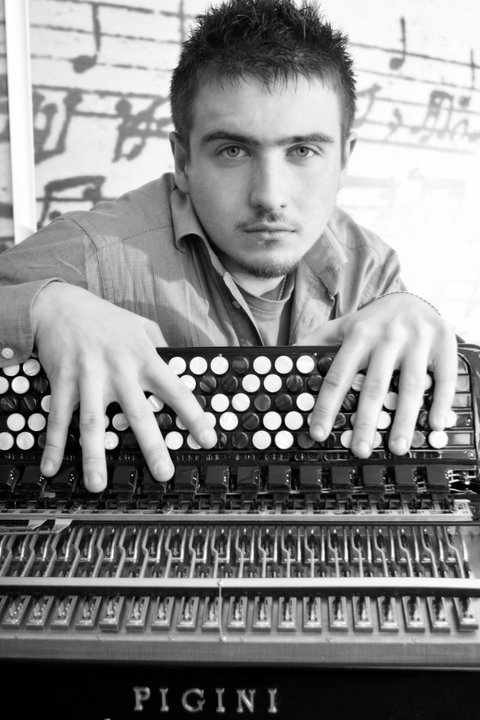
Who or what inspired you to take up the accordion and pursue a career in music?

I started playing the accordion quite late, when I was 11 and I began attending one of the national schools in Poland where I am from. I soon realised that this is what I wanted to do in my life. I was very lucky to have amazing teachers who were also great human beings so that helped me a lot in my decisions.

Who or what have been the most important influences on your musical life and career? 

I cannot name a single person in my musical career who has been the most important to me. I tend to take inspiration from everyone I have come across or worked with. My teacher Owen Murray from the Royal Academy of Music is one of them, for example, as someone who showed me the importance of sound quality.

What have been the greatest challenges of your career so far? 

I think that maintaining the artistic vision in every concert is the biggest challenge but I think this problem touches most artists.

Which performance/recordings are you most proud of?  

It is very hard to name them as every performance is special for me and I try to give my best in each of them. If I have to choose one it would have to be my performance of Concerto Classico by Mikolaj Majkusiak for accordion and symphony orchestra in Vienna or my first album “Encuentro” with my group, the Deco Ensemble.

Which particular works do you think you play best?

I love to play classical contemporary works for accordion and I think that is the most natural repertoire in classical music for accordion nowadays. But, I enjoy playing all different styles of music as it helps to develop your musical taste.

How do you make your repertoire choices from season to season? 

My choices are based on my new discoveries. I love to go for the pieces or transcriptions which are not very popular or completely new.

Do you have a favourite concert venue to perform in and why? 

I think the Wigmore Hall is one of my favourite venues because of the acoustics. Also Studio S1 of Polish Radio is outstanding. I am also really looking forward to playing at the Wallace Collection for the first time as part of City Music Foundation’s Summer Residency on 28th July.

Favourite pieces to perform? Listen to? 

Works by Gubaidulina are my favourite to perform and Chopin to listen to.

Playing Chopin on the accordion would be one of the biggest mistakes possible.

Who are your favourite musicians?

My favourite musicians are the ones who I work with as I am often very lucky to meet people who are very talented but, more importantly, are nice people to work with. I think is really important. From the musical legends my favourites are Vladimir Horowitz, the great jazz pianist and composer Krzysztof Komeda, and Paco de Lucia.

What is your most memorable concert experience? 

I remember playing for one of the political institutions in Brussels during an exhibition of pictures on the martology of Eastern Europe. I did not want to spoil the institution but the organisers asked me to play one of pieces in my repertoire called The Gulag Archipelago based on Solzhenitsyn’s book. Unfortunately, straight after the performance, the audience were supposed to move to the area where the post event reception was meant to take place. However, most of the audience went there after I started playing. I thought that it was a very bad concert experience until one lady came to my dressing room crying and explaining that her family went through the Gulag prisons and how touched she was.
We went for coffee together and she told me a lot of incredible stories from her life which were absolutely inspiring. Those kind of moments compensate for all the bad experiences in a musician’s life.

What do you consider to be the most important ideas and concepts to impart to aspiring musicians? 

I would have to say it is the concept of musical journey in the concert which the musician can reflect on.

What is your idea of perfect happiness?

The word “perfect” should be completely erased from any language as there is no such thing in real life. For me happiness should be balanced between what you do, who you do it with and how you do it. Having a lovely family, doing a lot of concerts with my artistic vision and being able to enjoy life is as close to perfect as it can get in my opinion. Finding this balance in real life situation is the hardest bit.

Accordionist Bartosz Glowacki performs works by Scarlatti, Arvo Pärt, Trojan, Makkonen, Semionov and Piazzolla on Thursday 28th July as part of City Music Foundation’s Summer Residency at the Wallace Collection 25-29th July. More details here

City Music Foundation’s mission is to turn exceptional musical talent into professional success by equipping outstanding musicians at the outset of their careers with the tools, skills, experience and networks they need to pursue music as a viable and rewarding livelihood. 

www.glowackiaccordion.com


avatars-000150970872-1m18d2-t500x500

Who or what inspired you to take up composing, and pursue a career in music?

My musical life began as a chorister at the Anglican Cathedral in Liverpool in 1977 when I was nine, but singing had already been a part of my life (winning local music festivals for solo singing), which is the reason I went to audition at the Cathedral. After joining I was given piano lessons and other basic theoretical training. From about the age of ten, I was composing a number of things which further supported my initial forays into composition; primarily the unwavering support of my mother and grandmother who purchased a piano and reams of manuscript paper. Various BBC programmes on music at the time engaged me; my parents mentioned a James Blades programme on percussion that I was enthralled by before I want to the Cathedral and I subsequently took up percussion alongside piano. I also fondly remember the Stravinsky centenary programmes on BBC 2 in 1982. The support of the organist at Liverpool Cathedral, Ian Tracey, a lovely piano teacher, Dorothy Hill, who was also an opera fanatic who would invite me to accompany her to Opera North seasons in Liverpool for a number of years. Singing high quality choral music of the Italian renaissance, English Tudor and even 20th century periods, all of these cemented my need to live in music.

Who or what were the most significant influences on your musical life and career as a composer?

It dawned on me about 10 years ago that one reason much of my work is saturated by activity against sustained resonances comes from my childhood memories of the acoustical properties of the Cathedral building.  The sort of aural glow that is present in that building (and sometimes, musical confusion!) seeped into my head at an impressionable age and has remained ever since. The reverberation of a large acoustic space also suggests ambiguity, doubt and distance to me. Also, the nature of ritual and text, the rich, reflective nature of space and echo, all left their mark on me.

Music of the Franco-Russian period – orchestral music mostly – was important when I was a very young composer and remains a pleasure for me to this day. I was lucky from the age of 13 to have my orchestral work performed by the Merseyside Youth orchestra and Royal Liverpool Philharmonic. From 2007-2009 I was the RPS Composer in the House with the RLPO which felt like a full turn of the wheel and a wonderful homecoming. About the age of 12 I had composition lessons from composer Steven Pratt (I remember that mine would often follow Steve Martland’s lessons) and he challenged my rather safe musical horizons with works by Berg, Messiaen, Boulez, Hugh Wood (his teacher) and other repertoire I would not have come across myself at this time. Three composers followed who have had a profound influence on how I believe a composer should be, Edwin Roxburgh, Oliver Knussen and Henri Dutilleux – fastidious in work, with acute musical ears and generous in spirit and nature.

What have been the greatest challenges of your career so far?

Maintaining space – both physical and mental – to work, to stay on top of commissions, to teach and be an active and present father to my young son. The musical challenges have been to remain true to the real inner voice and how to express it as clearly as possible, which also has a direct impact on technical issues of notation and performer psychology.

What are the special challenges/pleasures of working on a commissioned piece?

The challenges may come from the terms of the commission,  the constraints of the instrumental forces, the duration, the context which the new piece will find itself in (I’m not a fan of ‘themed’ or anniversary commissions but take them anyhow) and so on. The solving of these problems is also the pleasure of working on a commissioned piece. Solving a self-imposed technical issue (formal, harmonic etc.) and conveying something of the deeper intended affect or mood – without simply priming people in a programme note! –  is also a challenge/pleasure coupling.

What are the special challenges/pleasures of working with particular musicians, singers, ensembles and orchestras?

As scores are only the best possible ‘model’ to aspire to in realising a work, one hopes that it can be executed as conceived in the rehearsal time allowed. One also hopes that a collective situation can be arrived at where I feel the piece is well represented and speaks as intended (expresses its nature) and that there has been a transformative journey, for all involved – audience, performers, myself.  Working with technically brilliant and artistically informed musicians is one of the great pleasures of this musical life, as is the celebratory drink after a premiere!

Which works are you most proud of?

The ones which seem the most authentic to my ‘inner voice’ (perhaps even musical conscience) and also the ones where I’ve taken technical and emotional steps beyond my own initial expectations. This, in the happiest of circumstances, can lead to a synthesis of things I was only dimly aware of but which then become a foundation to build on in the following work.

Who are your favourite musicians/composers?

There are a great deal of established musicians and composers from the past and present who I find exciting, and even close to, that cover different musical genres (art music, medieval music, Moorish music, folk music). But I suppose it is the people that I have established a long-term working relationship with (and usually personal friendship) that are the most interesting and that I favour.

What is your most memorable concert experience?

To be honest I find performances nerve-wracking (perhaps a reason I gave up giving them myself) so I try to put them behind me or at least view them in hindsight.  However, my Prom concerts – be they as a performer (I was in the National Youth Orchestra of GB as a percussionist) or composer – are very special memories. Going onto the stage with an audience at the RAH is a hard experience to beat. But then, when I was 17, accepting the applause of a Liverpool Philharmonic Hall audience after the premiere of my early symphony, and more than two decades later accepting the applause on the same stage for a large work for orchestra, choir and tenor and being greeted with a warm and extended applause once more, these will also remain in memory.

What do you consider to be the most important ideas and concepts to impart to aspiring musicians?

Strive for technical mastery; be honest to your inner creative impulse; be curious and listen, read and experience art in all its forms; challenge yourself regularly if not daily (ask hard questions); make connections and get your name and work out there, however distasteful or difficult you may feel it is. If you wanted an easy profession you took the wrong turn.

Where would you like to be in 10 years’ time?

Still here.

Pianist Clare Hammond has released a disc of solo piano music by Kenneth Hesketh. Featuring Kenneth’s masterpiece, Horae (pro clara), a series of twelve miniatures written for Clare in 2011/12, this disc features a further three works which illustrate his kaleidoscopic approach to colour and the incisiveness of his imagination: Notte Oscura, Three Japanese Miniatures and Through Magic Casements. The disc is available now on the BIS label.

Described by Tempo magazine as “a composer who both has something to say and the means to say it”, Kenneth Hesketh’s work has met with widespread critical acclaim. He is a composer fluent in multiple genres and has worked with leading ensembles and orchestras in Europe, the USA, and the Far East.

He has received commissions from organisations including the Seattle Symphony Orchestra, the BBC Philharmonic, the Royal Liverpool Philharmonic Orchestra, the Göttinger Symphonie Orchester and Birmingham Contemporary Music Group amongst others. Hesketh’s work has featured at the Prague Premieres (Czech Philharmonic orchestra), Tanglewood, Munich Biennial, Beijing Modern Music, ISCM (Korea) and Gaudeamus Festivals. Appointed Royal Philharmonic Society/ PRS Foundation Composer in the House with the RLPO, his works were performed and broadcast as part of European City of Culture events. His music has been recorded on the London Sinfonietta label and has been the subject of a number of portrait discs on the NMC, BIS, Psappha and Prima Facie labels.

Hesketh’s early interest in other artforms, be they classical architecture, medieval iconography, poetry or Bauhaus constructivism, have more recently included a fascination with entropy, mutation and existentialism. His work has been described as “pure music, in possessing – because the notes seem to be creating their own harmonic and rhythmic forces and processes – a great freshness.” (Paul Griffiths).

Hesketh has worked with an array of important conductors including Sir Simon Rattle, Vasilly Sinaisky, Vasily Petrenko, Susanna Malkki, Ludovic Morlot, Pascal Rophé and Oliver Knussen who was an early champion of his work. Christoph-Mathias Mueller and Clark Rundell have also championed Hesketh’s music in Britain and Europe with orchestras including the Orchestra della Svizzera Italiana, SWR Sinfonie Orchester Baden-Baden and Ensemble 10/10.

His works for chamber and solo forces have been performed by Nicholas Daniel, Hansjorg Schellenberger, Sarah Leonard, Rodney Clarke, Sarah Nichols, Christopher Redgate, Tamsin Waley-Cohen and Clare Hammond. Commissions in this genre include the Endymion Ensemble (in honour of Hans Werner Henze’s 75th birthday), the Festival Présences (Paris), the Munich Biennale, Kissinger Sommer Internationales Musikfestival, ensemble Psappha, the Continuum ensemble, the Michael Vyner Trust for the London Sinfonietta, Ensemble contemporain de Montréal and the ASKO ensemble.

Hesketh’s music for the stage covers subjects as disparate as the Brothers Grimm and DNA. Commissioned by The Opera Group and Phoenix Dance Theatre, his work has toured nationally (including performances at the Royal Opera House in London). He has also composed music for three art films, all sharing an interest in the bizarre and eerie on celluloid.

Kenneth Hesketh is professor of composition and orchestration at the Royal College of Music, honorary professor at Liverpool University and active as a guest lecturer and visiting professor.

“Hesketh’s music is beautiful, complex and restless … His response to musical form is particularly remarkable … The colorful orchestration and palpable verve in the individual gestures and large-scale construction make me want to return to them again and again.” American Record Guide