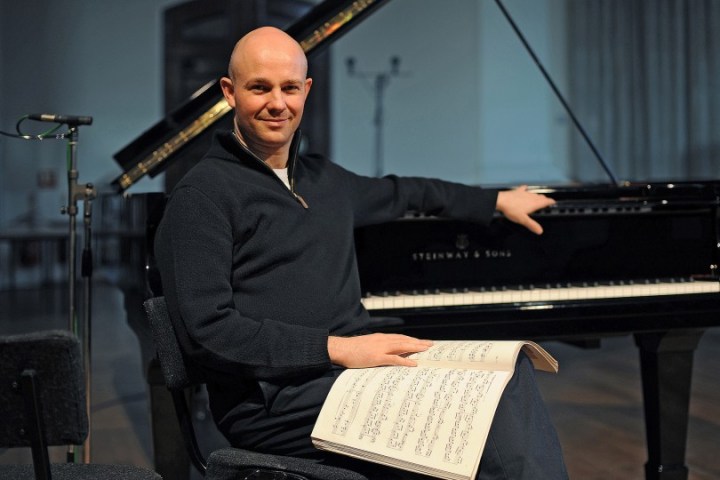
img_6899
(photo: Frances Marshall)

Who or what inspired you to take up the piano and pursue a career in music? 

My family! I am the youngest of four children and when I came along my three elder siblings were all at it! I was dying to get started and at the age of three my eldest sister Mary (aged 13) started to teach me. At age 6 I won a scholarship into the Royal Irish Academy of Music in Dublin to continue my studies with John O’Conor, but Mary also continued to coach me at home. And I haven’t stopped playing since! And I’m nearly 40!

Who or what have been the most important influences on your musical life and career? 

John O’Conor was the most wonderful and inspiring teacher and mentor.  He taught me from age 6 to 22 – I did my bachelor degree in music performance under his tutelage.  He has also been extremely generous to me by promoting me to his many international contacts and has helped my career enormously.

Christoph Eschenbach also helped me greatly when I was in my early 20s.  I was selected by Menahem Pressler to play for him at a  public masterclass in Ravinia and Eschenbach was so impressed he invited me to make my American début with the Houston Symphony – and I subsequently returned to play with the Chicago Symphony under his direction  – that was an amazing experience!

What have been the greatest challenges of your career so far? 

Maintaining a high standard of performance throughout a gruelling schedule of concerts with varying repertoire.  I am very lucky to be very busy and I get through a huge amount of difficult repertoire and am constantly learning new chamber music scores (currently the Ligeti Horn Trio!) – this is all wonderful and I am very grateful to be so busy but it comes with great challenges, simply being on top of the music at all times! And the other great challenge for me is dealing with varying acoustics.  It makes it so much harder to perform when you are in a dry theatre! Sadly one cannot play at the Wigmore Hall all of the time!

Which performance/recordings are you most proud of?  

My solo Schumann recordings for Claves Records.  They were the first really serious recordings I made and the whole process was so rewarding and fascinating.  So different to performing in recital. Hugely demanding in concentration but very satisfying when the final product sounds OK!

Which particular works do you think you play best?  

In solo repertoire, I think I am happiest with Mozart, Beethoven, Schubert, Brahms and Chopin  – at least, at the moment! I have just recorded a new Chopin CD and I feel really comfortable in that repertoire. But I love playing Bach as well!

Paricular works that I feel I play best (reading the question again!) – Schubert Drei Klavierstücke D. 946, Brahms Two Rhapsodies Op. 79, Alban Berg Piano Sonata, Chopin Ballade No. 4.  Just off the top of my head! Other people may think differently! I often think we are perhaps not the best judges of our own playing??!

How do you make your repertoire choices from season to season?

That is another great challenge.  It’s so hard to know what you will want to play 18 months in the future, or how you will get on with certain pieces.  It takes great courage (or foolhardiness?) to programme a very challenging work (for example the Chopin Preludes Op. 28) in a major venue (for example the Wigmore Hall)  when you haven’t ever played them before!

Do you have a favourite concert venue to perform in and why?

I’ve already mentioned it twice – the Wigmore Hall in London has got the most fabulous acoustic, and the feeling on stage is so rewarding and positive. I always feel I play about 10% better there than anywhere else! There’s just a feel-good factor, something about the sound that comes back to you on stage.  It’s the perfect size auditorium – for solo recitals at least, I’ve done very little chamber music there and no song! Hopefully in the future ! Another venue I’m very fond of – and proud of – is St. Mary’s Church in New Ross in Ireland, where we hold the annual New Ross Piano Festival in late September.  It has a most satisfactory acoustic and has been compared to the finest chamber halls in Europe.

Favourite pieces to perform? Listen to?

Perform: see above.

Listen to: Brahms string sextets, Mozart Sinfonia Concertante, Tchaikovsky Eugene Onegin, Verdi opera, Mozart opera, Mendelssohn octet…

Who are your favourite musicians?

Gosh, where to start! There are too many.  I work with such a huge variety of wonderful musicians. For example, this summer I worked with a  wonderful Russian violinist Nikika Borisoglebsky, I’d never heard of him and he was amazing! I also worked with the Goldner String Quartet in Australia, who were wonderful, what a lovely experience! And that’s just picking two at random. At the moment I have a few projects with István Várdai who is a fabulous Hungarian cellist.  Over the past decade I have worked a lot with the wonderful French cellist Marc Coppey.  When it comes to starry pianists (if that’s what the question meant?!) – the usual suspects apply – Argerich / Perahia / Lupu / Uchida but possibly most of all Grigory Sokolov, who is extraordinary.

What is your most memorable concert experience?

A recital by Grigory Sokolov in Switzerland (Cully Classique festival 2013 – it took place in a small intimate church with no more than 300 people) in which he played a most stunning rendition of the Hammerklavier Sonata.

What do you consider to be the most important ideas and concepts to impart to aspiring musicians?

Listen to yourself, listen to others, listen to other genres of music, be open to new ideas, play a lot of chamber music, go to a lot of concerts, don’t do too many masterclasses, don’t study until you’re 30, don’t do too many competitions, get out there and network and respond to emails in a business-like fashion!

Where would you like to be in 10 years’ time?

Doing the same routine only better, still having lots of concert engagements, still travelling, still having an appetite for it all, meeting new people, playing new music, constantly striving to serve the music better and fulfil my potential. Keep communicating the central message of the music to our audience, whom we live to serve! Without audiences we are nothing!

What is your idea of perfect happiness?

Jumping off a boat into the green sea off a Greek island for a swim before drinks and dinner with a treasured friend (or two).

What is your most treasured possession?

My iphone.

What do you enjoy doing most?

Travelling.

What is your present state of mind?

Optimistic.


One of Ireland’s most successful musicians, Dubliner Finghin Collins was born in 1977 and studied piano at the Royal Irish Academy of Music with John O’Conor and at the Geneva Conservatoire with Dominique Merlet. Winner of the RTÉ Musician of the Future Competition in 1994 and the Classical Category at the National Entertainment Awards in Ireland in1998, he went on to achieve major international success by taking first prize at the Clara Haskil International Piano Competition in Switzerland in 1999. Since then he has developed a flourishing international career that takes him all over Europe, the United States and the Far East.

Finghin Collins’ website

2751c7d40-04b5-aae9-56825b8f0700ef0fWho or what inspired you to take up composing, and pursue a career in music? 
It was a slow process, with music growing into such a presence in my life that midway through college I realized it had taken over, so I switched from pre-med and never looked back.

Who or what were the most significant influences on your musical life and career as a composer? 

That has changed many times: As a teenager I tried to play piano like Erroll Garner, then more like Keith Jarrett. In college I fell in love with the music of Edgar Varese and Stefan Wolpe, but listened about as much to Bonnie Raitt and the Band. In more recent years my work in opera led me to Verdi and my work in ballet to Prokofiev. Next week I might mention different names, but just now these are the influences that spring to mind.

What have been the greatest challenges/frustrations of your career so far?  

My challenges are the same as those of most composers: almost all orchestras and opera houses pay lip service to the importance of new music but in practice consider it a risk to their box office. So our work as composers is marginalized, perhaps set apart as a prestige item; classical music as a whole is correspondingly impoverished. Wonderful music is being created and performed all over the world, but you wouldn’t know it from Lincoln Center or similar places.

What are the special challenges/pleasures of working on a commissioned piece? 

I find it most inspiring to be given very specific guidelines, such as “an oboe quartet of about 15 minutes, to be paired with the Mozart for the same ensemble.” Or “5 minutes of fight music that becomes a love duet, for changing numbers of dancers.” These are both challenges and pleasures.

What are the special challenges/pleasures of working with particular musicians, singers, ensembles and orchestras? 

For most of us this is the usual situation, and it’s a healthy one, because as a composer I don’t write for the audience – I write for the performer, who in turn shares the music with the audience. Performers can do that best if I can write effectively for them – show off what they do best, while giving them something a little unlike the rest of what they perform. I love tailoring the music in that way; it also offsets the essentially solitary nature of composing.

Of which works are you most proud?

My four operas, because I think the way I combine the various elements that make up opera (text setting, stage timing, vocal deployment, use of the orchestra) is not like anyone else’s, and works better than most. Each of my operas is full of the most radical music I could think of, and at the same time each one reaches out passionately to the largest possible audience of non-specialist listeners. I try to combine those goals with anything I write, but opera feels particularly congenial.

How would you characterise your compositional language? 

I’m a “notes and rhythms” kind of composer. There is lots of life left in traditional musical devices, in fact more life than there is in straining for extremes or following musical fashions of any kind. I enjoy inventing unusual melodic lines, finding surprising moments for traditional chords, and combining fairly simple rhythms in unexpected ways.

How do you work? 

It depends on the piece. If I have a text, that helps me to organize the music. A dance or film scenario gives me another kind of structure. A portrait done from life is a combination of meditation and improvisation. A tribute usually starts with some sort of core of pre-existing music around which I spin other notes and rhythms.

Who are your favourite musicians/composers? 

I return over and over to the music of a few composers of roughly my own generation. In no particular order: Judith Weir, Stephen Hartke, Lee Hyla, Arthur Levering, Poul Ruders, George Benjamin, Chen Yi, Scott Lindroth. I’ve also played and conducted music by most of these composers, and highly recommend any of them to listeners looking for a fresh musical experience.

What is your most memorable concert experience? 

Here are a few: Messiaen’s Turangalila Symphony when I first heard it live; Sibelius 6th symphony live; The Band in concert; the opportunity to conduct Ramifications by Ligeti and Corpus Cum Figuris by Poul Ruders.

What do you consider to be the most important ideas and concepts to impart to aspiring musicians? 

Composers should write what they actually want to hear; performers should play and sing what passionately inspires them; audiences should demand excitement, not settle for what the PR agents are peddling that month.

Where would you like to be in 10 years’ time? 

Writing more music, probably in New York.

What is your idea of perfect happiness?  

Coffee and composing in the morning, friends and a good meal in the evening.

What is your most treasured possession?  

Nothing physical – I treasure my family and friends.

What do you enjoy doing most? 

Besides composing? Playing tennis, I guess, if I could only find the time to do it more.

What is your present state of mind? 

Opening out to new possibilities.


Scott Wheeler’s new album ‘Portraits & Tributes’ (works for piano 1977-2014), performed by Donald Berman, is available now. Further information here

scottwheeler.org

charlesowen-steinway-810x540

Who or what inspired you to take up piano, and pursue a career in music?

I gravitated quite instinctively towards the little cottage upright piano which we had at home when I was a child. Neither of my parents are musicians – vicar and teacher respectively – but both love music and encouraged my earliest fumbling attempts at the keyboard!

There was never an actual moment when I decided to pursue a career in music. It all happened very organically from the earliest lessons with a Hampshire County Award teacher  followed by a place at the inspirational Yehudi Menuhin School and then onto the Royal College of Music. I’ve never had any real doubts or regrets about following the musical path

Who or what have been the most important influences on your musical life and career?

Two exceptional pianists have guided my playing and approach to the piano and music making in general:

The wonderful Russian pedagogue Irina Zaritskaya taught me at the RCM in the early 1990s. She revealed and shared her special secrets into achieving pianistic fluency, a huge variety of touches and rich musical imagery. Her warm personality coupled with a generosity of spirit are qualities I remember and treasure.

I later had the privilege of working closely with Imogen Cooper on a wide range of repertoire. Imogen’s focus, intellect and sheer intensity of listening are truly exceptional. She demanded a greater sense of ‘digging deep’ into the scores, really focusing on long lines, balance of sound, projection, colour and style. All of the qualities that make her own playing so memorable and remarkable’

What have been the greatest challenges of your career so far?

For me these are threefold:

Studying, developing and maintaining a huge range of music is a challenge for the vast majority of pianists. Tackling certain epic works such as Bach’s ‘Goldberg Variations’ or Brahms’ 2nd Piano Concerto stand out in my mind as particularly demanding but immensely rewarding experiences.

The ability to cope with long journeys, strange environments and a wide range of different instruments, whilst always aiming to deliver the best performances is a perennial challenge!

Keeping a sense of long term perspective in one’s aims as a musician. Managing leaner times, dealing with difficult aspects of the music profession, remaining motivated and hopeful whilst keeping the flickering flame of that essential love of music alive and well’

Which performance/recordings are you most proud of? 

It is difficult to be truly proud of any particular performance or recording as so many aspects can always be improved upon.

Having said that, certain concerts where all the elements seem to combine do remain in my memory. Recent positive concert experiences include a Wigmore Hall performance of the Brahms Piano Quintet with the Takács Quartet, the Beethoven concertos at the magical St Endellion Summer Festival in Cornwall and a concert from last summer’s Ryedale Festival where I played the Goldberg Variations to a rapt, packed audience in one of Yorkshire’s grandest stately homes.

In terms of recordings, my have fond memories of a beautiful September weekend in Barnes when I recorded a solo Poulenc disc at St Paul’s School with super views across the Thames. I had just met my partner and was ‘walking on air’ at the time of the sessions. All that was back in 2003!

Which particular works do you think you play best?

Another impossibly embarrassing question! If forced to answer, I would mention the Debussy Preludes, Bach Partitas, some of the big Schubert sonatas and of course my beloved Janáček.

How do you make your repertoire choices from season to season?

I am not one of those musicians who has a clear plan for their whole playing career in terms of repertoire. Perhaps I should try to be!

I gravitate towards certain composers and their works rather as you may pick up a book from your packed library shelves. There is a little bit of divination going on here.

My aim is to constantly learn new works, to react to the suggestions of others and to regularly revisit pieces from earlier in life. Returning to these with new experiences and musical knowledge is one of the best aspects of being a full time musician. I’m becoming increasingly interested in contemporary music and feel excited to have recently worked with/recorded music by Jonathan Dove, James Macmillan and Nico Muhly

Do you have a favourite concert venue to perform in and why?

The Wigmore Hall for its sublime acoustics, stunning pianos and sheer history

Favourite pieces to perform? Listen to?

Concerto wise, I love to perform any of the five Beethoven, also the Schumann and Bartok’s 3rd. Plenty of two piano works are a thrill to play, particularly Ravel’s La Valse and the Rachmaninoff Suites. As a listener my list is utterly endless –  Bach Brandenburg concertos, Janacek operas, Mahler, Sibelius symphonies, Schubert & Schumann lieder, Joni Mitchell, David Bowie, Rufus Wainwright…

Who are your favourite musicians?

Alfred Brendel, Radu Lupu, Murray Perahia, Martha Argerich, Andras Schiff, Brigitte Fassbaender, Gerald Finley. Of those no longer with us – Carlos Kleiber, Claudio Abbado, Jacqueline du Pré to name just a handful

What is your most memorable concert experience?

Impossible to select just one! Perhaps the most unexpected was a performance in the South of France at the En Blanc et Noir Festival, Lagrasse where pianists perform in a semi covered, stone market place. I was giving my first ever concert of Liszt’s Anneés de Pelerinage, Switzerland and whilst launching into the octave deluge of ‘Orage’, a genuine summer storm raged overhead complete with crashing thunder and flashes of lightning. Perfect timing, coincidence and choreography!’

What do you consider to be the most important ideas and concepts to impart to aspiring musicians?

Commitment, passion, patience and a sense of giving your all to the works of the truly wonderful composers who enrich our lives.

On a practical front, each musician needs to acquire the essential knowledge of musical building blocks – harmonic movement, structure/architecture, a feeling for melodic shaping, precise rhythmic grasp – whilst constantly developing their abilities to listen closely to what is actually coming out of the instrument!

What is your idea of perfect happiness?

Having clear headspace and a mind free of extraneous worries

What is your most treasured possession?

My 2009 Steinway Model B Piano

Charles Owen is co-Artistic Director of the London Piano Festival


Charles Owen is recognised as one of the finest British pianists of his generation with an extensive series of performances and recordings to his name.

Charles has appeared at London’s Barbican and Queen Elizabeth Hall and regularly gives recitals at the Wigmore Hall and Kings Place. Internationally he has performed at the Lincoln Center, Weill/Carnegie Hall, the Brahms Saal in Vienna’s Musikverein, the Paris Musée d’Orsay, and the Moscow Conservatoire.

His chamber music partners include Adrian Brendel, Nicholas Daniel, Augustin Hadelich, Chloë Hanslip, Julian Rachlin and Mark Padmore as well as the Carducci, Elias, Takács and Vertavo Quartets. In addition he has an established piano duo partnership with Katya Apekisheva with whom he has recorded the duo versions of Stravinsky’s Rite of Spring and Petrushka

Charles studied in London at the Yehudi Menuhin School, the Royal College of Music with Irina Zaritskaya and later furthered his studies with Imogen Cooper and Valeria Szervánszky. He has won numerous awards, including the Silver Medal at the Scottish International Piano Competition (1995) and the 1997 Parkhouse Award with the violinist Katharine Gowers. A regular guest at many leading festivals such as Aldeburgh, Bath, Cheltenham, Leicester and West Cork , Charles has also performed concertos with the Philharmonia, Royal Scottish National, London Philharmonic and the Moscow State Academic Symphony orchestras.

Charles’ solo recordings include discs of piano music by Janácek, Poulenc and the complete Nocturnes and Barcarolles by Fauré. Together with Natalie Clein, he has recorded cello and piano sonatas by Brahms, Schubert Rachmaninov and Chopin for EMI.

Charles Owen is a Professor of piano at the Guildhall School of Music and Drama in London.

www.charlesowen.net


(photo: John Batten)

Who or what inspired you to take up the piano, and pursue a career in music?

I come from a musical home, both of my parents are piano teachers. Music was everywhere around me when I was growing up.

You are also a composer and a visual artist. Can you explain the connection between your music and visual art?  

I’m a pianist who composes and paints. There are many parallels between visual art and music – tonalities, colours, textures, form/structure, proportions. One art form feeds the other. I’ve been drawing since I can remember myself. In recent years I’ve been creating a lot of digital art on my iPad. I also use the iPad to read music.

Who or what have been the most important influences on your musical life and career?

I was fortunate to have wonderful teachers. First, when I moved to Israel I studied with Arie Vardi; then with Seymour Lipkin and Claude Frank at the Curtis Institute of Music. They formed my musical understanding. Later on, András Schiff was very instrumental to my development. But perhaps the biggest influences are the personalities of the composers whose music I’m playing at the moment.

What have been the greatest challenges of your career so far?

Finding mental space in the midst of traveling and playing a lot of different repertoire at the same time.

Which performance/recordings are you most proud of?

I don’t think too much about past performances.

Which particular works do you think you play best?

It’s difficult to be objective about what I play best. I love many things and I have a big and eclectic repertoire, ranging from Couperin to pieces that I commission. I would say that right now I feel very connected to the music of Haydn and Schumann.

How do you make your repertoire choices from season to season?

The process of putting together a recital programme is fascinating and at the same time can be quite daunting. The possibilities are huge. Firstly, I play music that I love and feel connected to. For example, at the moment I’m quite obsessed with Haydn. I’m working on 24 Haydn sonatas for the Lammermuir Festival in September. It is an enormous amount of work. This informed the last season, in which I programmed a different Haydn sonata in each of my recitals. I try to have a thread in my programs. It can be a thematic thread or motivic one.

Do you have a favourite concert venue to perform in and why?

I’ve played in many beautiful halls in Europe and in the USA. It is hard to choose one, but if I had to it would probably be Wigmore Hall. It is just such a gorgeous and intimate place to make music.

Favourite pieces to perform? Listen to?

To perform: anything by Haydn, Beethoven Opus 101, Stravinsky’s Petrushka, Rachmaninov and Prokofiev concertos.

To listen to: Sibelius symphonies, Mozart operas, Bach cantatas.

Who are your favourite musicians?

Bartok, Rachmaninov, Edwin Fischer, Schnabel, Szigeti, Furtwangler, Harnoncourt, Carlos Kleiber, Radu Lupu, Murray Perahia.

What is your most memorable concert experience?

András Schiff playing Goldberg and Diabelli Variations, and Opus 111 for an encore.

What do you consider to be the most important ideas and concepts to impart to aspiring musicians?

Be patient and know your priorities in whatever you do.

Where would you like to be in 10 yearstime?

Wherever life takes me.

What is your idea of perfect happiness?

Being outside, either in the woods or the mountains.

What is your most treasured possession?

The present moment.

What do you enjoy doing most?

Making music.

What is your present state of mind?

Curious.


Roman Rabinovich - Papa HaydnFor further information about Roman, his art and performances please visit his website: http://www.romanrabinovich.net


