Described by superstar pianist Lang Lang as ‘A genius…The new Bach’ during his performance on Channel 4’s popular and inspiring programme The Piano, Michael Howell is a young self-taught composer, singer and pianist from a working class Caribbean-Jamaican background in west London.
Praised for his other-worldly counter-tenor voice and his ability to touch audiences with his lyrical Latin-esque operatic language and Baroque-inspired piano accompaniment, Michael’s performance in London’s Victoria Station had the audience spellbound and secured him a place in the programme’s final, where he performed his own composition, ‘Great Is The Grief’.
‘Are you telling me he’s an amateur musician? This is incredible, this is not amateur….This is a pure talent. This is really something that’s very rare. It sounds like a new Bach is born from the middle of a train station in London.’ – Lang Lang
‘It’s gorgeous. That’s gorgeous!’ – Mika, singer-songwriter and co-judge of The Piano
‘Phenomenal’, ‘Sensational!’, ‘just incredible’ – audience/viewer comments via TwitterX
Find out more about Michael in this Meet the Artist interview:
Who or what inspired you to pursue a career in music and who or what have been the most important influences on your musical life and career?
There was no musical influence until I saw and wanted a little toy piano at the age of 5, which my parents bought for me. Having shown interest in pressing keys that make sound, my parents proceeded to find me a teacher. In fact one of my several childhood teachers still follows my career to this day. She introduced me to the wonders of music through reading me all sorts of stories, literature and relating it to the music that we would listen to. I especially remember being inspired by the legendary recording of 12-year-old Evgeny Kissin playing both Chopin Concerti.
What have been the greatest challenges of your career so far?
It has definitely been a learning curve since winning the Leeds Piano Competition. You have to be very disciplined with your time, carefully estimate and learn about what you can or can’t manage, preferably not the hard way! Planning programmes has been especially challenging as you have to take into account many factors, e.g. my development, audiences, and of course what I want to say artistically.
Which performances/recordings are you most proud of?
I am pretty happy with the Transcendental Etudes for the time being. I really enjoyed the process of creating something in a church in Hampstead for three days straight. It was quite an intimate experience as opposed to being on stage. That music has such a vast variety of ideas, so I felt fortunate to be able to explore it and try to convey this variety.
Which particular works/composers do you think you perform best?
At this point, I don’t think there are any I could say I perform best. I’m constantly learning about the styles of each composer and sometimes I relate with one more than the other at certain times. I can only say that I could never stop playing Beethoven or Chopin.
What do you do off stage that provides inspiration on stage?
Everything in life contributes, from eating, visiting places, to spending time with interesting people. A more direct way of being inspired for me is listening to others.
Do you have a favourite concert venue to perform in and why?
Besides Wigmore Hall, I very much enjoy playing in the Philharmonic Hall of my home town in Almaty, Kazakhstan. I enjoy sharing with the audience of such different culture what I’ve learnt over here.
What do you feel needs to be done to grow classical music’saudiences?
Making classical music accessible to everyone so everybody has the opportunity to discover potential affinity for it. Of course, the earlier the better.
What is your most memorable concert experience?
Definitely Rachmaninov Second Piano Concerto at the Proms [in 2023] with 2 days notice!
As a musician, what is your definition of success?
Success suggests an end goal for a certain task. As there is no end to perfection in music, I’d say making sure of consistent growth however small, is a success.
What advice would you give to young/aspiring musicians?
Discover yourself, your strengths and weaknesses. Play to your strengths while working on your weaknesses. I was fortunate to have a teacher who assisted me with this.
Pianist Alim Beisembayev hails from Kazakhstan and has already made a name for himself, having won the world-renowned Leeds Piano Competition in 2021 aged just 23. He appears at this year’s Cheltenham Music Festival on Thursday 11 July playing music by Schubert, Chopin and Clara Schumann. More information
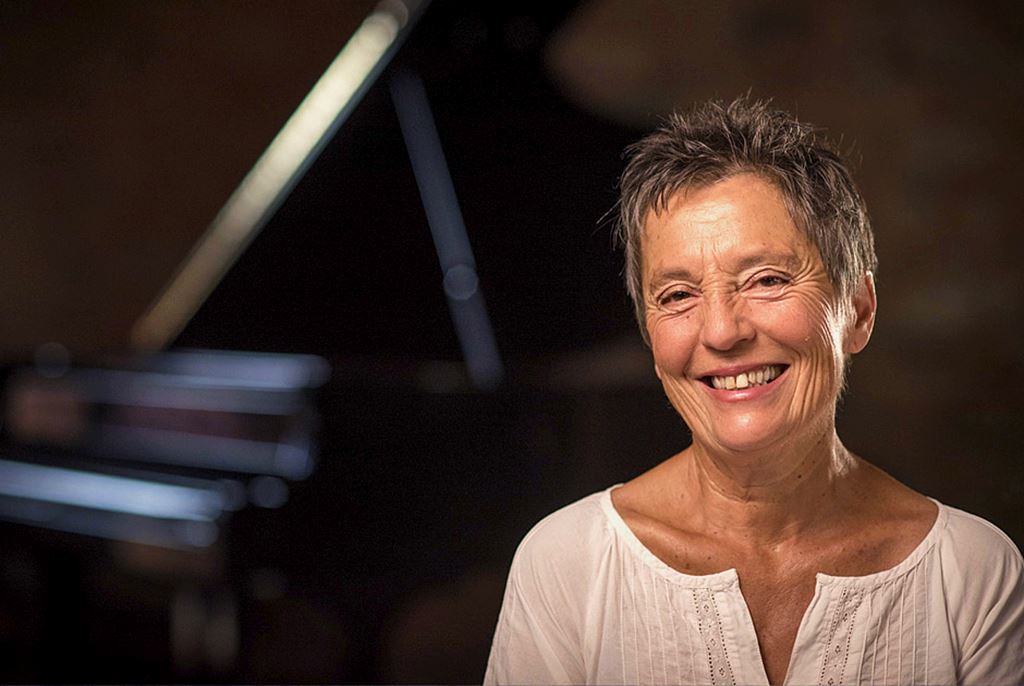
A noticeable stir arose in piano circles around Bordeaux recently when Maria Joao Pires scheduled a rare recital in the city’s Auditorium concert hall. One of the greatest living pianists of our time, she has become increasingly absent from the concert stage in the past few years. Her commitment to interests outside of the music world has taken over much of her time and interest.
In Bordeaux she played a modest programme of Mozart sonatas and two Debussy pieces. For 90 minutes without intermission, she displayed her famous keyboard touch, her blinding virtuosity and her respect for the score. Gracious bows between numbers showed her appreciation for the audience which, she said, came for the music, not the show.
As she said in our interview (below), “It’s not about me, you know.” She believes we have “more values to protect – nature and art, life itself “.
We met backstage at the Auditorium on a sunny June afternoon. She was relaxed in conversation, with an easy smile and a refreshing frankness about the piano world and about the effects of ageing.
A highlight of her teaching avocation was her U.S. production of her Partitura Workshop at Northwestern University in Chicago and at the Gilmore Festival in Kalamazoo, Michigan, last year.
Gilmore director Pierre van der Westhuizen recalled for me the impact she made in Kalamazoo. “Ms Pires took us back to the way music should be instructed,” he said. “These pianists almost became as apprentices. (The six participants) spent the whole day together, learning together, socializing together. Ms Pires asked as many questions of them as they of her.”
Ms. Pires also recalled the warmth and enthusiasm she encountered in Chicago and Kalamazoo.
In our interview, she spoke about life at 80. Her playing is hampered, she said, by a case of dystonia but she is not ready to retire. In the Autumn she heads for Asia, playing in Japan, Taiwan and South Korea. She will skip China because she has been blacklisted there for playing at a conference that the Dalai Lama attended.
She explained her restricted repertoire by showing me her small hands. She placed her palm against my “piano hands”, which easily engulfed hers. She avoids composers such as the big Russians, Rachmaninov and Prokofiev, whose demands on the pianist stretch well beyond the reach of an octave.
In our wide-ranging discussion, she said she still needs to practice, sometimes for one hour a day, sometimes for five hours. “What shrinks is not only your skills, it’s your repertoire. That’s life,” she said.
Here is an edited transcript of our interview.
MJ: At your recent recital in Bordeaux, the audience went wild. You got a standing ovation over your very fine Mozart and Debussy programme.
MJP: It’s not about me, you know. The real ovation should be about the dialogue with the music. We don’t need the ovation because we have more values to protect — nature and art, life itself.
You have just turned 80. Your fans have been expecting you to retire for some time. What does your agenda say?
No, I am not ready to retire. I have a couple of concerts coming soon, then I need a vacation, then in the fall I go to the Far East, to Taiwan, Korea, Japan.
What? Not China, site of the world’s biggest piano craze?
I have played a lot in Japan over my career but I don’t play in China any more because they won’t grant me a visa.
Did they give you a reason?
Yes, at a conference a few years ago l played for the Dalai Lama. To the Chinese leaders, that’s a no-no! But I still have many private students in China working with me online.
In Asia there are large numbers of serious piano students – too many for their local needs. Some of them will become great artists and they will come to the West, won’t they?
Certainly.
Are you concerned about the influx awaiting us?
I’m very concerned . Mainly about the number of people who don’t get the transmission of knowledge from a school or a culture to them, the players.
Your Gilmore workshop in Kalamazoo last year had six students, five of whom were Asians. Is that a sign of the future?
It is. No more comment.
Isn’t piano study a big problem in the USA, with all the electronic games and distractions from music lessons?
The problem is also in Europe. We have lost a lot of quality, in terms of knowledge behind the music. The schools do not make the transmission from the composers to us. We owe that to the composers. And it’s very sad because now we focus on goals and competition, and competition does not go well with art.
You had a life in the competition world, did you not?
Not really. At about age 28 I was obliged to compete because I was chosen by the (Salazar) dictatorship in Portugal and I had to go to the Beethoven Competition in Brussels.
You won that first prize didn’t you?
Yes but I am absolutely not proud at all of that.
Do you have an opinion about competitions?
I have an opinion, a very strong opinion. Competition and art do not go together. Unfortunately young people believe that if they don’t participate in competitions, they cannot earn a living. That’s an illusion, I promise you, it’s a total illusion. A pianist with skills and knowledge can do many other things.
Don’t young pianists from wealthy backgrounds have an easier way forward?
I have nothing against money or rich people. But I have something against how much can this can disturb our view. I see more and more young people being distracted by that idea. Money is replacing everything. It is replacing the clear view over everything. We need more empathy with other people. If we don’t have that empathy we are blind, in terms of consciousness. This is the worst thing that could happen.
Are you still playing regularly?
Yes, but I have a big problem with my right hand dystonia [involuntary muscle contractions in the hands]. This is taking too much effort. I also have small hands, so I always have problems. Age just makes it worse. [She presses her open palm against my “piano hands”. I easily envelope hers in mine.]
Ashkenazy also has tiny hands and yet he manages to jump octaves, even tenths.
Tiny is one thing. This is another. I have a child’s hands and that’s different from “tiny” hands.
Your repertoire seems tightly controlled, with accent on Bach, Mozart, Chopin, Schubert, Debussy.
Even among the French impressionists, I play with great difficulty. It’s not easy. And neither can I do the Russians, Rachmanniov, Prokofiev. But I like to teach pieces that I don’t play.
You have recorded Schumann and Brahms.
Yes, but I play them but in very small amounts.
You have been quoted as blaming Liszt for inventing the modern solo piano format.
No, Liszt was a great composer. How can I blame him? If I cannot play some pieces, it’s my fault, not his.
Over the past twenty years, workshops and teaching are taking you more and more away from the concert stage.
Yes, I have always been interested in the transmission of skills and knowledge. As an adult, I realized that the transmission is cut back. So the transmission of art is not happening any more. I wish we could be stronger in our complaining about what’s going on. We have no clear view over future generations. How to teach them, how to deal with problems.
How much energy do you have left? How much more stamina is there in you, living in hotels, taking planes and trains throughout Europe and Asia? Doesn’t that wear you down?
Yes, it does, and I was sick really badly for six months and this was a very good lesson for me. My body and spirit were saying “Come on, take care of yourself.” I still have a bit of energy but I rest when I need to rest.
You have said you suffer from stage fright.
I have a lot of stage fright. We have this responsibility, and that can give you a lot of pressure. So you don’t want to go on stage. I prefer if I wake up on a day that I have nothing on stage, I am happy. And if I don’t have to go into an airplane, I am happy. It is not a pleasant life. But it is a life that brings a lot of experience. A vision of the world, and of the people — how they react to things.
Are you still uncomfortable playing in public?
Yes, but I am comfortable with people who collaborate with me, people who are there to listen to the music. I feel they are friends.
Do you still need to practice?
Yes, I need to practice more and more. Sometimes an hour a day, sometimes five, sometimes nothing. What shrinks is not only your skills, it’s your repertoire. That’s life.
If you could choose, how do you want to be remembered after your time runs out?
No problem. I have no wish at all. All right, I have one wish. When I die, I don’t want to die stupid or mean.
Michael Johnson and Frances Wilson recently published a collection of interviews with concert pianists, under the title “Lifting the Lid”. The book is available through Amazon.
MICHAEL JOHNSONis a music critic and writer with a particular interest in piano. He has worked as a reporter and editor in New York, Moscow, Paris and London over his journalism career. He covered European technology for Business Week for five years, and served nine years as chief editor of International Management magazine and was chief editor of the French technology weekly 01 Informatique. He also spent four years as Moscow correspondent of The Associated Press. He is a regular contributor to International Piano magazine, and is the author of five books.Michael Johnson is based in Bordeaux, France. Besides English and French he is also fluent in Russian.
Korean-born composer Unsuk Chin is one of the featured artists at this year’s Aldeburgh Festival, which is celebrating its 75th anniversary. Find out more about Unsuk Chin’s influences, working methods, and thoughts about classical music in general in this insightful, thoughtful interview:
Who or what are the most significant influences on your musical life and career as a composer?
The most formative influences are probably those from childhood when the senses react to everything around them in a more ‘holistic’, immediate approach. Then, there was the time of my studies: immersing myself in European avant-garde music in the early 80s was vital, as I had before that known ‘Western’ musical history only until Stravinsky’s Violin Concerto. Conversely, the experience of studying with Ligeti, who denounced the avant-garde, requested utterly original music of excellent craftsmanship from himself and his students, asking me to throw away my prize-winning works, was a pivotal moment. Indeed, moments of crisis and subsequent attempts to find a way out are essential moments and threshold experiences.
The excellent Danish poet Inger Christensen wrote that the major influences on her work were creative stumbling blocks, irritations that, in the long term, made her question and develop her approach. For me, such a moment was when I worked, in the late 80s, and after a writer’s block of almost three years, for a couple of years at a studio for electroacoustic music. Through this, I could re-evaluate the essential elements of my compositional approach and expand the basis of my music. Another significant experience was, in the 90s, longer stays in Bali, where I studied Gamelan music – the acquaintance of a different tradition of great refinement and quality deeply rooted in the society was a discovery.
What have been the greatest challenges of your career so far?
That was to realise my childhood dream of becoming a professional musician and fighting my way out of difficult circumstances – in the 1960s and 1970s, South Korea was a poor post-war country on the periphery, and it was not easy to start as a female Asian composer in Germany.
What are the special challenges and pleasures of working on a commissioned piece?
Without a commission or deadline, I would never compose a work. One needs much pressure from the external world to get through this crazy process. I don’t have any works in my drawer. Writing a new piece is a very demanding process and can take years. I wouldn’t go for it without external pressure and the adrenaline rush. At the same time, I would never accept a commission with conditions that don’t fit into the musical thoughts and goals I am working with during a specific period.
What are the special challenges and pleasures of working with particular musicians, singers, ensembles or orchestras?
I always choose very carefully which commissions I accept. One has to prioritise. It almost needs to be a compulsion: if I don’t have an idea what to write for a certain instrument or concept, I won’t do it. For example, I wrote my First Violin Concerto in 2001 and was convinced I would never write another one. But then, when there was a possibility to write for Leonidas Kavakos, I reconsidered, and the work, 20 years later, is very different from the first one.
Of which works are you most proud?
I move on and try to do something new with every piece. I have removed several earlier works from my work list as I am not content with them. As for the remaining ones, I accept them, but there are also pieces to which I feel more emotional distance than others – which is unsurprising when one revisits works from several decades ago. But I can also name a counterexample – my Piano Concerto, which is from 1995 but which wasn’t much performed before the Deutsche Grammophon recording two decades later. This is a work into which I put all the energy and frenzy of my then 34-year-old self – I wouldn’t compose in this manner any more, but I feel emotionally close to it.
How would you characterise your compositional language?
I prefer not to, as it may make it more difficult for the listener to approach the work without prejudices. Besides, when I compose a new work, the most important thing for me is its unique shape. Of course, as a composer, you have a particular craft; you prefer certain materials and draw on compositional techniques acquired through the years. You cannot and perhaps shouldn’t avoid that. Nonetheless, it is important for me to attempt each work to be singular in character. Pablo Picasso once expressed it this way: style holds the painter captive in the same point of view, in a technique, in a formula, but he always wants to make something that is new and unknown to himself.
How do you work?
With pen and paper. Composing is, above all, waiting — days, sometimes weeks, before the empty staves. And then, suddenly, a door opens in the head. With age and experience, one develops trust that this door opens at some point if one tries hard enough. The music is in my head. I sometimes jot down ideas, plan harmonies, etc., but for me personally, it is an abstract process without piano or other devices. It can take several years for thoughts and concepts to mature. And when the pressure is great enough, it’s like giving birth: the thoughts have to come out, then you write.
As a musician, what is your definition of success?
That I am fortunate to be performed by several excellent musicians.
What advice would you give to young or aspiring composers?
To think carefully if one really wants to have a life as a professional composer. It is usually a back-breaking and lonely job, and the financial prospects are often non-existent. If one really wants to do it, one should, but one should be aware what price it takes.
What do you feel needs to be done to grow classical music’s audiences?
This is not easy since, nowadays, there is a tendency to think more and more in purely economic and functional categories, on top of which you have to add the quickness of modern mass media. Besides, there exists a mistaken notion that classical music would be something ‘elitist,’ which is why the notion that society should support artforms that only a small minority will engage with has lost traction. All of this does not mean that things were better during other times. However, it is concerning and a scandal that music is often no longer even considered a minor subject in schools due to very obscure claims of competitiveness and economic success – claims often made, for example, by numerous politicians. It is wrong to withhold from children the experience of art, which is one of the things that distinguishes human beings from AI, not to mention that art often provides indispensable solace and a utopia. Anyway, there are also ‘late bloomers’, audiences that can be won over with creative ideas and new approaches even if they won’t have had previous exposure to classical music; after all, the experience of great music can be a deeply emotional one. The methods and approaches used to try to develop classical music’s audiences depend on the place and context. But the main thing, I believe, is trust. Trust in quality, the hard work of serious performers and composers, the slow progress of building audiences and overcoming obstacles, an almost aggressive defence of artists’ quality and hard work, the audience’s right to hear this music, and the need for financial support of the whole musical ecosystem.
What is the one thing in the music industry we’re not talking about but you think we should be?
I doubt that such a thing exists as ‘the music industry’ – fortunately, we live in a diverse world. At the same time, of course, certain tendencies exist, but these are intertwined with societal developments. Our times are obsessed with the speed of information, packaging, and the surface, which can be problematic for developing sustainable quality standards. Also, the future of classical music institutions in many places is endangered. That leads often to market-think and occasionally to a winner-takes-it-all mentality. At the same time, fortunately, there are many niches and different initiatives. It was much more polarised in the 50 years after the Second World War: there was the established conservative music world, and then there were the rebellious circles of both the avant-garde and the early-music revival, who not infrequently fractured into warring factions. But every time has its challenges.
What do you enjoy doing most?
Playing the piano. If I need a break during an intense compositional process, I might play fugues by Bach for hours. This helps me clear my mind and persevere.
On Wednesday 12th June Tenebrae give the first UK performance of Unsuk Chin’s Nulla est finis – a prelude to ‘Spem in alium’ in Ely Cathedral as part of this year’s Aldburgh Festival. Find out more about Unsuk Chin’s music at Aldeburgh Festival here
The Cross-Eyed Pianist is free to access and ad-free, and takes many hours every month to research, write, and maintain.
If you find joy and value in what I do, please consider making a donation to support the continuance of the site







 The Cross-Eyed Pianist