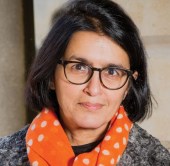
Who or what inspired you to pursue a career in music?

The reason I started playing the guitar was John Denver. I loved his songs from the age of five and that put the idea of learning the guitar into my head. I started having lessons when I was seven. From my mid-teens I was set on studying music at university and then heading abroad for further study and to hopefully establish a career. I always loved making music both as a guitarist and on my second study instrument – percussion. I never seriously considered doing anything else.

Who or what have been the most important influences on your musical life and career?

My teachers John Casey (at home in Perth, Western Australia) and Gordon Crosskey (at the Royal Northern College of Music). John Williams and Julian Bream were the two guitarists I listened to the most when I was growing up. Many of my colleagues have been influential and inspirational as well: Paul Tanner (percussionist from Perth), David Juritz (violin), Roger Bigley (viola) and many more.

What have been the greatest challenges of your career so far?

Just establishing a career is extremely challenging and involves some degree of luck. Capitalising on those moments of good fortune is an important skill too! Getting a foothold at the beginning of your career can be very difficult. I was very lucky to be offered a recording for Nimbus Records circuitously via Michael Tippett early in my career and that gave me a strong start.

Which performances/recordings are you most proud of?

Recording concertos is a huge privilege and was an opportunity I appreciated greatly. For Chandos Records I recorded all three solo Rodrigo guitar concertos with the BBC Phil and on another disc, three English concertos (Arnold, Berkeley and Walton) with Richard Hickox and the Northern Sinfonia. Recording with the very lovely, late Alison Stephens (mandolin) was a joy. I was proud of coming up with the idea behind the Chandos Records CD ‘Music from the Novels of Louis de Bernieres’ which sold really well when it came out in October 1999 at the height of the popularity of ‘Captain Corelli’s Mandolin’.

Which particular works do you think you perform best?

I really don’t know how to answer that! I try to do my best with all of the repertoire that I play. I love playing Bach in particular but I enjoy all of the music, chamber, concerto and solo that I perform. The only piece I would absolutely avoid playing again is Kurze Schatten II by Brian Ferneyhough.

How do you make your repertoire choices from season to season?

My solo repertoire evolves over time but I am always learning new chamber music. Having played percussion for many years as a second study, I really love playing with other people in groups of all sizes. I have regularly performed with strings, voices, percussion, mandolin, accordion, saxophone and flute over the years and have had shorter associations with the kanun (Middle-Eastern lap harp type of thing!) and other styles of guitar (metal, lap-slide). My repertoire choices are partially influenced by projects on the go or in development while my solo recital repertoire also develops depending on requirements of certain promoters, commissions and my own areas of interest.

Do you have a favourite concert venue to perform in and why?

The best and most rewarding venues to play in on the guitar tend to be small, resonant spaces such as small churches. I’ve played in exquisite college chapels in Cambridge and Oxford, comparable churches all over the UK and then of course stunning venues such as the Wigmore Hall. My favourite type of venue would be any beautiful space with a lovely, resonant acoustic, with absolute silence all around.

What is your most memorable concert experience?

It’s tricky to single out one but playing in the Royal Albert Hall would have to be up there, performing Rodrigo’s famous Concierto de Aranjuez.

As a musician, what is your definition of success?

Being well prepared and giving something close to your best performance.

What do you consider to be the most important ideas and concepts to impart to aspiring musicians?

There are many different elements that go in to building a successful career. How to practice, thinking positively, relaxing while playing, the importance of pulse both in terms of shaping interpretations and also as the key tool in communicating with other musicians. Other issues include working effectively with colleagues, developing relationships with promoters, being imaginative and innovative with programme development and collaborative projects. Most of all, remembering to love what you are doing and to savour every moment.

What is your most treasured possession?

If I am thinking in terms of what to leave when I’m gone, it would have to be my 2011 Greg Smallman guitar. I was extremely fortunate to win my first Smallman in 1993 in Darwin, Australia and the current one is my third. They are beautiful, lyrical instruments. At a more personal level I absolutely treasure photos I have of my kids, and also photos of surfing holidays with some of my friends from Perth. Although I haven’t lived in Australia since 1990, some of my friends from school and university are my closest friends and the photos of our time together are some of the most precious things I have.

As part of the London Mozart Player’s “At home with LMP” series, Craig Ogden will launch the first of LMP’s ‘Saturday Sessions’ live-streamed from his home via the LMP’s Facebook page at 7pm on Saturday 28th March.  Ogden will bring the soothing sounds of the classical guitar right to your living room with a relaxing performance of much-loved classics from the guitar repertoire, including Scarlatti’s Sonata in E major and excerpts from Rodrigo’s Concierto de Aranjuez: www.londonmozartplayers.com/athome


Australian born guitarist Craig Ogden is one of the most exciting artists of his generation. He studied guitar from the age of seven and percussion from the age of thirteen. In 2004, he became the youngest instrumentalist to receive a Fellowship Award from the Royal Northern College of Music in Manchester.

One of the UK’s most recorded guitarists, his recordings for Virgin/EMI, Chandos, Nimbus, Hyperion, Sony and Classic FM have received wide acclaim.

Read more

An interview with Wasfi Kani OBE, founder of Grange Park Opera


Who or what inspired you to pursue a career in music, and specifically opera?

I don’t think of myself as having a career. I’ve done lots of different things. Most humans can do lots of different things and they lumber themselves with a single track . . . a “career”.

Tell us a little more about your background. I understand you haven’t always worked in music?

I was born in 1956 in Cable Street in London’s East End, and I am the only opera impresario who spent their childhood in a house with an outside lavatory. My parents, from Delhi and Agra, had fled India at Partition to take refuge in the UK. I attended a state grammar school (Burlington Grammar School for Girls in White City), played the violin in the National Youth Orchestra and went on to study music at St Hilda’s College, Oxford.

After 10 years in the city, programming and designing financial computer systems, I started a small computer consultancy which gave me the flexibility to spend more time conducting. I’ve always had this sense that the arts provide some kind of insight into the ultimate truth, whereas banking and computer systems don’t.

Who or what was the biggest influence in your career?

But I don’t have a career! The biggest influence is my mantra to work as hard as possible. And the fact that I don’t get tired. Then I jump into bed and fall straight asleep.

Grange Park Opera is your latest opera enterprise; how did you arrive at this point and what challenges did you encounter along the way?

It all began with Pimlico Opera and by 1992, I was made Chief Executive of Garsington Opera in Oxford. During my five years’ tenure, I more than quadrupled its turnover. In 1997, I founded my own opera company/charity, Grange Park Opera and built an opera house in Hampshire. I also started the operas at Nevill Holt, Leicestershire.

Wormwood Scrubs is very far removed from Grange Park: what motivated you to put on opera in a prison?

It was the Pimlico Opera days and we were performing for the National Trust, for private banks, in other big houses and I suddenly thought “Why not do a show for prisoners?”. I had gone to school behind Wormood Scrubs so around 1989 I wrote to the governor and he rang me. The rest, as they say, is history. Here I am 30+ years later…. we’re still in prison. That’s a long sentence!

You founded Grange Park Opera in 1997 and it has recently relocated to Surrey. Tell us about the process of securing the land and building the new opera house, known as the Theatre in the Woods.

In 2015 our Hampshire landlords terminated the charity’s lease and we had two years to find a new site, get planning permission, raise £10m and build a new opera house. Miraculously, we did it.

We found West Horsley Place in 2015, applied for planning permission in January 2016. It was granted in May 2016 and we had one year to build the five-tier opera house based on La Scala. It is in a magical wood behind the historic orchard and we named it the Theatre in the Woods.

Meanwhile…..we had to raise money to build it. I had assumed we would have to borrow cash at some point but people were very very generous. No loan was necessary.

The new location West Horsley Place, an estate in the Surrey Hills inherited by Bamber Gascoigne, is much closer to London, which is obviously a huge advantage. The audience usually, but not exclusively, dress in black tie/ long dresses and arrive two hours before the performance to wander, glass of champagne in hand, at leisure through this magical demi-Eden. A convivial atmosphere reigns – the city seems far away. A walk through the ancient Orchard – passing a 300-year-old mulberry tree, damson, pear and apple trees – takes you to the opera house for Act 1.

The long dining interval is an all-important part of the evening. There are two restaurants but some guests take a more bucolic approach and fling down a rug and picnic. When the opera ends, the audience walks out into the magical moonlit wood and through candlelit formal gardens.

The whole experience is beyond stylish. (There are even 47 vintage cars on offer (for a fee) to drive you from (and to) London or Horsley Station. Imagine arriving pre-War Rolls Royce . . .)

What are the particular pleasures and challenges of running your own opera company?

Pleasure: you can put on anything you like as long as you can pay for it! Challenges: every problem lands on my desk.

What are you particularly looking forward to in this season at Grange Park Opera?

The 2020 season combines mainstays and eyebrow-raisers: the traditional and the unexpected. We’ve possibly the biggest statement of the entire summer opera season: La Gioconda with superstar tenor Joseph Calleja fresh from the Met, New York, to play nobleman Enzo Grimaldo in this tragedy of Shakespearean scale. Ponchielli’s luscious musical palette tinges a Verdian richness with a biting acidity. The ribbon on the box is the Rambert School to perform the Dance of the Hours.

Then there is more acidity with a world premiere: The Life & Death of Alexander Litvinenko. Not to be missed.

Do you think opera is elitist?

This “elitist” tag is predicated on the idea that you need to know something to enjoy opera. You don’t. All you have to do is walk into the theatre and sit in a seat. A narrative is transmitted by 70 people in the orchestra, 50+ people on stage, all performing live, right in front of you. As the story unfolds you will feel lots of things. The people around you will feel different things. There is no right or wrong. Whatever you feel is an insight to your humanity. It makes you a better, bigger person.

What advice would you give to young and aspiring opera singers?

Work harder than everyone else. It’s a very competitive world.

How do you define “success”, in the world of opera and classical music in general?

Oddly, many of these questions use phrases that I shun! I don’t have a view on “success” and I don’t think about it. We are all the same. Me, the prisoners I work with, you, Bernard Haitink. We are all here to try to make the world a better place and learn about what it is to be a human in the world today.

Grange Park Opera’s summer season opens on 4 June

Visit the Grange Park Opera website


wasfi-kani-please-credit-robert-workman-700x455-1
Wasfi Kani

Grange Park Opera, founded in 1998 by Wasfi Kani OBE, has staged more than 80 operas, performed to more than 300,000 audience, nurtured the careers of young singers and created a family of supporters that has helped me raise more than £22m in funds to support Grange Park Opera, which receives no subsidy from the government. Only 23 miles from London, Grange Park Opera is an integral part of the English summer season.

Wasfi Kani is an Honorary Fellow of the RIBA and St Hilda’s College, Oxford. She received an OBE in the New Year’s Honours List 2002 for her work in bringing her second opera company, Pimlico Opera, into prisons.

This annual initiative gives inmates the opportunity to work with professional directors and singers in creating a production which the public attend. The next show is Hairspray, 7-15 March 2020 at HMP Bronzefield. This is the 28thcollaboration and more than 60,000 public have ventured inside to witness remarkable talent. Besides the work in prison, Pimlico Opera gives a half hour singing class to 2,000 primary school every week of the school year a part of Primary Robins


(Image credit: Robert Workman)


Bernard Hughes

Who or what inspired you to take up composing, and pursue a career in music?

I started composing of my own accord at about the age of 8, without anyone particularly inspiring me or suggesting I do it. I just started writing things down on bits of manuscript paper lying around the house. I remember making up a key signature which combined sharps and flats and showing it to my father, who said there was no such key signature. I didn’t understand why that was, or why I wasn’t allowed to make up my own key signature. As to making a career from music, that was never intended. Most people who write music stop at some point, and I just never stopped.

Who or what were the most significant influences on your musical life and career as a composer?

I had an wonderful music teacher called Gwynne Lewis when I was about 10. He didn’t especially inspire me to compose, but he communicated a love of music and the joy of being involved in music and I carry that with me. I also learned a lot about commitment and integrity from the composer Param Vir. Apart from my teachers the inspiration above all has been Igor Stravinsky. I didn’t discover his music until the shockingly late age of 16 or 17, but once I heard the Rite of Spring I never looked back in my devotion to his music. First hearing the Symphony of Psalms was an unforgettable experience.

What have been the greatest challenges of your career so far?

As with all composers, the challenge is to have your music heard. In this I have been pretty lucky, but every composer wants more and higher profile performances and commissions.

What are the special challenges/pleasures of working on a commissioned piece?

Having a particular occasion or performed in mind can really help to shape a piece. When the requirements of the commission and you are aligned it is really fun: writing my narrator-and-orchestra piece ‘Not Now, Bernard’ was one such – I realised it was a story I loved to tell, and that the music could add to.

What are the special challenges/pleasures of working with particular musicians, singers, ensembles and orchestras?

I’ve been lucky to work quite often with the BBC Singers over many years, including on an album of my music released in 2016. The fun of writing for them is also the danger – they can sing anything and make it sound good, but if you push the boat out too far no one else will ever sing it.

How would you characterise your compositional language?

My musical language changes with each piece I write, so I don’t have a personal style as such – although I am sure there are recurring tricks if you look for them. Writing a piece is finding a solution to a problem, and when the initial restrictions vary, so does the end result. But when I write a piece like ‘Not Now, Bernard’, which is very tuneful and ‘accessible’, I don’t think of it as any less a ‘proper piece’ than my more avant-garde pieces – they are all aspects of my compositional voice.

As a composer, how do you work?

On a practical level I move between the keyboard, handwritten music notation and the computer. They each have their role within the process – although often first ideas come when I’m on my feet, either walking round my neighbourhood or in the shower. I like the handwritten element because you can trace your ideas back archaeologically if you change your mind. But I also love the opportunity the computer offers to check things like pacing, and complex harmony that is beyond my fingers.

Which works are you most proud of?

It would have to be the two large-scale pieces written for the BBC Singers. ‘The Death of Balder’ in particular, is an original conception – a ‘radio opera’ for choir on a Norse myth – and I am happy with how it turned out, after a great deal of uncertainty while composing it. I also had the opportunity to write an orchestral piece in 2012 called ‘Anaphora’ which again caused me a lot of grief in the creation but which I am in retrospect very proud of.

Who are your favourite musicians/composers?

As mentioned above, I am a huge Stravinsky fan, and always will be. Of contemporary composers, I really love Judith Weir’s music – she is also an extremely kind and generous person and it was a pleasure working with her on my album Not Now, Bernard and Other Stories, which features the premiere recording of her piece ‘Thread!’ alongside my own music. My current enthusiasm is for a French composer called Guillaume Connesson, who is very little known in this country but I think is brilliant and deserves much wider programming.

What is your most memorable concert experience?

I was lucky enough, as a child living in Berlin in the 1980s, to be taken to hear the Berlin Philharmonic a few times. The two occasions I particularly remember were hearing Mendelssohn’s Violin Concerto and – the first time I went – Mozart’s Piano Concerto no 21. I was about 10 and both completely blew me away, just the sound of the orchestra, and I still love both pieces. I also remember, at one of those concerts, the second half being a Shostakovich symphony, which I hated; Shostakovich symphonies still don’t do it for me.

What advice would you give to aspiring musicians and composers?

I think it is a responsibility of composers to listen widely, and to music that is not necessarily instantly amenable. I think too many people, young people in particular, are too narrow in their range of listening. In one sense there is no excuse for not listening widely – my excuse as a youngster was that it was difficult to access music, apart from Radio 3 and my local library’s cassette collection. But the flip side is that there is so much music available now that it can be difficult to wade through it all. But it is important for composers to have open ears.

Interview date: January 2020


www.bernardhughes.net

Who or what inspired you to take up conducting and pursue a career in music?

I didn’t have any intention to do it early on. I was training as a ballet dancer, with the hopes of pursuing that professionally, but had also been studying the piano since I was very small, and composition at the local university since I was 14. So, when injuries and illness put an end to ballet, just after I started full-time training, I enrolled in a music degree, as I couldn’t face going back to complete high school. The wonderful professor who’d been teaching me composition was also head of conducting. He saw those two disciplines as complimentary threads, and knew I had a strong interest in harmony and analysis and had conducted a little at school, so encouraged me to add it to my degree. It just grew from there.

Who or what are the most significant influences on your musical life?

I am enormously, and endlessly, inspired by my husband, Jon Hargreaves – a contemporary music specialist, and my co-Artistic Director at Nevis Ensemble. Every project he creates is rigorously and creatively thought-out, and his ability to open up complex music to players of every experience level is second to none.

My grandmother Louise Carroll was a very important formative influence. She was a superb pianist as a young woman, but had to turn down a scholarship to study in London due to a pregnancy. She married my grandfather and channelled her musical energies into teaching and motherhood instead. I started harmony, piano and composition with her when I was about 4 years old, and fell asleep on many nights to the sound of her playing Medtner, Poulenc, Rachmaninov, Nielsen. Any sense of musical style that I can claim to have comes from what I absorbed as I dropped off to sleep, I’m sure. The grounding she gave me in harmony is the foundation of everything that I do.

Lastly, when I first arrived in the UK, I worked for two years as the librarian at the Philharmonia. Happy, exhausting years. I learnt so much from watching and talking to Esa-Pekka, Maazel, Dohnanyi etc, but also through my discussions with the players, many of whom are now amongst my dearest friends. They were generous, insightful and caring teachers.

What, for you, is the most challenging part of being a conductor? And the most fulfilling aspect?

At the moment, the greatest challenge is the anxiety. It can be crippling, and some orchestras really enjoy making the conductor suffer! I do better work when I’m with ensembles that are healthy and happy in spirit, and don’t project so much negativity onto the podium, because I can be very sensitive to it. But even with the friendliest band, the first rehearsal can be terrifying. Imposter syndrome is widespread in the music world, especially among conductors I think, and we all cope with it differently.

On the flip side, when you find that wonderful working rhythm with a group, to the point you can throw ideas at each other in the performance, and play together in quite an improvisatory way, it is pure gold. That interaction and level of communal creative responsibility is a beautiful thing. Also, actually meeting audience members, going to chat with people and have a cuppa after the concert is great – a powerful reminder of who we do it all for, but also how significant connectedness is to the arts. Doing perfect music “at” people and then leaving without any personal connection is far less satisfying to me than making whatever adjustments and measures are necessary to actually involve people, and find out why music is significant to them. Live music is a far more potent social lubricant than alcohol, and it is the doing of it, the sharing of it as an experience, wherein lies the magic.

As a conductor, how do you communicate your ideas about a work to the orchestra?

This is a tricky one… Of course, there is an ideal scenario that we’re all taught to speak of in hushed tones, in which we have weeks or even months to prepare a major score, and craft an analysis; enough rehearsal time to forge a gripping realisation of it; and divinely-inspired technique with which to communicate it. Utter b*ll*cks, really. A 19th-century fantasy. In reality, for 99% of working conductors, especially those of us in the early stages of our careers, we are tearing through scores with barely enough time to process them on even a basic level; spending much of our time working (happily!) with young people and non-professionals who require a totally different, and far from ideal, physical gesture to help them through; and when we are with a good professional band playing repertoire with a capital R, a significant portion of the rehearsal period involves allowing the orchestra to play you THEIR version of the piece. Hear the knowledge and experience of the piece that they bring to the room, listen to the sound they enjoy making, work out who in the room is central to their playing style, assess the relationship between the string principals, and work out whether the principal bass and timpanist listen to each other (hot tip: if not, the best conducting technique in the world can’t save you or them.) You can then add your contribution to the pot, and hopefully it will be a valuable one, but at the end of the day, this is their performance, their hard work and their energy being channelled.

As I was writing this, I thought “maybe it’s different for the elite conductors at the top of the food chain”? After all, the higher a conductor rises in the industry, the more specialised and narrow their repertoire tends to become, and the more easily they can turn down extra gigs, so of course they will know it in far greater depth. But also, I’ve watched many a 5-star maestro sight-read one of the pieces in the first rehearsal. By the second play, the really brilliant ones will have something helpful to say at every point of the piece. They think on their feet and ascertain immediately how to be of use. That is true virtuosity, in a weird kind of way!

How exactly do you see your role? Inspiring the players/singers? Conveying the vision of the composer?

Well, perhaps this is answered already above. But for a more pithy soundbite, I’d say our role is to be useful, in whatever way is needed in that specific situation. That might be helping the orchestra understand the piece, if it’s unfamiliar repertoire; but often it’s a far more practical role of knowing how to put out the fires when needed, and keeping the orchestra’s nose pointing in the right direction. With a really good orchestra, the most helpful thing you can do is get the jet off the ground, then let the engine (the players!) fly. 99% of the time, they really don’t need you – or, at least, your contribution is no better than anything they can do themselves, so do your best to keep it minimal and worthwhile. I always feel sad when really young conductors get thrown straight into the A-list orchestras, because they never really learn the skills required for those earlier scenarios – nor do they get to experience the genuine satisfaction of performing when you really are needed. The big bands will play brilliantly regardless of your posturing on the podium; but you can do serious damage in other situations, if you’ve not really learnt how to roll your sleeves up, listen deeply and rehearse effectively.

Is there one work which you would love to conduct?

The operas by Schreker and Korngold are at the top of my dream-list. Highly impractical. Utterly lush.

Do you have a favourite concert venue to perform in?

We regularly take Nevis Ensemble to the Nan MacKay Memorial Hall – a lovely little community centre in South Glasgow with a full-time programme of activities and resources for anyone in the community in need of company; the elderly, people with social issues, recent newcomers from the refugee community come together to grow veggies, play mah-jong and do craft and exercise classes. There’s barely enough room for the orchestra to set up, and I need to stand on a coffee table in order for the brass and winds to see me. The audience sit around us with bowls of crisps, and there’s always a spread of food afterwards that would make your gran proud. But the energy in the room is like a carnival, and we always meet some really interesting people there. It’s impossible to go there and not come out beaming and full of hope for humanity.

Who are your favourite musicians/composers?

My favourite musicians are the incredible amateur music-makers who are the backbone of musical life in this country. Composers…? Well, Schreker and Korngold are high on the list, obviously! I have pretty broad tastes, but some lurid late Romanticism, just on the brink of early Modernism, will always set me purring.

As a musician, what is your definition of success?

Not needing to do it – I don’t mean financially, but… spiritually. If my right arm fell off tomorrow and I had to change careers, I’d be quite excited about getting to choose something new and fresh. I take that as an indication that my relationship to my work is quite healthy. The day that balance shifts too far in the other direction is the day I should retire.

What do you consider to be the most important ideas and concepts to impart to aspiring musicians?

1. Perfection should not be the end we’re after; it’s far more satisfying to an audience to witness curious, brave musicians who are on a journey with a piece than virtuosity with no value beyond itself. You’ll also grow into a performer (and human) of greater depth and flexibility by challenging yourself in that way. So, don’t sweat the small stuff in a performance; your job is to invite the orchestra and audience into your process, not show them how clever you are.

2. Every single aspect of your life as a musician is a construct. Question it all!

Where would you like to be in 10 years’ time?

Somewhere with mountains nearby, and a work-life balance that allows me to adopt a dog!

What is your idea of perfect happiness?

Waking up in a remote, wild part of the world, and peering out of the tent to find Jon brewing a cup of earl grey tea on the billy. Bliss, though I’m not sure he’d agree.

What is your most treasured possession?

I love my Xbox for evenings when I don’t need to study, and we have a beloved collection of tea mugs, all of which have a personal story behind them. So, basically, anything in the house, the function of which intersects with my slippers and the sofa…

What is your present state of mind?

Two things:

1. Exhausted. It’s been a long season and I only get 2 weeks off before it all starts again.

2. Content! I’m having a ball touring the Scottish Highlands and Islands with Scottish Chamber Orchestra this week. They’re lovely people and superb colleagues.


New Zealand-born Holly Mathieson is an award-winning conductor, regularly working with opera houses, ballet companies and orchestras in Europe, Australasia and North America. She frequently records for BBC Radio, and her first major commercial recording with Decca will be released in July 2019. Her work has seen her travel to nearly every continent on the planet, and perform for audiences spanning from the British Royal Family and Europe’s political elites, to Scotland’s homeless and refugee communities. She is the founder and artistic director of Rata Music Collective, and Co-Artistic Director of the Nevis Ensemble with Jon Hargreaves.

Read more