Award-winning composer Thomas Hewitt Jones was one of the first people I interviewed for my Meet the Artist series, back in 2012. Here, he has updated his interview with further thoughts on his significant influences and inspirations, and why we should cherish and value the arts.
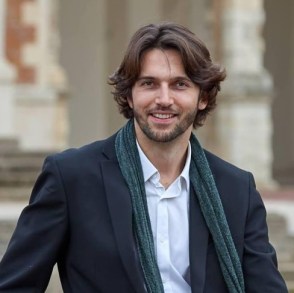

Thomas Hewitt Jones

Who or what are the most significant influences on your musical life and career as a composer?

Without a doubt, my paternal grandparents (both composers) were hugely significant influences on me, both musically and in terms of my career trajectory so far. My grandfather Tony was a great craftsman and studied with Nadia Boulanger; my granny Anita wrote educational music that is extremely accessible for young string players, yet is of consistently high quality. Both had studied harmony and composition techniques with the lovely man that was Bernard Rose while at Oxford (who told Tony in an early supervision “you’ll never get a girlfriend unless you cut off your beard”… anyway the next week Tony announced with a wry smile that he was engaged to Anita); however, over her lifetime Granny’s music did better commercially than Tony’s, who wrote entirely for himself (and often wrote choral music that was high quality, yet challenging to both listen to and perform). He once got offered a large amount of money to write music for a TV ad for a building company, and turned it down. I like to think that I have ended up with a mix of both approaches to composition, although I personally enjoy writing music for a wide audience which is nevertheless genuine, with…that ever-important word these days…integrity.

What have been the greatest challenges of your career so far?

I think that we live in a difficult time for composers who want to write music that has what I call ‘horizontal’ emotional narrative. There’s so much soundbitey ‘vertical’ contemporary classical music that is constructed like pop music, built around earworms and varying textures over a repetitive chord sequence rather than maintaining melodic, rhythmic and harmonic interest over time. Music can do so much more than just an earworm intended to get high numbers on Spotify.

On the other end of the artistic spectrum, I’ve got an amusing commercial music track called ‘Funny Song Cavendish’ that has gone mega-viral on TikTok (currently 2 billion streams, and countless celebrity videos as I write this). It is a lesser-discussed part of the music streaming arguments that are currently taking place, but newcomer music usage platforms such as TikTok present difficulties for composers and publishers because royalty streams are not always transparent until legislation is fought for in retrospect. I’ve actually recently been voted on the Ivors Academy Senate Committee for this year, and I’m going to be campaigning for this, and many other similar issues that will hopefully make issues of streaming rates more transparent for the composers of tomorrow. My overriding feeling is that composers in the year 2022 feel that they must write a certain type of music that will serve them well financially through the algorithms of streaming services, rather than being musically satisfying – rather than pushing artforms to a new and exciting place – which is, in my humble opinion, a sorry place to be.

What are the special challenges/pleasures of working on a commissioned piece?

It’s always an enjoyable challenge to write to a brief. As artists throughout time have invariably found, the difficult commissions are the ones where there is a clear cognitive dissonance during the creative process – if, for example, there are words a composer doesn’t particularly want to set, or a subject matter that doesn’t really interest him or her. The really great craftsmen can transcend these situations – but the arts at their best are an honest expression of humanity. A composer is invariably emotionally naked, and audiences aren’t stupid so they will realise pretty quickly if music isn’t authentic. I’ve been lucky not to have to deal with such situations, but in the arts there is nowhere to hide!

What are the special challenges/pleasures of working with particular musicians, singers, ensembles or orchestras?

I am incredibly lucky to have worked with some of the finest players around in recording sessions so far, many of whom have become friends as well as colleagues. The COVID lockdowns in 2019-21 were an interesting time because everyone was recording at home, but we managed to still make things work and release albums. As well as writing the music I very much enjoy the music production process as well, so these things came together during that time.

Of which works are you most proud?

I’m not sure that a composer can judge his or her work. Each piece of music you write is like a new offspring, but as soon as it has grown up and left home, it’s no longer yours. For this reason, I make a point of deleting files and throwing away copies of pieces of music that have had copyrights assigned and are published and out in the ether. If people email asking me for copies of pieces, I genuinely can’t help – and I occasionally hear things on the radio that I’ve forgotten I’ve written! As a writer, the thing you are working on is the only piece you are aware of.

How would you characterise your compositional language?

Approachable and mainstream, yet high quality and with integrity. That’s what I hope anyway, but it’s not for me to judge.

How do you work?

I have a lot of technology in my studio, and I love using it. That said, I believe that the key elements of music composition are exactly the same as they were in Bach’s time, that great melody and harmony (or interesting texture used in a way that is satisfying in narrative) are key to an emotional experience that makes great music.

It strikes me that today there are a lot of ‘noodlers’ who can’t look at a score and hear it in their head, and can’t compose away from their DAW [Digital Audio Workstation]. For me personally, that isn’t quite right. There is a place for every approach, and improvisation is incredibly important for all-round great musicianship. But for me, the first idea isn’t necessarily the best one, and while noodling might make for perfectly good underscore underneath an emotive speech in a film, it won’t break the mould as a standalone piece. (It might satisfy a mass radio streaming audience who are using music as background wallpaper though.) The creative process is full of contradictions so I always approach each project differently. As Stephen Sondheim so wisely said, ‘Content dictates form’.

As a musician, what is your definition of success?

A second performance. I think many of my peers would agree – if you ever meet a load of composers in a bar, they’ll either be chatting about the PRS, or about second performances.

What do you consider to be the most important ideas and concepts to impart to aspiring musicians?

This will sound facetious, but – like the human condition itself, the route into a musical career is also full of contradictions and there is honestly no set way to approach a career in music. I’m sure many would agree that it’s about hard work, luck, and being happy to be poor while you are building up a reputation in your early years. It took me 8 years after leaving university to make a successful living as a composer. Hopefully the horrendous swagger of entitlement of the generation above us (typified by the likes of certain members of our cabinet) will cause a reassessment of honesty, integrity and equal access for talented newcomers that will filter through to the arts as a whole. But that might be wishful thinking.

What do you feel needs to be done to grow classical music audiences?

I think that two ends of our industry have to meet in the middle, and everyone needs to be unjudgmental. I think ClassicFM has done such a huge amount for music appreciation in the general population, and I love its straight-to-the-point promotion of great melody. I also really enjoy listening to the Ligeti Piano Concerto. I think that great music needs to be given as much of an airing irrespective of commercial viability, background or composer’s gender.

Where would you like to be in 10 years’ time?

Last time I did this, I said I would like to be in a hut by the sea, with a wife and kids if I’m lucky. Well now I have a wife, Annalisa and two kids. Maybe next time I do this, I’ll have another kid, but hopefully not another wife!

What is your idea of perfect happiness?

Being with my wife and kids.

What is your most treasured possession?

My wife and kids.

What do you enjoy doing most?

Don’t ask.

What is your present state of mind?

I’ve got a huge amount of writing to do at the moment, on top of some mixing, so I’m extremely busy, but happy to be working on projects at the moment which are employing other musicians. Using live musicians is really important, and never more so than post-COVID. Software sampling is really great these days, but still nothing beats many musical brains working as one…


Thomas Hewitt Jones is an award-winning composer of contemporary classical and commercial music. Since winning the BBC Young Composer Competition in his teens, his music has been published by many of the major music publishers and is frequently heard in concert and on radio, TV and in the cinema.

Thomas’s diverse catalogue includes small instrumental, orchestral, choral and ballet works, and his large number of choral titles includes seasonal carols. ‘What Child is This?’ (OUP) has become a choral classic of recent years, garnering large numbers of performances each season. His music is regularly featured on Classic FM, including most recently ‘Christmas Party’ (his seasonal violin concerto, written and recorded for violinist Simon Hewitt Jones). In 2021, he released ‘Can you hear me?’, an acclaimed response to the COVID19 pandemic. 
Read more

Frances Wilson AKA The Cross-Eyed Pianist talks to the Things Musicians Don’t Talk About, “an online platform and a couple of musicians who have had enough with the silence surrounding topics that affect all of us“.

Listen here:

Do take a look at the Things Musicians Don’t Talk About site

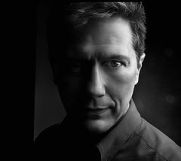
Ahead of the world premiere of his new piano work Sudden Memorials, written in response to the aftermath of 9/11, composer Kevin Malone shares insights into his creative life, his influences and inspirations and why he thinks we need to take more “time to think”….


Who or what were the most significant influences on your musical life and career as a composer?

Roger Mroz, my first serious saxophone teacher in Buffalo, New York, has left a positive, indelible influence on my teenage psyche regarding high levels of performance and serious repertoire. Ken Radnofsky at New England Conservatory offered wisdom by telling me to attend cello and voice masterclasses so that I wouldn’t be just a saxophonist, but instead like a musician who considers the context of interpretation.

When I stumbled upon the music of Rouse, Stravinsky, Weir, Reich, Beethoven, Crumb and Laurie Anderson, I realised that there are approaches to composition outside “the system,” yet their works contained logic, rigour and a strong sense of internally-established identity which made sense to me. Discovering the music of Ives at age 14 changed my life completely. His meticulous irrationality (an oxymoron, but an accurate description!) gets to the heart of what it’s like to be human: the visceral and philosophical self being one.

All of the above meld into how I think of what a composition is for me: a script for musicians to act upon, to interpret.

What have been the greatest challenges/frustrations of your career so far?

Without any doubt, it is time to think. Teaching at a university is about productivity, making it challenging to create anything truly unique to add important works to the repertoire or broaden musical expressivity. If we had time to think, then we could properly assess where we’ve come from and where we are in musical composition. For the past 60 years, the focus in the arts has been on manner, not substance, and manner (style) is highly marketable so it’s taken precedence. These mannerisms pretend to address the above questions, but instead they create a veneer to evade truly addressing and reevaluating compositional substance.

There’s also time wasted because, as a citizen, we have responsibilities to challenge oppression, injustice and maltreatment. When a government sets out to privilege its financial support base and offer promises specific to its voting base, then every musician and composer must join others to take action. That takes up much mental space and time. I’ve been shocked when some composer associates have told me that such activism is up to others, even though my associates will benefit, because they claim they are here to be composers.

What are the special challenges/pleasures of working on a commissioned piece?

I usually come up with ideas which I’m burning to compose into audience experiences; some of these become proper commissions, such as Sudden Memorials for Adam Swayne. When approached with a commission idea, then I like lots of discussion to ensure I honour the commissioner. For example, A Day in the Life is a violin concerto commissioned in 2018 by Andy Long, Associate Leader of the Orchestra of Opera North. He had a very specific brief that it should relate to Robert Blincoe, an indentured child forced to work in Northern textile mills in the late 18thC. I undertook massive amounts of research into Blincoe, indentured children and historic and current Northern mills. We discussed the proposed scenario at length, considered the audience, and after many coffees together, the music just flowed, since we had devised the vessel inside which the music would sail with many adventures along the way.

What are the special challenges/pleasures of working with particular musicians, singers, ensembles or orchestras?

Oh my, that’s everything! With some close artistic associates, I actually want to completely let go of the piece when I give it to them, so that it’s entirely theirs. I want to wait until they perform it before I hear it! That level of trust and synchronised thinking is rare, but so very precious.

With others, I like to get into lots of conversations about what the piece should be doing for the listener, and how they may wish to change things here and there to achieve that. I want to hear and learn about their sound, timing, phrasing and articulation so that they and the music are speaking the same language, dialect and accent as to what I intended.

Of which works are you most proud?

Eighteen Minutes (concerto for double basses) and Requiem77 (cello and voices) for their simplicity and directness (both are on iTunes and Spotify)

Sudden Memorials (piano) and Opus opera (string quartet) for their scale which goes beyond structures, and variety of emotional unfolding.

A Day in the Life (violin concerto) and The Water Protectors for their thorough grounding in people’s experiences, tribulations and activism

And HerStories Unsung Vol.1 and The People Protesting Drum Out Bigly Covfefe for the reaction they evoke from audiences: real audience participation! Check out the premiere by Diana Lopszyc of HerStories: Lilith:

and The People Protesting premiere by Adam Swayne:

How would you characterise your compositional language?

It is polystylistic in that each work is a heady brew of multiple styles and dialects, aimed at thwarting predictability as to what comes next, yet often imbued with familiar sounds in unusual gestures. For example, a series of triadic chords may appear – what I call “tonal artefacts” – and sometimes they might suggest a sort of archaeological dig revealing a tonal centre, but one which is seriously disjointed (not apologetically muddied or blurred). So it sounds familiar, but the syntax is wildly new.

I like what Beethoven said: good music should always have beauty and surprise. That’s a powerful combination when it’s understood and balanced. I would say my music is 20% music for music’s sake, and 80% music for listener’s emotional and psychological enlivenment. I like to experiment with new approaches in compositions for ensembles, and not to experiment with the musicians themselves. As a performer for many years, it was disheartening to have a composer ignore the many thousands of hours I put into a wide palette of solid technique, only to find that I had to develop an equally convincing technical range for just this one composer for just one piece (which most likely would be performed once). We are social beings, and it is important to respect what your musicians bring to the table. A medium-size orchestra offers 600,000 hours of high-level musicality to a composer, so to ignore that is quite arrogant!

How do you work?

I think of what the audience experience would be, then I make a structural diagram of that experience, as specific as 2” phrases in some places. The structure is drawn linearly, often stretching four meters left to right. While I create the structure, I hear musical ideas in my head to make that experience, writing them in notation and English and taping the bits of paper to where they will be most effective. Eventually, the structure suggests where new ideas and developed ideas should go to best create that experience. This is wildly different from what I was taught, which was to take an idea(s) and develop it to see where it goes. I don’t think an audience cares to hear what decisions a composer took (that’s composerly-orientated music). To my ears, that approach sounds like the minutes of a staff meeting or a logical proof being justified. I’d rather focus on giving the audience an experience instead of asking them to experience my music as a composition.

This may sound quite opinionated, but I think of it as my music having an opinion – and strong ones at that – so that its narrative is spicy, flavourful, sometimes contradictory, always provocative.

As a musician, what is your definition of success?

To attain a sustained high level of craft which produced provocative, original works that communicate to audiences. I am suspicious of celebrity artists; surely hearing their artistry without knowing who they are should have the same value as knowing their identity. But sadly, there’s so much emphasis on marketing the person and putting artists into gladiator-type situations like X Factor and Britain’s Got Talent, where artists are spontaneously judged with the goal of choosing one winner and many dozens of losers. I’d love to see a TV show called Comp Idol: composers writhing in ecstatic spasms of inspiration, trying to impress instead of express. (Channel 4: I have the treatment already drawn up.)

What do you consider to be the most important ideas and concepts to impart to aspiring musicians?

To work your ass off. To not underestimate the incalculable hours and years of work it takes to really say something artistically. To seek criticism from every quarter. To take risks. To not be defensive. To not try to be original, but instead to be genuinely the best of what’s inside you, which takes a lifetime. When these are achieved, you’ll be making a unique contribution to that life-force we call music.

What do you feel needs to be done to grow classical music audiences/listeners?

To teach the art-music of our diverse cultures from pre-school onward as compulsory in every school. To insist on accurate representations of art-music (it is for all people, not just certain social classes) and a vocabulary to talk about it (a perfect fifth is a perfect fifth in classical, hip-hop, reggae, ska, house, techno, jazz, folk, pop, etc.). To have a funded community orchestra/ensemble in every borough, and to make it accessible to everyone. Look at all the sports facilities in boroughs (wonderful!) but where is the funding for expressive arts? This mirrors the contempt that governments have for the power of the expressive arts: the mechanism which activates people to raise their voices and have their say.

Where would you like to be in 10 years’ time?

I have no idea. I live mostly in the present, evaluating where I’ve come from.

What is your idea of perfect happiness?

I don’t believe people should try to achieve happiness (a goal, a thing); rather, people should be happy (action, doing). This means making happy feelings for ourselves: they are our responsibility and under our control, and can change as circumstances change. For me, that is to write music which is rich with emotions and psychological states (wit, humour, sadness, surprise) and rigorously structured.

Is music the most important thing to me? No, but it is the only portal through which I achieve clarity to find out.

What is your most treasured possession?

It’s my Soviet-issued ceramic bust of Lenin which was given to me by the Composers Union of Ukraine. In 1994, they were no longer required to keep it on display in their office. I keep Lenin’s head warm with a pink pussy hat I knitted 5 years ago.

What do you enjoy doing most?

For leisure, watching films, which is such a widely diverse art form. What I enjoy doing most is composing when I’m not relaxing.

What is your present state of mind?

Great anxiety for society and humanity due to the immense greed of politicians and wealth-extraction industries (i.e. most capitalist businesses). But day to day, I am enriched by my partner and our long-haired German Shepherd dog; they buoy my hope for the future.

Sudden Memorials by Kevin Malone receives its world premiere in a concert by pianist Adam Swayne at London’s Wigmore Hall on Saturday 11th September at 1pm, the exact hour in Britain twenty years on the from the beginning of 9/11. More information

The score of Sudden Memorials is available from Composers Edition


The work of Kevin Malone spans genres and media beyond conventional labelling. He is equally at home with electronics, multimedia and harpsichords to choirs and orchestras, embracing postmodernist and hybrid approaches across his work.



Abandoning high Modernism, Malone speaks with an open, personal expression, freeing his music from the baggage of serious high art music without actually throwing away the bags.

Read more www.opusmalone.com

Pianist, educator and mentor, Professor Julia Mustonen-Dahlkvist is Artistic Director of Ingesund Piano Center in Arvika, Sweden, and founder of the IPC’s Artists-in-Residence scheme, where up to ten young pianists are rigorously selected to take a ‘deep dive’ into their artistic, career and personal development. Each residency is fully funded.

An accomplished pianist herself, Professor Mustonen-Dahlkvist’s training in Russia, Germany, France, and Spain informed what would later become her own methodology, which when combined with her nurturing and passionate nature, has resulted in a unique formula for success, mastery and excellence. Here she talks about her early influences and how she was inspired to develop the programme at IPC.


Who or what inspired you to pursue a career in music and who or what have been the most important influences on your musical life and career?

I have multiple sources of inspiration. I have been consciously searching for musicians and pedagogues from whom I can learn something valuable. Everything started with my mother. She was a piano teacher at a music school working with kids, and wanted me to become a piano teacher too, simply because in the era of the USSR, this was a very good profession and a respected job to have. I grew up in communist Siberia at the end of the 1970s and beginning of the 80s. It really was a different planet. My grandparents were deported to Siberia and despite a not very pleasant time during my childhood there, I was very lucky to meet Larissa and Valery Starodubrovsky in the early stages of my life. They were actual students of the great Heinrich Neuhaus and studied together with Sviatoslav Richter, and were deported to Siberia during Soviet times to “help to develop the culture” in Siberia. Larissa was an especially important teacher for me, and I stayed connected with her until the very last moments of her life. Even when I was already living in Finland and Germany, I still travelled to Moscow to play for her (where they returned to after the dissolution of the USSR). I also kept contact during the years of my master’s degree in Berlin.

Another very important teacher for me was Vitalii Berzon. He could really tell his students that playing piano was not difficult technically; he showed us exactly how to play and gave us students all the tools for it. Erik T. Tawaststjerna in Helsinki told me how I will exactly achieve my dreams to become a pedagogue and pianist and showed me the way. After that, and essentially the most important part for me as a musician and pedagogue was meeting and studying one year with Alicia de Larrocha. To be able to see and hear so closely the sound world of such a legendary pianist was very special. If you hear this once in your life, you can’t unhear it anymore and my whole life I have been searching for all possible methods just to get closer, bit by bit, to her amazing sound world. I feel like every year I come closer and closer in understanding her heritage, which I was fortunate enough to experience in person.

What have been the greatest challenges of your career so far?

I think my whole life was built on challenges. It feels like I have gone through many problems like long term injuries, deep psychological problems with stage performances, a not very easy upbringing with lots of trauma, and difficulties with finding out how to deal with piano playing and psychological balance. It took me many years to find a way to be a confident performer and it took several years to establish any kind of stability in pedagogical process – even if I was always sure that it is my true calling to be a pedagogue. In the beginning of my pedagogical career, I found it very challenging to be a young professor and also a woman in this position.

What do you do off stage that provides inspiration on stage?

Everything! I tend to learn from each special or new moment of my life and compare it to music, seeing how I can use it. Very often we can find inspiration in everyday situations in life, because the emotional content in music is unlimited, the same way as the emotional content in life.

Tell us more about the Ingesund Piano Foundation. What was the motivation for establishing this Foundation, how does it support young artists, and how do you choose the students?

The Artists-in-Residence idea stemmed from the growth of our class over the past years. As the class grew into a group of pianists of vastly different cultural experiences and personalities, it became a nurturing ground for those who are striving for the same goal – excellence and depth in music-making.

Our students decided to come to Ingesund in Sweden because of the compatibility we share. To us, what matters most is how well we may understand each other, and whether our style and approach fits best for the individual’s improvement in their current state. This created an absolutely fantastic environment of trust, openness and true musical exploration.

To decide to work together with a student is a very difficult and long process, because the whole professional life of this person will largely depend on the productivity and quality of our work. Personally, I get very attracted if I hear somebody with their own unique voice in their music making. Everybody has their own voice of course, but some are more intriguing than others. In my case I have to intuitively see “hundreds of steps” forward, regarding how I may help to bring this pianist to become what he or she is dreaming to sound like. Most of it is down to hearing, and executing correctly. How realistic the process may be, and what kind of particular steps I can do to make it happen. Sometimes I absolutely love the musician, but after some trial – it may just not fit. I am intuitively always searching for pianists who possess some quality or potential to be the “real deal”. However, often these talents may not be the simplest personalities to deal with, and not the easiest musicians to teach. I guess we are indeed learning a lot from each other in the process.

Learning at the same time while teaching and developing together with the students is something very important to me. I have striking realizations from time to time and they often change the whole direction of my teaching and music making. In this particular moment, I am actually finding myself in such a revelation. It feels like I have never understood what piano playing was about earlier, compared to what I know now.

You were inspired by the Netflix programme ‘Playbook’. Tell us how this has influenced your approach and your role at IPF?

Patrick Mouratoglou, the coach of Serena Williams, is a genius who is capable not only of understanding but also working with human nature, understanding the psychology of highest-level performance under tremendous pressure. His ability to see the talent and foresee the steps of creating world-class players is very inspiring. The connection was immediate when Patrick, in the very beginning of the episode, started by comparing the practicing process of difficult details and passages at the piano, to the polishing of moves in tennis. He says, “Piano can be beautiful, if you listen to the piece from the start to the end. But if you repeat the same thing all the time…it drives people crazy. Of course it’s tough, and that’s why not many people can be Number One”. He is a huge inspiration for me, and in the same way, the work that we do is an inspiration for him. He talks about how the greatest weaknesses can become the greatest strengths, how emotions are your worst advisers, and how mistakes should not define you. I could suddenly relate to every word he is saying and recognize every situation he described in the preparation for the big stages. How can it be so similar? The psychology of the elite sport and the art of the piano performance, especially in competitions.

It does not matter what we do professionally, we are all humans, and our conditions in top-level performances are strikingly similar. Patrick said that his goal in coaching is very simple: we are there to help people to achieve their dreams. This is exactly the whole purpose of my piano teaching too.

What are the challenges facing young classical artists today and what are you doing to support and encourage them in their professional careers?

The challenges have been and will be always the same. First of all, it’s generally very difficult to get to the point where young artists are able to be ready professionally for all challenges for the future, and afterwards, once you are ready, it’s very difficult to get on the stage and be heard.

I personally hope that I am the pedagogue who is able to help professional development in a rather distinct manner. But lately I started to feel that it was not enough – because the professional world out there is not easy to enter for a young soloist and it’s not easy to get the right exposure. At Ingesund Piano Center we are trying to establish a useful platform and trying to think and work differently – curating an education which does not only take care of exams and degrees, but an education which would help to make a difference in the pianists’ careers and success on stage.

What do you feel needs to be done to grow classical music’s audiences?

I think we just need to find, recognize, support and educate young musicians, who can play their instruments at the highest possible level, have an ability to captivate audiences and make a difference with their performances on stage.

Many musicians are nowadays very well-promoted, but not really giving this experience to the audience which would make them go back to the concert hall. It’s like going to a very well-designed restaurant, where the food is not good. You will not go back there.

But I have also experienced many times people becoming the biggest lovers of classical music when they get a revelation provoked by some very good performances, which could open up this whole world to the people. Good musicians and talented performers are our best ambassadors.

As a musician and pedagogue, what is your definition of “success” in the world of classical music?

The biggest success is the inner success in finding who you actually are and what you can contribute to this music world. And after you find the purpose, you also find the balance between the professional and personal lives. I guess success is something very personal, for some, they really need a completely full schedule to feel successful, for others, it is enough to have a few small events to feel this way. Generally, I think it’s very difficult to define success because it’s something very personal. The biggest success is if you can contribute exactly what you have dreamed about and that you know yourself well enough to place yourself rightfully with regards to your inner talent in the music world.

What do you consider to be the most important ideas and concepts to impart to aspiring musicians?

Never stop searching, evolving and developing. Never think that you have any limitations, try always to search for ways how to go above them. Do not be arrogant, but be aware of who you are. Be always clear in your mind, about your current situation, your possibilities and problems, and always have very clear goals and paths to go, search for help that exactly pinpoints and solves problems in the playing for example, and drop all delusions as soon as possible, do not try to give yourself too much international display and attention too early, before you are really ready, but never stop dreaming!

Led by Julia Mustonen-Dahlkvist, Ingesund Piano Center in Arvika, Sweden, offers young world-class pianists the support to cultivate international, sustainable and high-profile performing careers. The final concert in Ingesund Piano Center’s inaugural NORDIC STAGE Gala Concerts takes place online 10 June. The earlier concerts are to view via the IPC’s website

Read interviews with the participating pianists here