DONNE Women in Music | Showcase Concert,  St Gabriel’s Church, London, 7th March

Guest review by Karine Hetherington

On the eve of International Women’s Day, I attended a concert at St Gabriel’s Church, Pimlico, showcasing women’s music.

Soprano, Gabriella Di Laccio, the powerhouse behind the musical initiative Donne: Women in Music, welcomed us and introduced us to her musicians for the evening: James Akers guitarist, soprano, Susie Georgiadis and pianist Clelia Iruzun. I was pleasantly surprised to see a male musician in the line-up.

Akers produced a Romantic guitar, which is smaller than the classical guitar. I realise that night that my knowledge of the classical guitar was limited to Andrés Segovia, Julian Bream and John Williams. My mother played their records over and over during our childhood in the early 1970s.

James Akers, I learnt, had a few misgivings about the Father of the Guitar, André Segovia. Whilst acknowledging Segovia’s brilliance, he believed that guitar masters had limited the guitar repertoire we have been exposed to. Women composers especially had suffered as a result of Segovia’s promotion of Spanish male composers. This evening was the occasion to redress the balance.

He played works by Emilia Giuliani (1813-1850) who shared the stage with Franz Liszt, and Athénaïs Paulian (1801- c.1875) who was a child prodigy, was well known in British society and had a biography written about her. Prelude 2 by Giuliani was particularly appealing; however Akers’ delicate, dexterous play could have benefited from some amplification in the church. I listened to extracts from his Le Donne et la Chitarra CD later and was struck by the colour and expression he brought to each work. Highly recommended.

Next, Gabriella Di Laccio interpreted songs by Clara K.Rogers (1844-1931) and Avril Coleridge-Taylor (1903-1998). Can Sorrow Find Me by Coleridge-Taylor is a beautiful, dramatic and haunting work. Di Laccio had the power in the higher register but her voice felt a little tight in the lower notes and pianissimos. I was delighted however to hear her sing the same work again on BBC 3’s In tune the following day for International Women’s Day. This time Di Laccio broadcast it to the nation perfectly!

Meanwhile soprano, Susie Georgiadis, performed a variety of Italian and Brazilian songs, all very different in tone and all beautifully sung. Georgiadis’s voice is warm and controlled and rich with emotion.

Most memorable was Cardellina, a charming song about a little bird and Sul Fiume (By The River), an intensely romantic composition. The composer, Giulia Recli (1890-1970), together with many other female composers, appears on Susie Georgiadis’s CD Homage, just out.

The evening ended fittingly with a Brazilian protest song entitled Marielle presente (2018). Composed by Catarina Domenici, in memory of the Rio de Janeiro councillor Marielle Franco, who was assassinated last year, it was a rousing song in honour of those women who had died recently in Brazil for their political activities.

All in all a tantalising introduction to the world of female composition.

Hats off to Gabriella Di Laccio for her remarkably enlightening project, which can only grow and grow.


Both of the CD’s below are available from the Donne Musica online shop.

Le Donne e la Chitarra with James Akers.

Homage: Women Composers from Italy and Brazil – Susie Georgiadis, Soprano & Angiolina Sensale, Piano
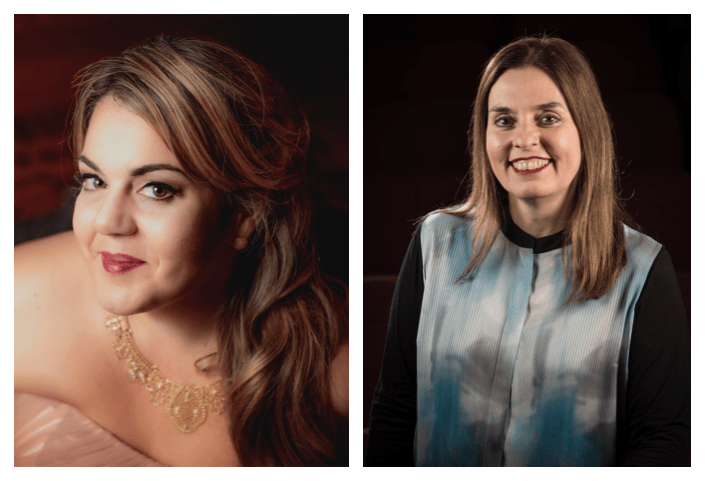
Gabriella Di Laccio & Clelia Iruzun
Susie Georgiadis
James Akers

Karine Hetherington is a teacher and writer of novels, who also blogs on art and music. Her two published novels, The Poet and the Hypotenuse, and Fort Girard, are set in France in the 1930s and 1940s. Karine promotes singers and musicians performing in the fast-growing Kensington and Olympia Music and Arts Festival. She is also a reviewer for ArtMuseLondon.com

Kate-S-and-Steven-DKate Semmens, soprano & Steven Devine, harpsichord. Weymouth Sunday Concerts, 10 March 2019
When I think of the Notebooks of Anna Magdalena Bach, I imagine a weighty tome, leather bound, filled with album leaves of handwritten music on thick creamy vellum.

Anna Magdalena was the second Mrs Bach and was her husband’s helpmeet, looking after his children and assisting in copying out music part for performance. The two surviving collections of music which have come to be called Anna Magdalena’s Notebooks contain works for keyboard and voice, written by her husband and others, used for teaching and for entertainment. The works are small-scale and domestic and offer an intriguing glimpse into the home life of the Bach family: the children studying their keyboard and composition techniques and the entire family enjoying making music together. Interleaved with verse songs, polonaises and minuets are early workings of pieces which Bach later turned into works regarded today as some of the finest in the entire classical canon, including the Aria which opens the Goldberg Variations and Schlummert ein which was developed into Cantata 82.

Kate Semmens and Steven Devine presented a charming programme of works for voice and keyboard drawn from the Notebooks of Anna Magdalena. Performing on an instrument by Colin Booth, copied from a 1710 harpsichord made near where Bach lived, Steven brought vibrancy and elegance to the music, and for me, someone normally to be found at piano concerts, it was refreshing and instructive to hear a harpsichordist’s approach to aspects such as voicing and articulation. Despite the dynamic limitations of the instrument, Steven brought richness of tone and texture, most keenly felt in an uplifting performance of the Italian Concerto BWV 971.

Kate’s soprano voice is warm, expressive and colourful with clear diction and fine sense of drama and contrast. There was a lovely sense of synergy and understanding between these two musicians which highlighted the intimacy of the music, and both musicians introduced the works on the programme, engagingly setting them in context. This was a intriguing insight into the home life of JS and AM Bach and a delightful afternoon of fine music, beautifully presented.


Weymouth Sunday Concerts are presented by Weymouth Music Club. Now in its 74th season, the club hosts six concerts per year on Sunday afternoons at Weymouth Bay Methodist Church. Further information

Meet the Artist interview with Kate Semmens

Meet the Artist interview with Steven Devine

When is a piano not a piano?

When it submits to the dizzying, audacious Musica Ricercata. The Wigmore Steinway found new voices – drums, horns, tinkling bells and great bellowing bass rumbles – in Roman Rabinovich’s mesmerisingly theatrical and witty performance of Ligeti’s eleven-movement musical algorithm. Based on the Baroque ricercar, the set of pieces are linked by a gradual reveal of pitches and structural progression, culminating in a fugue. This was an ambitious and, for some, uncompromising opening to a concert which also comprised music by Bach and Schubert. As befits this musician who is also an artist, Rabinovich drew myriad colours from the instrument, all infused with a rhythmic bite and vibrant sparkle which took full advantage of the crisp tuning of the piano.

That same rhythmic bite and richly-hued sound palette found a different voice in Schubert’s piano sonata in c minor, D958. Composed in 1828 and completed shortly before the composer died, this is his hommage to Beethoven, and the unsuspecting listener could easily be forgiven for mistaking this for one by the old radical himself. Yet Schubert’s more introspective nature is always there, in the shifting piquant harmonies and mercurial volte-faces of emotion and pace. Those who favour the “Schubert knew he was dying” approach to the last three sonatas would have been disappointed: Rabinovich’s performance proclaimed “Choose life!”, particularly in the rugged (but never earnest) orchestral vigour of that deeply Beethovenian opening movement, and the rollicking, toe-tapping tarantella finale (which had a woman across the aisle from me air-pedalling frantically while jiggling up and down in her seat). The second movement was a hymn-like sacred space of restrained elegance and mystery, oh so redolent of Beethoven in reflective mood, yet unmistakably Schubert in its intimacy and emotional breadth.

The Bach Partita, which came between Ligeti and Schubert, tended towards romanticism (no bad thing – I play Bach with a romantic tendency), while the bright sound of the piano afforded some delightful filigree ornamentation.

Based on what I heard last night, I look forward to hearing Rabinovich’s new Haydn piano sonatas recording (the second of which is in production).


Wigmore Hall, Friday 25th January 2019

Ligeti
Musica Ricercata
Bach
Partita in D, BWV828
Schubert
Piano Sonata in C-minor, D958

Roman Rabinovich, piano


Meet the Artist – Roman Rabinovich

On Artistic Process

If you enjoy the content of this site, please consider making a donation towards its upkeep:

Buy me a coffee

An initial approach via this blog in March 2017  led me this week to St George’s Bristol for a lunchtime concert by the sparkling Piano 4 Hands duo (Waka Hasegawa and Joseph Tong).

Last year Josie Dixon emailed me to ask if I might feature her mother, the composer Ailsa Dixon, in my Meet the Artist series. One of Ailsa’s choral works was receiving its premiere as part of the Oriana Choir’s Five15 project. This was rather special because, as Josie explained, her mother had rather “hidden her light under a bushel for the majority of her lifetime”. Ailsa’s interview was published on my Meet the Artist site in July 2017, to coincide with the premiere of her anthem These things shall be, a setting of verses by John Addington Symonds. Around the same time, Josie contacted me again to ask if I knew a piano duo who might be interested in giving Ailsa’s piano sonata ‘Airs of the Seasons’ its first performance. Knowing their fondness for contemporary repertoire for piano duo, I immediately suggested Waka Hasegawa and Joseph Tong (Piano 4 Hands), and was delighted to hear from Josie that they had enthusiastically taken up the piano sonata.

Sadly, Ailsa died in August 2017, just short of her 85th birthday.

In April this year, as I was in the throes of preparing to move from London to the West Country, Josie contacted me again to tell me that Waka and Joseph would be premiering Ailsa’s piano sonata in Bristol on 8 November. As I’d never visited St George’s (considered by many of my musician friends and colleagues to possess the UK’s finest acoustic), nor heard Waka and Joseph together as a duo, I was delighted to join Josie and her family and friends to celebrate the premiere of her mother’s piano sonata.

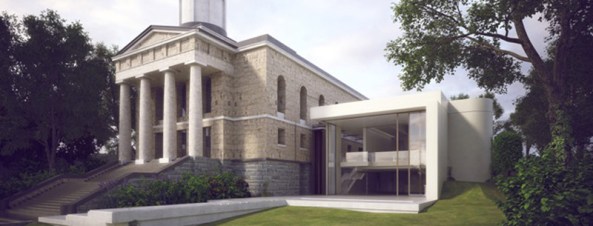
St George’s, a former church in the graceful, well-proportioned Greek Revival style of the early 1820s, is a really fine venue, and a handsome new extension has added a contemporary bar and social area which perfectly complements the building’s clean neo-classical lines. The concert hall itself retains the columns and balcony of the original church, together with a fine altarpiece. A small illuminated star in the ceiling indicates where a bomb fell through the roof during the Second World War but did not explode. At just shy of 600 seats, St George’s is about the same size as London’s Wigmore Hall.

view-from-great-george-street-for-webbanner
St George’s Bristol with its new extension

The purity of St George’s acoustic combined with Waka and Joseph’s split-second precision, supreme technical assuredness and musical sensitivity brought wonderful clarity and contrasting shading to Mozart’s Andante with Variations KV 501, which opened the concert. This linked neatly to David Matthews’ Variations on a theme by Haydn, which was written for Waka and Joseph. The unsually chromatic theme from the opening of Haydn’s last string quartet is the starting point for this set of 12 variations which initially remain close to the originally theme before moving into wider musical territory, including a tango (Var. 5), a blues variation (Var. 7) and a moto perpetuo (Var. 10). The work has a delightful sense of fantasy suffused with romanticism and musical wit, and ends with a humorous exchange between the two players which Haydn would surely have appreciated. It was evident from the performance that Waka and Joseph really relish this kind of repertoire, which proves that the piano duet is not confined to small-scale salon works.

Ailsa Dixon’s Airs of the Seasons was composed in the early 1990s and is her only substantial work for piano. Its four brief movements are each prefaced by a short poem, evoking in turn the magical stillness after a winter snowfall, the first stirrings of spring, a dragonfly darting over the water in summer, and finally amid the turning leaves of autumn, a retrospective mood which recalls the earlier seasons and ends with the hope of transcendence in ‘Man’s yearning to see beyond death’. The opening chords of the first movement are reminiscent of Debussy and Britten in their timbres, and the entire work has a distinctly impressionistic flavour. Ailsa’s admiration of Fauré for his “harmonic suppleness” is also evident in her harmonic language, while the idioms of English folksong and hymns, and melodic motifs redolent of John Ireland and the English Romantics remind us that this is most definitely a work by a British composer with an original musical vision. The entire work, although quite short, is really delightful and inventive. Rich in imagination, moods and expression, the musical evocation of each season is distinct and characterful – Summer, for example, is not all sunshine as a brief but dramatic storm interrupts the warmth and serenity, while Autumn contains flashes of music from earlier movements to underline its reflective, retrospective mood. From a pianistic point of view, the textures of the music are carefully conceived to bring a range of colours and voicings imaginatively shared between the two players.

Mme Debussy deemed her husband’s La Mer unplayable in its piano four-hands version, but Waka and Joseph made impressively light work of this masterful evocation of water, light and wind (and reminded me of my coastal home in Dorset, currently in the grip of gale force autumnal winds!). Their brilliant pianism complemented by total synergy at the keyboard brought this work to life with vivid drama and passion, and was a thrilling close to an absorbing and varied programme.

img_2202
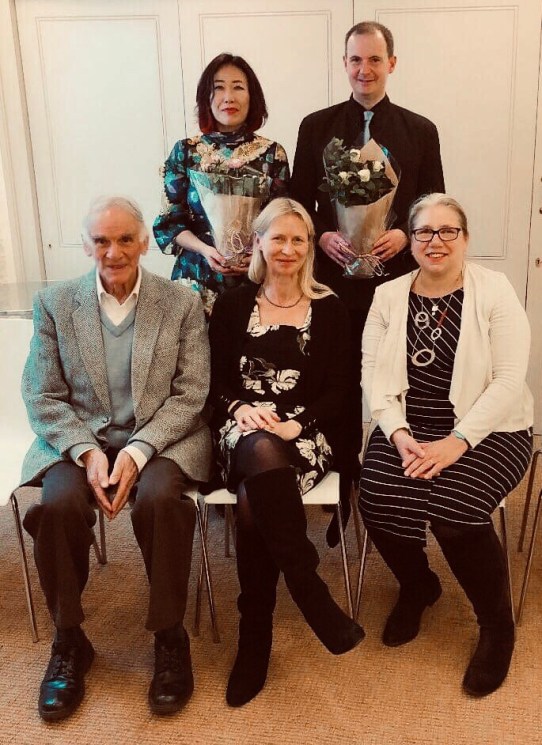
back row: pianists Waka Hasegawa & Joseph Tong; front row from L to R – Brian Dixon (Ailsa’s husband), Josie Dixon (Ailsa’s daughter) and Frances Wilson (The Cross-Eyed Pianist)

Meet the Artist interview with Ailsa Dixon

More about Ailsa Dixon


