It seemed fitting in the year of the centenary of Claude Debussy’s death for the pianist Denis Kozhukhin to devote half of a concert to his music, and appropriate to include George Gershwin in the second half. Debussy was undoubtedly aware of – and influenced by –  American ragtime and jazz, and had an immense influence on Gershwin, and later jazz composers, including Duke Ellington, Bill Evans and Keith Jarrett. The ghost of the French composer haunts many of Gershwin’s works with their pungent harmonies, simple melodies and improvisations.

Never had Book 1 of Debussy’s Préludes seemed so languid, so laid back as in Kozhukhin’s hands: even the up-tempo pieces such as Le Vent dans la plaine and Ce qu’a vu le vent d’ouest, or the capricious La Danse de Puck had a relaxed suppleness which suggested music played not in a grand concert hall but rather late evening in a Parisian café with a glass of something before one. Danseuses de Delphes set the tone: this first Prelude had an erotic grace, a hint of naughtiness behind the direction Lent et grave (slow and serious). Voiles even more so: was this a boat gently rocking on water, its sails barely ruffled by a warm breeze, or perhaps diaphanous veils wafting in an altogether more sensuous scenario? Kozhukhin kept us guessing, lingering over Debussy’s intangible perfumed harmonies, subtly shading his colourful layers and textures, and highlighting the quirky rhythmic fragments which frequent these miniature jewels. His approach was concentrated and intense – the frigid stillness of Des pas sur la neige was almost exquisitely unbearable – but there was wit and playfulness too, Minstrels prancing cheekily across the keyboard to close the first half with an insouciant flourish.

Read full review here


Artist photo: Marco Borggreve

jeremydenk_3226643k

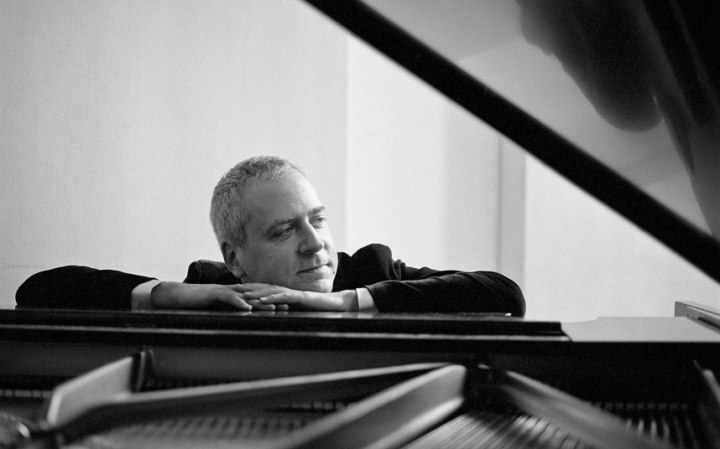
When the concert is perfect, does that make the reviewer redundant?

As regular readers of this blog will know, I enjoy writing about the concerts I attend but I also struggle with the purpose and value of concert reviews. At the most fundamental level, a review is a record of the event, setting it in context and as a moment in history. A review should also offer readers a flavour of the event and the thoughts and opinion of the reviewer about that event. When I left Milton Court last night I told my concert companion I could not write about the concert we’d just attended because it was so perfect that to write about it could not possibly do justice to the quality of the performance…..

Last night I attended American pianist Jeremy Denk’s concert at Milton Court, one of London’s newest concert venues and, in my opinion, the finest for piano music because of the clarity of its acoustic. Add a pianist whose musical insight and intellectual clarity, magical touch and sense of pacing bring the music to life so that you want to hear him “no matter what he performs” (NY Times), and we have the makings for an evening of exceptionally fine pianism.

It was a typically piquant programme, changed from the published version to include just three works – two magisterial, transcendent late sonatas by Beethoven and Schubert and Prokofiev’s Vision Fugitives, twenty fleeting miniatures, by turns quirky, ethereal, rambunctious, grotesque, poetic, delicate, fragmentary….. Denk revealed their individual characters so carefully, so delightfully that each tiny gem felt like a stand alone piece in its own right.

Beethoven’s piano sonata in E, op 109, the first of his triptych of last sonatas, also opens with a fragment – a tiny arabesque of just two notes in the right hand to which the left hand replies with a similar figure. It’s not a melody, yet that opening is immediately memorable. In Denk’s hands the music unfolded before us, its narrative flow so naturally paced. A muscular middle movement which dissolved into a theme and six variations, surely some of the most transcendent Beethoven ever wrote and handled with a delicacy and robustness, when required, by Denk which pulled one into this otherwordly soundworld so completely that one was transported, fully engaged and utterly overwhelmed. It was akin to meditating.

It felt almost wrong to leave the auditorium for the interval and face the noisy crush around the bar, but we knew the second half would take us to another special place, the unique world of late Schubert, his final sonata completed just a few months before his death.

Is the Sonata in B flat, D960 Schubert’s “final word”? A valediction for his departure from this world? I’ve always been suspicious of this view of this great sonata, whose expansive opening movement is like a great river charting is final course before the ocean, and whose finale is a joyful outpouring of hope, a reminder perhaps that Schubert had more, much more to say, had he lived longer. This was certainly Denk’s take on Schubert’s last sonata. The opening movement’s first theme had the serenity of a hymn, the second theme more unsettled, but the overall sense of repose remained, occasionally interrupted by dark, but never ominous, rumbling bass trills.

The meditative quality of the Beethoven variations was felt again in the slow movement of the D960. In some pianist’s hands, this movement can sound funereal, but Denk gave it a mystical grace and a sense of forward movement, so that the warmth of the A major middle section when it came infused rather than surprised the ear. The Scherzo poured forth with the agile freshness of a sparkling mountain stream, but the Trio reminded us that melancholy is never fair away in Schubert’s world, the bass accents (too often overlooked in other performances/recordings) here perfectly highlighting the change of mood….

The finale opens with a bare G, potentially as cold as the opening of the first Impromptu, but a dancing sprightly rondo quickly ensures, rising to a joyous conclusion, all masterfully and imaginatively presented by Denk. The overall pacing of this Sonata, like the Beethoven, was so elegantly managed: it is a long work (around 40 minutes) yet Denk’s clear sense of a through narrative and overall architecture of the music ensured there were no longueurs, not a moment when the mind wandered to other realms.

The encore was Brahms’ ever popular Intermezzo in A, from the Op 118. Tender and poignant, it was a lovely conclusion to an exceptionally fine evening of pianism.

when I have felt in the moment of the performance I have brought the notes on the page to life in a weird way which is outside of me – that is the kind of success that I am after

– Jeremy Denk (interview with The Cross-Eyed Pianist)

Meet the Artist – Jeremy Denk

original

Thursday 11 January 2018

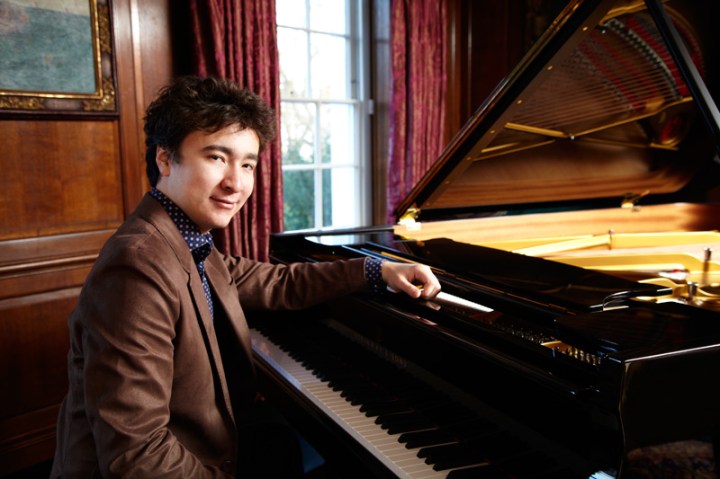
Samson Tsoy, piano

Schubert – Four Impromptus, Op 90

Rachmaninoff – Five Preludes Op 23

Two composers writing 75 years apart, both 30 and both entering significant periods of intense creativity in their compositional lives. By 1827 Schubert knew his life was drawing to a close. Ill with syphilis and the side-effects of its treatment since 1823, the year before his death, when his composed his Impromptus for piano, signalled a period of remarkable output. 75 years later in 1902 Rachmaninoff marries his cousin Natalia Satina and embarks on his Second Piano Concerto, the Cello Sonata, and Second Suite for Two Pianos, in addition to the Preludes Op 23.

Both sets of works are infused with their composer’s distinct psychology. Schubert’s bittersweet nostalgia, his markedly shifting moods, his long-spun melodies and the lilting rhythms of the ländler and the waltz run through the Four Impromptus Op 90, creating a unifying thread, and Samson Tsoy revealed these special qualities of Schubert’s writing with sensitivity and poise, from the desolate opening of the Impromptu in C minor, to the warm poetry of the fourth in A flat. This was refined and mature playing.

Rachmaninoff’s Op 23 Preludes are confident and exuberant, never more so than in the famous G minor, and Samson responded to with equal confidence and spirit, offering a rich palette of musical colours presented with stylish panache and an evident relish for this music. A special warmth and elegance was reserved for the D major Prelude.

A most enjoyable and rewarding lunchtime concert.


The Jazz Room at The Bull’s Head, a riverside pub in Barnes, SW London, more usually vibrates to the tunes, rhythms and vibe of the genre from which it takes its name, but last night the intimate space was filled with altogether different sounds in a concert given by two highly acclaimed classical musicians – David Le Page (violin) with Viv McLean (piano).

David-le-Page-2-1

In addition to his solo, ensemble and orchestral work, David Le Page is also a composer of beautifully-crafted, imaginative and highly evocative music. His latest album ‘The Book of Ebenezer’ (release date TBC) is inspired by The Book of Ebenezer Le Page by G B Edwards. Set in Guernsey through the late nineteenth century up to the 1960s, the novel takes the form of a fictional autobiography narrated by Ebenezer Le Page, a typical “Guern’ man, deeply engrossed in his life on the island. David Le Page also hails from Guernsey,  no relation to Ebenezer Le Page, though as David said in his introduction to his music, the name Le Page is as common in Guernsey as Smith is elsewhere in the UK. David has taken moments in Ebenezer’s life as recounted in the book as the inspiration for an album of 10 exquisite miniatures for violin and piano.

In the slower, more reflective pieces, the music is redolent of the spare grace and meditative stillness of expression of Arvo Pärt, while the more lively pieces have folksy intonation and foot-tapping rhythms. Several of the pieces use Guern folksongs, and one is based on Sarnia Cherie, the national anthem of Guernsey. All the music is highly evocative, infused with a tender poignancy which speaks not only of the eponymous hero’s reminiscences and reflections but also of David’s connection to the island of his birth, its landscape and its weather. There are haunting bird calls, as if heard from afar, the gentle wash of the sea rippled by the wind, the glint of light in water – elements which give the music a filmic quality and serve as a narrative thread which runs throughout the suite of pieces.

Purists may balk at hearing classical music in a venue normally reserved for jazz, but the small size of the jazz room lends itself to the right kind of concentrated listening and intimacy of expression which this music demands and offers. And David Le Page and Viv McLean create a very special intimacy of their own – these musicians work together regularly and their empathy and mutual understanding is palpable in every note they play.


David Le Page and Viv McLean return to the Jazz Room at the Bull’s Head for a special concert for Valentine’s Day on Wednesday 14 February – details here