Guest review by Ruth Livesey
Jia Ning Ng, Biggar Music, Club 5th October 2023
BEETHOVEN: Piano Sonata No.17 in D minor, “Tempest”Op. 31 No. 2
ROBERT SCHUMANN: Bunte Blätter Op. 99
SCHUBERT: Piano Sonata in B-flat major, D960
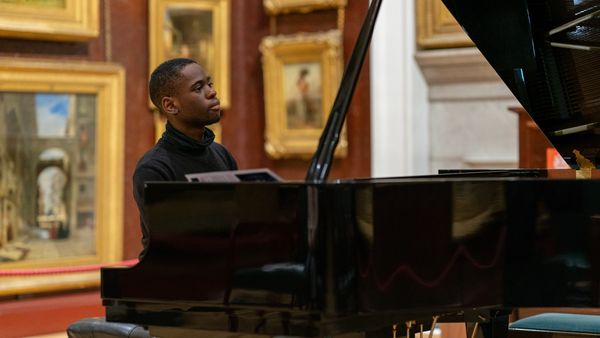
Jia Ning, a young pianist from Singapore, studied at the Royal Conservatoire of Scotland. She graduated top of her class in 2022 and was awarded her Artist Diploma, having previously gained her Master of Music (Piano Performance) and Bachelor of Music with First Class Honours. She also won several awards and competitions, including the RCOS concerto competition, allowing her to make her debut with the Royal Scottish National Orchestra. In addition to embarking on her solo career, Jia Ning regularly collaborates with other musicians as a keen chamber musician and is also a staff accompanist at the Conservatoire in Glasgow. Her recital at Biggar Music Club formed part of an RCS Governor’s recital tour, including performances in Peebles, Kelso and Falkirk, and forthcoming concerts in Inverness and at Strathearn Music Society in November.

Her performance was keenly anticipated in Biggar, after she received a standing ovation in Peebles, and deservedly so; her performance of the same programme here, tackling some very profound works, showed immense maturity, poise and mastery. Right from the sorrowful Largo opening phrase of the first movement of Beethoven’s Sonata in D minor, Op.31 No. 2 (Tempest), she captivated the audience, who didn’t move a millimetre from the beginning to the end of the concert. Indeed, it was one of those rare openings to a recital where it was apparent from the first few notes that it was going to be something very special.
One of several notable aspects of Jia Ning’s playing, which immediately stood out in this first motif, was the quality of her tone production – a feature that was evident and a highlight throughout the whole recital, in the vast spectrum of soundworlds called for – as she created a mysterious atmosphere, with such a gentle, but clear touch. This immediately gave way to the dramatic, agitated contrasting material that followed. The frequent alternation of the stormy and peaceful sections was well managed and varied throughout this movement. Passages where a lighter, more articulated touch was called for were wonderfully nuanced, with an interplay between melodic and harmonic lines in impressive balance at other times, such as at the end of the exposition. There was an other-worldly quality to the recitative-like section, a solo right hand line over an arpeggiated pedal, often attributed to Beethoven’s own words, but according to Dr Barry Cooper perhaps erroneously so, as being, “like a voice from the tomb.”
In the noble, hymn-like, ravishing slow movement, the audience remained entranced and completely silent, as Jia Ning achieved a splendid purity of tone in her long cantabile melodic lines, which unfolded organically, allowing the music to speak for itself. The triplet drum-like figures in the accompaniment, alternating in register, towards the end of the first subject were played with admirable articulation and an extraordinary, shimmering delicacy. Chords were voiced exquisitely throughout, with so many tangible layers to her sound, even just in this movement. The graceful sweep of the left hand demisemiquaver descending accompaniment in the recapitulation, was stunningly beautiful and elegant, creating one of many memorable moments in this introspective and sometimes poignant movement. Moreover, it was also obvious throughout the evening that Jia Ning possesses an intelligent attention to detail and faithfulness to the score in all aspects of her playing, yet her interpretations were never predictable.
We were always left with an impression of spontaneity and a feeling of discovery, with Jia Ning finding numerous special moments and delightful details, in order to portray her evocative exploration of many different emotions. In the final movement, she presented us witha contrast between lyrical lines and the stormier material, where there were bold torrents of sound. There was tension in the climaxes and a spine-tingling control in the quietest of passages. We were treated to a full range of expression to end this turbulent Sonata. It was a magnificent start to the recital, leaving a wonderful first impression of her astonishing pianism and ability to communicate meaning.
To end the first half, Jia Ning turned to Schumann and his uncommonly heard Bunte Blätter, Op. 99 (which translates as ‘Colourful Leaves’). She presented the first 10 of the 14 miniatures in the set, and each was expertly characterised with a vast array sentiments and moods, that often shifted abruptly. The opening to the first was extremely tender and moving, yet with a joyful simplicity and perfectly judged flexibility in the rubato. It was a splendid introduction to the rich and vivid world of Schumann. There was a meticulous approach, with every phrase precisely contoured, yet her playing always unfolded naturally and was never forced. The playfulness and liveliness achieved in the Novelette was particularly enchanting. An energetic conclusion in the Präludium brought this remarkable first half to an end and, for a while, the audience sat quite stunned, taking in what they had just heard before turning to each other with smiles and praise.
The second half was entirely given to Schubert’s monumental Sonata No. 21 in B flat, D960. This was his final sonata, written in a frenzy of activity during the last months of his life, a time wracked with poverty and ill-health before his premature demise. It is cast in four expansive movements, classical in overall structure, but romantic features are evident, such as the cyclic material unifying the movements, and also the harmonic language. It was pleasing to hear the exposition repeats in the long opening movement. Jia Ning explained that she had included them so as not to miss out important motivic details. The movement is notable for its mercurial shifts in harmony, colour and thematic material, which were handled with a staggering intensity and artistry, as we were drawn into the gentle drama that unfolded. The opening of the development section, in the remote key of C-sharp minor, was played with a celestial beauty and, as it progressed, contrasting motifs gave way to the climax of the development which was imbued with real pathos and serenity. At other moments, warmth radiated from long flowing lines over well-balanced and muted bass figurations. The dynamic and emotional range throughout the movement was boundless.
From the outset, we were drawn right into the reflective, sombre and sometimes tragic second movement. At times the playing was barely audible, yet with an ethereal clarity of sound that still reached the back of the hall. This considerable dynamic control was effortless and there to serve the music, with its spiritual inclination. The rich textures of the middle section signalled yet another shift in temperament. The change of timbre towards the end of the movement for the move to C major was hauntingly sublime.
The Scherzo of the third movement skipped along with a luminosity of sound and lightness of touch, interspersed by the momentarily darker mood of the Trio. The concert was brought to an end by a tumultuous reading of the mighty final movement. Just as in the Beethoven, Jia Ning handled the unpredictable shifts of mood, key, dynamics, texture and timbre astoundingly, yet there was never an excess of ideas. There was a real drive in the turbulent themes, which contrasted with the jubilation elsewhere. It was refreshing to heara player at the beginning of their professional career tackle this repertoire, rather than opt for more obvious showmanship, which she is clearly capable of, as shown in the rapid flourishes in the encore, (Balakirev/Glinka, The Lark). This left me speechless as we were taken to yet another stratosphere. However, it takes a pianist of outstanding skill to be able to play these works of great depth in the way that she achieved, with much of what astounded me being difficult to portray in words, because it was found in her deep communication with the audience. She balanced her ability to have something to say, with letting the music just be. How blessed are the music lovers in our community, and those surrounding us, to have been able to witness such fine creativity and artistry.
There is surely a bright future ahead for this pianist and I will look forward to attending a future concert given by Jia Ning.
©Ruth Livesey







 The Cross-Eyed Pianist