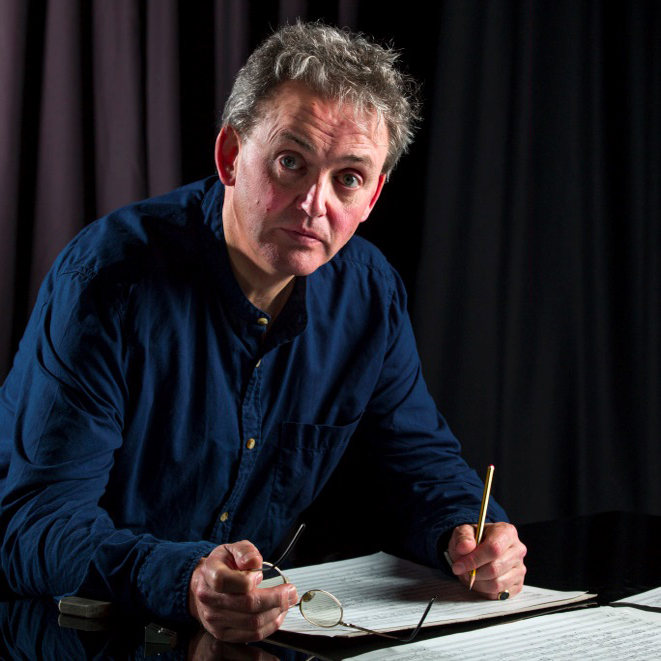
24 Preludes for Piano by Nicholas Scott-Burt

Da-Hee Kim piano

Premiere recording

Listen to the opening measures of the sixth Prelude from Nicholas Scott-Burt’s 24 Preludes for Piano, and you might be forgiven for thinking this is actually by J S Bach, with its combination of rigour and elegance, counterpoint and Baroque flourishes.

The ghost of Bach is also present in the very first Prelude of the set, redolent of the C major Prelude from Book 1 of the WTC in its processional momentum, its rhythm, and expression. Played by pianist Da-Hee Kim with a luminous glow and clear articulation, it’s a wonderful opening to this intriguing new release of contemporary piano music, drawing you into a composer’s soundworld that is richly coloured, texturally diverse, witty, and at times quite beautiful. 

British composer Nicholas Scott-Burt composed his 24 Preludes during 2019 and 2020. Following a tradition established by J S Bach and continued by, among others, Chopin, Debussy, and Shostakovich, Scott-Burt’s cycle reimagines the prelude as both a brief musical statement and a means for expressive variety. Each piece acts as a standalone miniature whilst also contributing to the overall narrative of the complete set: the Preludes are organised into four ‘Books’, which can be performed as an integrated sequence, ‘pausing for longer at the end of each book, as one might pause between the movements of a sonata or symphony’ (Nicholas Scott-Burt).

Each book has its own distinct character: Book 1 is neat and neo-classical; Book 2 is more extravagant and romantic; Book 3 is somewhat more introspective; and Book 4 is bright and sunny, though not without some darker moments.

The composer was kind enough to allow me to see the score, and it’s clear that he draws on a wide range of pianistic textures, rhythmic gestures, and harmonic languages in his writing. Some preludes evoke lyrical introspection, others have driving rhythmic energy or contrapuntal interplay. There’s a powerful array of dynamics from hushed delicacy to declamatory chords, and many of the preludes experiment with colouristic sonorities that brilliantly celebrate the piano’s resonance, sonic variety and expressive range. 

With their imaginative harmonic progressions, rhythmic variety and shifting tonal perspectives, each prelude embodies its own character and atmosphere. The result is a sequence that invites both performer and listener to explore a wide range of moods – from reflective calm to virtuosic brilliance – within the intimate scope of the piano miniature.

While rooted in the tradition of the prelude cycle, Scott-Burt’s collection has a distinctly modern voice, with his musical influences clearly evident. It echoes composers such as Bach, Chopin, Shostakovich, as well as Handel, Purcell, Schumann, Liszt, Prokofiev, Bartók, Messiaen, and jazz. Scott-Burt skillfully integrates all the colours of his own compositional language to craft music that is individual and contemporary, while acknowledging the rich traditions from which it emerges.

Award-winning Korean pianist Da-Hee Kim performs the preludes on this premiere recording, bringing both sensitivity and virtuosity to the music, always alert to its shifting colours and textures. She delivers pristine articulation, supple phrasing, some impressive pedal technique, a luminosity of tone, and wonderfully weightless playing, when required, highlighting the individual character of each prelude, and ‘musical personality’ of each Book.

In addition to the 24 Preludes for Piano, this album includes two further works by Scott-Burt, his Minimalis I, ‘a self-imposed experimental exercise in structuring’, and Love Song, a contemporary on the tradition of the piano ‘Love Song’ by composers such as Mendelssohn, Schubert, Schumann, and Liszt.

This is a wonderful addition to the contemporary piano literature, and I truly hope the composer can find a publisher for his 24 Preludes, so that more pianists, both professional and amateur, can explore and enjoy it. 

24 Preludes for Piano is released on the Divine Art label on CD and streaming.

Read Meet the Artist interviews with Da-Hee Kim and Nicholas Scott-Burt
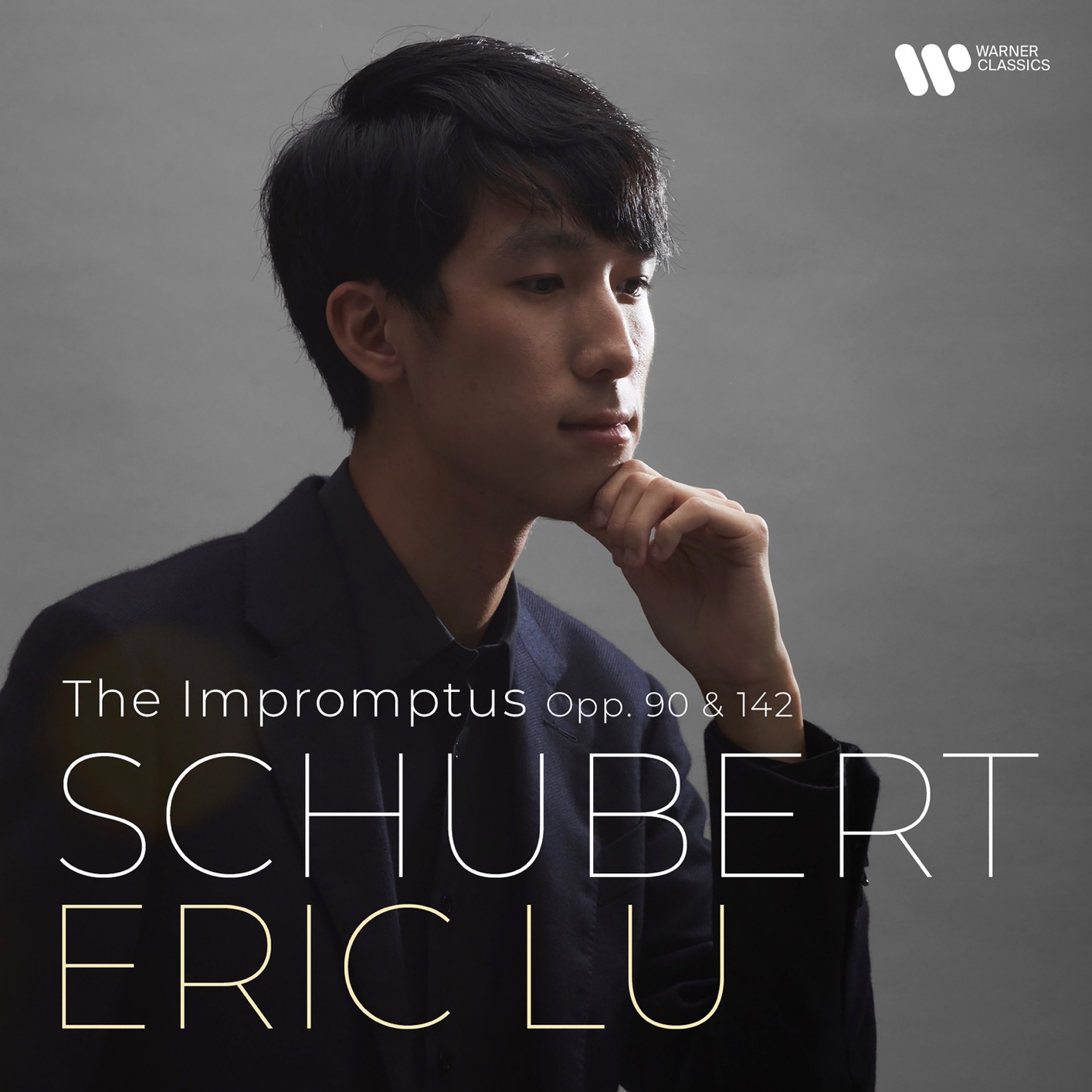
Schubert: Impromptus Opp.90 and 142 – Eric Lu, piano (Warner Classics)

The two sets of Impromptus are my favourite piano pieces by Franz Schubert, music which I’ve explored as both player and listener since my teens. As a consequence, I’m very fussy about performances and interpretations of this music

In his second recording of Schubert’s piano music, Eric Lu, winner of both the Leeds and Chopin competitions, presents both sets of Impromptus. In interviews, Lu has expressed his affinity with and affection for Schubert’s music, stating that, “It is difficult to describe how meaningful his music is to me….he is the composer who moves me most intensely.

A shame then, that Lu doesn’t seem to translate these statements when he actually plays the music. Ponderous tempos, lingering rubato and over-emphasised agogic accents, all presumblay intended to suggest “emotional depth” abound, particularly in the D898/1, D935/1 and D935/2. Here, I feel Lu mistakes slowness for profound emotion. This is most evident in the very first impromptu. That bare G that opens the piece is sustained far too long, to the point where one wonders if the pianist has perhaps forgotten what comes next. The opening theme is sluggish (the overall tempo is too slow here) and detracts from the drama and contrasting moods (portrayed in Schubert’s characteristic volte-faces between minor and major keys). I felt this performance was contrived, somewhat egocentric – and find myself repeating some of what I said about Lu’s previous Schubert release. Oh dear! (https://crosseyedpianist.com/2022/12/30/leeds-winners-release-albums/)

He’s better in the more lively impromptus. The D899/2 ripples along in its outer sections, with a clear dance pulse in the bass which adds to the sense of forward propulsion. The final impromptu, a fiery Hungarian dance, has rhythmic bite which contrasts with sparkling scalic passages.

Lu is often described as “a poet of the piano” (a moniker attributed to many a young competition winner these days!) and there’s no doubting his ability to make a beautiful sound, perhaps most evident on this recording in the G-flat major impromptu where Lu achieves a singing melodic line, sensitively phrased, over a subtly shifting bass of almost continuous movement.

The thing about this music is that Schubert gives plenty of directions and a rather more “literal” interpretation, free of wandering rubato and unnecessary accents, actually feels more in keeping with the composer’s emotional landscape.
And for that I would recommend recordings by more mature, experienced Schubert players such as Maria Joao Pires, Mitsuko Uchida or Murray Perahia.

But Lu is not yet 30 and there’s plenty of time for him to absorb all the subtleties and details of Schubert’s writing. So maybe I’ll find more to love in his next release, when it comes….

Opus 109 – Vikingur Olafsson

A late masterpiece by Beethoven lies at the heart of this new release by Icelandic pianist Vikingur Olafsson to create a dialogue across the centuries.

The works of Beethoven’s third creative period feel both intimate and cosmic. It is the music of the future, yet it is fuelled by the music of the past – the music of Bach.

Vikingur Olafsson

Olafsson eschews the usual custom of presenting Beethoven’s final three sonatas together and instead places the transcendent Opus 109 alongside pieces by J S Bach and Franz Schubert as well as Beethoven’s Sonata Ppus 90 to create a ‘concept album’ where pieces connect and reflect.

For Olafsson, it was Bach’s Goldberg Variations (which he recorded in 2023) that drew him to Beethoven’s last three sonatas. He “felt the presence” of Bach in these late masterpieces, works where Bach’s influence is most strongly felt in their “wild polyphony”. The Sonata Opus 90, meanwhile, offers a prelude to the Opus 109 with its intimate, fleeting first movement and warm second movement, while also looking forward to Schubert’s early period sonata in E minor, D566, also scored in two movements. The other works on the album are Bach’s prelude in E major from the Well-Tempered Clavier and the imposing E minor Partita, perhaps the greatest of his keyboard suites.

Another unifying thread through the album is that all the pieces are in the key of E (major and minor modes) which for Ólafsson, who has a form of synaesthesia, represents lush and vibrant shades of green.

The album opens with the Prelude No. 9 in E from Book 1 of the Well-Tempered Clavier, played with Olafsson’s trademark luminous tone. It’s an intimate opener and contrasts with the drama of Beethoven’s Sonata No. 27, the first movement of which is imposing yet carries with it, especially in the second movement, the same airy elegance of the Bach Prelude.

The E minor Partita is serious, majestic, articulated with clean Baroque detachment and sensitive voicing. Olafsson finds the same intimacy in the middle movements of the Partita, in particular in the Allemande, which is almost tender in its counterpoint. The Sarabande, prayer-like and sombre, has an improvisatory quality. The closing Gigue, meanwhile, is energetic and crisply articulated.

We stay with E minor in Schubert’s two-movement Sonata D566. Olfasson’s transparent sound and subtle phrasing suit Schubert and he brings a warm cantabile to the music, in particular in the second movement.

With his characteristic clarity, poetic imagination and instinct for colour, Ólafsson approaches Beethoven’s late-period masterwork as a living, breathing meditation – fragile, searching, ultimately transcendent. The opening movement is natural, almost spontaneous, with a conversational quality in its phrasing.

The middle movement bursts forth with a controlled ferocity. Here, Ólafsson’s articulation is exceptionally clean, almost crystalline, but never merely virtuosic.

The emotional heart of this sonata is the third movement, with its tender, prayerful theme. Each variation has its own emotional landscape, shaped with meticulous attention to detail and rich in genuine feeling, yet Olafsson never loses sight of the overall narrative arc of this movement. His voicing allows inner lines to glow while the delicate filigree in the upper registers shimmers delicately. The music seems to unfold in a single, unbroken breath, time almost suspended in the later variations. Here is the music’s spiritual core and Olfasson invites us to bask in its radiance.

The album closes with the Sarabande from the E major French Suite, as Olafssons takes us back to the beginning, as it were, with J S Bach, the daddy of them all.

As with his previous releases, notably his recordings ‘Rameau and Debussy’ and ‘From Afar’, Olfasson brings a fresh perspective to well-known repertoire through thoughtful programming, finding intriguing connections and shining a new light on the familiar. And it’s all beautifully presented too.

Opus 109 is released on Deutsche Grammophon on CD and streaming

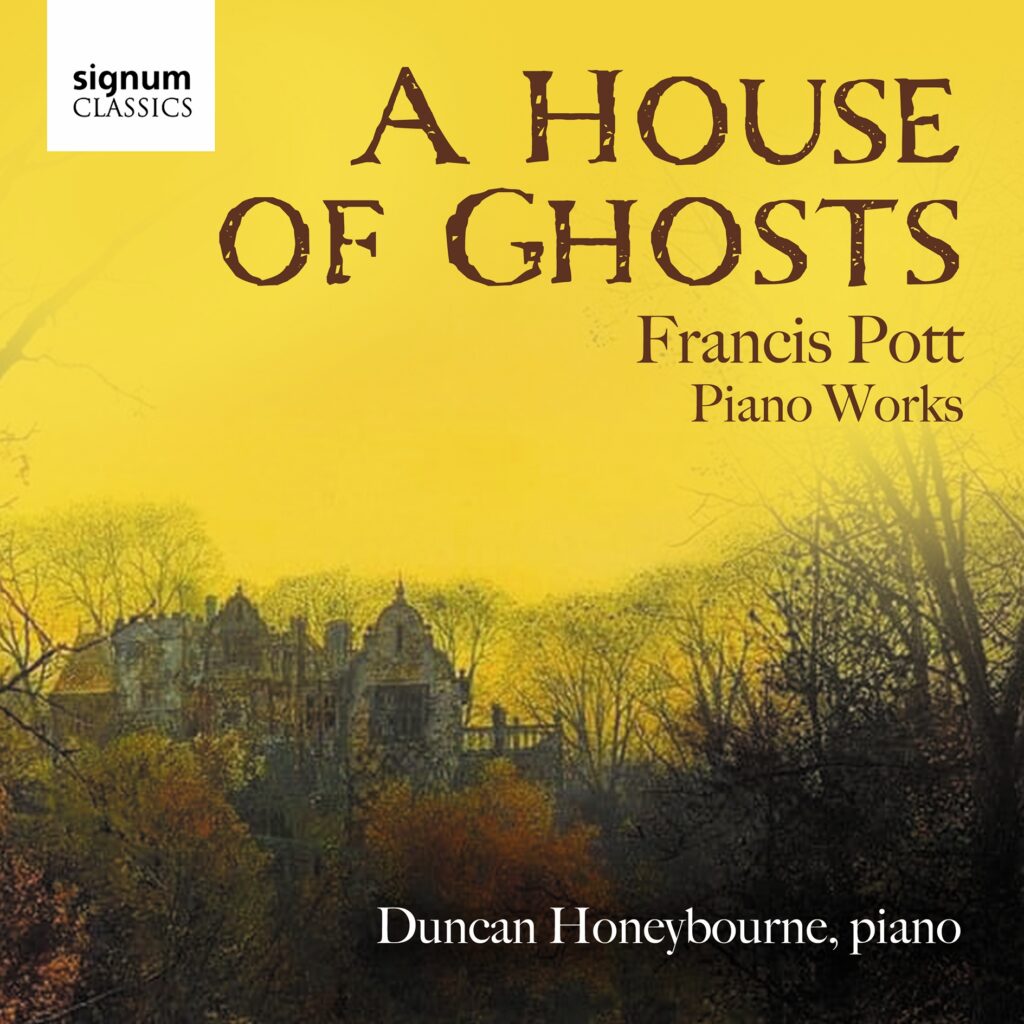
This new release of music by British composer Francis Pott, performed by Duncan Honeybourne, brings together piano works written between 1983 and 1997.

The title of the album, ‘A House of Ghosts’, reflects the character of the pieces: short works and miniatures which offer glimpses of places and voices that remain just out of reach, rather than an overall narrative. Pott’s music is elegant and restrained, reflecting on memory, landscape, and legend, occasional reference to medieval song (Minnelied, Blondel, Walsinghame), Chaucer (Pageant, with its distinctively ‘Medieval’ open fourth and fifth chords), T. S. Eliot (Revenant), and the abandoned community of St Kilda, a remote archipelago in Scotland (Farewell to Hirta). The mood of many of the pieces is wistful or nostalgic, with a timelessness which harks back to earlier times and musical styles: Pott’s influences include William Byrd, Gustav Mahler and Vaughan Williams, and one hears echoes of these composers, and others, in his harmonies, textures and long-spun melodies.

“A House of Ghosts is a sequence of a dozen short pieces concerned with the past, whether imagined, historical or (as in the case of the final piece) autobiographical. These movements are combined here with freestanding longer items, where sea music (Farewell to Hirta and Hunt’s Bay) is mixed with explorations of elusive memory (Le Temps qui n’est plus and Drowned Summer). Gently distinctive in its harmonic and tonal language, this music is the work of a professional pianist-composer with a refined and subtle insight into the physical and textural properties of the instrument.”

Duncan Honeybourne, pianist

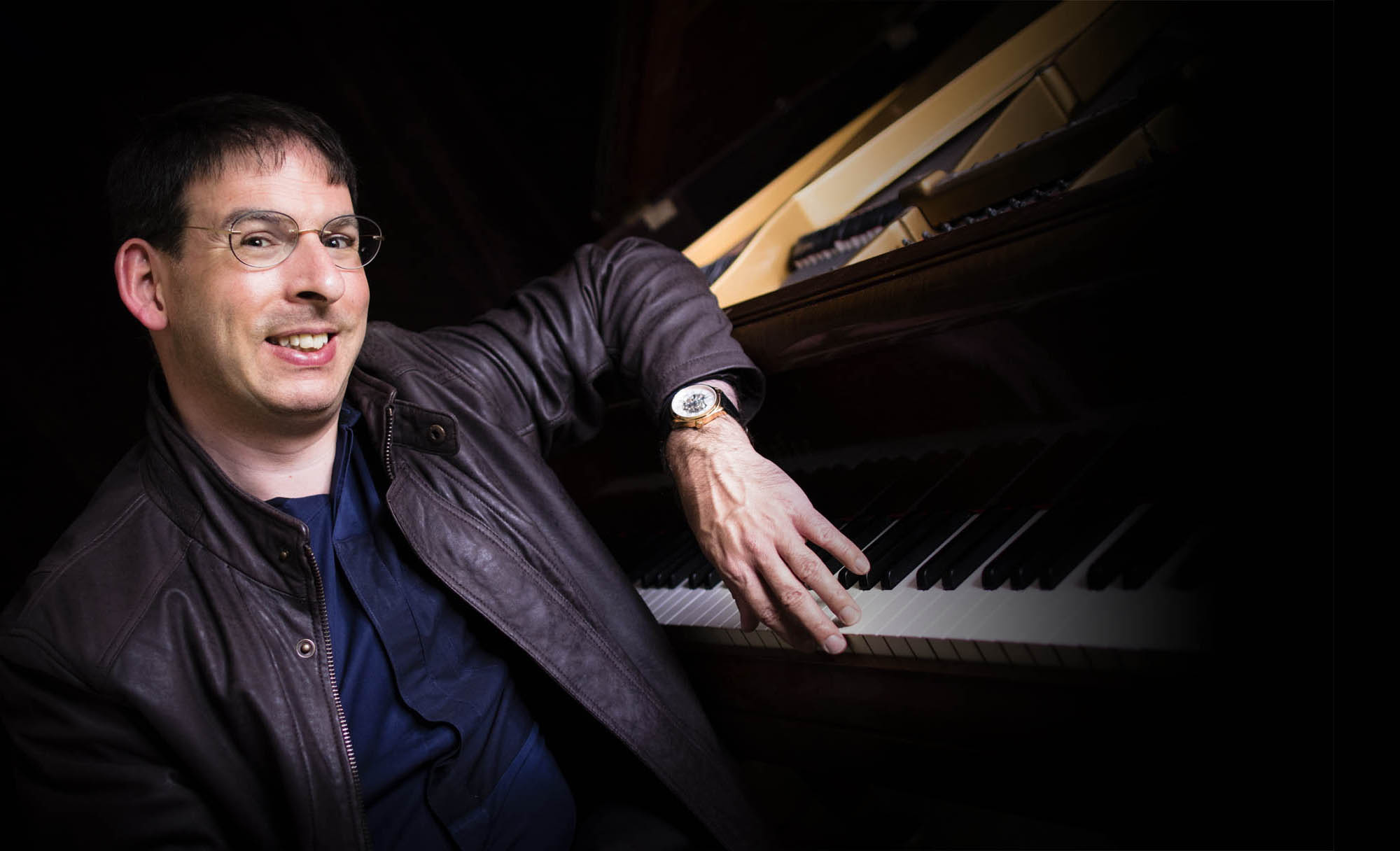
I had the pleasure of page-turning for a performance by Duncan Honeybourne of several of the pieces featured on this album. This not only introduced me to Pott’s compelling soundworld but also offered a glimpse of his writing style. ‘A House of Ghosts’ is music written for the intimacy of the home, with the amateur pianist very much in mind. This is music that will appeal to the sophisticated amateur pianist who enjoys contemporary music that is melodic, structured and expressive, yet not overly-challenging. The music is highly pianistic (the composer is a pianist himself), approachable yet thought-provoking, consonant…. They may appear simple, but there is much scope for sensitivity in voicing, dynamics and pedalling to bring these finely-crafted pieces to life.

Duncan Honeybourne brings clarity, gracefulness and emotion to this elegant, atmospheric music, responding with much musical thought and sensitivity to its subtly-shifting colours and moods to create an album that is wholly enjoyable and deeply absorbing.

A House of Ghosts is released on digital streaming and download

Scores of Francis Pott’s music are available from Composers Edition