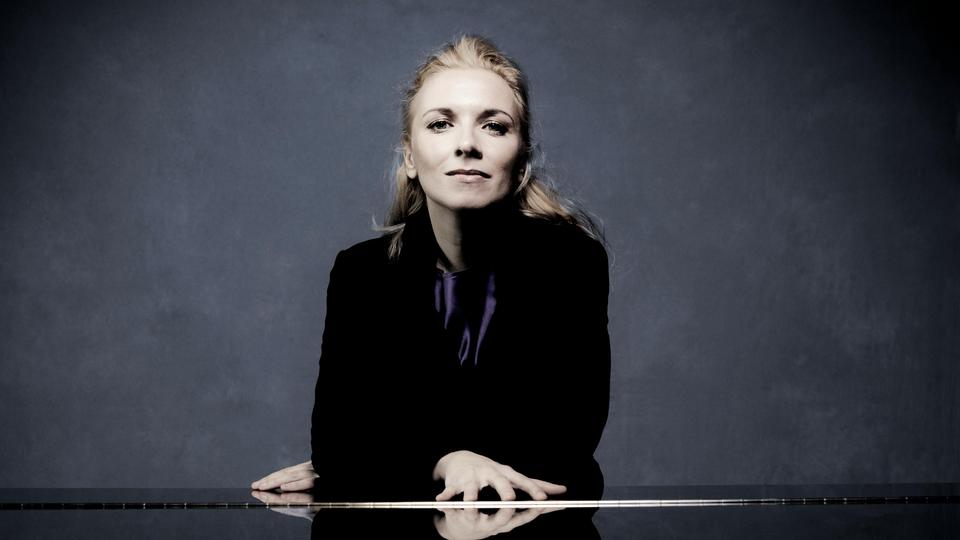
An interview with Chinwe D John, a medical doctor and author, whose first EP “Within a Certain Time and Place” was released in March 2022.

Tell me a little about your background. Have you always written poetry?

Firstly, let me say thank you for hosting an interview with me. I was born in California to Nigerian parents, and had lived on four continents by the time I was a teenager. Due to my younger siblings schooling in the UK, I came to spend a modest amount of time in England. I ended up pursuing my post medical school training in the States, where I practice my medical vocation as a Physical Medicine and Rehabilitation specialist. I did not start out writing poetry, though my first published work “Tales of Fantasy and Reality”, was a poetry book.

For as long as I have had memory of myself, I have written stories, and made up simple melodies. Growing up during my time in Nigeria, the school system sharply separated art and science courses, once one got into the higher secondary school years. I always wanted to be in the medical field, but also had a passion for literature. There were no options available for me to pursue a combined training in both fields, so I became a partially self-taught student of literature, sitting in formal lectures during class breaks, and devouring as many books as I could get my hands on. It helped that my parents, both professionals in the field of science, encouraged reading in all of us siblings.

How did you come to write your song “Now as Before” and what motivated you to approach a British composer rather than one based in the US to write the music?

In October of 2020, there was growing tension in the air here in the States, and I turned, as I often do, to classical music for solace. Serendipity led me to discover the work of tenor Andy Staples, and I was enchanted by his wonderful singing voice and versatility. Around the same time, there were numerous news reports in UK news outlets, on the unique plight of its classical musicians due to a combination of the pandemic, and EU work restrictions. This led me to take a closer look into the classical music industry, and my conclusion was unless a new audience was brought in, once the core supporting demographic passed on, there would be no way for the industry to exist as we know it.

Added to this, was the trend to decrease funding for the arts in UK schools. I decided to do my small bit to support an industry that had given me a lot. In my mind, one way to increase classical music’s listening audience, was to commission contemporary composers, and have them set music to lyrics which are reflective and relevant to our current times.

As to why the UK? Many reasons, some of which I have already mentioned. For me, if the UK, which had been a major influence when it came to orchestral music/choirs/literature, was investing less in the arts, it signified a global shift in perspective. A reduction of value in the arts, to me signifies a reduction of value in matters of humanity, at a time when technological advancements do not appear to be matched by an advancement in our expression of humanity.

I wrote the lyrics to “Now as Before” in January 2021, and it was the first time I was writing in four years. The line which gave birth to the song, came from a line I had written about eight years ago for a never published poem. I knew that I wanted to write a song whose main theme was Hope. I wanted the song to touch on some of the internal conflicts and challenges we face today as individuals, show how these challenges have always existed, and perhaps give some suggestion as to how to address them.

It was a really challenging time – it still is – and I felt a prayer would help ease people’s minds. Mid-February of 2021, I was invited to a live Zoom event by La Nuova Musica. A question I posed (regarding the need to commission contemporary classic composers to set music to lyrics reflective of our present time), got the attention of Andy Staples, who was a guest artist at the event. This for me was a sign to continue with my search for a UK based composer, with the hope that he, Andy, would agree to collaborate on the song once it was completed.

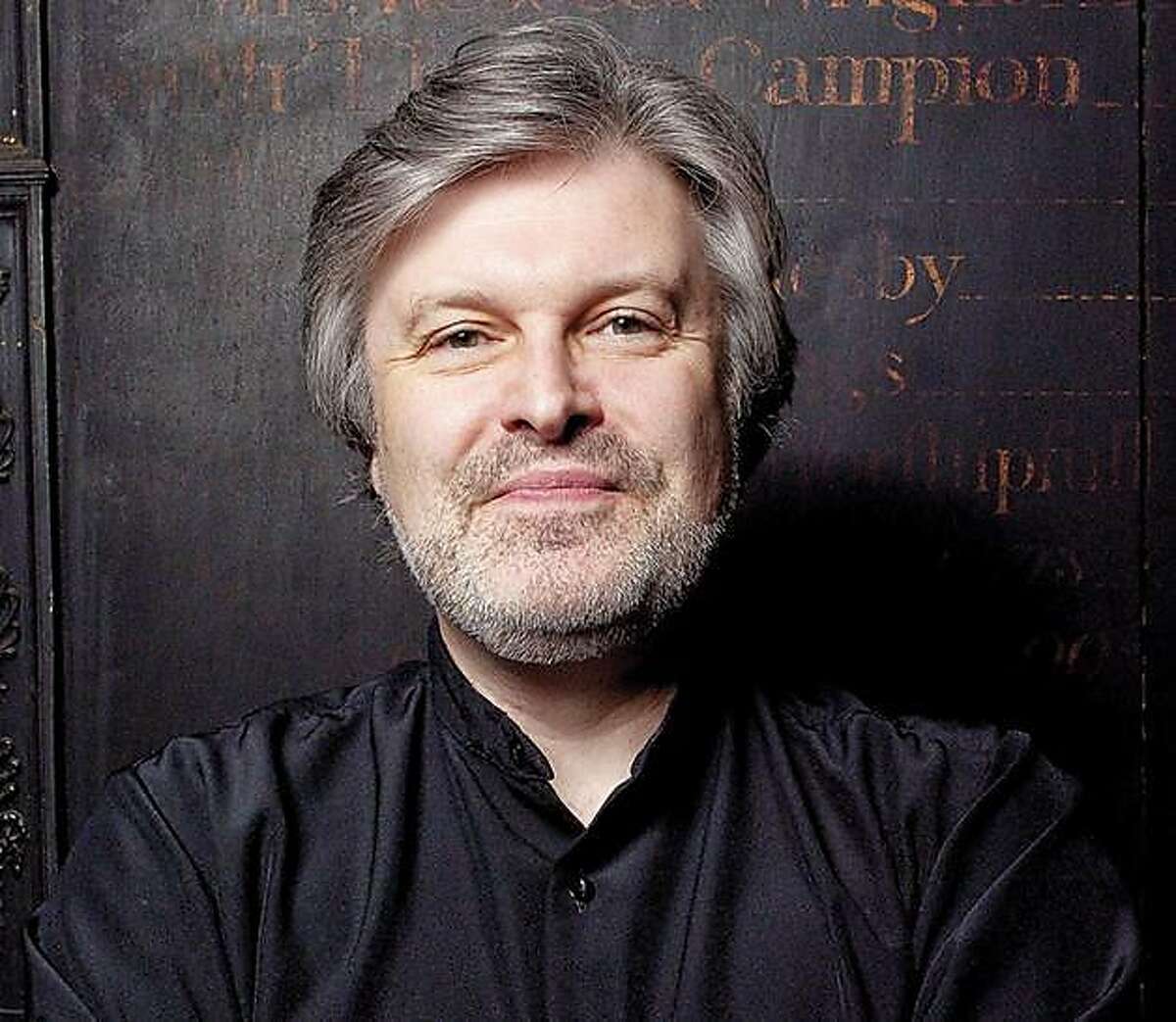
How did you meet composer Geoff Hannan?

In January of 2021, serendipity at play once again, led me to a recommendation, which in turn led me to the London Sinfonietta’s website. On this website was a list of composers whom they had commissioned through the years. I listened to works from many composers, including those on a BBC “postcards from composers” feature, and made a list of six composers whose use of melody worked with what I had in mind for the lyrics. Geoff was amongst the composers on the list, and I contacted him at the end of February to enquire if he would accept a commission to write music for a piece whose theme would be Hope. He asked if I had any lyrics, and after I sent over the lyrics for “Now as Before”, he composed the music for the chorus that very day.

How do you feel Geoff Hannan has responded to your lyrics in his music?

Honestly, and with great attention to the meaning of the lyrics. The music compliments the lyrics beautifully. He is a fantastic musical interpreter of emotion, and it shows in these songs.

What are the main themes explored in your songs on the EP?

“Now as Before”: Hope. The repetition of history. The importance of interpersonal interaction. Our interconnectedness with nature.

“Changing Fate”: Predetermined versus Undetermined fate. The Judas and Job questions. Nihilism and apathy versus Optimism and action.

“Oriented”: Perception of reality. Mental status. Time travel. Everlasting love.

Who are your favourite writers/poets?

I will list a few favourites:

Writers: Shakespeare, Charles Dickens, Victor Hugo, Roald Dahl, Oscar Wilde, Jane Austen, E.M Foster, P.G. Wodehouse, George Orwell, Cyprian Ekwensi, Chinua Achebe, James Clavell, Milan Kundera, Umberto Eco, and Chimamanda Ngozi Adichie.

Poets: Khalil Gibran, Charles Baudelaire, Arthur Rimbaud, Dana Gioia, Sahir Ludhianvi, Leonard Cohen, Bob Dylan, David Olney, Joan Baez, Nina Simone, and Maya Angelou.

And who are your favourite composers/musicians? Did your musical taste influence how you approached writing these songs?

Composers:

Old time favourites are: Purcell, Handel, Bach, Mozart, Beethoven, Tchaikovsky, Rachmaninoff, R.D. Burman, Ennio Morricone, Claude-Michel Schönberg and John Williams.

Currently, I am paying closer attention to, and discovering works by Schubert, Mahler, Schumann, and the contemporary composers with whom I am collaborating.

Musicians: Stevie Wonder, Van Cliburn, Glenn Gould, Arthur Rubinstein, Abner Jay, Jeff Buckley, The Smiths, Bob Marley, Jacques Brel and too many others to list here.

Yes, my musical taste did influence how I wrote these songs. Additionally, when I am trying to write a poem or a song lyric, my lines come accompanied by simple melodies. This helps both in ensuring a smooth rhythm, and coaxing the words to come along.

How does it feel to have your lyrics represented in songs written by Geoff and performed by Andy Staples and Alisdair Hogarth? What do you feel these musicians bring to the project?

It feels wonderful! This EP project is one of the most unique and successful projects I have ever initiated. Working with people you know is challenging enough, working successfully with strangers during a global pandemic, is nothing short of a miracle. All three brought their musical genius and experience, but genius alone would not have brought about a successful collaboration. All three artists brought dedication, work ethic, and a commitment to the goal. They also made sacrifices. Andy and Alisdair had the additional task of finding a distributor for the work, which they handled with great aplomb, getting the EP released by the great Voces8 label. I am very thankful to Geoff, Andy and Alisdair, for collaborating with me. I hope listeners connect with our music, and the goal of our EP “Within a Certain Time and Place”, is achieved.

“Within a Certain Time and Place” is available now on the Voces8 label and via streaming. Listen here


Chinwe D. John is a medical doctor and author, who was born in the U.S to Nigerian parents. In 2012 she published a book of narrative poetry Tales of Fantasy and Reality. This was followed by a novel The Boy in the Painting, Book 1 of The Time Shield Series, in 2016. Within a Certain Time and Place, released in 2022, is her first EP

As part of this year’s Hertfordshire Festival of Music (HFoM), French horn player and this year’s HFoM Principal Artist Ben Goldscheider will be giving a horn masterclass on Thursday 9 June 2022, 5.00pm-6.30pm, at Queenswood School, Hatfield, Hertfordshire.

Applications are now open for musicians to apply:

  • Anyone can apply. There is no age limit; however, applicants should be Grade VIII or Diploma standard, and above.
  • There is no charge to apply to participate in the Masterclass, and tickets to observe the sessions will also be free. Due to limited space, the classes will also be made available as a livestream.
  • The services of a professional pianist will be provided, free of any charge, if you’re chosen to participate. You will only need to cover the costs of transport to and from the class, and accommodation, should that be necessary.
  • APPLICATION DEADLINE: Tuesday 12 April 2022

DOWNLOAD Masterclass Application

Find out more about Ben Goldscheider


The Hertfordshire Festival of Music (HFoM) celebrates and nurtures exceptional music-making, bringing world-class musicians to the county. HFoM’s aims include supporting professional and young musicians from Hertfordshire, presenting fascinating music by living composers, and devising major and innovative projects for education and participation.

Founded in 2016, HFoM has presented concerts that have inspired extraordinary audience responses, with artists such as Tasmin Little OBE, Dame Emma Kirkby, Chloë Hanslip, Stephen Hough CBE, Steven Isserlis CBE, the Carducci Quartet,
the Galliard Ensemble, and the Orchestra of the Swan.

In 2022 Ben Goldscheider will be the Principal Artist at the Hertfordshire Festival of Music, which runs from 2nd to 11th June 2022.

In addition to the masterclass, Ben will be giving a recital with pianist Richard Uttley on Thursday 9th June 2022, also at Queenswood School. Ben will also be performing with a quintet on Friday 10th June at 7.30pm in St Saviour’s Church, St Albans.

Full details of all the HFoM concerts and event will be available on the HFoM website:
www.hertsmusicfest.org.uk

A “friendly and accessible vibe…the very highest level of music-making and extremely imaginative programmes, in beautiful locations

– Judith Weir, CBE, Master of the Queen’s Music

Tōru Takemitsu was a composer, but he was also a writer on aesthetics and musical theory. His music is delicate and refined, as beautiful as a Hokusai print or a carved jade netsuke. Largely self-taught, his music combines elements of Japanese and Western philosophy with the subtle manipulation of instrumental and orchestral timbre, using both western and traditional Japanese instruments, and the use of defined silences to create a unique and extraordinary soundworld.

Takemitsu admired Debussy and Messiaen, as is evident in his piano music, and was drawn to composers who were themselves deeply influenced by the musical and philosophical culture of Asia, including John Cage.

Takemitsu composed his Rain Tree Sketch II in 1992 in memory of Olivier Messiaen (1908-1992), the French composer who had a strong influence on Takemitsu. The work was composed for a concert “Hommage à Olivier Messiaen” at Les Semaines Musicales Internationales d’Orléans, France, and was premiered by Alain Neveux on 24 October 1992. The name of the work was probably inspired by a quotation from a novel by Kenzaburō Ōe about the miraculous rain tree, whose tiny leaves store up moisture and continue to let fall raindrops long after the rain has ceased. The work is also a dreamy meditation on the flow of life, and was the last piano piece by Takemitsu (his first Rain Tree Sketch was written in 1982). It is in a clear ternary (ABA) form, with a rhythmic opening which is reprised, in shortened form, after the melodic middle section. Its tonal language is reminiscent of Debussy and Messiaen, with chords used for colour and timbre rather than strict harmonic progressions, and, like its dedicatee, Takemitsu employs recurring motifs (such as an ascending three-note broken chord figure) and well-placed silences to create a carefully nuanced atmosphere and colouristic shadings. Directions such as “celestially light” and “joyful” contribute to the metaphysical nature of this work.

The first page of Rain Tree Sketch II © Schott Music

The first page of Rain Tree Sketch II
© Schott Music

Much of the power and profundity of this work comes not from the notes themselves, but the silences between them, which create extraordinary moments of stillness and repose. This arresting juxtaposition between sound and silence reveals Takemitsu’s intense interest in the Japanese concept of “Ma” – which translates as a pause in time, an interval or emptiness in space. The best performances of Rain Tree Sketch II are by those performers who appreciate the music’s need for stasis rather than forward flow. (The powerful use of silence is also evident in Oliver Knussen’s homage to Takemitsu, ‘Prayer Bell Sketch’.)

There are suggestions of traditional Japanese instruments in this work (and other piano works by Takemitsu): specifically the Taiko drum (the low D pedal point at the opening of page 2), the long zither koto and the short-necked lute biwa (the ascending arpeggio figure suggests the plucked sound of these instruments). This music requires a particularly sensitive approach: the sounds should be played with absolute clarity, and must also have great beauty, but not too much sentiment. Motifs and forms unfold like a “picture scroll unrolled.” (Tōru Takemitsu), emerging out of silence and retreating back into stillness.

“….sound, in its ultimate expressiveness, being constantly refined, approaches the nothingness of that wind in the bamboo grove.”

― Tōru Takemistu, ‘Confronting Silence: Selected Writings’


This site is free to access and ad-free, and takes many hours to research, write, and maintain. If you find joy and value in what I do, please consider making a donation to support the continuance of this site

Make A Donation

(Image: Schott Japan)


Pianist Matthew Schellhorn has launched a campaign to give young pianists access to proper practice facilities.

Those of who teach piano, and/or perform ourselves, appreciate the importance of a decent instrument on which to practice. Many music students cannot afford a high-quality instrument or lack easy access to such an instrument on which to practice, yet they are expected to perform on the best concert grand pianos. This is a particular issue for young musicians studying in London where practice facilities are limited and expensive.

With this initiative, Matthew hopes to make “a real difference to the artistic output of musicians, particularly young pianists at the start of their careers.I want to help by providing practice facilities to gifted students otherwise rehearsing on home uprights but expected to perform to the highest standards forthcoming exams, concerts and conservatoire entrance.”

The project aims to make a good-quality Steinway grand piano available to those in need. Matthew will further work with the National Youth Arts Trust, and will set up a home-based recital series raising money for musical charities.

For more information about the project and to make a donation, please visit Matthew’s GoFundMe site