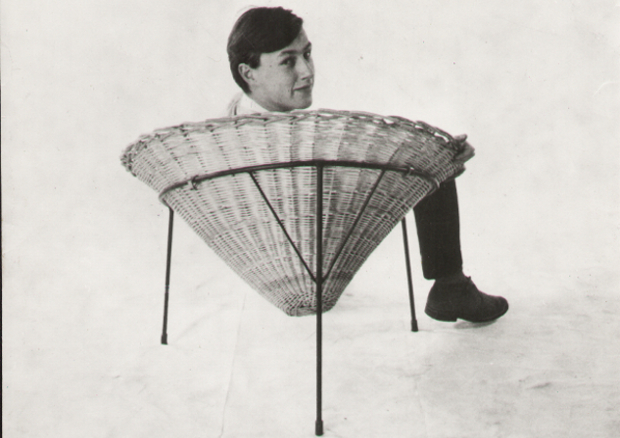
To mark the eightieth birthday of Sir Terence Conran, London’s Design Museum is hosting an exhibition celebrating his unique and lasting impact on British contemporary life, his special creative and entrepreneurial flair, and his “particularly persuasive way of looking at things”. Read my review for OneStopArts here
OneStopArts is the new sister site to Bachtrack, for people who want to find out what’s on in London – whether it’s theatre, classical music, comedy or the visual arts. The pre-launch site is displayed currently; the site will be going fully live very soon.
2012 is the 150th anniversary of the birth of Claude-Achille Debussy (22 August 1862–25 March 1918), and, all being well, there will be plenty of performances of his fabulous music to celebrate the occasion.
2011 was of course Franz Liszt’s year, but despite many fine performances to mark the occasion (a couple of which I was fortunate enough to attend – reviews here and here), I suspect the case for Liszt still needs pleading (not something Debussy need worry about, given the perennial popularity of his music). Much of Liszt’s music remains obscure or impenetrable, or simply totally ‘over the top’ to many listeners and performers, and a common misconception remains that much of his music is unplayable, except by top flight virtuosi.
Not so the music of Debussy, which is accessible and generally easy on the ear, and which can be enjoyed by the proficient amateur as well as the professional musician. I can’t remember how old I was when I first heard Debussy’s music: I suspect it may have been a recording of La Mer, a richly evocative piece completed in 1905, after the composer enjoyed a stay at the English seaside resort of Eastbourne. The first piano piece by Debussy I learnt was a simplified version of the languorous Prélude ‘La fille aux cheveux de lin’ (‘the girl with the flaxen hair’); my father and I also played a clarinet and piano version of this, and later I learnt the original piano version. In my teens, I learnt another of the Préludes, ‘La cathédrale engloutie’ (‘the submerged cathedral’), in which the composer evokes the ancient Breton legend of the cathedral of Ys, which was said to rise from the waves, with its bells tolling, priests chanting, and the organ playing. Subsequently, I’ve dabbled with other Préludes, some of Children’s Corner, and the first two movements of the suite Pour le Piano. This year I’ll be learning more, probably the Hommage à Rameau, more Préludes, and the Valse Romantique.
Together with Maurice Ravel, Debussy is considered to be one of the most prominent figures in the “impressionistic” movement, though he himself disliked the term intensely when applied to his compositions. It is too sweeping a term, making a strong connection with Impressionist painters such as Claude Monet (the Dover editions of Debussy’s piano music have reproductions of paintings by Monet on their covers), and suggesting that Debussy’s music is all about blurred edges and misty harmonies. In a letter from 1908, Debussy described his music as being “an effect of reality”. His musical influences and style are far wider, and his early music demonstrates his interest in the Symbolist movement of art and literature with its dreamy, often morbid romanticism. Already, he was experimenting with harmonic colour, the use of whole-tone scales, and a move away from strictly classical forms of musical construction towards music with a single, continuous theme.
At times, he seems the natural heir to Chopin, with his sensitive approach to melody, filigree passagework and articulation, and fioriture, and his music bridges the gap between the Romantic period and the twentieth-century. In other works, he looks back to ancient music such as Gregorian chant, or East to Javanese gamelan music. In Pour le Piano, he makes direct reference to his French Baroque antecedents in both the organisation and style of the material. His two books of Préludes are related to Bach’s and Chopin’s, but they are impressionistic tone poems, their titles suggesting literary or artistic stimuli. Each is complete within its itself, but by including the title at the end of the piece, Debussy implied a “story” within the music. Meanwhile, his Prélude à l’après midi d’un faune is a revolutionary work, both in style and execution, perhaps the first piece of truly ‘modern’ music, and demonstrating the key features of his music: uncertain or parallel harmonies, unprepared modulations which lack a harmonic ‘bridge’, the use of harmony and chord progressions for colour and timbre, and the use of whole-tone and pentatonic scales.
Debussy is regarded as one of the most influential composers of the twentieth century. His use of harmony had a direct influence on composers such as Ravel, Stravinsky, Bartok, Messiaen, Boulez, as well as the minimalist composers Steve Reich, Philip Glass and Toru Takemitsu, and jazz musicians including George Gershwin, Bill Evans and George Shearing.
Today, in performance, his piano music in particular seems to “suffer” occasionally from too impressionistic a reading: there is a misconception that all his music is dreamy, fluid and gentle. It was, compared to the style prevailing at the time of its composition, but we have almost gone too far now. In any event, I am sure we can look forward to plenty of varied performances this year.
I expect everyone has their favourite works by Debussy. I list a handful of my own here:
La plus que Lente (literally “as slow as can be”). A decadent, tender and languorous cocktail waltz, full of subtle ambiguities and sly ironies.
Images: the Piano Music of Claude Debussy – Paul Roberts (Amadeus Press)
The Piano Works of Claude Debussy – E. Robert Schmitz (Dover Publications)
Debussy at the Piano – interesting website with accounts describing Debussy as a pianist. Some useful insights into his playing style and how he wanted his piano music to be played.
Playing Debussy’s Piano Works – website by an amateur pianist with playing notes and analysis of many of Debussy’s piano music.
Notes from a Pianist – pianist and blogger Christine Stevenson will be writing about Debussy this year, following on from her journey through the music of Franz Liszt in 2011
I’d love more guests posts in 2012. If you are interested in contributing to this blog, please contact me via the comments box on this post, or Facebook or Twitter (@crosseyedpiano).
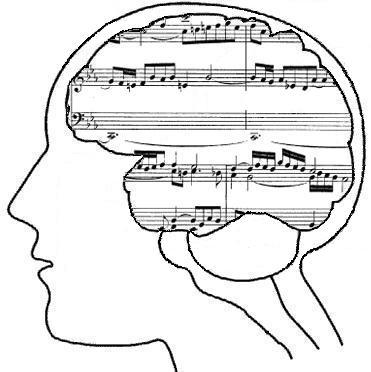
It’s one of the great romantic images, isn’t it? The lone performer, faced with the huge black beast of a full-size concert grand piano on a bare stage, armed with nothing but his or her memory. And it’s one of the most absurd things musicians put themselves through. We have Clara Schumann and Franz Liszt to thank (or blame!) for the tradition of the concert pianist playing from memory, and both were significant in turning the piano recital into the spectacle it is today. Before the mid-nineteenth century, pianists were not expected to play from memory. Few pianists today would dispute this legacy, and now it is almost de rigeur, so much so that if you go to a concert where the pianist plays from the score, you may hear mutterings amongst the audience, suggesting the performer isn’t up to the job. Which is of course rubbish: sometimes, especially in contemporary or very complicated repertoire, it is simply not possible to memorise all of it. No other musician is expected to play from memory, though some virtuosi, and of course opera singers do.
When I had piano lessons as a child and teenager, I was not taught how to memorize music. Thus, there are very few pieces in my repertoire which I can play from memory now. However, in the course of my study for my Diploma, I realised the benefits of memorization, and I’ve made the practice and exercise of memory part of my daily diet in my practising. Piano students in music colleges and conservatoires are expected to memorise all their music and to perform from memory, and are taught the skills to facilitate successful memorization.
Playing from memory is not a virtuoso affectation. It allows the performer greater freedom of expression and communication with listeners, and if one is not glued to a score, one can be far more gestural. Memorization demonstrates a high degree of skill and application (high-level musicians often display mental agility akin to that of chess masters), and people often exclaim of concert pianists “how on earth does he/she remember all those notes?” (as pianists, we have to learn more than double the number of notes of any other musician). While each individual musician will have his or her own particular method of memorization, there are a number of proven strategies to assist in memorising music, and the storage and recall of information.
For the pianist, there are four kinds of memory, all of which must be employed when learning music:
Visual Memory: human beings use this part of their memory function to record large amounts of information, such as faces and colours and everyday objects. Music is made up of patterns and shapes, and the pianist uses visual memory to “picture” the score, as well as to recall the physical gestures involved in playing.
Aural/Auditory Memory: this is what enables us to sing in the shower! Music is an assortment of sounds, arranged in a certain order. The pianist uses aural memory to know he/she is playing the correct notes and to anticipate what he/she will play in the next few seconds.
Muscular/Kinaesthesic Memory: the ability to recall all the movements, gestures and physical sensations required to play music. Muscular memory is trained by repetitive practice: just as the tennis player practices his over-arm serve in exactly the same way each time to ensure a perfect delivery, so the pianist must employ repetitive practice to ensure the fingers land on the right notes every time.
Analytical/Conceptual Memory: the pianist’s ability to fully comprehend, absorb and retain the score through his/her intimate study and knowledge of it. This involves understanding structure, harmony, dynamics and nuances, phrasing, reference points, modulations, repetitions etc, as well as the context in which the music was composed, whether it is Baroque, Classical or Romantic, for example. This “total immersion” in the score should result in a rich, multi-layered awareness of it.
Many young students rely, often unconsciously, on auditory and visual memory, or on auditory and muscular memory, and many can play competently from memory. However, to play expertly from memory, and to ensure that one’s ability to download and deliver music accurately is completely secure, all four aspects of memory must be trained and maintained.
Students should be encouraged from the very first lesson to memorise their music, but discouraged from relying purely on muscular memory. They need to understand both the building blocks of the music, and its unique language.
Secure memorisation can lead to an assured performance and less performance anxiety. However, even the very best people can suffer from memory lapses, perhaps due to anxiety, lack of proper preparation, tiredness, stress, or any number of other factors. I’ve witnessed memory lapses in concert a few times: on each occasion, the performer managed to maintain the harmonic framework of the music, thus making the errors less obvious, but no less unsettling, and I’ve often wondered how many times post-performance the performer went over that section of the score to exorcise the mistake.
The Cross-Eyed Pianist is free to access and ad-free, and takes many hours every month to research, write, and maintain.
If you find joy and value in what I do, please consider making a donation to support the continuance of the site






 The Cross-Eyed Pianist