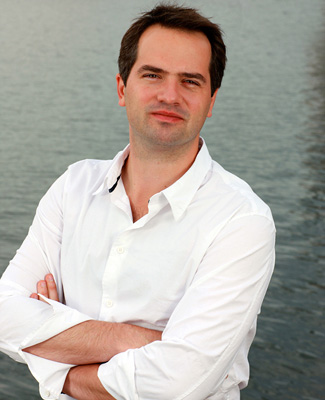
Peter Jablonksi’s contribution to the ongoing International Piano Series at London’s Southbank Centre was a transatlantic mixture of ballades and blues. Read my review for Bachtrack here

Peter Jablonksi’s contribution to the ongoing International Piano Series at London’s Southbank Centre was a transatlantic mixture of ballades and blues. Read my review for Bachtrack here
Friends and regular followers of this blog will know that I took my piano performance diploma in December. I am pleased to announced that I passed – with Distinction! Without wishing to blow my own trumpet too much, this is a significant achievement for me: to have studied for and taken a high-level music exam in my mid-forties, some thirty years after I took my Grade 8 is no slouch, and I’m very glad I did it. I owe a debt of gratitude to my teacher, who gave me the confidence and self-belief to do it. Also to those friends and colleagues who have been so supportive – hearing me play, offering advice, putting up with me cancelling dinner dates etc. And not forgetting my loyal page-turner, Andy, a good friend of mine, and one of my students, who accompanied me to practice rooms in Edgware Road ahead of the exam, and who carried my briefcase containing my scores to the exam centre in Greenwich on the day.
Anyone who thinks a diploma is a step up from Grade 8, think again. While it is a logical next step for a competent musician who has achieved Grade 8, a diploma, even at the lowest, Associate level, is significantly more involved, requiring a high degree of attainment, combined with a professional attitude to preparation, communication, musicality, presentation and stagecraft. The diploma itself is a professional qualification, recognised by other musicians and music professionals around the world. (One of my students, Eli (10), described my Diploma as “Grade 14”!)
Diploma candidates are expected to create a recital programme that demonstrates a range of musical styles, moods and tempi, as well as artistic coherence, and to provide programme notes for each piece. Marks are awarded, or deducted for the artistic balance, planning and timing of the programme as a whole. One of the nicest things a friend said to me about my programme was “When I read it, I really wanted to hear it”.
Candidates are also assessed on ‘stagecraft’, which is more than just ‘presentation skills’ in the manner of, say, a job interview. The exam should be treated as a professional public recital, and one’s clothing, attitude and communication should reflect this. For me this was one of the harder aspects of the exam, as I have, until recently, always been a reluctant performer.
Here’s my advice on preparing for a diploma, based on my recent experience:
Repertoire: Select pieces you know you want to spend time with: you may be working on them for a year or more, and you need to love every piece to hold your interest and excitement. Don’t be tempted to select repertoire because you think it will “impress the examiner”, such as a Chopin Ballade or a big Beethoven Sonata, but choose pieces which you feel will highlight your skills and demonstrate your ability to tackle a range of music. If you have time, consider learning one or two extra pieces than you need to for your recital to give yourself some flexibility when organising your programme. You can plan a programme entirely from the published repertoire list, or a mixture of own-choice and set list pieces, or entirely own-choice (if including own-choice repertoire, you must seek approval in advance – allow plenty of time for this as it can take up to 20 weeks). As your exam date grows near, try to recall what excited you about the pieces in the first place – you want to convey that excitement and passion in your performance.
Stagecraft: Get as much performing practice in as possible ahead of the exam – play for friends, do competitions and festivals, masterclasses, courses. Have a proper dress rehearsal in your exam clothes in advance and practice walking to the piano, bowing, pauses between pieces etc. I also regularly recorded myself playing – but don’t listen to your recordings immediately afterwards. Leave it a day or so, and then listen. It is an incredible useful exercise and can highlight areas which need refining.
Check the regulations: Go through the exam regulations and syllabus very carefully. Some Diplomas have pre-requisites (such as proof of a pass at Grade 8) for entry. Make sure you qualify and ensure you fulfill all the exam entry criteria. An oversight here could lead to disqualification. Check the closing dates for entries and the exam seasons.
Practice on a variety of instruments: Play as many different pianos as you can, especially if, like me, you do not have a grand piano yourself. Rehearsal rooms can be hired from as little as £10/hour: Jaques Samuels in central London has a Steinway D and a dinky little Kawai baby grand, both very good instruments (I actually preferred the Kawai to the Steinway, which spooked me). Don’t expect the set up on the day to be perfect: I was fortunate to warm up and perform on Steinways but the piano stool in the exam room was wobbly!
Ahead of the exam: Make sure you know where to go. Do a practice run, if necessary, to check out transport links, parking, practice facilities etc. Sometimes exam centres will even allow you to try the piano in advance – it’s worth asking. Write your programme notes and have them proof-read/checked by someone else. Print your notes on good-quality paper or lightweight card. Make sure you include timings for each piece as well as the duration of the whole programme.
Don’t over-practice: In the final days before my exam, I cut back on my practice time, and what practice I did was mostly spent on openings and endings. Some pieces needed to segue into one another (Bach ‘Toccata’ to Debussy ‘Sarabande’, for example), while I wanted a longer pause after the Schubert (Impromptu in E Flat, Op 90/2) and the Liszt Sonetto. All these details count: don’t stint on them.
The day before the exam: Don’t over do it! I did a light run through of the entire programme and spent the rest of the day doing very little. It is important to keep body and mind rested ahead of a performance. Play your pieces quietly and slowly, or play music which you enjoy, just for relaxation. Avoid alcohol and make sure you get a good night’s sleep.
On the day of the exam: Do very light practice. Try and rest as much as possible. On the day of my exam, I got up late, did light practice, got changed and packed my briefcase. I did everything slowly and quietly.
I think the most important factor I drew from the whole diploma experience is that if you are well-prepared you should have nothing to fear. I had been working on my repertoire for over a year, in the case of some pieces, and I knew everything really well. (You are not required to play from memory and no extra marks are awarded for pianists who play from memory.) I loved every single piece in my programme and was excited about presenting the programme to the examiner on the day. I wore a dress that was comfortable – I was very careful to choose something that had no tickly labels or other distractions. All these things are very important.
All in all, I found the whole experience of studying for, and taking a music Diploma extremely positive. To immerse oneself in a set of pieces for such a long time, to know them intimately, and to grow to love them, was deeply satisfying. I also learnt how to practice deeply, thoughtfully and productively, useful skills which I can pass on to my students. And the end result, not just a pass, but a pass with Distinction, endorses everything I do at the piano, day in day out.
There are many different music diplomas to choose from, and plenty of support for those studying for a diploma. Summer schools and courses are also a great way of sharing repertoire and gaining useful insights from the professionals, as well as offering an opportunity to have your playing critiqued by peers. The current issue of Pianist magazine contains comprehensive details of summer schools.
So, what next? No sooner had I read the exam report and chatted to a friend who took her Diploma on the same day as me (and who also gained a Distinction) than I started looking at the LTCL repertoire….
Further resources:
Trinity College of Music Diplomas Overview of different types of diplomas, repertoire lists, regulations, entry forms and entry information
ABRSM Diplomas Overview of different types of diplomas, regulations, repertoire lists, supporting material for viva voce requirement, and writing programme notes.
As some of my readers already know, I write regular music reviews for international concert and opera listings site, Bachtrack.com. A new sister site, OneStopArts, has just gone live, specialising in listings for theatre, music, exhibitions, comedy and lectures in London. Do visit the site to find out more.
My latest reviews for OneStopArts are here
A recent search thread which led someone to my blog – “classical music you should be practising” – set me thinking: what are the “must plays” of the standard repertoire, and why?
Please feel free to join the discussion and leave your comments and suggestions. I will then compile a proper blog post.
To get the conversation going, I have so far:
Bach – Partitas, WTC and Italian Concertos
Chopin – Etudes
Use the comment box to leave your suggestions, or contact me via Twitter @crosseyedpiano.




 The Cross-Eyed Pianist