The important thing is not to stop questioning… Never lose holy curiosity – Albert Einstein
One of the tenets of my own musical study, my writing and my life in general is to “stay curious”. I’ve always been curious and from a young age, I wanted to know stuff – from dinosaurs to Egyptology, Old English to the piano music of Schubert, or setting up my own website/blog and learning basic computer coding. Today, the internet is a remarkable resource for the curious-minded and my usual habit, if I want to find out something, is to look it up on Google or YouTube.
Curiosity is essential for the musician. Not only does it drive exploration, keeps practice interesting, improves problem-solving skills and creativity, and helps to maintain self-motivation, it also fosters creativity, thus encouraging one to explore further – new repertoire, techniques and more to improve one’s skills and expand one’s musical horizons.
Mindless, uncurious practising is boring. It’s often simply “going through the motions”, without thinking creatively about what you are doing at the piano. Look closely at the score, ask it questions – why has the composer used that harmony/ combination of notes/specific articulation? – and seek your own answers (and remember that there isn’t necessarily a single or straightforward answer, nor that there is a “right answer” or “right way” of doing things – adopting this mindset is liberating in itself, and breeds even more curiosity and creativity).
The curious pianist approaches each practice session with an open mind – “what can I do today that’s different/better?“. Curiosity helps to keep practice engaging and interesting (because, let’s be honest, practicing can be tedious, especially if you’ve been working on the same piece or pieces for long periods of time, for example, when preparing for an exam or diploma performance). By approaching practice with a sense of curiosity, you can make the process more enjoyable and satisfying – and, importantly, more motivating.
Curiosity improves problem-solving skills too. When you encounter a difficult passage in a piece or a technical problem in your playing, curiosity can help you to find creative solutions. It encourages you to think outside the box and come up with new ways to approach a problem.
A good teacher will encourage curiosity in their students and give them the tools to be curious in their own practicing and musical study (and curiosity is related to independent learning and self-teaching which will be covered in a separate post). Curious students tend to be more eager to learn – and to learn more – motivated and self-starting.
Away from the practice room, be curious about your encounters with other music. Go to concerts, experience music with which you may or may not be familiar. Listen with an open mind and find inspiration from others’ music-making.
Curiosity allows us all, at whatever level we play, whether amateur or professional, to push ourselves to improve and expand our skills, which is essential to becoming a better musician.
This site is free to access and ad-free, and takes many hours to research, write, and maintain. If you find joy and value in what I do, please consider making a donation to support the continuance of this site
Sergei Rachmaninov (1873-1943) is surely one of the greatest – if not the greatest – composers for the piano in the history of the instrument.
It probably helped that Rachmaninov was an extraordinarily talented pianist himself and the instrument dominated his creative thinking from the outset. He began playing the piano at a young age and by his early teens he was already performing in public. He went on to study at the Moscow Conservatory, where he received a rigorous musical education that included extensive training in piano performance. This background gave him a deep understanding of the instrument, both technically and artistically, which is clearly reflected in his piano music.
As a master of the piano, who fully understood its capabilities, one of the hallmarks of Rachmaninov’s piano music is its virtuosity. His music is technically demanding and requires exceptional skill and dexterity to perform. But he was also careful to ensure that his virtuosity always served the music, rather than being an end in itself, and his works for piano – from the miniatures and salon pieces to the great piano concertos – are not just impressive displays of technical prowess, but also deeply expressive and emotionally evocative, full of brooding passion that remained a powerful force in his music throughout his compositional life. His music is often intimate and personal. He wrote many of his pieces as a way of processing his own emotions and life experiences. His pieces are full of passion, nostalgia, and a sense of yearning; they plumb the depths and scale the heights of emotion, and they speak of and to the human experience in a way that is both universal and also highly intimate.
Another important aspect of Rachmaninov’s music is his use of harmony. Reacting against the trend towards modernism and the avant-garde, which dominated classical music at the turn of the 20th century, Rachmaninov remained true to the late Romantic style of which he was a master. His music is replete with lush harmonies and emotional expressiveness, and he used a wide range of complex chords and sweeping arpeggios to create a sense of richness, vivid colours, depth and emotional power.
He also had a wonderful gift for melody, and his piano pieces are full of beautiful, memorable themes which are often developed over the course of the piece, becoming more complex and intricate as the music unfolds to create a sense of narrative and emotional progression.
For the advanced amateur, and even the professional, his music can be daunting. Many pianists believe they cannot play Rachmaninov’s music because of the physical demands it places on the player – a misconception to which I subscribed for a long time, until I decided to include two of the Op. 33 Etudes-Tableaux in one of my performance diploma programmes.
I believed my hands were too small for Rachmaninov, that I didn’t have a big enough hand stretch (a ninth, at a stretch; Rachmaninov could famously stretch an octave plus 4) or the necessary power and stamina to manage the big, hand-filling chords or the tempi. So what did I do? I selected a piece (op. 33, No. 7) which included both of these challenges – and I rose to them, with the help of my then teacher who showed me that one needs neither hands like shovels nor a specially-adapted piano keyboard to play this magnificent music.
Yes, technique is crucial in mastering Rachmaninov’s music, but perhaps the harder aspect is interpretation – and for that one can hear the master himself playing his own music. Recordings of Rachmaninov playing Rachmaninov offer some remarkable insights into his approach to tempo, phrasing, dynamics, interpretation, a gift for counterpoint, and so much more. There is much expressive freedom in his performances coupled with a profound emotionality (as opposed to sentimentality), rendered with great clarity and drama. He offers us the best interpretation possible of his own music. It is therefore surprising to learn that Rachmaninov declared, “I can’t play my own compositions.”
His most famous works for piano are surely the second and third piano concertos, the Rhapsody on a theme of Paganini, and the Preludes in C-sharp minor and G minor. But his oeuvre for piano is extensive and varied – the opp. 23 and 32 Preludes, two sets of Études-Tableaux (opp. 33 and 39), transcriptions, salon pieces like the Morceaux de fantaisie and Moments musicaux, the Symphonic Dances, works for four and six hands piano, variations (on themes by Chopin and Corelli), two piano sonatas, and many other miniatures and shorter works.
Which pianists should we turn to for inspiration in this remarkable repertoire? Of today’s pianists, Evgeny Kissin is, for me, one of the finest Rachmaninov players – an opinion which was fully reconfirmed when I heard Kissin in concert at the Barbican in March; the second half was all Rachmaninov (to mark the composer’s 150th anniversary). Kissin’s technical virtuosity and musical understanding allow him to reveal the full range of Rachmaninov’s music, from hauntingly beautiful, intimate melodies to thunderous climaxes.
This Etude-Tableaux, from the Op. 39 set, is one of my favourites:
When preparing for my diploma, John Lill’s recording of the Etudes-Tableaux was one to which I returned many times, but I also very much like Nikolai Lugansky in this repertoire. His performances of Rachmaninov’s music in general are marked by a rare combination of technical mastery, emotional breadth, and interpretive insight which showcase the full range of the composer’s vision. Steven Osborne is another pianist whose recording of the Etudes-Tableaux I much admire for its clarity, multi-hued dynamic palette and beautiful quality of sound, coupled with a thrilling “in the moment” spontaneity.
Pianists from an earlier era must surely include Vladimir Horowitz, who was greatly admired by the composer himself, and who helped bring the third piano concerto to prominence in the USA. His recordings of the Prelude in C-sharp minor and the Vocalise in particular are also widely admired for their emotional intensity and technical brilliance.
And no collection of favourite Rachmaninov recordings should be without Sviatoslav Richter. Renowned for his technical command and expressive power, and his ability to create a sense of “controlled risk”, Richter’s performances of Rachmaninov’s music are considered some of the finest ever recorded.
Other pianists to seek out in this repertoire include Emil Gilels, Cyril Smith, Vladimir Ashkenazy, Yefim Bronfman, Byron Janis, Martha Argerich, Arcadi Volodos, Daniil Trifonov, Yuja Wang, Peter Donohoe, Khatia Buniatishvili, Valentina Lisitsa….. Each of these pianists brings their own distinct interpretive style to Rachmaninov’s music, resulting in memorable performances that are technically fluent and emotionally rich.
Are there pieces that are simply too challenging for non-professionals to even attempt?
Guest post by Caroline Wright
There are those who believe that, yes, there are indeed pieces that amateurs should leave well alone. Hugely technically challenging pieces – of which there are many in the piano repertoire – should be respected by those who cannot hope to do them justice. We should all be aware of our limits, and leave the tough stuff to those who can handle it!
I think most musicians probably disagree with this position. Personally I don’t think any repertoire should be off-limits,to anyone. We all need to be aware of our level and personal limitations, but that’s true of professionals and amateurs alike. Many individuals have physical limitations that mean they will never be able to play certain pieces, but that has no effect on their ability to play other repertoire – for example, having small hands is a curse for pianists who wish to play Brahms, Rachmaninoff and Ravel, but may actually bean asset in Bach, Scarlatti and Mozart. Finding and expressing the beauty of a piece of music can be both a challenge and a joy for anyone, irrespective of it’s technical demands.
I cannot think of a better way of respecting the music of great composers than by dedicating many hours to playing and memorising it. Listening to recordings and live concerts given by great performers is wonderful too, of course, but undoubtedly a more passive way to experience music than playing it and internalising it yourself. Learning the music, to such a level that you can see the score in the mind’s eye and listen along without the need for external sound, is surely a greater mark of respect than playing it note-perfect in every performance?
In reality, the boundary between amateurs and professional musicians is blurred. Many amateurs are highly skilled, qualified musicians, and many professionals rarely perform in public. At the end of the day, any musician (particularly soloists!) must decide what repertoire they are happy to play in concert in front of strangers, versus that which they prefer to play for their own enjoyment, in the safety of their own home. And here, I believe, is where the most stark difference occurs between amateurs – literally ‘lovers’ of music – and professional performers who must make a living from music. Those of us who have the (dubious!) ‘luxury’ of earning a living outside of performing can afford never to play to a fee-paying public, if we so desire. We may play to friends and family, students and colleagues, or simply to ourselves, without having to conquer performance anxiety and the very real possibility of making fools of ourselves on stage. This choice should certainly not act as a barrier to playing particular repertoire. Professional performers, on the other hand, must make a living from performing and accept that anything less than a polished performance is unlikely to help their career progression or recording sales.
As an amateur pianist, there is no doubt that there are many pieces that I will never be able to play well enough even for my own satisfaction (and wouldn’t dare inflict on anyone else!), and others that I believe I play well enough both for myself and others to enjoy. There’s a balance that I find hard to strike between painstakingly learning more challenging repertoire and playing technically easier repertoire to a higher musical level. The guidance of a teacher to steer any unwary students towards repertoire that they will find challenging yet satisfying is crucial. But no music should be off-limits and, regardless of one’s ability, it is a privilege to be able to study some of the greatest works that have ever been created by the human mind.
Caroline Wright is a musician (MMus, LTCL) and scientist (MSci, PhD). Her compositions have a diverse range of influences, from classical and contemporary to blues and jazz, film and folk, dance and electronica.
I admit I was prepared to hate this series on Channel 4 (and, full disclosure, I was interviewed for the programme by someone from the production company last summer). It was made by the same production company which brought us The Great British Bake Off, another series which I have come to loathe, and was billed as “Bake Off for amateur pianists”. Oh dear.
The basic premise of the series was to showcase the pianistic talents of ordinary people through their performances on street pianos at railway stations in London, Leeds, Glasgow and Birmingham. Unbeknownst to these amateur pianists, their performances were being watched by “the world’s greatest pianist” Lang Lang and one-hit wonder singer-songwriter Mika. The series is presented by Claudia Winkelman.
The programme makers wanted us to believe that these performances were completely spontaneous, but in fact the participants had to go through an audition process and were then selected for the programmes. Also, the instrument on which they played was not the usual rather beat up, out of tune street piano of the type which this article rather rudely describes, but a rather nice Boston upright from Steinway’s ‘diffusion range’.
However, none of this matters in the least because it quickly became evident that the real joy and power of this programme lay in the people, their back stories, and of course their music. Just as in Bake Off, the participants were a mixed bunch, from the young to the very old. There were some really heart-warming moments, such as a 92 year old man who played the piano to communicate with his wife who had dementia, or the young man who had found comfort in music, following the suicide of his father.
During each episode, a young professional pianist friend of mine would message me to rail at the lack of “proper classical music”, and while I too had hoped for more Chopin or a drop of Mozart, it was evident that this series was about people and their connection with the music they played, and why the piano was so meaningful or special for them.
A number of the participants had taken up the piano during the covid lockdowns as a way to fill the excruciating sameness of those long, dull days. Others had been playing all their life. Some were self-taught. But all found joy, fulfilment and personal achievement in playing, regardless of the genre of music or their ability.
In episode two we met Lucy, a blind girl with severe learning disabilities but with a remarkable natural aptitude for the piano. Her performance of Chopin’s B-flat minor Nocturne was beautifully fluent, subtly phrased and elegantly shaped. Actually, it was simply astonishing. It held the audience at Leeds station utterly spellbound, and it was quite evident that Lang Lang was genuinely moved by her performance, along with the many others who watched her playing. She was supported by her teacher Daniel, who works with a charity called The Amber Trust, which provides musical opportunities for blind and partially-sighted children, and children with more complex needs.
The final episode of the series was a special concert in which the “winners” (although this wasn’t really a competition – and certainly nothing like any talent show presented by the likes of Simon Cowell) performed at London’s Royal Festival Hall. Once again, Lucy’s extraordinary talent shone through, this time in a mesmerising performance of one of Debussy’s Arabesques. But all the performers played with commitment and emotion, which really transmitted to the audience. At the end of the concert, Lucy was awarded star player (in a lovely, low-key way) and then Lang Lang and Mika made a special announcement: each player was to be gifted an acoustic piano.
The four finalists at the Royal Festival Hall with Lang Lang, Mika and Claudia Winkelman.
Reactions on social media are a testament to the appeal and power of music, as people were genuinely moved, amazed and intrigued by all the performers in this series. The more relaxed, spontaneous way of presenting music, on a street piano, will, I’m sure, remind people that music is for everyone and one need not enter a formal concert venue to experience the wonder. And if this series inspires people to take up or return to the piano, or for young (and old) piano students to find renewed enthusiasm in their practising, then it has served an important purpose. Finally, this show must surely raise the profile of the piano, and music in general, at a time when classical music in particular is under attack – and that has to be A Good Thing.
As the various performers demonstrated, through an incredibly eclectic range of music and ability, it’s not about winning; it’s about doing something that you love and finding fulfilment, comfort, self-improvement, and above all pleasure in what you do.
The Piano on Channel 4 is inspiring, joyous, uplifting, poignant, moving and life-affirming. Do seek it out on All4.
The Cross-Eyed Pianist is free to access and ad-free, and takes many hours every month to research, write, and maintain.
If you find joy and value in what I do, please consider making a donation to support the continuance of the site

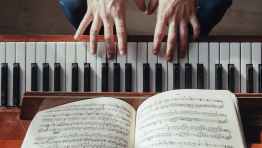

 There are those who believe that, yes, there are indeed pieces that amateurs should leave well alone. Hugely technically challenging pieces – of which there are many in the piano repertoire – should be respected by those who cannot hope to do them justice. We should all be aware of our limits, and leave the tough stuff to those who can handle it!





 The Cross-Eyed Pianist