Retreat from the bustle of traffic and shoppers on London’s fashionable Bond Street, and step into the world of the great Baroque composer George Frideric Handel with a visit to the delightful and evocative museum in his house in Mayfair. Handel made London his home in 1712, and was the first resident of the newly-built 25 Brook Street W1 in 1723 until his death there in 1759. It is here that he wrote some of his most famous works, including ‘Messiah’ and the coronation anthem ‘Zadok the Priest’. Read my review here
A modern copy of a harpsichord by Flemish maker Ruckers. Handel would have owned and played a very similar instrument.
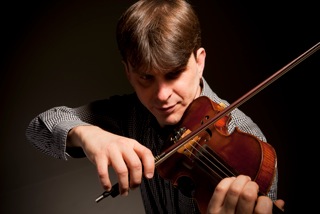
Who or what inspired you to take up the violin, and make it your career?
I used to hear my grandfather play violin when I was 7 years old and just seemed to be fascinated by the instrument itself and by his sense of humour that seemed to harmonise with it. After that, it was a question of parental encouragement and getting my first inspirational teacher, Mr. Duckering who lived locally. I think when you get good at something quickly you hang on to it and before you know it, it becomes a way of life, or indeed a living. I was also learning piano and the two instruments seem to go hand in hand right through University and music college. When you meet others along the way that are also learning an instrument and experiencing similar musical times, then inspiration comes naturally all around you.
Who or what were the most important influences on your playing?
My two years spent studying in Prague, Czech Republic, became a huge influence in the way I played. My teacher there was Prof. Ivan Straus, who really changed the way that I practised, and helped me to think about my vibrato and sound. I attended numerous master courses in Austria and in the Czech Republic where I met some incredible players who shared invaluable musical and technical ideas that I try now to share with my students. Feats of brilliance in any discipline, being music or indeed any other, always evoke the question: “How on earth do they do that..?”. When you hear or see great artists both on the stage and in close proximity, it is bound to influence the way you approach your own skills in some from or another.
What have been the greatest challenges of your career so far?
Recording my CD From the Homeland was one of the biggest challenges to date. It’s the actual process of getting to that red button that makes it so rewarding. It’s not just the hours of rehearsing, but all the administration and phone calls that go with it!
Which performances/recordings are you most proud of?
My CD is definitely something I am proud of. Any recital that I have done I would like to be proud of for similar reasons as in the previous question. There is something, however, about live performing though that is endearingly unpredictable! Each performance is so different (hopefully), and one never knows how the audience is going to react. Whatever the case, it’s a sense of accomplishment coming off the stage and is sure to make you feel proud. Whatever happens during performance, good or bad, you learn from the experience.
Do you have a favourite concert venue to perform in?
The Bergersen Quartet, in which I play, performed at the Barbican in London late last year. So many amazing musicians have played there, so definitely one to tick off the list.
I did a recital in a Norman church down in a small village in the south of England. It has great acoustics and a very appreciative audience. I had the opportunity to play with my country folk band Pig Earth at Wembley Arena in London last month. It’s hard to beat the feeling of exhilaration as 6000 people cheer you on!
Favourite pieces to perform? Listen to?
The Violin Concerto No. 1 in D major by Prokofiev is a particular favourite of mine to listen to. I’ve never got tired of it. At the moment I love performing works by Astor Piazzolla, especially the Grand Tango, which I played at a recital recently. The Czech Rhapsody by Martinu is another work I love to play purely because of its driving folk rhythms and “on the edge of your seat” ensemble writing with the piano. I always like to put into a programme a work or two, which may be lesser known by audiences. I must also mention the Scriabin piano Preludes, some of which I love to play (although a little rusty these days). Many of these Preludes are barely a minute long but brimming with intense dynamics and incredible harmonies.
Who are your favourite musicians?
Most people reading this question will be screaming simultaneously at their screens, claiming that such a list is far too big to put on here, but since you’re asking, Shlomo Mintz or David Oistrakh have to be on my personal list favourites for violin tone. Others on that list include Sarah Chang, Itzhak Perlman and Vadim Repin. For technical prowess, check out violinist Ning Feng. I also love pianists Vladimir Ashkenazy, Evgeny Kissin, Vladimir Horowitz and John Lill. Outside the classical world, I’ve always been a huge fan of Prince, who is certainly one of the most talented musicians and songwriters I’ve ever heard. His after show gigs are unforgettable and in fact I managed to meet him personally in a bar in New York a couple of years ago. I’m learning how to play banjo at the moment (but don’t tell anyone) and admire the picking of Bela Fleck, Noam Pikelny and Tony Trischka.
What is your most memorable concert experience?
Years ago, I went with my dad to hear Shlomo Mintz perform at the Barbican playing Paganini’s Concerto No. 1. Talk about faultless technique and a warm rich sound! I remember a close friend of mine at school introduced me to a recording of Shlomo Mintz playing the Prokofiev Violin Concertos, particularly No.1 in D major. I just couldn’t believe how sublime and dream-like this music was. Years later I managed to get Shlomo Mintz to sign that CD for me after a concert he played in London. Must also mention that I had the pleasure of looking after John Ogden when he came to give a concert at my school. As a young pianist, that was a musical experience that I wasn’t going to forget in a hurry and still remember vividly.
What do you consider to be the most important ideas and concepts to impart to aspiring musicians?
As with any art form, I would say the bottom line is work at it everyday. Find a teacher that comes highly recommended and that can inspire you. There is an ever increasing number of great and talented musicians out there so you have to be on top of your game. Get out there and go to concerts. Try to find other like-minded musicians that you can form groups with. You’ll be amazed how much you can learn from your colleagues or indeed they can learn from you! Try to perform regularly, even if to just family and friends. Setting concert dates is important, as you will have a target to work towards. Don’t forget to enjoy it!
What are you working on at the moment?
At the moment I am working on the usual suspects of scales and studies. I have some concerts coming up with the quartet next month at the Brighton Fringe Festival, and solo work in the Czech Republic. For the latter, some unaccompanied Bach is on the menu. On the piano, I am pretending to learn Un Sospiro by Liszt.
Where would you like to be in 10 years’ time?
I often have this conversation with friends who ask me of where I want to be in the next 10 years or what my dreams are for the future. I always reply that I hope I am doing exactly the same variety of projects as I am now. I like to think that I am indeed living the dream now, as we speak.
Craig Stratton studied violin performance in London and in Prague, with Professor Ivan Straus. He has attended courses in Bechyne, Czech Republic and spent numerous summers at the master courses in Semmering, Austria.
Craig has given solo recitals in the UK, France, Czech Republic and Florida and has also performed extensively on Fred Olsen, Page and Moy and Noble Caledonia cruises. He has performed duo recitals with pianists Sholto Kynoch, Simon Howat and Liz Rossiter.
He has appeared on countless film and TV productions including, Downton Abbey (Series 3), Star Wars Episode 1, Bridget Jones, Die Another Day, Holby City, Miss Marple, Foyles War, and Midsomer Murders.
As a session player, Craig has performed on Julian Cope’s album ‘Interpreter’ and appeared on the Jools Holland Show with Tindersticks. He is a member of the BERGERSEN STRING QUARTET which specialises in spectral music and contemporary works by living composers. The quartet performed on the recent “Songs to Save a Life” album for the Samaritans.
In 2004, Craig released From the Homeland which is now available online. The CD was featured on the Classic Fm Evening Concert and given three stars in the Classic FM magazine. From the Homeland has also been broadcast on Lyric FM, Dublin.
Craig plays violin, banjo and mandolin in the country folk group PIG EARTH who won best Horizon Act of the Year at the British Country Music Awards and performed at Wembley Arena in February 2012
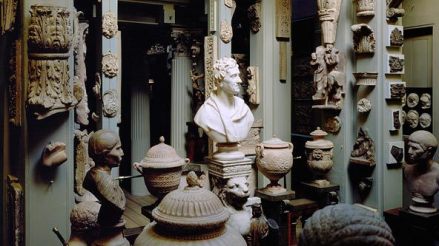
The Soane Museum, former home of the architect, Sir John Soane, who designed the Bank of England and Dulwich Picture Gallery, is a treasure trove of the eccentric and eclectic right in the heart of London – and one of my favourite museums. Read about my visit and what antiquities, objets and oddments lie behind the door of No. 13 Lincoln’s Inn Field here.
Sir John Soane presides over his collection of Roman statuary in the basement of his home
Featuring some of the most powerful and poignant choral music to come from the western world, the Platinum Consort presents a survey of works from the Sixteenth Century to the present day – including James MacMillan’s stunning Miserere and Tenebrae settings by the consort’s composer-in-residence Richard Bates, as well as In The Dark composed by Bates especially for this recording.
Platinum Consort – Live at Kings Place
Saturday, 1st September 2012 – 7:30pm
Box Office: 020 7520 1490
Online Tickets: http://bit.ly/MYOD3m
The Cross-Eyed Pianist is free to access and ad-free, and takes many hours every month to research, write, and maintain.
If you find joy and value in what I do, please consider making a donation to support the continuance of the site







 The Cross-Eyed Pianist