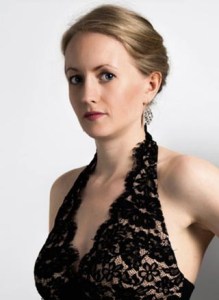
 Who or what inspired you to take up the piano, and pursue a career in music?
I didn’t plan on becoming a pianist or a professional performer until studying with Raymond Fisher while at university; he gave me the technique and self-belief to give it a go. Before that, I got a huge buzz from being surrounded by other enthusiasts and immersed in music day in, day out at music school. I’d studied recorder and clarinet too, but gradually came to realise that the piano appealed the most – because of the wealth of repertoire and playing opportunities it offers. My family wasn’t particularly musical, but my mum could strum a guitar so we sang lots of songs when I was pretty small, and I loved listening to records.
Who or what were the most important influences on your playing?
Obviously my teachers – I’m very grateful for my time with Richard Beauchamp who is disarmingly modest, open-minded and curious. The quality and quantity of chamber music on offer at school has undoubtedly given me a passion for collaborative playing. I like to think I have a reasonably open-minded attitude and curiosity for all arts and music – growing up in Edinburgh with it’s annual festivals and inspiring live performances of music, dance, theatre and wealth of art exhibitions has helped that.
What have been the greatest challenges of your career so far?
Staying focused and productive in personal practice, balancing commitments between different projects, being efficient with admin, and working out what’s next in a field that offers such huge flexibility for developing your career.
Which performances/recordings are you most proud of?
The projects where there’s a shared attitude and natural understanding with the people I’m working with, or in new projects that involve an element of challenge or risk and stretch you further than you thought possible. Specific things I’m really proud of: solo performances of Beethoven’s Choral Fantasy and Elgar’s Enigma Variations, duo performances of Bowen’s Sonata for flute and piano with Claire Overbury, Amalie Trio’s school workshops about the drama and skills of chamber music, and my recent debut recording bringing together lots of colleagues, Enigmas.
Do you have a favourite concert venue to perform in?
Anywhere with a decent piano that’s not too cold, and an open-minded audience!
Favourite pieces to perform? Listen to?
To listen to: Barber’s Violin Concerto, Mozart’s Clarinet Quintet, Schubert’s three last piano sonatas, any of Brahms’ violin sonatas… Mind you, I don’t often listen to classical music in my downtime. I dance and sing along to bands like Snarky Puppy, the Divine Comedy, Count Basie and Stornoway, or listen to Cerys Matthews and Craig Charles on Radio 6 Music. To perform, I love finding compelling repertoire that’s less well-known: trios by Nicolai Kapustin and William Bolcom, an Azerbaijani suite by Fikret Amirov, songs by Bernard Stevens. I love it when the audience hasn’t heard of a piece or composer but enjoys the discovery. It’s way more interesting to me than being the 3000th person to play Beethoven’s Ghost Trio, however good the piece is!
Who are your favourite musicians?
Those who find endless expressive nuance without distorting the overall shape of the music, and who prioritise the music and avoid any on-stage presence of ego. I’ve been blown away by concerts and recordings by Adrian Brendel, Imogen Cooper, Stephen Hough, Kathryn Stott and Steven Osborne, and outside the classical world by the creativity of Stornoway and Chick Corea, and the skill of Courtney Pine and Joshua Redman.
What is your most memorable concert experience?
Hmm. They’re often memorable for the wrong reason. Performing extremely badly but with total swagger aged 7, with two painfully-bandaged knees due to a pre-performance backyard incident! Nerve-wrackingly page-turning for Martha Argerich and Nelson Goerner in the Edinburgh Festival. Good ones: Beethoven’s Choral Fantasy (from memory, which is unusual for me), Enesco’s Violin Sonata no. 3 in my final recital at music college, the rapport with new colleagues in our very first performance together of Mendelssohn’s Piano Trio in C minor.
What do you consider to be the most important ideas and concepts to impart to aspiring musicians?
Play pieces you really believe in, and nothing beats being properly prepared.
Where would you like to be in 10 years’ time?
Performing more frequently with my regular chamber music partners and doing more 1-1 coaching with adults – I enjoy accompanying and working with them to release potential musical expression and overcome frustrations. I also love working with choirs, so continuing to develop that alongside my performing work.
What is your idea of perfect happiness?
A productive days’ work, or being outside somewhere rural in good weather, or good food in relaxed company.
Elspeth Wyllie performs throughout the UK and abroad as a solo pianist, chamber musician and accompanist. She has appeared at the Purcell Room, Fairfield Halls, The Brunton, and on Classics Unwrapped for BBC Radio Scotland. She is a founder member of the Métier Ensemble (with flautist Claire Overbury and cellist Sophie Rivlin) and the Amalie Trio (with mezzo-soprano Catherine Backhouse and violist Alexa Beattie), performing regularly with them and in projects with other musicians from major ensembles, orchestras and opera companies.
In addition to chamber music, Elspeth rehearses and performs with choirs. Particular highlights have been a performance of Beethoven’s Choral Fantasy and piano duo performances of Brahms Ein Deutsches Requiem and Liebeslieder Walzer. Her experience includes engagements with the BBC Symphony Chorus, the National Children’s Choir of Great Britain, and animateur Gareth Malone, as well as regular work with Clapham’s Festival Chorus and several other amateur choirs. Elspeth also teaches, coaches and accompanies, both privately and for workshops and courses. In the studio, she has recorded sessions at Abbey Road, AIR and Dean Street Studios, and for Novello publications.
Elspeth studied piano with Richard Beauchamp and Audrey Innes at St Mary’s Music School in Edinburgh, and continued with Raymond Fischer while reading music at the University of Oxford. She completed her professional training with a PGDip from the Royal Academy of Music, London, studying piano and accompaniment with Andrew West and Colin Stone and winning many prizes, including the RAM Club Prize for Accompaniment, the Vivien Langrish Prize, Evelyn German Prize and J E Reckitt Award. She was supported during her studies by the Oldhurst Charitable Trust and was shortlisted for the 2011 Park Lane Group Award with duo partner Claire Overbury. She has enjoyed lessons and masterclasses with many wonderful musicians, including Julius Drake, Susan Tomes, Adrian Brendel and Tasmin Little.
‘Enigmas: solo piano and chamber works’ is released by Divine Art Records on 19 May 2017
www.elspethwyllie.co.uk

 It seems to me that there is an obvious answer, staring us in the face: unfamiliarity. How many of our teachers drilled scales into us as a child? I’m guessing practically all of them. Sight-reading? The vast majority (and how thankful we are, even if we hated it at the time!). Transposition? I expect not a single hand in the room will have gone up.




 The Cross-Eyed Pianist