JDJ_2446-1

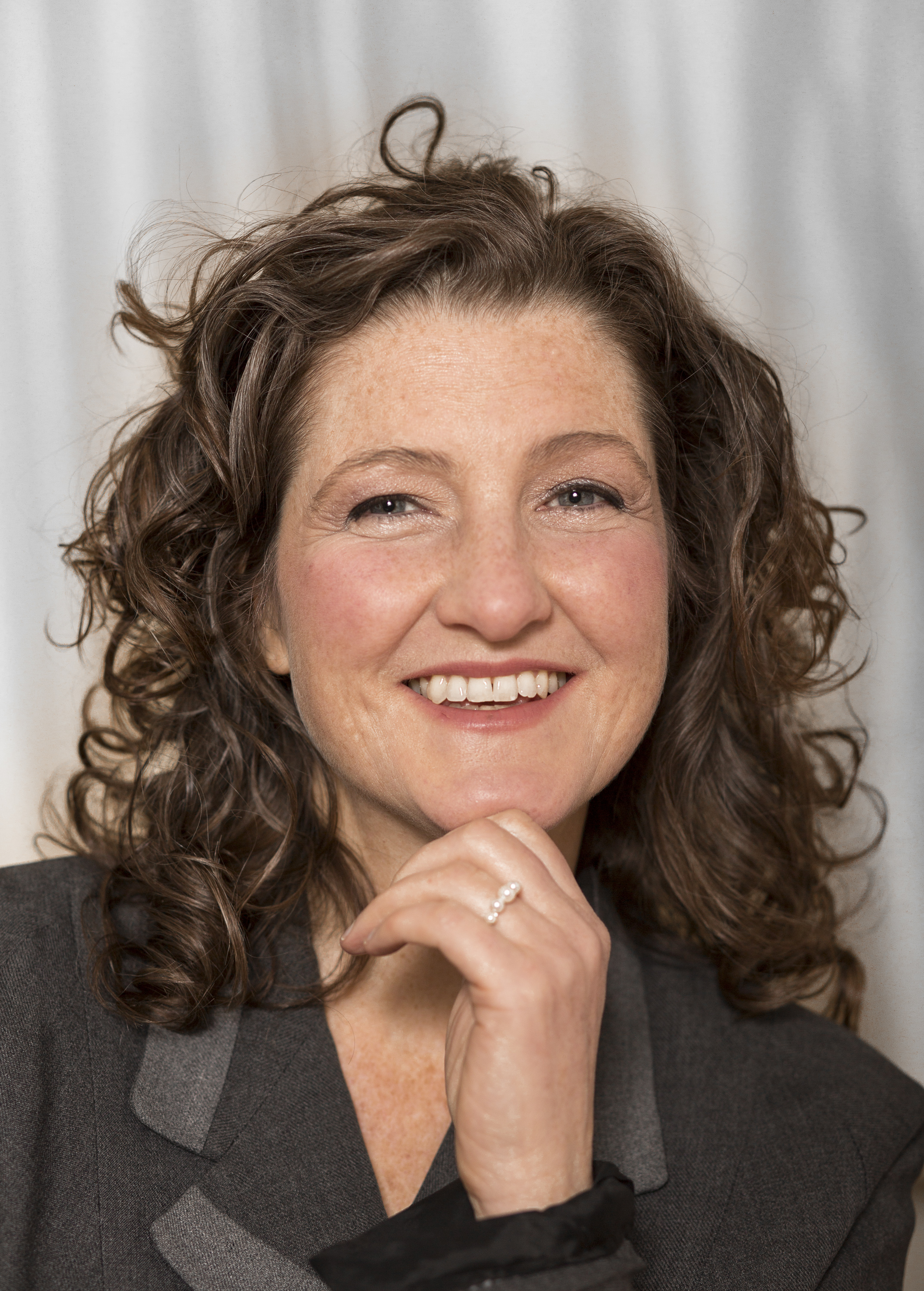
Who or what inspired you to take up the piano and make it your career? 

Apparently, my grandfather always wanted my mother to play the piano, but they came from a very humble background and decided that instead of going to a conservatory she would be much better off attending a regular school to become a doctor. When I was born, she was 35 and finally started taking lessons. However, it was just too difficult to continue lessons while working and looking after two kids, so she instead spent her free time with me playing games at the piano. I would sit at the instrument, singing and playing with full concentration for hours, which they thought was unusual for a baby. So my mother took me to her teacher, who kept refusing to teach me, saying my fingers were too short to start. She finally took me on when I was five-and-a-half years old, so my formal musical education began at her studio on the weekends.

Who or what were the most important influences on your playing? 

I think that the ‘social environment’ is very important, as well as your upbringing. At my home there were two gigantic speakers that my father put up in the living room with much pride. It was always very important to be able to ‘to listen to music’ instead of playing something in the background. I think this made me an ‘active’ listener, paying attention to melodies and just generally being aware of what is happening. Music was also something that connected my family. Despite all the little fights we had, we would turn the music on to dance and laugh. I remember times when the four of us would all wear sunglasses and dance to Rock ’n’ Roll in the living room. My dad had some killer moves – he would spin me in the air. My sister also loved singing – although her voice was pretty awful. (She is now much better and often sings to her own baby son!)

On the weekends when I took lessons, it was much more formal and disciplined. My first teachers made me understand the huge responsibility you take on as a performer, when you are playing a great piece by a classical composer. From the beginning, I knew it was not something you could take ‘lightly’. To me, playing the piano was serious: it needed so much detailed analysis, character and effort. I remember playing a Chopin Waltz when I was 7 years old in front of hundreds of people and it felt like my heart almost stopped backstage. I still get that feeling; but I wouldn’t call it ‘stage fright’ because I always loved going on stage, yet it is the enormous respect you feel towards all these amazing composers and you, as a pianist, should represent their work the best you can, so the audience can understand it.

I think, I took lessons following these two approaches: 1) using music to communicate and to have fun 2) taking it seriously and approaching it with respect and admiration

What have been the greatest challenges of your career so far? What advice do you have for other musicians? 

There are amazing talents I’ve met at my schools and it is almost always the same path for musicians: you teach, take part in competitions and accompany people to earn money. Yet, when you do what you have been educated to do (give concerts), they expect you to do it for free. It is not seen as a career, as you do not earn money for the hours you spend practising the piano, and this is such a pity. I see so many of my colleagues spending so much time wasting their skills on things they would not do if they were provided with better financial opportunities. They also do not have any time left to create something new because they spread themselves too thinly. (The tragic truth is even an entry level secretary gets paid more than an experienced professional musician)

This is because funding for arts and music gets cut first whenever there is a financial crisis, and without sponsorship and/or government support it is difficult for musicians to prosper.

Thanks to the digital age, I am lucky to have so many amazing fans around the world that connect with me through Facebook, YouTube and Twitter and make it possible for me to have a busy concert schedule!

I would like to see the same happening to my friends and I think the greatest step they can take is to use self-initiatives, take risks and communicate with their audiences more.

Which performances/compositions/recordings are you most proud of?  

I did a peace concert in Moscow along with 11 other pianists, all from conflict-affected countries. It was at The Cathedral of Christ the Saviour (the tallest Christian Orthodox church in the world), and was an event where people from different religions, races and political sides came together to promote worldwide peace through classical music. It was so touching, and I had a great time working with everyone there.

Do you have a favourite concert venue to perform in? 

I think each venue has its own unique characteristics. I love it when there is good acoustics and a great piano, yet it is also the people who listen to you that affect your performance. I like it when the audience members are willing to interact with me and this can happen the most in the unexpected parts of the world. For example, I was 12 years old performing at a small Greek town when after the concert an old Greek man approached me and told me the lines from a Turkish poem he had memorized, following a “tesekkurler” – (‘thank you’). I guess the magical experiences are created by people, not buildings or pianos. My favourite venues are those where I can inspire as many people as possible through music.

Favourite pieces to perform? Listen to? 

I listen to a lot of romantic classical music as well as oldies, rock and pop music up until the early 2000s. I love performing Chopin, Rachmaninoff, Liszt. I also love Beethoven because he was such a revolutionary guy.

Who are your favourite musicians? 

I admire those ‘giants’ who are sadly no longer with us, among them are Vladimir Horowitz, Arthur Rubinstein, S. Richter, Rosalyn Tureck and Artur Schnabel. Currently, my favourite pianists include Menahem Pressler and Arcadi Volodos, who always make their performances ‘magical’ and ‘inspiring’.

I also admire Lang Lang for being so open-minded, creative, hugely talented, for inspiring so many young people with his music and for his entrepreneurship. I think we need more people like him in this world.

What is your most memorable concert experience? 

My first concert with orchestra when I was 9, playing J S Bach’s 5th Keyboard Concerto was so important to me. It was the first time I showed I was able to handle this work. It was also very stressful, as there were more than 700 people in the audience hearing me for the first time. In the end it was a success. I received a huge toy dog from an audience member as a present, which I still keep.

What do you consider to be the most important ideas and concepts to impart to aspiring musicians? 

I think the most important thing is to be honest with what you do. Do not try to hide your own characteristics, in fact exaggerate them! I hear so many people who play so robotically just to be ‘perfect’ – yet their music becomes nothing more than a ‘photocopy’ of other people’s performances. It is important to be spontaneous on the stage and really let your emotions control your performance.

What are you working on at the moment? 

I am working on the rest of my Pink Floyd arrangements for the full album to be released this summer, along with chamber music performances and solo classical concerts. It is very busy, arranging, practicing, rehearsing and performing. I also like doing some creative and not-so-classical productions to really enjoy music.

What is your idea of perfect happiness?

Happiness to me means always having a project ready to inspire people with.

What is your most treasured possession?

I do not treasure objects. I treasure people, and the time you spend with them. Most of it is with those who inspire me and open my eyes, help broaden my thinking and allow me to see the world differently.

What do you enjoy doing most?

I love getting reactions from audience members after concerts. It reminds me of why I chose this career.

What is your present state of mind?

I am in a state of ‘production’ – focusing a lot on creating my own path.

AyseDeniz Gokcin is giving a private recital in London on Tuesday 14th May. Programme includes her own ‘Pink Floyd Lisztified’ and Liszt’s  “Apres un Lecture de Dante”: Fantasia Quasi Sonata, plus works by Chopin and Mozart. Further information and tickets here

AyseDeniz’s Billie Jean Smooth Criminal Thriller Mashup – a tribute to Michael Jackson on the occasion of the thirtieth anniversary of his performance of ‘Billie Jean’ on the Motown Records 25th anniversary tv show.

AyseDeniz recently completed her Masters in Piano Performance at Royal Academy of Music in London with Merit, under the tutelage of Christopher Elton, receiving the Maud Hornsby Award and completing the LRAM Teaching Certificate. In 2009, she finished her Bachelors Degree at Eastman School of Music (Rochester NY) in the studio of Douglas Humpherys, where she received Howard Hanson and Clements Scholarships as well as the John Celentano Excellence in Chamber Music Award.

AyseDeniz made her concerto debut when she was nine, with Gordion Chamber Orchestra playing J.S. Bach’s Keyboard Concerto No. 5. At thirteen, she had already performed as a soloist with various orchestras under conductors including Ibrahim Yazici, Fahrettin Kerimov, Antonio Pirolli, Cem Mansur, Engin Sakpinar, Ertug Korkmaz, Rengim Gokmen, Vladimir Sirenko, and Kirill Karabits.

Upon receiving an invitation from Nikolai Petrov, she has performed in Kremlin Palace (Moscow, Russia). She has also appeared in L’Eglise (Verbier, Switzerland); Duke’s Hall, Kings Place (London, UK); Central Park of Culture and Resort Open Air Hall, Lysenko Hall (Kiev, Ukraine);  ‘PepsiCo Hall’ Texas, ‘Kilbourn Hall’ New York, ‘Harris Hall’ Colorado, ‘Lehmann Hall’ California (USA); Bellapais Antique Monastry (Northern Cyprus) and most of the important art centers in Turkey, including the Sureyya Opera House during the 38th Istanbul International Music Festival.

She attended prestigious summer festivals including Verbier Academy; Music Academy of the West, Aspen Music Festival and School, PianoTexas, Goslar Konzerterbeitswochen, Tel-Hai and Beijing International Music Festival and Academy, studying with renowned piano pedagogues such as Menahem Pressler, Jerome Lowenthal, Arie Vardi, Yoheved Kalpinsky, as well as Lang Lang. Having been invited by the world renowned Bach interpreter Rosalyn Tureck to Spain, AyseDeniz had the privilege to study with her for a semester during her last years.

AyseDeniz has appeared on various TV channels, radio stations and in magazines including CNN Turk, NTV, TRT, The Voice of Russia and Vogue Turkey. She is currently working on solo and recording projects, as well as giving concerts to raise money for charities around the world.

global_212048962As part of this year’s Brighton Fringe Festival, Music of Our Time (MOOT) presents a unique series of concerts focusing on Music and Disability with an imaginative and exciting range of artists and programmes.

One of the highlights of the series will be a concert by left-handed pianist Nicholas McCarthy, who more than amply demonstrates through his virtuosity and pianistic sensitivity that having only one hand need not be a hindrance to extraordinary piano playing. His programme features works by Bach, Scriabin, Schubert, Richard Strauss and Liszt.

Meanwhile, ‘The Bionic Ear Show’ is an award-winning fun, interactive show about hearing and how to protect your ears for the future. ‘Lost and Sound’ is a moving documentary film by partially deaf filmmaker Lindsey Dryden, with stories of sound and silence including a young pianist who lost her hearing as a baby, and a music critic facing sudden hearing loss.

An afternoon workshop on Saturday 18th May with Dr Paul Whittaker OBE and singers from the British Voice Association explores how deaf people can enjoy singing and vocalising.

Other concerts in the series include a performance of Stravinsky’s ground-breaking The Rite of Spring one hundred years to the day since its controversial 1913 premiere in Paris. The programme also includes Debussy’s Épigraphes antiques and a short film about The Rite and the infamous riot at its premiere.

The brilliant young Ligetti Quartet perform works by Adams, Górecki’s Arioso, Huang Hai-Huai, Webern, and Laura J. Bowler’s Hay Fever (includes a teapot and four copies of The Sunday Times). Plus György Ligeti’s Poème symphonique for 100 metronomes (don’t forget to bring yours!).

Paul Silverthorne (Principal Viola, London Symphony Orchestra) & pianist Aglaia Tarantino perform Schubert’s Arpeggione Sonata, followed by a tribute in memoriam to Elliott Carter, Hans Werner Henze and Richard Rodney Bennett with imaginative works by each composer, ending with Paul’s own transcription of Stravinsky’s elegant Suite Italienne.

Full details of all the concerts in the series, and tickets, here

MOOT also present a special free Spectrum Music Day with Thalia Myers. Pianists are invited to play any piece from the eight Spectrum books published by ABRSM. There will be a workshop with Thalia Myers followed by a concert.

Further details here

My Meet the Artist interview with Nicholas McCarthy

MOOT is a non-profit group for the public benefit promoting contemporary music arts education. Artistic director: Norman Jacobs. To keep up to date with MOOT events, join the MOOT Meetup group.

Angelo Villani is planning his debut CD ‘Dante’s Inferno’. Help make it happen by supporting his Kickstarter campaign. Pledge your support here

Who or what inspired you to take up the piano and make it your career?

My mother always wanted to play but never had the chance. One day she asked me if I wanted to learn, and I said yes.

Who or what are the most important influences on your playing?

I really love and admire the older pianists who themselves emulated the great singers of the past. One can always hear the influence of great singing on pianists such as Horowitz, Nyiregyhazi, Sofronitsky, and Tiegerman.

What have been the greatest challenges of your career so far?

After not playing for over 25 years, it was a very long walk to the wonderful Fazioli at St James’s last October.

Do you have a favourite concert venue?

My dream venue would be an open-air concert in Loch-ard Gorge along the Great Ocean Road in Victoria, Australia. The acoustic there is phenomenal. Just a slight logistical problem of getting a piano and full orchestra down there.

Who are your favourite musicians?

Ramon Vinay (Tenor), the late Dietrich Fischer – Dieskau (Baritone), Zara Dolukhanova (Mezzo Soprano), Adolf Busch (Violinist), Bronislav Hubermann (Violinist), Carlos Kleiber (Conductor), Victor de Sabata (Conductor), Wilhelm Furtwangler (Conductor)…. and many more.

What is your most memorable concert experience?

I heard Shura Chekassky play at Wigmore Hall just before he died. He made the most ravishing piano sound I’ve ever heard in that Hall.

What is your favourite music to play? To listen to?

Being a pianist, I am really spoilt for choice as there is so much truly great music written for the piano. Where does one stop? And to listen to….. I constantly marvel at the sense of novelty and invention of Errol Garner’s concert by the sea (I also seduced my fiancée listening to this album).

What do you consider to be the most important ideas and concepts to impart to aspiring musicians/students?

There is no such thing as perfection. The greatest performances, no matter how extraordinary and ‘ideal’, are in a state of flux. We must never forget that some of the greatest performers in history i.e. Bach, Beethoven, Liszt, Chopin, Scriabin, Art Tatum, Errol Garner and Miles Davis et al, were great improvisers.

What are you working on at the moment?

I love to work on a number of things simultaneously. My old Russian piano teacher often spoke about walking past Sviatoslav Richter’s apartment and eavesdropping, hearing the great master practicing completely different works to what he was going to play later that very evening.

What do you enjoy doing most?

Opening a sensational bottle of red wine after a good concert and sharing with friends.

Angelo Villani performs at London’s St John’s Smith Square on Wednesday 8th May in a concert featuring works by Debussy, Chopin, Liszt, Wagner/Von Bulow/Liszt/Villani and Alkan. Further details and tickets here

Born in Australia to Italian parents, Angelo Villani attended Melbourne’s school for musically- gifted children, the Victorian College of the Arts, where his teachers included Alexander Semetsky, a pupil of Emil Gilels, and Stephen McIntyre, a student of Arturo Benedetti Michelangeli. A flourishing career as a teenager included performances of the Tchaikovsky 1st Piano Concerto and Rachmaninov 2nd Concerto with Melbourne Symphony, acclaimed for their dramatic intensity, vision and musical conviction.

Following further recitals and appearances on ABC Television, Angelo Villani won considerable respect and esteem and a promising career seemed forthcoming. Following recommendations by Leslie Howard and Joyce Greer de Holesch to take part in the Moscow Tchaikovsky International Piano Competition, the 23-year-old pianist was accepted for the 9th International Tchaikovsky Competition in 1990.

The young Australian pianist arrived in Moscow a week earlier to prepare himself for the Herculean contest. Shortly before the first round, Villani withdraw owing to a trapped nerve. A potentially important career came to an abrupt halt, whilst Villani travelled internationally seeking effective treatment.

Since settling in London in 1991, Villani has performed sporadically in mostly private gatherings such as the Liszt Society annual meeting performing alongside Kenneth Hamilton and at the Royal Overseas League. He has channeled his extensive knowledge of piano repertoire and recording history in new ways. He gives masterclasses to professional musicians, has written for specialist publications and worked for 7 years in Tower Records, providing expert advice on recordings to customers. When specialist music shops disappeared from the high streets, Villani took up employment as piano teacher at Rosary Primary School (Belsize Park) and Kentish Town Church of England Primary.

Since 2010, tangible improvements have emerged which have allowed Angelo Villani to make a full return to the keyboard and over the past couple of years he has given several private concerts across the UK. 2012 marked a return to form culminating in his official London recital debut.


www.angelovillani.com

Photo credit: Marco Borggreve

It would be foolish of me to attempt to review harpsichordist Mahan Esfahani’s magical Wigmore Hall recital in detail, as I have neither the knowledge of the mechanics of the instrument nor familiarity with the repertoire to do justice his performance. I “dabbled” with the harpsichord while at school, playing continuo in a Baroque group, and now I occasionally play a friend’s instrument, more to attempt to understand some of Bach’s writing in pieces I am learning on the piano, than any serious commitment to the instrument. For years, I felt it was best left to early music and Baroque specialists.

I grew up listening to my parents’ LPs of Glenn Gould’s recordings of the Goldberg Variations, and believed these were the benchmark against which all other interpretations of this mighty work should be set. However, in 2011, after reading about the young Iranian harpsichordist Mahan Esfahani on Norman Lebrecht’s blog, I decided to take the plunge and review a harpsichord recital. In July 2011, at London’s elegant Cadogan Hall, a double debut took place: Mahan’s Proms debut and the first time ever a solo harpsichord recital was presented at the Proms. I called my review “Spellbound by Bach” because for the full hour of the concert that is the state in which Mahan’s playing put us. Credited with bringing the harpsichord “out of the closet”, Mahan’s approach captivated and enthralled. He made the instrument – and the music – appear modern, newly-wrought.

So, when I and the friend who owns the harpsichord rocked up at the Wigmore on Friday night I knew we were in for an exceptional evening of music.

The pieces by Byrd drew inspiration from dances and songs, some toe-tapping and rousing, others stately and elegant, and religious texts, written by a composer living in a country poised on the cusp of change, as England sloughed off the Middle Ages and stepped confidently into the Renaissance. Some of the works were delicate, fleeting, poignant, others proud and courtly. All were beautifully presented, Mahan highlighting the subtleties of sound and touch possible on the instrument. During a pause in the performance, Mahan talked engagingly about Byrd’s importance in the canon of English music, and the forward-pull of his compositional vision. I was struck, not for the first time on hearing Mahan, at the range of tone, colours and moods he was able to achieve with the instrument.

After the interval, a selection works by Bach from the ‘Musical Offering’, a collection of canons and fugues and musical “riddles” which Bach composed in response to a challenge from Frederick the Great (and to whom they are dedicated). A three-part fugue and a six-part fugure (Ricercars) and a “Canon in tones” showed Bach at his most esoteric, teasing and “modern”, which set the scene nicely for, what was, for me, the highlight of the evening – the complete harpsichord music of Gyorgi Ligeti, which recalls Renaissance and Baroque models (the Passacaglia and Chaconne).

Again, Mahan introduced the works, explaining that in the Soviet Eastern Bloc, the harpsichord and early music were considered dangerously reactionary and composers and musicians were not permitted to write for or play the harpsichord. (Interestingly, a number of key modern composers and champions of the harpsichord are from former Eastern Bloc countries.) Mahan then explained that the second harpsichord on the stage was a rather special instrument, a modern harpsichord with nine pedals, a kind of “prepared piano” of the harpsichord world, capable of some extraordinary, other-worldly, sounds – amply demonstrated by Mahan in his performance of the works by Ligeti.

The Passacaglia Ungherese was redolent of the falling figures and ground basses of the music of Bach and his contemporaries; by contrast, Continuum was a fleeting sonic flurry, its strange sound-world recalling an alarm, breaking glass, an angry mosquito. (Ligeti used the harpsichord for this piece because the rapid speed would be almost impossible to achieve on the heavier action of piano.) To close, Mahan played Ligeti’s Hungarian Rock, a tour de force of rhythm and sonic textures suggesting the plucked sound of a modern guitar. The basis of the work is a Chaconne, a set of variations over a pounding, repeating chord pattern (the basis for much jazz and rock music). It was an energetic – and energising – close to a stunning and unusual programme.

For an encore, a short work by Purcell: simple, elegant, perfect. Afterwards, we queued up the stairs to the green room of the Wigmore to congratulate Mahan on a truly miraculous evening of music making.

Mahan argues the case for a modern appreciation of the harpischord and its repertoire far better than I can. Read his guest blog for Gramophone here

My Meet the Artist interview with Mahan Esfahani (from 2012)

Review of Mahan Esfahani’s Prom’s debut