Who or what inspired you to take up composing, and pursue a career in music?
When I started playing piano and clarinet at Gnessin Music School, Moscow, my first influence for composing was my performance – playing music with very bright and talented musicians. The main trigger, however, was performing in Messiaen’s Quatuor pour la fin du temps together with cellist Alexander Knyazev. It was a profound experience which unveiled to me the mysterious and cathartic power of great music.
Who or what were the most significant influences on your musical life and career as a composer?
Paradoxically enough I would refer to great performers rather then great composers: Vladimir Horowitz, Glenn Gould, Rostropovich, Jascha Heifetz and other masters. Through their art of interpretation of great music I discovered the link between their endeavour to rediscover the composer’s world as they saw it, and the composer’s world as the composer saw it in its entirety.
What have been the greatest challenges of your career so far?
Any new work or project seems the greatest challenge at the beginning and less so nearer the end.
What are the special challenges/pleasures of working on a commissioned piece?
To be focused on the specific task of forming the project and then… to share an excitement with parties involved.
What are the special challenges/pleasures of working with particular musicians, singers, ensembles and orchestras?
Probably the most pleasurable experience for me which unifies all these types of musicians is to the opportunity to discover musicians and their ability to respond the music.
This premise is based on my belief in the uniqueness and versatility of every singer or a member of ensemble or orchestra.
Which works are you most proud of?
There are few, among them are two the most recent choral works: Prayers for Mankind, the Divine Liturgy of St John Chrysostom, and 24 piano pieces written in 24 different keys.
Do you have a favourite concert venue?
I would leave it to the audience, however a good church acoustic always adds something extra to the performance.
Who are your favourite musicians/composers?
People like Miles Davis, John McLaughlin, Glenn Gould and some Spanish Renaissance composers.
What is your most memorable concert experience?
The recent London première of the Divine Liturgy with the choir Tenebrae.
What do you consider to be the most important ideas and concepts to impart to aspiring musicians?
Complete honesty in writing music. For performers – relentless striving in achieving the most eloquent and original interpretation of the music.
What are you working on at the moment?
I have just finished writing a piece for VOCES8 and about to start revising my Second String Quartet which I wrote for the Tippett Quartet.
Where would you like to be in 10 years’ time?
Alive and with my family
What is your idea of perfect happiness?
Absence of unhappiness
What is your most treasured possession?
My family.
What do you enjoy doing most?
Making people smile
What is your present state of mind?
Enlightened and connected with my inner self.
Born in Moscow in 1955, Alexander Levine studied piano from the age of six at the Gnessin Music School (Moscow), and later he took up the clarinet. Upon graduation he was offered a place at the Moscow Gnessin Music Academy where he studied from 1976-1980. During his college years he also held the position of Principal Guitar in the Orchestra of Russian National Radio and Television.
In the years that followed he established himself as a composer working in collaboration with a variety of highly acclaimed performers in Russia. His compositions won prestigious awards from the Russian National Radio and Television in 1989, 1990 and 1991.
Since 1992 Alexander Levine has lived in the United Kingdom.
In 1993 he was awarded the honored Wingate Foundation Scholarship to study in the Postgraduate Composition course at the Guildhall School of Music and Drama. In that year many of his compositions received awards and won prizes at various composers’ competitions.
In 1994, in recognition of his achievements, he was awarded the GSMD Bursary to continue his studies in the Advanced Postgraduate Composition. He also did his Master Degree (MA) in Composition at the GSMD in 1995, studying under Prof.Gary Carpenter and Simon Bainbridge.
In 1994 he was commissioned to write music for the Barbican production of War and Peace, directed by Peter Clough, which was performed by the GSMD Symphony Orchestra on stage. The Times wrote about this work: “It is not often you go to the theatre and get an orchestra thrown in: not providing cues for numbers but underscoring dialogue with a grand swell, like a soundtrack for the big screen.”
He also was engaged as music director for the restoration of The Beggar’s Opera and Love’s Labour’s Lost.
In the following years Alexander collaborated with various artists such as Maria Freedman, Christian Forshaw, Stanzeleit/Jacobson Duo, Darragh Morgan, Mary Dullea, Fidelio Trio, Konstantin Boyarsky, Jonathan Powell, Andrew McNeill, Bozidar Vukovic, Tippett Quartet, Orlando Consort, BBC Singers, 21st Century Choir, Tenebrae, Mariinsky Opera Choir. Russia State Orchestra “Novaia Rossia”, Bel Canto Chorus.
Tate Britain presents the first major survey in 25 years of pre-eminent British sculptor Richard Deacon’s work. Deacon is best known for his lyrical open forms and works displaying organic fluid movement, a recurring feature notable in serpentine structures such as ‘After’ (1998), which occupies Room 5 of the exhibition like a giant somnolent latticework python.
American cellist David Finckel, who has just embarked on a series of seminars entitled ‘Being a Musician’ at Stony Brook University, identifies the important habits of those musicians who have built and maintained successful careers. (This article first appeared in The Strad.)
1. Know thyself
Being a musician begins with you. Knowing and being able to articulate why you love music, and why you must make a life of it, are the first steps to convincing the world that you are in the business to stay. Understanding how you stack up in the music world, and knowing what you have yet to learn, is equally important. If you are tougher on yourself than others, you’ll be ready for anything.
2. Be an artist
There are many musicians, but few real artists. True artists remake and replenish themselves perpetually, and are the ones followed by a loyal public. Decide what you need in order to honestly call yourself an artist and go get it. Study the people you consider to be great artists and emulate them. You can’t go wrong by spending a day as Mendelssohn, Picasso or Charlie Chaplin. Put yourselves in their heads and you’ll see the world differently.
3. Keep learning
Artists never stop absorbing knowledge and ideas that enrich their minds. Read, listen, watch, ask questions and surround yourself with interesting people. Don’t discount unconventional sources of knowledge. People who are constantly learning are the most interesting, always changing and always growing. Be one of them.
4. Work on your performance
Don’t be afraid to compare your performance to your own ideal. Be relentless in your determination to improve. Tape yourself on your mobile phone. Ask your friends for honest opinions. Listen and watch those musicians you admire most. Ask to play for the best musicians you know. You will only show yourself to be more dedicated than others.
5. Make friends
Careers are not made in isolation. Your friends, colleagues, mentors and industry contact list should be large, ever-growing and well-maintained. It will likely be one of these people who opens opportunities for you, recommends you, or shares a new idea that changes your life. A large musical family is not a bad thing to have.
6. Visualise possible lives
Keep an open mind as to the variety of ways you could be a musician. There are many.
7. Ask not what the industry can do for you…
Everyone who works in the arts industry faces enormous challenges on a day-to-day basis. The best thing a musician can do for them is to offer solutions, not present problems. These people appreciate all your ideas about programming, creative ways to appeal to the public, and help you can offer to run their organisations more powerfully. Ask what you can do for them.
8. Lead by example
The ideas and ideals of an artist are often beyond the comprehension of most around them. As a rule, the most effective way to stand out in the field from the rest is to live the life you believe in. Inspire others through your own work, and opportunities will surely come your way.
9. Give back
It is never too soon to begin sharing your experience, knowledge and inspiration with those poised to become classical music listeners, supporters and practitioners in the near and far futures. As an artist and a musician, you always have something to share. That you are perceived as thoughtful, generous and forward-thinking is completely in your favour.
10. Stay the course
Commitment to your art – respecting your initial reasons for becoming a musician and rejecting all unprincipled derivations from the course of integrity – is essential for ultimately commanding the respect of your colleagues, public, supporters and the entire industry. Today there are numerous temptations in the music world to stray from the highest standards of a pure course of study and practice of great music. Musicians, educators and administrators desperately employ short-lived ideas for getting engagements, creating opportunities for students and selling tickets. At the end of the day, not being among those who doubt the staying power of our art is the only safe way to ensure that you will be trusted and taken seriously.
“I like to compare my process of making art to the composing of music.”
Gerhard Richter
Composer Jim Aitchison draws inspiration from his personal interactions and relationships with some of the leading twentieth-century and contemporary artists in the UK and beyond, including John Hoyland, Richard Long, Antony Gormley, and Sir Terry Frost. In 2008/9 he was commissioned by Tate Modern, Henry Tillman and Jill Bradford and the PRSF Foundation for New Music to respond in music to the gallery’s Mark Rothko exhibition, the largest Rothko show for 30 years. His response was performed in the gallery amongst the paintings with horn player Michael Thompson, counter-tenor Nicholas Clapton and the Kreutzer Quartet.
Jim Aitchison’s latest project is his personal musical response to the paintings of German artist Gerhard Richter and traverses aspects of Richter’s work such as chance, sequence , distance and memory to create a unique concert experience. Aitchison’s Portraits for a Study explores real geographical distance, for the work will be performed on four pianos simultaneously at four different venues, using Yamaha’s Disklavier technology. The “live” performance, and the trigger for the other simultaneous performances, will take place at the University of Falmouth, where pianist Roderick Chadwick will play the “parent” instrument. The other three pianos – at the Royal Academy of Music, Goldsmiths College and Yamaha Music, London – will be played remotely via broadband data transfer, and the exact nuances of Chadwick’s performance will be created in real time. Pictures from the Tate’s 2012 Gerhard Richter show will be projected during the performance.
Richter’s practice of passing the same images through a variety of processes or filters is also explored in Aitchison’s work: he has recomposed the same music for string quartet. It will be performed by the Kreutzer Quartet at the RAM and transmitted to all the other venues by audio link.
This fascinating blending of music, art and technology takes place on 22nd February 2014. I asked Jim about his influences and inspirations, his particular compositional methods, and how he translates his responses to a particular art work or works into music.
Who or what inspired you to take up composing, and make it your career?
From being relatively unaware as a child, the world of music crashed into my dim 11-year-old awareness in the form of Arthur Rubinstein’s coruscating RCA Appassionata recording, followed a little later by the televising of Vladimir Horowitz’s final London concert in 1982. I had never encountered eloquent intensity of this magnitude. In hindsight one might question aspects of the magnificent fading drama of Horowitz at this stage of his career, but the experience was electrifying and ushered in many years of preoccupation with 19th and early 20th-century pianism. I began composing at around this time with various futile attempts to emulate the major exponents of this, and it took a long time and significant effort to escape from thinking solely in terms of piano sonority, texture and timbre. In terms of becoming a ‘real’ composer (if I ever have done so) this emerged extremely slowly, and I consider myself very much as a late developer.
Who or what have been the most important influences (including non-musical influences) on your composing?
Regarding sources of musical influence, these might appear conventional: largely Euro-centric art music, with a particular interest in the aura of the 19th century, but very much thinking of this in terms of how to engage with it now, and what such music might mean as experienced in the present with all of the complexities, problems and paradoxes therein, neither trying to create some kind of illusory, sanitised re-formulation of the past for the purposes of hiding from the present, or an amnesia-based rejection in order to repel the influence of the past.
This sense of ‘present’ in terms of a place to think about the past, and the here and now, manifested itself in around 2001, when I discovered a hitherto unrealised link in myself between the visual and the sounded, embodied specifically in using aspects of visual artworks to create music. Bringing my musical material into engagement with the gallery space and with some of the procedures and approaches used by contemporary artists has been a transformative experience for me as a composer.
What have been the greatest challenges of your career so far?
To date, I think encountering the work of Gerhard Richter and attempting to respond to it in music has perhaps been the most challenging and rewarding for me.
What do you consider to be the most important ideas and concepts to impart to aspiring musicians/composers?
It is almost impossible to answer this complex question, without the danger of propagating potentially meaningless and deceptive platitudes, as there are so many variables within any one person’s path and what is around them. I can only offer the rather lame suggestion that one should try to be as true as possible to one’s self, but perhaps make sure to ask, continuously throughout life, what those notions of ‘true’ and ‘self’ mean.
Where would you like to be in 10 years’ time? You will have to wait and see!
What is your idea of perfect happiness? An ‘idea’ of happiness is something I try to be very wary of.
What do you enjoy doing most? (when not working) Walking in solitude, followed by good coffee.
What is your present state of mind? Restless
You say that your work is inspired by or in response to particular artwork/s and/or artists. Does a particular artwork/s prompt an immediate musical response in you, or is the process longer, more of a case of “living with” the art?
Occasionally the response can be quite swift in onset (particularly the case here: http://www.youtube.com/watch?v=vH8zK5W-l7A), but usually it is a long and painful process of building a kind of scaffolding from the visual to the sounded. I particularly value the process of attempting to apply procedures in music that an artist has used in their visual construction, and this can become very involved, almost like learning aspects of a language before being able to say anything useful in it.
What are your intentions when composing with a painting as the subject?
to “explain” musically the painting?
to “extend” the painting?
to make your own personal interpretation, musically?
I think I would be absolutely horrified if anyone thought that I was attempting either to ‘explain’ or illustrate or even worse, ‘extend’ an artwork. I don’t even like to think of it as a ‘personal interpretation,’ rather, I prefer the idea of a conversation between different art objects, where the original art work might give me a set of starting points from which to create my own piece of music that may take off in its own directions. If there are illuminating links between the art and the music, then so much the better, but I do not see the artwork as a ‘life-support’ machine for my music and I don’t see either as necessary to ‘explain’ the other.
The interpretation of colour introduced into a musical composition – is that present at all?
I am not synaesthetic, so there is no direct physiological correlation within me that I can draw upon to link colour with some kind of sounding outcome. However, the expressive and structural effects of colour that I encounter do inevitably find their way into the mix somehow. Previously, I have contrived intuitively simple correlative schemes between colours and different harmonies, which I have found very useful.
Portraits for a Study is inspired by the work of Gerhard Richter whose work contains distinct working methods/elements. How have you referenced these aspects in the music, in both the composition and the ways in which the piece will be performed?
CHANCE
UNCERTAINTY
BLURRING
COLOUR CHARTS
SCRAPING OFF
ABSTRACTION
Are there any particular musical techniques you have employed to achieve these aspects?
Yes, all of those elements you mention I have used to greater or lesser degrees within the pieces. Of all of them, abstraction in the sense that Richter uses it is rather hard to define here: as I understand it, in many other artists’ approaches to abstraction, what may be considered as a drive to transcend reality coupled with a kind of essentialising process, is in Richter’s hands, more a process founded upon establishing its own reality through the accumulation and erosion of visual material: a surface, not a doorway. In the case of my responses in Portraits for a Study, I decided to largely steer clear of direct engagement with this huge part of his output, though I hope to concentrate on this in a future project.
Chance and uncertainty, limited and mediated through formal procedures, have played an enormous role throughout Portraits for a Study, in a variety of ways. From harvesting and re-assembling tiny fragments of music by Bach and Beethoven according to simple pre-established rules, to creating transcriptions of photo-improvisations, to applying rigid filters to large spans of material, to using strict methods of cutting and re-ordering material, where the outcome of this is uncertain. Uncertainty is also built into the performance configuration itself: there is no way of knowing exactly how much of the data transferred between the remote Disklaviers over the Internet will come through and how this will affect the sounding result, as this is significantly dependant upon many variables.
Blurring, scraping off or erasure, palimpsest, the blow up, mechanical reproduction and copying, multiples and sequences (such as seen in the colour charts), are all filtering strategies that I see as establishing distance, levelling out, relative anonymity, and an aspiration towards the non-subjective intervention of the artist (a goal that I think is perhaps debateable in terms of whether it is always entirely fulfilled). I have sought compositional applications of all of these things: mechanically copying a whole Rondo by Dussek and then in one case blurring it almost beyond recognition through simple musical means, and in another, taking a fragment from the same piece, blowing it up six-fold and then completely erasing it and filling its duration with something else. In another instance, solo string pieces by Bach are buried under layers of musical ‘over-painting,’ some carefully contrived, others more coarsely applied. Multiples and sequences are used throughout the pieces, in the re-patterning of assembled fragments or in more intricately ordered cutting and re-positioning of segments of improvisations. Once again, the performance configuration is intimately invested in this: multiples, sequences and distance are created quite literally with 4 linked Disklavier pianos spread over 300 miles, and then the same material performed and transmitted again, re-composed for string quartet.
Has your investigation of the work of Gerhard Richter, which has significantly demonstrated the value of painting in the 21st century, assisted you in your question “what is the ‘correct ‘ kind of music to write in the early 2lst century”?
I would say that Richter’s art has enabled me to find some kind of permission to remain entirely uncertain about this, and reassurance that this is OK, even if it still feels uncomfortable, confusing and worrying.
What are the special challenges/pleasures of working with particular musicians, for example the Kreutzer Quartet and pianist Roderick Chadwick?
I have been collaborating with the Kreutzer Quartet for nearly 10 years, and it has been an immense privilege to work with colleagues and friends who are true artists. The only real challenges are found in the great distance I live away from them, and to produce work worthy of their skills: I am indebted to their patience in dealing with my inadequacies. This is the first time that I have worked with Roderick and, once again, I am utterly spoiled by being able to collaborate with such an extraordinary musician.
Has working with other musicians’ influenced/changed/stimulated your creative processes?
Absolutely, not only do I get almost instant feedback and data on critical aspects of the pieces written for them, but also wholly new insights on the music in rehearsal and performance that I hadn’t considered, and I also find early involvement with them often gives me indispensible approaches that I would not have thought of otherwise. This is what happens when you are able to work with musicians who have such breadth and depth in their wider artistic interests.
What are the particular challenges of working in a multimedia format, for example, with the Yamaha Disklavier?
Firstly, I feel I ought to emphasize that the new music is actually written for solo piano (as well as in a different version for string quartet), not Disklavier, and as such, I hope that pianists may be interested in it in future. But yes, the idea is that the music will be performed on the Disklavier piano in this case, making use of the Disklavier’s ability to be connected to many other Disklaviers across a network. Thus, the sense of distance and automation apparently present in aspects of Richter’s art will be referred to via the configuration of one live pianist at Falmouth University triggering 3 remote Disklaviers 300 miles distant, to play exactly what he plays, and exactly how he performs (the potential for chance data aberrations in transfer notwithstanding), at the Royal Academy of Music, Goldsmiths and Yamaha Music London.
composer Jim Aitchison (photo: Richard Bram)
There are immense technical challenges in doing this and in reversing the polarity, when we will transmit the Kreutzer Quartet performing the re-composed version of the same music back from the Royal Academy of Music to all the other venues via audio-visual link. We have run a whole series of tests between the various institutions and will continue to do so up until the performance on 22nd of February 2014. The main challenges are logistic (co-ordinating a large group of people comprised of several different teams across 4 remote venues and from several other participating organisations, accessing and organising spaces and getting equipment transported and set up over a wide geographical area), and technical (dealing with the idiosyncrasies of a large communication system with many components devised and set up especially for this project).
One of the joys of working like this however is that of building fruitful collaborations, both existing and new. In addition to the wonderful musicians, Arts Council England, The PRS for Music Foundation, Yamaha, Falmouth University, the Royal Academy of Music and Goldsmiths, and with wonderful support from Tate, we have also been incredibly fortunate to find a new collaborator in the Europe-wide Vconect video conferencing research project that includes major partners such as EURESCOM – European Institute for Research and Strategic Studies in Telecommunications, British Telecommunications plc, Portugal Telecom, Alcatel-Lucent Bell, Goldsmiths University, University of London, Stichting Centrum voor Wiskunde en Informatica, Fraunhofer-Gesellschaft zur Förderung der angewandten Forschung, JOANNEUM RESEARCH Forschungsgesellschaft and Falmouth University (http://www.vconect-project.eu/h)
The Cross-Eyed Pianist is free to access and ad-free, and takes many hours every month to research, write, and maintain.
If you find joy and value in what I do, please consider making a donation to support the continuance of the site

 Who or what inspired you to take up composing, and pursue a career in music?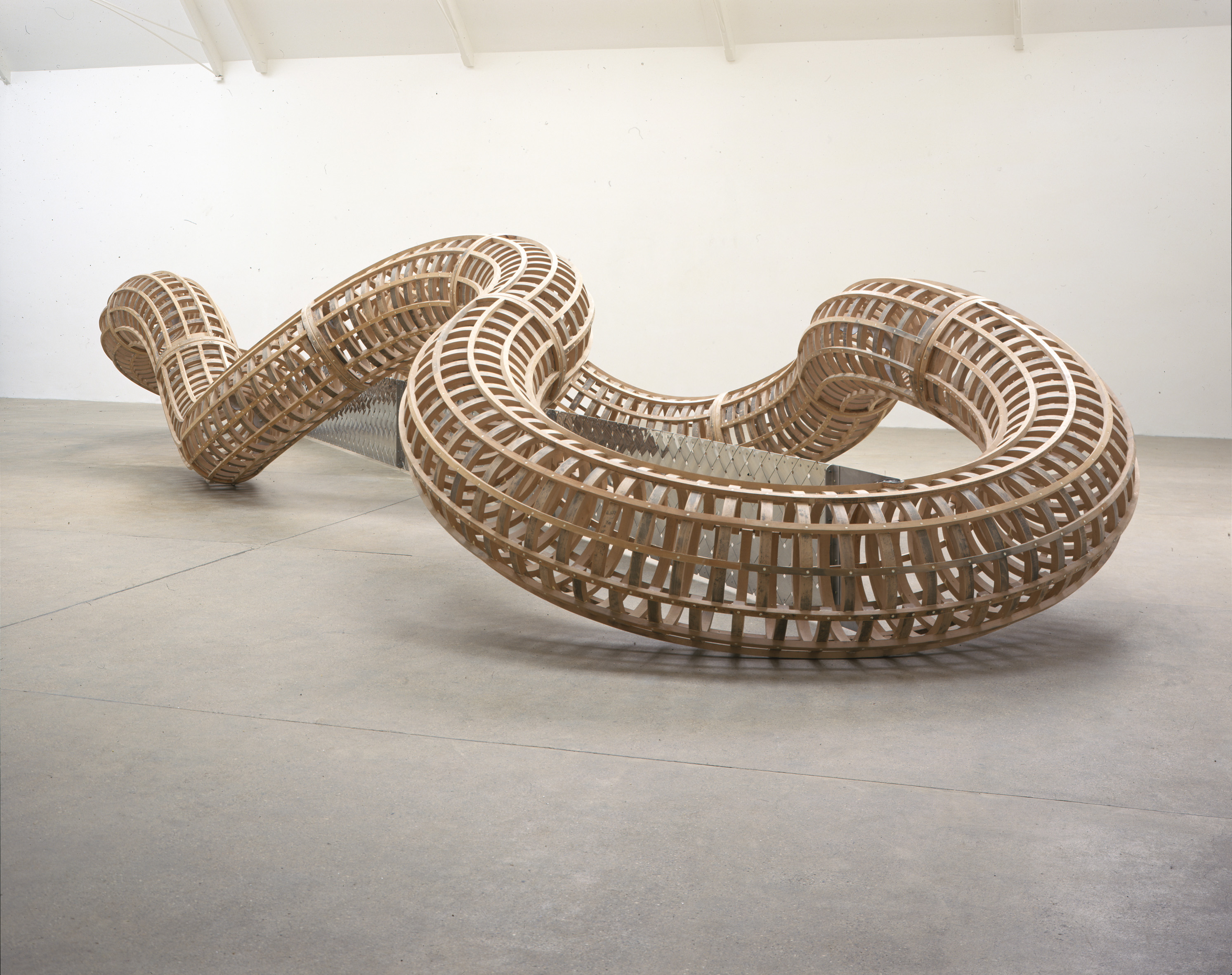






 The Cross-Eyed Pianist