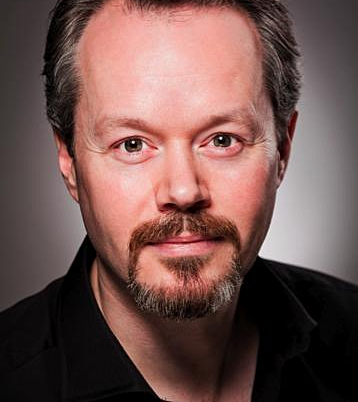
Dame Fanny Waterman, co-founder, chair and artistic director of the Leeds International Piano Competition and grand elder stateswoman of piano teaching, has been in the news this week as she has announced that she will be standing down from the prestigious piano competition after next year’s event.

Dame Fanny is “a living institution of British music” (source: The Guardian) and her views and opinions command much respect in the piano world and music education community in the UK and beyond. In today’s Observer, she expresses her fears for the future of pianism in the UK. I read her article with interest and have enjoyed a lively discussion in response to it with members of my own pianistic and piano teaching community on social networks. Based on these discussions, I would like to offer some points in response to Dame Fanny’s view:

Electric pianos and keyboards

I don’t like these instruments either. They are not a patch on a “real” acoustic piano, upright or grand, but they do offer an affordable alternative and for beginning students, child or adult, I would not hesitate to recommend a digital piano. There are some excellent models on the market at the moment. Many people simply do not have the income nor the space to purchase an acoustic piano for their children when starting piano lessons. (And I have seen some truly awful pianos in the homes of some of music students – out of tune and badly maintained.) One of my students has recently acquired a piano, having been studying with me for c4 years. Her parents took the decision to upgrade to a proper instrument because they could see she was committed to her piano studies and they appreciate that a real piano will enable her to develop as a young pianist.

Starting young?

Some children show aptitude for a musical instrument from a very early age, some later. And some come to music in adulthood. What is important here is encouraging and supporting an interest in music. Sure, there are kids out there who “are capable of “amazing” performances aged just four”, but delve a little deeper and I think most of these proto-Lang Langs display exceptional technical facility without any proper insight or musical understanding. This comes with maturity, time spent with the  music, understanding the context in which the music was created, and listening around the music – and much more besides….

There are no great British pianists today?

Dame Fanny, I beg to differ. They may not be well known on the international circuit (yet), but I have encountered some extraordinarily talented British pianists through my concert reviewing and interviews on this blog. What about Benjamin Grosvenor, a young British artist who already shows tremendous maturity, beyond his tender years? Other artists I would cite include Danny Driver, Daniel Grimwood, Clare Hammond, Richard Uttley, Lara Melda, Cordelia Williams, Daniel Tong. There is a terrible tendency, especially amongst more senior members of our society, to continually hark back to an earlier “golden age”. But we should look to the future and nurture and encourage the talent we have.

British pianists are not entering the Leeds competition

As one contributor to the discussion on Facebook said, one needs a hefty amount of wherewithal to enter international competitions. Music is notoriously badly paid in the UK, and not many people have the financial support (including parents who will fund such ventures) to consider the risk of entering a competition. It’s not because British pianists aren’t good enough; it’s because many of them simply can’t afford it!

And competitions should never been seen as the be all and end all. Sure, winning a prestigious competition can launch one on a successful international career, but it’s not a dead cert.

Students today lack “a grounding in the instrument’s complexities”

Here I agree with Dame Fanny. In my experience as a regular concert-goer and reviewer, I come across too many young artists (of all nationalities) whose sound has become “dumbed down”, if you will. They aim for  middle of the road expression and dynamics which they believe will please audiences and critics, and (some) teachers. I think part of this is due to bad teaching – the teachers themselves do not understand the complexities of the instrument – and also the fault of exceptionally high-quality recordings whose sound artists feel they should replicate in live performances.

Young pianists have too narrow a repertoire

In fact, I think many young artists have too wide a repertoire, as they feel they must have the big warhorses of the standard piano repertoire in their fingers by a certain point in their career in order to gain recognition and respect. This goes back to my earlier point about maturity. But I agree with Dame Fanny’s point that piano students today do not spend enough time studying a composer’s complete oeuvre: one cannot study one piece in isolation. I teach context from the get go, encouraging students to understand where the music they are learning comes from and suggesting “further listening” and study to offer a broader picture.

Young people lack the discipline to study the piano seriously

In addition to the discipline that is required to practise and apply oneself to musical study, students also need encouragement and support from family and teachers. Parents also need to understand that genuine musical talent comes from day-in-day-out commitment – and on this point I agree with Dame Fanny. But children should not be pushed to the extent that they lose their childhood in the process.

Music lessons are becoming the preserve of the better off

With poor provision for music education and instrumental teaching in many of our state schools, sadly, private music lessons are becoming the preserve of the better off.  The cost of learning an instrument is a major barrier for many. Only a relatively small sector of our society can afford to put students into specialist music schools or offer the necessary funding for their study, both at school and beyond.

Initiatives such as James Rhodes’ ‘Don’t Stop the Music’ are laudable, but I think a major shift in attitude towards music and the arts in general needs to take place, from the Department of Education down, in order for music education to be respected and accepted as a necessary part of our children’s education. My own recent research into attitudes towards private piano teaching in the UK reveal an alarming viewpoint: that music is regarded as a “soft”  subject, or simply a “hobby”. This view extends into the world of professional music making, where musicians are not properly valued and receive poor or no pay, because they are perceived as doing a job they love, or that music is not regarded as “a proper job”. This is part of a wider discussion, but it is touched upon in Dame Fanny’s article.

Another related aspect is the British attitude towards “achievement” and that peculiarly British dislike of “show offs”. Achievement and excellence have become dirty words in this country, and this dumbing down begins in primary school (at least in the state sector) where, for example, sports day has become some bland running about pointlessly with teachers cheering kids on and saying anodyne things like “everyone’s a winner!”. Culture, excellence and personal achievement need to be supported, nourished and encouraged. 

Future of piano playing in UK is in peril, veteran teacher warns

Thank you to everyone who contributed to this discussion via my Facebook thread.

I was also interviewed by LBC in response to Dame Fanny’s article. Listen here

Who or what inspired you to take up the piano and composing, and pursue a career in music?

I grew up in a musical household as my mother was a piano teacher. She taught me piano and I also played viola and violin, and for as long as I can remember I knew wanted a career in music. I think I first started composing because improvising new melodies and harmonies made practising my scales more interesting!

Who or what were the most important influences on your musical life and career?

Many and varied. I was fortunate enough to have an excellent musical education with many good teachers, starting with my mother. My secondary school, Dame Alice Owen’s, had a very strong music department and I attended Trinity College of Music, Junior Department on Saturdays. I also played the viola in Hertfordshire County Youth Orchestra. I then went on to study music at Oxford and composition at King’s College, London.

More recently, I joined CoMA (Contemporary Music for All) in 2005, playing the piano in CoMA London Ensemble which is a contemporary music group open to all instruments and all abilities. Initially I thought that CoMA would be a good way to provide composing opportunities, but I enjoyed playing the piano in the ensemble so much that I started to realise that I had more of a passion for playing than composing, particularly the excitement of playing contemporary music. CoMA has taught me more about contemporary music than my master’s degree in composition and I have discovered many wonderful composers and explored their solo piano music, including Paul Burnell, Joanna Lee and Dave Smith whose works appear on my latest CD.

What have been the greatest challenges of your career so far?

The greatest challenge for me has been working out how to find my niche as a musician in the first place. I always knew I wanted a career in music and after graduating I worked for several years in music organisations alongside some composing and teaching. However I always felt that I wanted to spend more time making music myself. When I had the opportunity to switch to part time hours in my administrative work I was able to think seriously about what career I really wanted and how to get there, and that’s when I realised that I wanted to focus on piano.

While I had always taken piano seriously I knew that converting this into a full-time career would require a concentrated period of study and that’s when I got in touch with my teacher Thalia Myers. Under her guidance I threw myself into getting my playing up to a standard where I could forge a career as a pianist.

Embarking on a career as a professional pianist in ones thirties rather than twenties has its challenges, but I believe that a richness of musical and life experiences informs my playing, providing me with something a little different to offer audiences.

Which performance/recordings are you most proud of? 

My first CD, Dream Rotation, which I recorded in November 2013 and which has recently come out. Dream Rotation is a collection of six contemporary works by composers I know. Four of the works were in fact written for me to play, two of which are dedicated to me. Five are premiere recordings.

I had at the back of my mind that I would like to record some of the repertoire I had been working on. I decided to go for it in 2013 when I discovered I was expecting a baby in early 2014 and I knew that my practising time would be reduced afterwards. I recorded the six works in one day in November 2013 at the Jacqueline du Pré music building in Oxford with the excellent recording engineer Adaq Khan. In the run-up to the day I had to put a lot of work into learning the works to a standard I was happy with and I had three other concerts during that two-week period. All while being seven months pregnant! The recording day itself was enormous fun and went more smoothly than I could have hoped for, then all the editing and admin that goes into bringing a CD out was done during 2014 in bits of time snatched in between looking after my little boy.

Which particular works do you think you play best?

As I am always learning new things and developing as a player it tends to be whatever I’ve performed most recently. I love playing contemporary music and I actually find standard repertoire quite daunting because there are so many interpretations already out there. I also love playing in ensembles and orchestras and regard this aspect of my playing as just as important as my solo playing.

How do you make your repertoire choices from season to season?

In a variety of ways. Depending on what concerts are coming up I may look for a piece for a particular occasion or others might make a specific request. In addition, composers often send me their works, which I welcome although I also warn them that their pieces will go on to a large pile on my piano and there’s no guarantee of a performance! I have discovered that male composers are much less shy about sending pieces to performers than female composers. Women take note!

As a composer, who are the major influences on your work?

A tough question! Every piece is different and I have sometimes noticed that each piece has something of whatever I’ve been listening to and playing at the time. In recent years this means CoMA repertoire, particularly the use of aleotoric notation such as indefinite pitches and rhythms and generally thinking outside the box. Composers such as Howard Cheesman, Joanna Lee, Stephen Montague and Dave Smith all think creatively about what the performers are required to do and how to express that in a notation which will be understood.

Do you find your composing informs your performing and vice versa?

Absolutely! In terms of playing it is useful to think about what kind of sound the composer was aiming for in any particular texture and to imagine each passage as if it were written for voice, and as if it were written for orchestra, as well as how it is actually written for piano. Understanding the structure of a piece and how the material develops is essential in planning a performance.

It is imperative for composers to understand their music from the point of view of a performer because it is only the performer who can actually bring the music to life. Since I have been playing contemporary music I have thought much more carefully about writing music for the instruments playing it and notating from the performer’s point of view. I think the music I have written as a result of this has greater clarity and I have been much more careful about how things are notated.

You have a special interest in contemporary repertoire and new music. What are the special pleasures and challenges of working with this repertoire?

Bringing a piece to life for the very first time is a wonderful experience. I love the feeling of discovering a piece I didn’t know before and with a brand new piece there is the added feeling of being the first to discover it. Think of your favourite piece of music and imagine being the first person to hear it!

Performers who concentrate on mainstream repertoire rely on a filtering process by which the best works survived and the less successful ones didn’t, whereas performing contemporary music involves being part of this filtering process. I find this exciting and rewarding but it does require patience because one has to engage with the less successful pieces as well as the gems. Patience is also required when working on a piece for the first time because there are invariably teething problems requiring a dialogue with the composer. Again, I enjoy this but it does require patience.

Do you have a favourite concert venue to perform in and why?

I have given several recitals at the Schott recital room in central London. I like the intimacy of this venue which enables the performer to engage with the audience. So many concerts are in churches and other large venues where the audience can hide at the back. Having said that, I am very much looking forward to performing at St. Cuthbert’s Church NW6 on 27 September. It is a modern building with a wooden interior and is beautifully proportioned inside. The concert is to celebrate the arrival of a new piano and launch of their concert series and I think it is going to turn out to be a popular chamber music venue.

Favourite pieces to perform? Listen to?

I have a few pieces which I come back to regularly because they work so well in performance. Gabriel Jackson Angelorum is one I have performed many times as it is so satisfying to communicate to the audience, whether they are regular listeners of contemporary music or completely new to it. The pieces on my CD, particularly Joanna Lee Atta and Hopper and Paul Burnell 3 Plain Pieces fall in to the same category. Another piece I loved performing and hope to perform again is Patrick Nunn Music of the Spheres which includes electronic sounds taken from data from Voyager spacecraft as it flew past the planets. Great fun!

To listen to, I have several favourite composers including Bartok, Messiaen, Ravel and Schumann but really I love all classical music from Bach to Birtwistle.

Who are your favourite musicians?

Goodness, how long have we got? I think I’m just going to pick out a few musicians who have inspired me somehow for various reasons.

The pianist Mary Dullea is quite special. I have heard her and taken masterclasses with her at CoMA summer schools and her playing displays a really sensitive and intelligent musicianship as well as formidable technique. I am also a fan of the pianist Nicholas Hodges whose mastery of counterpoint makes sense of the most complex of Birtwistle’s piano works.

There are a number of living composers who I count amongst my favourites. Aside from the composers I have previously mentioned, I love the music of Phil Cashian. He has written a number of pieces for CoMA which work really well and he always uses fresh textures and has a wonderful ear for harmony. Julian Anderson and George Benjamin are also favourite composers of mine.

What is your most memorable concert experience?

My first recital at the Schott recital room in September 2011 was very special as it was my first recital after I started studying piano seriously again. I played a set of twelve waltzes by Schubert, a short piece by Phil Cashian called Slow Air, Gabriel Jackson’s Angelorum and Schumann Kinderszenen. Unfortunately the event was tinged with sadness because, having taught me to play the piano in the first place and provided so much support over the years, my mother was not there to hear it as she had died earlier that year.

What do you consider to be the most important ideas and concepts to impart to aspiring musicians?

General musicianship is so important. Develop a good sense of rhythm, pitch and harmony and everything else will be much easier. Taking part in a variety of musical activities, particular singing in a choir but also playing in an orchestra, accompanying, composing, arranging and improvising all helps to build a rounded musician.

Where would you like to be in 10 years’ time?

I would like to be able to play a scale in thirds with one hand and for it to sound beautifully smooth.

What is your idea of perfect happiness?

The things around me here at home: my lovely piano, wonderful husband, brilliant son and Maestro the cat. Not necessarily in that order!

What is your most treasured possession?

It would have to be the piano. What else? It is my first real piano. Until five years ago I only had a digital piano which is no replacement for the real thing. When I got married my in-laws gave us a proper piano as a wedding present. It was the best possible thing anyone could have given me. We chose a Boston upright UP132. When it arrived I realised that all I wanted to do was play the piano and I followed the course which has led me to where I am today.

What do you enjoy doing most?

Playing the piano, spending time with the people I love, eating and sleeping. Not necessarily in that order!

What is your present state of mind?

My mind is in many places at once nowadays as I try to get so much done in so little free time.


The word “transcendental”, at least when applied to piano music, usually suggests rampant virtuosity and piano pyrotechnics, and the first pieces which come to mind are Lizst’s Études d’exécution transcendante. Liszt himself chose the word to allude to the extreme difficulty of the pieces, the implication being that the musician who masters these works will be able to “transcend” their technique, musicianship and the expressive capabilities of the instrument.

In Ivan Ilic’s hands, the word “transcendental” has a different meaning. His new disc, ‘The Transcendentalist’, draws inspiration from  Transcendentalism, America’s first indigenous intellectual community, which included literary luminaries Ralph Waldo Emerson and Henry David Thoreau. Emerson’s manifesto Nature (1836) laid out the philosophy of the movement, which was founded as a reaction to and against rationalism and materialism. The music included on Ilic’s new disc is by  Scriabin, John Cage and Morton Feldman, together with a new work by Scott Wollschleger, ‘Music Without Metaphor’. The composers have connections to the tenets of the Transcendentalist movement: Scriabin’s mysticism, Cage’s interest in Zen Buddhism, Feldman’s intuitive approach to composing and Wollschleger’s synaesthesia, and the works on this disc display virtuosity in their originality and thoughtfulness, contemplation and introspection, rather than showy technical prowess

The works by Cage, Feldman and Wollschleger demonstrate the influence of Scriabin on American avant-garde composers, while Wollschleger’s deeply haunting  ‘Music Without Metaphor’ subtly reflects on and refracts the other music on the disc. Scriabin’s miniatures reveal hints of Chopin in the early Preludes while the later works are exotic and ambiguous, rich in pre-Shoenbergian atonality and unusual and arresting harmonies.

Ilic’s touch is assured, sensitive and as thoughtful as the music, his sound rounded, the pedal used tastefully to create halos of blurred sound, particularly affecting in Cage’s ‘In a Landscape’. The entire disc is contemplative, dreamy and genuinely spiritual. Play this at the end of a busy day, with the lights turned low, and surrender to the music and Ilic’s subtle delivery.

Recommended

‘The Transcendentalist’ is available on the Heresy label and as a download from iTunes and Amazon.

Ivan Ilic will feature in a forthcoming Meet the Artist interview

I have a theory that we should spend c25 years living with our music, studying it, absorbing it, and then only perform it when we are in our 40s or 50s; unfortunately, this is not an ideal scenario in which to forge a career as a performer, and few professional musicians would ever have the luxury of being able to work in this way, but it’s an interesting thought nonetheless.

Music – like wine – needs to mature. We need to spend time with it, understand it, allow its flavour, depth, and narrative to develop. We need to live with the music to find out what makes it special, study its style and contextual background which provide invaluable insights into the way it should be interpreted, listen around the work, endlessly strive to find the emotional or spiritual meaning of a work, its subtleties and balance of structure, and how to communicate all of this to an audience as if telling the story for the very first time.

To do this, we should never study and learn music solely in the isolation of the practise room. The 8-hour practise regime I know some musicians pursue is harmful in so many ways, beyond the merely physical. And note-bashing (which is what practise becomes beyond a certain time-frame), is no substitute for life experience: fall in love, fall out of love, embrace art, literature, poetry, theatre, film, go to concerts, meet friends, eat, drink – all these things feed into the artistic imagination and help shape one’s response to music. Because, fundamentally, composers are just like us – sentient, thinking, emotional human beings who drew on their own life experience to create their music.

I know my own musical maturity has come from physical maturity and life experience, and from spending a great deal of time “in music”, by which I mean attending concerts, in my capacity as a concert reviewer and for the sheer pleasure and enjoyment of live music (which I adore); interacting with other musicians, primarily through the Meet the Artist interview series on this blog, and encounters with musicians at concerts and other events; teaching and interacting with students and other teachers; reading and listening. In addition,  I continue to study with master teachers, whose own studies with some of the great pianist-teachers of the twentieth-century (including Nina Svetlanova, Andras Schiff, Vlado Perlemuter, Phyllis Sellick, Guido Agosti and Maria Curcio) offer unique insights and act as connectors to earlier teachers and mentors, and, most importantly, to the music.

In more practical terms, I believe that our music matures through detailed and careful learning, a deep understanding of the piece, and a solid grounding in the technical and stylistic aspects of piano playing, together with an awareness of cultural and historical contexts. Learning a work and then putting it aside for a few months can also be hugely beneficial, for on returning to that work, one often discovers new things about it, while also deepening one’s understanding of and response to the music. Performing regularly helps shape our response to our music and allows interesting new ideas to develop which can be reviewed and pursued after a performance. The work is never static: it is always evolving, developing, and on this basis one can never truly say a work is “finished”.

Observing young professional artists in concerts, it strikes me that many young people, and even some more established or senior artists, feel they must learn a lot of repertoire very quickly. They are under pressure to have the big warhorse concertos – a Rach, a Tchaik, a Beethoven – in the fingers, together with other “holy grails” of mainstream concert repertoire, such as Chopin’s Études, Ballades, Sonatas and Scherzi, Liszt’s Transcendental Etudes, Beethoven’s most well-known and well-loved Piano Sonatas. Young artists are under tremendous pressure in this competitive world of classical music to demonstrate that they can handle these great works (competitions and superior-quality recordings don’t help this situation either), but sometimes their performances seem to lack depth: technically assured but not always as insightful or thoughtful as one might like, their sound becomes a bland synthesis, as if they are striving for that perfect sound of a top-quality recording, instead of allowing emotion and life experience and the excitement and risk of the one-off live performance to enter their music. One hopes that such artists will give their music time to develop and mature.

The late great Glenn Gould was obviously aware of the differences in one’s playing and response to the music which develop over time when he re-recorded the Golberg Variations in 1981. Compare this with his youthful recording, and one hears more breathing space and thoughtfulness in the music. It is perhaps this insight and profundity that one seeks in going to hear performers such as John Lill, Maurizio Pollini, Martha Argerich, Maria Joao Pires and Radu Lupu, all now “senior” musicians who have spent a lifetime in music. But of course now and then one comes across a young performer whose playing leaves one utterly awestruck and keen for more: one such performer is Daniil Trifonov, who at only 23 already displays an extraordinarily mature approach, combined with superb technique and musical understanding. One can only hope that these fine aspects of his pianistic persona go on developing as he matures.

Glenn Gould – Aria from the 1955 Goldberg Variations recording

Glenn Gould – Aria from the 1981 Goldberg Variations recording


