A lively debate is developing over on the Music Haven blog in response to an article by conductor/artistic director Tom Hammond in which he questions the usefulness of reviewing concerts when it seems that the main focus is on “big name” artists and venues in the big cities (i.e. London) and scant attention is paid to out of town or smaller scale and amateur performances.
As a reviewer myself, for this blog and also for a major concert and opera listings site, I regularly question the value of reviewing concerts, and it troubles me that certain reviewers seem to focus an undue amount of attention on the big names and almost none on lesser-known or more unusual artists and ensembles. Personally, I see my role as an “enabler” – enabling artists, audiences and reviewers to connect, engage and communicate via my blog and my reviewing. As the British pianist Peter Donohoe said in his own earlier article on music critics, ultimately we should all be on the same side – that of the music – and I feel we have a responsibility as reviewers and music bloggers to support the rich musical landscape we are so lucky to have here in the UK.
Stress testing (sometimes called torture testing) is a form of deliberately intense or thorough testing used to determine the stability of a given system or entity. It involves testing beyond normal operational capacity, often to a breaking point, in order to observe the results (Source: Wikipedia)
Performing in front of others is stressful, whether it is to a group of friends at an informal gathering or to a full house at Carnegie Hall.
In order to prepare ourselves for such performances, particularly important performances such as an exam, audition or formal recital, it is crucial to “stress test” our repertoire by playing the entire programme in a variety of situations. This process is commonly used by professional musicians, who may choose to play a programme at regional venues before performing at an important venue such as London’s Wigmore Hall. Each time we perform, new things are revealed about our music which inform subsequent practise sessions and help us make our music more refined and, more importantly, secure, thus protecting us against errors, or at least allowing us to skim over slips and minor mistakes so that the “flow” of the performance is not disturbed.
This last week I and a friend have been “stress testing” our respective programmes for forthcoming concerts. I am fortunate in that I own a very beautiful antique grand piano, which piano-playing friends of mine love to come and play (and I love hearing the piano played well by others). Playing for a couple of friends, in a relaxed atmosphere with cups of tea and cake, allows one to play in a “safe zone”. In these situations, we know that our friends are not judging us, they listen attentively and offer encouragement and applause afterwards. Of course, it can be difficult playing to other pianists – but it can be a sympathetic experience too as we all understand how very hard it is to play the piano!
I played three pieces, by John Field, Schubert and Schumann, which form the solo element of a longer concert which I am giving with a singer. In practise, the pieces felt secure and well-known, but, interestingly, weak spots were revealed when I played to my friends which subsequently enabled me to practise with care and focus.
In addition to helping us focus on practising, “stress testing” our repertoire allows us to gauge aspects of our performance, from our concert attire and stagecraft to the vibrancy and expression of our playing (and yes it is important to do a “dress rehearsal” to make sure clothing and shoes are appropriate and comfortable). It also enables us to better understand and handle anxiety and stage fright: and the more times you practise performing a programme before The Big Day, the better you become at recognising and accepting the symptoms of performance anxiety.
Of course this preparation for performance presupposes that one has done all the careful, detailed work learning the music, including being able able to work both too slowly (a musical challenge) and too fast (an efficiency challenge), one hand thinking the other and using the wrong hand (see Graham Fitch’s useful article on symmetrical inversion), working with and without the metronome, studying the music away from the piano and in one’s head, and creating a vivid, perfect interior model of the music, while all the time guarding against routine and a lack of mindfulness. It’s hard work: there’s no getting around the fact that playing the piano is very difficult, regardless of one’s ability – as Graham said to me the other day, “if it was easy, everyone would do it!”.
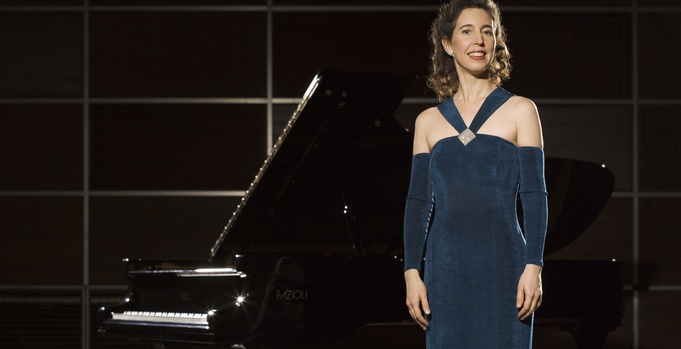
Returning to the subject of practising for a performance, I had an interesting experience with one of my more advanced students recently, a teenage girl who was preparing to take her Grade 6 piano exam. I have done a lot of work on confidence and stagecraft with her, and at the last lesson before her exam, she wanted to run through her pieces. After three false, frustrating starts to the C P E Bach ‘Solfeggio in c minor’, with me sitting quietly next to the piano, I suggested we try something different. I told her about the Canadian pianist Angela Hewitt whose stage presence suggests someone who loves performing and who can’t wait to share her music with the audience. “Channel your inner Angela Hewitt!” I suggested to my student, and then asked her to leave my piano room, wait in the hall (as if backstage at the Wigmore) and then “come on” to the “stage”. Meanwhile, I moved away from the piano and sat “in the audience” on my sofa. The transformation in her performance was remarkable: she was confident and poised and she made a wonderfully vibrant sound. She was thrilled with her performance, and when she saw me after the exam, she explained that she had done the same visualisation/acting exercise in the moments before she went into the exam room. I am delighted to report that she passed her exam with a high Merit and received very complimentary comments from the examiner about the communication and expression in her playing.
Angela Hewitt (photo Medici TV)
As performers, we have to be actors, partly to enable us to cope with the feelings of anxiety, but also to allow us to step into the character of each piece we play. All these aspects need to be practised and tested before the The Big Day. Curiously, the more of this work we do in the weeks and days leading up to the important performance, the better able we are to “let go” in the actual performance, to play in the moment and to allow the creative and artistic side of our personality (often called “right brain thinking”) to take flight.
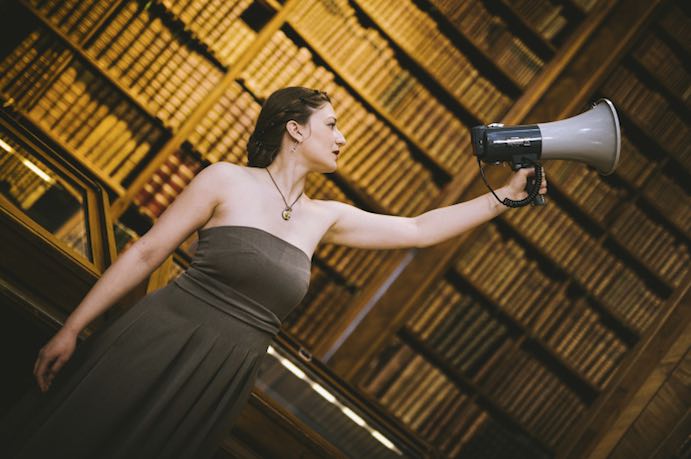
Who or what inspired you to take upcomposing and performing and pursue a career in music?
I remember asking my parents for a keyboard as a child and never looking back.
I’ve wanted to be a writer since my teens, but I decided that I wanted to spend a great deal of time perfecting my musical craft first. This would give me something interesting to write about later, a topic with which I would be not only intimately familiar but also passionate about.
Who or what were the most important influences on your musical life and career?
My musical influences include but are not limited to Beethoven, Yann Tiersen, Philip Glass, Dolly Parton, Lana Del Rey, Edith Piaf, Leonard Cohen, Fever Ray, and Bach. My mom is one of my role models because she is the quintessential creative woman: she works as an engineer and is also a visual artist (halinamontrey.com). Tom Plaunt, Wolfgang Dosch, Anne Wieben, Karlheinz Essl, Barbara Lueneburg, and Suzana Stankovic are artists with whom I’ve either worked or studied (or both), who have helped shape the way I approach creativity.
What have been the greatest challenges of your career so far?
I believe that the greatest challenge for an artist that strives for authenticity is remaining true to oneself while surrounded by various sources of pressure. For me, this means time, resources, and the opinions of others. Not only have I been true to my own musical and artistic intentions; I have defined my own voice as an artist. I continue to speak with that voice every day and strive to communicate from the heart with my audiences.
Which performance/recordings are you most proud of?
I am always proud of a performance in which I reach someone. If I make you laugh, cry, or ponder, I feel that I have accomplished a part of my continuing mission to connect with the people taking the time to listen to my work.
Which particular works do you think you perform best?
How do you make your repertoire choices from season to season?
It depends on what I’ve recently written! This year, and, I suspect, for much of next year as well, my set is mostly about GRAVITY WING, a science fiction concept album written in various musical genres and styles. I describe it as folktronica/classical crossover. You can read more about it at this link: clio-em.com/gravity-wing
In preceding years, I focused more on contemporary classical repertoire I’d composed, and on classical pieces by other composers. Some favourites by others include song cycles by De Falla and Rodrigo. The longer I make music, however, the more I enjoy performing my own compositions. This way, I can convey a certain intention that I carry from beginning to end throughout the entire creative process.
Do you have a favourite concert venue to perform in and why?
I’ve performed in venues across a wide range of spatial arrays and sizes, from the Vienna Musikverein and the Austrian National Library (in the Hofburg Palace) to jazz bars, coffee houses, and, one time, a cupcake shop called Brass Monkey. Every venue can be made magical. I just need to find the right recipe of sounds and songs! It’s like casting a spell, and when it works, the venue breathes with the music.
Favourite pieces to perform? Listen to?
Where do I begin? There are so many. I’ll focus on what’s been on my mind recently.
I absolutely love to play Bach’s Prelude and Fugue in Bb minor (book 1).
Lately I’ve been listening a lot to Apparat [Sascha Ring]’s fantastic work. He strikes a wonderful balance between classical, new music, and pop. His songs pull apart my emotions and put them back together.
Magdalena Kozena does a beautiful interpretation of “Connais-tu le pays?” from Thomas’ Mignon that I just keep listening to over and over again (with the Mahler Chamber Orchestra under Marc Minkowski).
Who are your favourite musicians?
I really enjoy listening to Owen Pallett. He’s completely down-to-earth when performing live and his music speaks to my soul. Tanya Tagaq’s music is full of joy and pain and both raw and processed energy, really so much of what it means to be human. Her powerful live performance makes you redefine the term “force of nature.”
What is your most memorable concert experience?
Singing the Carmen Habanera on the runway of MQ Vienna Fashion Week 2013! Fellow operetta singer Anete (Liepina) and I arranged a duet version for a show put together by Mario Soldo, showcasing a collection by Lisi Lang for her label lila. We walked onto the runway as if we were modelling the clothes, and suddenly we started singing duelling strains of the aria. The audience responded so enthusiastically, it nearly overwhelmed me. It was then that I decided to move more into the world of crossover music.
What do you consider to be the most important ideas and concepts to impart to aspiring musicians?
Music gives us a way to experience ideas, emotions, and atmospheres collectively, and so it is a tremendously powerful tool. Fearlessly and honestly share your love for sound with those around you.
Remember, though, that you are a part of your own audience. Be kind to yourself. Perform what you are passionate about. Have passion for what you perform. Learn to love music you may not have liked in the past. Give new pieces a fair chance, but don’t waste time adjusting to others’ expectations of what you should sound like. There is room enough for all our musical ideas in this universe, so express yours.
What do you enjoy doing most?
As much as I love performing and composing music, the act of writing a story is what holds my heart. You can find some of my speculative fiction on my blog (at clio-em.com). I incorporate a great deal of my musical knowledge into my writing, though. Descriptions of surreal instruments and futuristic compositions, that sort of thing. My texts inform my musical work, and vice versa.
Syzygy Saxophone Quartet formed in 2009 after playing together at the World Saxophone Congress in Bangkok. The quartet aims to promote and perform established contemporary classical works for saxophone, alongside new music written especially for the ensemble.
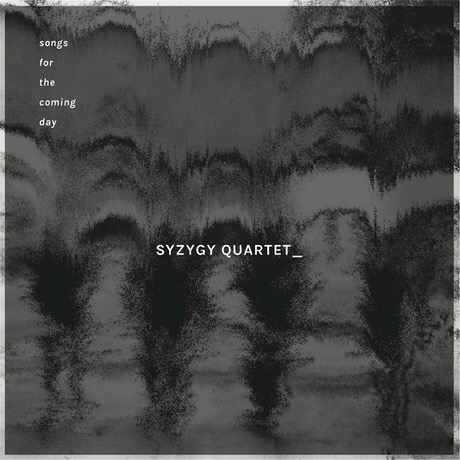
At the beginning of 2013 Syzygy Saxophone Quartet were the only ensemble in Europe to be awarded the performance and recording rights to the new 45 minute work by the American composer David Maslanka. Entitled ‘Songs for the Coming Day’, the work considers ethical and moral issues facing the world today such as the environment and war. Despite such problems, the piece is imbued with hope, reflecting the composer’s belief that “that under the chaotic surface of our world there is a rising creative energy through which is growing a new idea of living in harmony with ourselves and the Earth” (David Maslanka) and that there is still optimism regarding the future of the planet.
Lasting around 45 minutes, the work comprises nine movements, relatively brief “songs without words”, with titles such as Breathing, Awakening, Letting Go of the Past, and The Soul is Here for its Own Joy. The movements have hymlike qualities both in the SATB harmonies and ensemble playing, but also because some are actually based on hymns or songs, adapted and reset for saxophone. Eight of the nine movements have varying degrees of slow tempi and a generally quiet or restrained dynamic palette.
The opening movement, ‘At This Time’, utilises a three-note motif redolent of ‘Nimrod’ from Elgar’s Enigma Variations, and just as in the Elgar, this rising figure sounds a note of hope. All the movements, except for the penultimate one, are reflective and meditative, and Syzygy’s precise and concentrated ensemble playing and exceptionally well-blended, warm tones enhance the sense of contemplataion and stasis. The music itself is melodic and accessible. At times it has a choral quality reminiscent of Renaissance sacred music in it harmonies and simple lines underpinned by ostinato figures or pedal points.
In contrast to the other movements, the eighth, ‘The Soul is Here for its Own Joy’, bursts forth with exuberance and rhythmic excitement, while the closing movement, the poignant and introspective ‘Song for the Coming Day’ returns to the pensive mood of the earlier movements.
The saxophone is often the poor-relation instrument in classical repertoire, rarely utilised in the orchestra and not generally taken up by “famous” composers. In ‘Songs for the Coming Day’, the combination of elegance, restraint and melody and Syzygy’s technical assuredness and musical understanding, we are given the opportunity to appreciate the saxophone as a classical instrument.
Highly recommended
‘Songs for the Coming Day’ is available now
Syzgy Quartet will feature in a forthcoming Meet the Artist interview
The Cross-Eyed Pianist is free to access and ad-free, and takes many hours every month to research, write, and maintain.
If you find joy and value in what I do, please consider making a donation to support the continuance of the site





 The Cross-Eyed Pianist