Concert pianist. Thanks to movies and popular culture, this job title brings to mind conflicting images of a starving artist, mad genius, or supernaturally talented magician who communes with the Muse – almost never the hardworking professional that a pianist must be in order to maintain a successful performing career.
Lifting the Lid: interviews with concert pianists seeks to change this. In this brief book, authors Michael Johnson and Frances Wilson [The Cross-Eyed Pianist] give readers a personal, off-stage glimpse of some of the world’s most accomplished concert pianists. This thoughtfully-curated collection of interviews allows pianists the opportunity to talk about the music they love – and the lives they lead – in their own words. What emerges is composite picture of the joys and challenges of a specialized job, as well as the passion that pulls each of these players to the piano each day to wrestle with the music (and themselves) in their quest to bring moments of beauty to the rest of us.
The following Japanese terms are all about warding off laziness and boosting motivation plus tips for embracing the concept of doing your best. They are useful as general rules for life; here I have interpreted them for the benefit of musicians:
Ikigai
Have a purpose in life
Ikigai comes from two words – Iki meaning life, and Gai which describes your value or worth. It’s the reason you wake up each morning, what drives you, and what gives you fulfilment and purpose in life.
For the musician, this probably seems obvious – music is your purpose. Whether you’re a professional or an amateur musician, if you genuinely love and care about music, pursue it with passion.
Kaizen
Making small improvements, every day
This is particularly helpful for musicians in their daily practising/training and is a useful reminder that achievable goals and slow gains are, ultimately, more motivating, meaningful and personally fulfilling than striving for perfection from the outset. We tend to define achievement through one significant moment – learning a whole page or movement of a piece of music, for example – and underestimate the value of making small improvements on a daily basis which accumulate to create a significant whole. Recognizing and celebrating small milestones and achievements is an important aspect of Kaizen. Musicians should acknowledge their progress, which can be a motivating factor to continue improving.
Shoshin
Beginner’s mindset
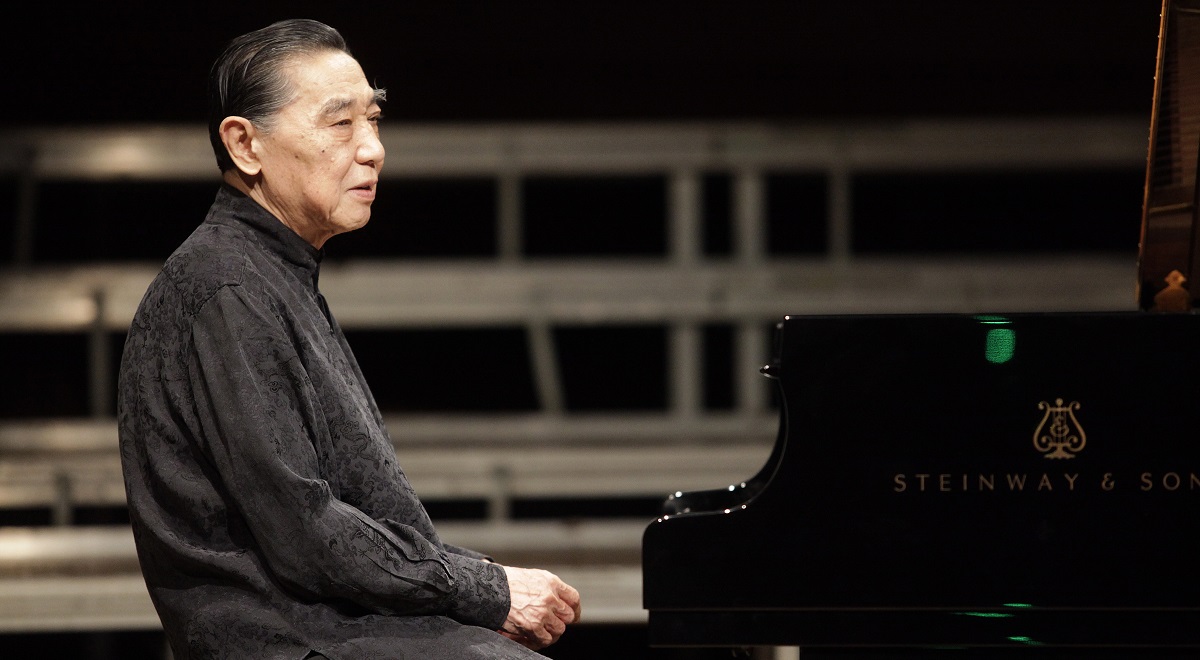
“I am a beginner. I am always learning” – Fou Ts’ong, pianist (1934-2020)
Shoshin encourages approaching tasks with an open, eager, and non-judgmental mindset. In the context of the musician, this may include: openness to learning; abandoning preconceptions and biases; embracing and learning from mistakes; curiosity and creativity; humility.
By applying shoshin, musicians can maintain a sense of wonder and enthusiasm in their musical journey, leading to ongoing growth and a deeper connection with their art.
Fou Ts’ong
Ganbaru
Doing your best / persevering
Ganbaru conveys the idea of doing one’s best, putting in maximum effort, and persevering through challenges. It’s about pushing yourself to your limits and never giving up, even when the going gets tough. For musicians, applying ganbaru may involve: diligent, deliberate practice; resilience; commitment to excellence; consistency; maintaining a positive attitude.
Ganbaru encourages musicians to work tirelessly to achieve their musical aspirations and reach their highest potential.
Nintai
Patience and perseverence
Patience is a virtue in Japanese culture. It’s also a very useful attribute for musicians to cultivate! When applied to musicians, nintai may include:
Having a long-term Perspective: Musicians should appreciate that mastering their art is a gradual process and be patient in their development.
Endurance: They must persevere through challenges, setbacks, and plateaus in their musical journey.
Staying Committed: Nintai encourages musicians to stay dedicated to their practice and goals, even when progress seems slow.
Respect for the Process: Appreciating the value of each step and the learning process itself is essential.
This site is free to access and ad-free, and takes many hours to research, write, and maintain. If you find joy and value in what I do, why not
Guest post by Ingridon the experience of studying with Dr Michael Low
Like many musicians, my journey started thanks to a fabulous piece I heard one day (and for sure so many more, but it has been a while so I can’t quite tell) that moved my heart and soul so deeply that I started daydreaming about it and about being able to do that same thing with the piano. I was maybe 10 or 13, but it took a while until I finally got to convince my parents to allow me to start learning the piano.
This led me to begin music lessons at the National Conservatoire here in Guatemala, and, as all music schools based on tradition, the curriculum included not only piano per se, but also Solfege, History, Tonal Harmony, and other subjects that are intended to nurture (and they actually do) your musical understanding and therefore your musical interpretation. A couple of years later I decided to pursue a music degree at university, and I obtained a Teacher’s Diploma in Music and a bachelor’s degree in music composition.
All of this gave me the tools to finally “play the piano”, which we normally say when we hear someone “play” that instrument. But little did I know that there is a huge dimension behind the mere study of any artistic discipline, that is sometimes overlooked and underestimated – that is, the Human Dimension, with all its intricacies and complexities.
And why is it overlooked? Well, maybe because we usually assume that as artists (musicians, painters, writers…) that dimension is an obvious part of us, and even if that is true, no one ever prepares us for the setbacks and negative experiences that are inevitably part of the journey. As musicians we may suffer from stage fright, we may face abusive/authoritarian teachers, we may be immersed in a toxic competitive environment, we may be the target of intended mean critics, and none of that has to do with the subjects that we learn in during our studies, and that prepare us to become professional musicians – but it has a lot to do with who we are as human beings and how we practice our art.
These setbacks may lead us to reconsider our career path and that maybe we need a change. Some of us may decide to make a radical change, some of us may decide to make a small change. But all of this raises the question of how we can thrive when facing such difficult challenges.
I started searching for answers and began to read blogs where other musicians shared their own experiences in similar situations; blogs where teachers shared their thoughts on how to build a healthy technique and learning environment; blogs where authors shared their thoughts on creativity and how to foster it in your own practice; blogs that shared research based tips to better manage performance anxiety; and I found great resources in authors like Noa Kageyama, Forrest Kinney, William Westney, Graham Fitch, Penelope Roskell, Frances Wilson (The Cross-Eyed Pianist), Rhonda Rizzo, Zsolt Bognár and Michael Low.
In one of those blogs, I was particularly struck by an article that Dr. Michael Low shared where he talked about his own journey with the piano, performance anxiety and the tradition in music education. It really resonated with me, so I started following his work closely.
At some point we also started sharing our musical impressions through social media and video chat. I shared with him that I was re-studying the Brahms’ Intermezzo in A, op. 118 no. 2, and sent him a recording I made of the piece. I remember he gave me some observations about it and his enthusiasm to work on it musically. I am not exaggerating when I say that this experience has been life changing.
I have to say I’d never had the chance to really discover and experiment with that (or any other) piece, nor I have had the chance to “think outside the box” musically speaking, because you are normally taught that there are “rules” that you must respect as interpreter, and sometimes even “fear”. There is nothing wrong with rules, but as an artist you can always trust your own criteria to use them; however, only an open-minded teacher and artist can help you discover that, and one of them is Dr. Michael Low.
It amazes me how spontaneously Dr. Low fosters that safe environment for experimentation, and how through funny examples and direct questions he challenges your own beliefs: be it about the piece or the composer or your own playing, always in a very kind and respectful manner, going beyond the surface and helping you to start thinking more as an artist than just a “piano player”. And the best part is that there are plenty of Eureka! moments, when you discover all the possibilities you have in your own hands, under his guidance.
And even if I have been in piano lessons before, there has always been a rush and a pressure to play a particular piece “perfectly”, not giving any space to really discover it (besides the obvious aspects of technique and analysis that are intrinsic to the music study), and to find one’s own voice as a musician and, most importantly, as artist. When there is too much noise outside, we get distracted from what we must look for on the inside.
After working all this time with Dr. Low and sharing interesting discussions about music, while also applying and following all of his very insightful advice in my own practice (both as teacher and as pianist), I have come to various conclusions that make me think about how we can thrive.
There is not just one answer, nor a right or wrong one, but there are some general thoughts that are worth always keeping in mind:
Music is a lifelong learning career/experience where one of our biggest enemies is the obsession with perfection
Kindness, in every aspect: with ourselves and with others, is a life changer as it creates wonders
Patience with our own artistic growth, as no path is the same as other and there is no one-size-fits-all solution for such big endeavor
As Vincent van Gogh wrote to his brother Théo, in a letter from May 1882, with relation to the meaning of being an artist:
“(…) Those words naturally imply always seeking without ever fully finding. It’s the exact opposite of saying ‘I know it already; I’ve already found it’. To the best of my knowledge, those words mean ‘I seek, I pursue, my heart is in it’.”
This article is translated from the original Spanish, which you can read here:
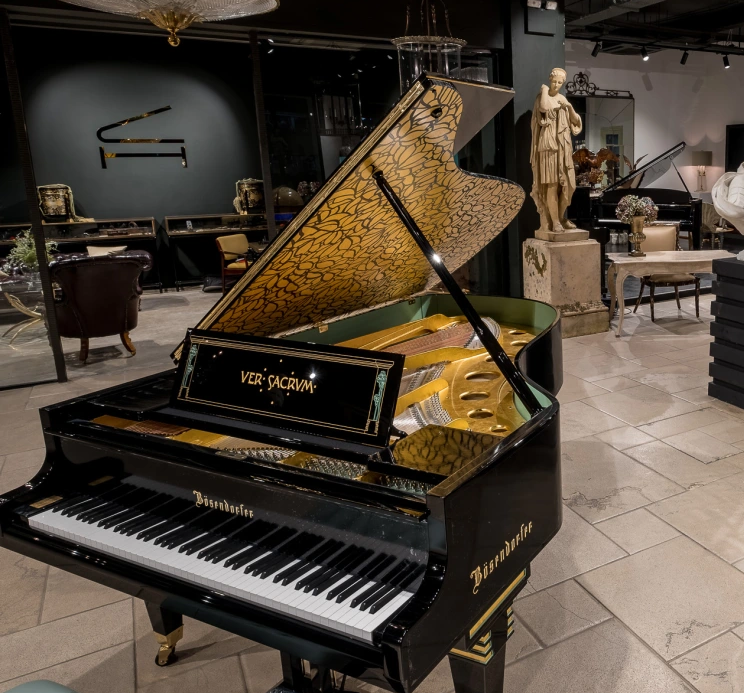
Dr Michael Low is a pianist and teacher based in South Africa. If this article has piqued your interest in his work, why not come along to a masterclass at Coach House Pianos London showroom on Saturday 1 June to observe Dr Low teaching advanced amateur pianists in a variety of repertoire. The event is hosted by Frances Wilson AKA The Cross-Eyed Pianist.
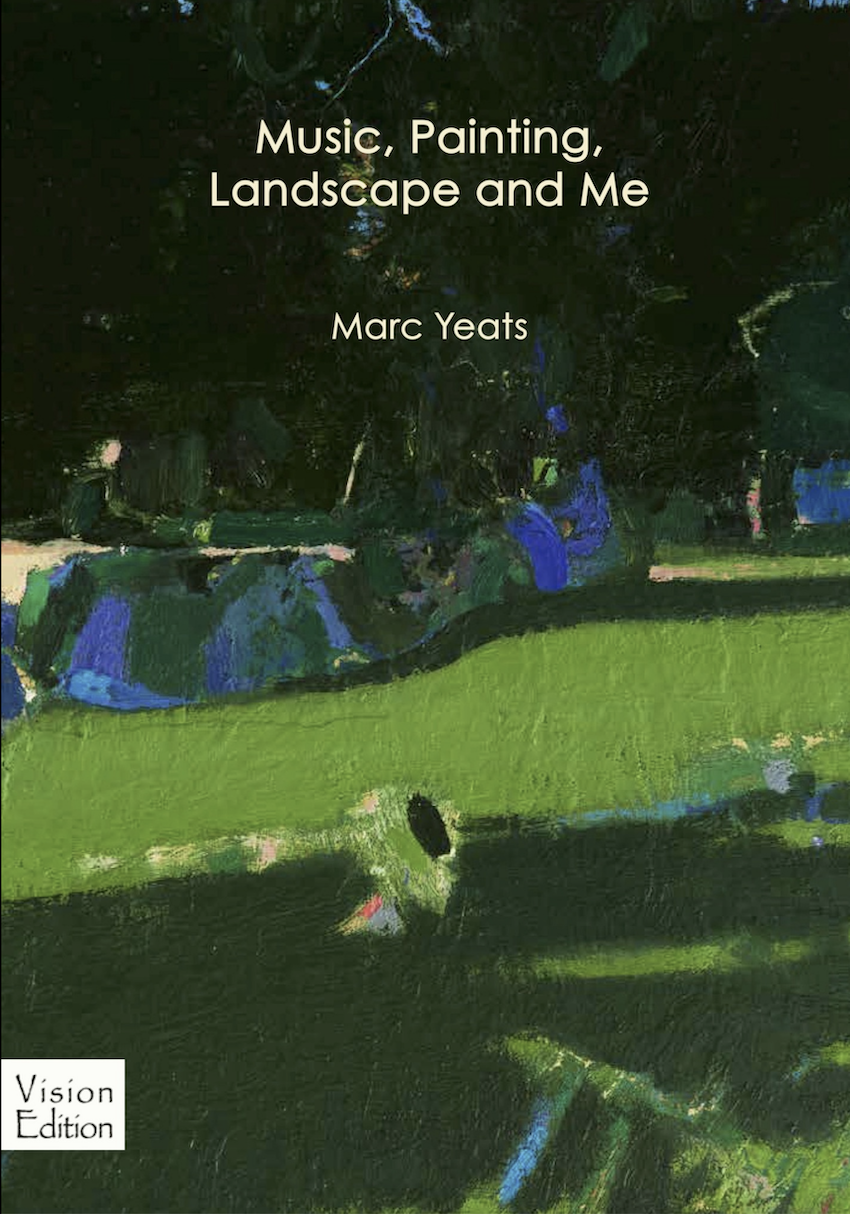
‘Music, Painting, Landscape, and Me’ by Marc Yeats
Publication date 1st April 2024
In this book, composer and landscape painter Marc Yeats embarks on an introspective journey, weaving together the symbolic realms of music and painting through the written word. This endeavour expands upon the immediacy of engagement with his compositions and paintings and what these artworks tell us, offering further understanding and dialogue concerning their interrelation. Yeats’s transformation of his inquiries and insights into text emerges from a conviction that the foundational questions—the ‘whys’ and ‘hows’ of being an artist and his creative exploration—resonate far beyond the confines of his personal experience, reaching out to a wider community of artists and those intrigued by the mechanisms of artistic expression.
I have known Marc Yeats for some years now. We met ‘virtually’, initially, as is often the way these days, via Facebook and TwitterX, and then in real life when I moved to Dorset in 2018. We have become good friends and enjoy many stimulating conversations about creativity – and so much more! (I also own one of Marc’s wonderful landscape paintings.) For a flavour of our conversations, do watch this video
I was very flattered when Marc asked me to endorse his book
Music, Painting, Landscape and Me is a fascinating, detailed and honest journey into the endlessly curious, questioning and polymathic mind of landscape artist and composer Marc Yeats. Drawing on a diverse range of subjects – including quantum mechanics, metaphysics, philosophy, fuzzy logic, neuroscience and hermeneutics – this book offers the reader an extraordinary personal insight into the complex mechanisms of making art and music, and Yeats’ own intent, impulse, imagination and inspiration. Furthermore, it shines an important light on the ‘how and why’, not only of Yeats’ artistic practice, but that of creative individuals in general, and is an invaluable contribution to the understanding of the creative impulse and ‘what artists do all day’.
The Cross-Eyed Pianist is free to access and ad-free, and takes many hours every month to research, write, and maintain.
If you find joy and value in what I do, please consider making a donation to support the continuance of the site





 The Cross-Eyed Pianist