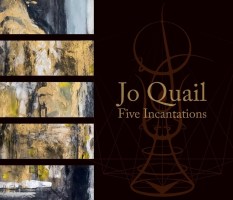
jo-quail-five-incantationsAdrian Ainsworth nominates Jo Quail: ‘Five Incantations’

In recent years, my listening has evolved and expanded from rock/folk/electronica more and more towards the labyrinth of listening options that is ‘classical music’… So perhaps it’s no wonder that one of my favourite artists is someone who is continually developing along those lines as a musician.

Jo Quail is a cellist and composer who produces work primarily (but not exclusively) for performance on her own electric cello, plus loop station. This electronic aspect allows her to write pieces that develop layer upon layer into something genuinely, and at times overwhelmingly, orchestral. Part of the exhilaration of seeing her live is to watch how the tracks build: the total absence of trickery, the obvious presence of melodic/harmonic invention, and rhythmic precision.

Because she emerged from, broadly speaking, the avant-garde ‘underground rock’ world, it’s still perhaps most common to encounter JQ supporting a heavy instrumental guitar band, or quietly wowing a festival crowd on the continent. But when she stages a concert of her own, she gives her ‘classical’ side equal weight – as with her recent composition for electric and acoustic cellos, percussion and choir, ‘This Path with Grace’. (To me, it’s a mystery why a label like NMC or ECM aren’t paying more attention – perhaps it’s a side-effect of JQ building her fanbase in all corners of the music-going public?)

However, her latest recording ‘Five Incantations’ is, in its own way, her most ambitious and fully-realised project yet. The ‘incantations’ are related movements that form a kind of suite, or single-player concerto, for cello and electronics. As we’re guided through the elements, the mood shifts between driving, stately anthems and near-ambient, gliding pauses for reflection. Overall, the work is designed for listening in one sitting – and JQ plays it live, entirely solo, in an unbroken, 40-minute sequence.

That said, ‘Gold’ is perhaps the section that can most readily stand alone. Before the album’s release, JQ issued an alternative mix of this particular track, and I’m very fond of it – I return to it often, especially if I don’t have time to play the whole CD. It encapsulates the attractions of her music beautifully. The unhurried patience of the tune as it nestles in your brain; the heartbeat rhythm (created by striking the cello) dovetailing with the harsher, bowed punctuation points that kick in after around five minutes; the way the loops allow various parts to ‘slot’ in and out until finally fitting together like a musical jigsaw.

If you like this, please investigate further on JQ’s Bandcamp page (https://joquail.bandcamp.com/album/five-incantations), where you can listen to – and buy – her music.

(To give an idea of the ‘live’ experience with something a little more pacy than ‘Gold’, here is a performance of ‘Laurus’ from the previous album ‘Caldera’ – the video allows you to see the quickfire use of loop pedals, all managed in a near-balletic style while playing an absolute blinder with the hands!)

Meet the Artist……Jo Quail

Adrian Ainsworth writes for a living, but mostly about things like finance, tax and benefits. For light relief, then, he covers his obsessions – overwhelmingly music, but with sprinklings of photography and art – on the ‘Specs’ blog, which you can find at

Twitter:


This weekend I headed off to “sarf-east” London for a rather unusual Prom featuring music by American minimalist composer Steve Reich who is 80 this year….

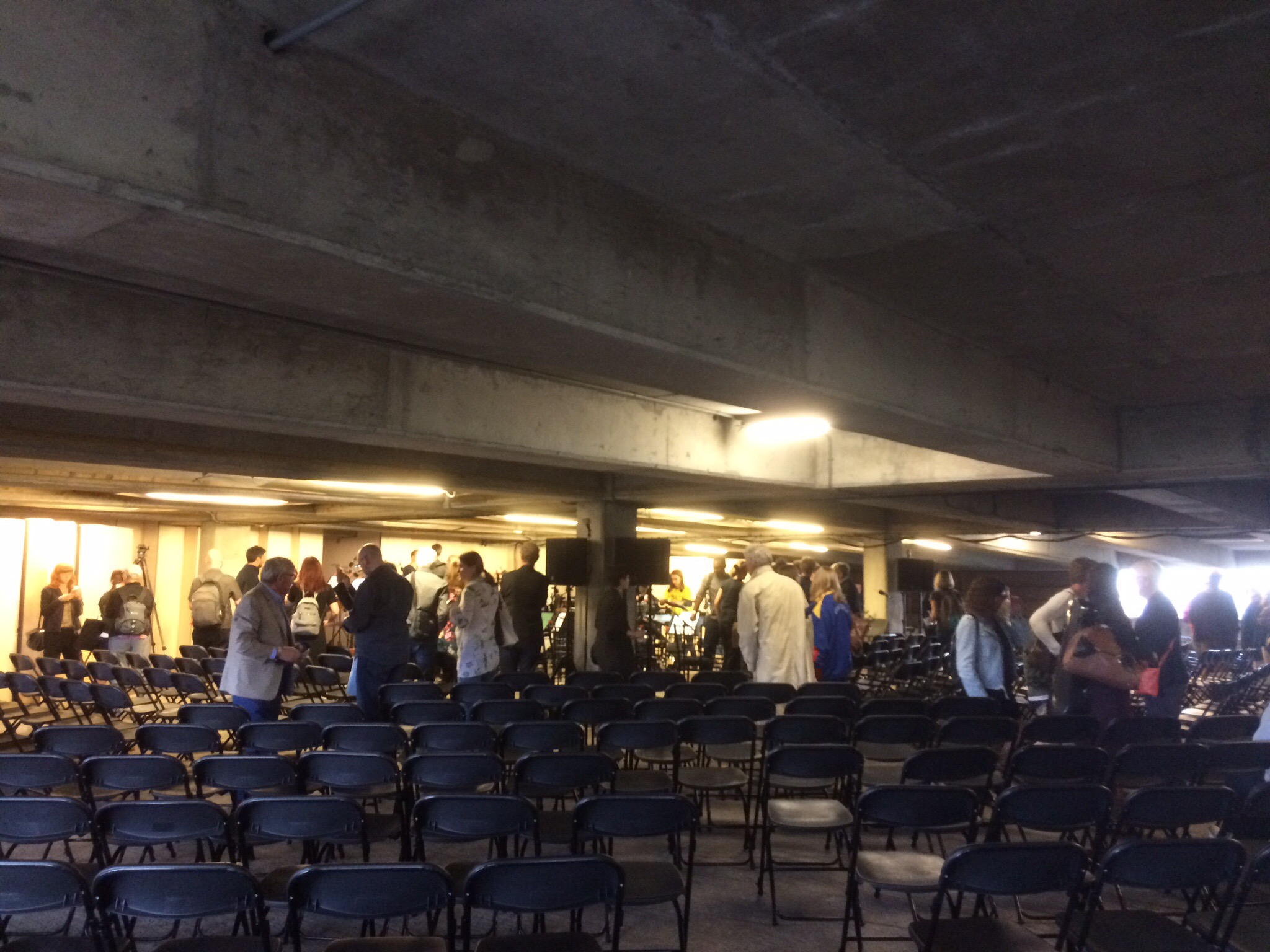
For those of us more used to the highly refined atmosphere of London’s finest chamber music venue, a brutalist concrete lump with low ceilings and unremittingly grey walls cannot possibly be a good place to hear music, whatever the genre. The acoustic should be appalling, a brisk wind slices through the performance space, riffling music, which is pegged to the music stands to stop it blowing away, and the music is regularly interrupted by rattling trains and the sounds of the street below….

Read my full review here

the venue
Multistory Orchestra conducted by Christopher Stark
part of the Derek Jarman garden at the Bold Tendencies multi-storey carpark
leaving the carpark after the concert

img2171sim-canetty-clarkecurated

7-9 October 2016, Kings Place, London

The London Piano Festival is a brand new celebration of the piano created by Katya Apekisheva and Charles Owen. These two highly-acclaimed pianists have enjoyed extensive performing careers both as soloists, chamber musicians and as a widely-admired duo partnership. Their shared love of the instrument has led them to curate this weekend especially for the city’s many piano lovers.

The festival – co-curated by Owen and Apekisheva – will include performances from some of the world’s leading pianists such as Kathryn Stott, Noriko Ogawa, Stephen Kovacevich and Julian Joseph in addition to a lecture on Liszt From Exuberance to Asceticism by Alfred Brendel. Owen and Apekisheva will perform the world premiere of a new work for two pianos written by American composer Nico Muhly.

“There is a lot of laughter in our rehearsals and we have created the London Piano Festival because we wanted to share our enjoyment of the repertoire with many of our friends.” Charles Owen

The duo has created the London Piano Festival to bring together their friends and colleagues for an entertaining and collaborative weekend of piano music. The festival begins with Alfred Brendel’s lecture on Liszt on 7 October, followed by a performance of Liszt’s piano sonata in B Minor by Hungarian pianist Dénes Várjon. On 8 October co-Artistic-Director Charles Owen performs a selection of Bach Partitas, Kathryn Stott performs a French recital of Fauré, Ravel, Messiaen and Dutilleux and co-Artistic-Director Katya Apekisheva performs a programme of Chopin, Scriabin and Fauré. The highlight of the London Piano Festival is the two piano gala on 8 October with Stephen Kovacevich, Katya Apekisheva, Ronan O’Hora, Charles Owen, Martin Roscoe, Kathryn Stott and Ashley Wass. The varied programme includes duets by Busoni, Debussy, Rachmaninoff, Ravel, Milhaud, Piazzolla and Grainger, in addition to the world premiere of Nico Muhly’s Fast Patterns – a rearrangement of an organ piece.

On Sunday 9 October, Japanese pianist Noriko Ogawa gives three children’s concerts with the theme of the magical world of the piano. Ogawa’s short 30-minute concerts are aimed at 2–5 year-olds followed by a 45-minute concert for children aged 6+. Pianist Lucy Parham joins actor Henry Goodman for Réverie – a composer portrait on Debussy combining his words and music. The 2016 London Piano Festival ends with a jazz recital by Julian Joseph, featuring a mixture of pieces including a selection of his own compositions and jazz standards by Gershwin, Ellington and Porter.

sophie_duner_buenos-aires3

Who or what inspired you to take up singing and pursue a career in music?

Elvis Presley – for his dynamics. However, my very first instrument was the piano and I wanted to be a `cocktail bar pianist´. Then I changed to voice. I had a short introductory period singing pop though, pretty soon coming to the realization that my artistic `mood´ was far too `serious´ and complicated for the task. I was looking for something more complex, artistically. That led me to enroll in jazz studies at Berklee College of Music (vocal performance & composition). Apart from the jazz studies, I also attended classes in classical singing as well as in contemporary classical composition.

Who or what were the most important influences on your musical life and career?

Igor Stravinsky, Charles Mingus, Kurt Weill, Paco de Lucía, Cathy Barberian, Björk. I was also very fond of all types of ethnic and dynamic singing, which was a big influence on my expression in jazz. When it comes to composers, I listened to a variety, spanning from jazz, world music to contemporary classical – I always needed all of them to feed my ears.

What have been the greatest challenges of your career so far?

To explain what type of music I do, finding the right people to work with and finding the right venues to perform at. Making my music sound the way it should. Achieving consistency in work opportunities & controlling and combining it with my mood.

Which performance/recordings are you most proud of?

My latest string quartet CD ‘The City of My Soul’ (produced by Michael Haas) and a track called “La Finadita” from the album ‘The Outsider’ by F. Tarrés and The Arida Conta Group. I am also very pleased with a performance I did with electric cello last year as well as some tracks from an upcoming vox & acoustic bass (jazz) CD. I also enjoyed a gig I did at `Festival O/Modernt’ in Stockholm (with a string orchestra among other combos.) A gig at `Festival de Música Cotemporánea de La Plata´ in Buenos Aires was also great – it was audiovisual as well.

Which particular works do you think you play best?

I love to sing music with angular melodies. With extreme highs and lows! That way, I can express varied vocal colours in my different vocal registers and vocal `placements´. I also love music with interesting rhythms and change of meter, and with a lot of energy and groove. I also like dissonance. And space, with dynamic attacks! Basically, anything that is vocally challenging is fun and stimulating.

How do you make your repertoire choices from season to season?

My choices are related to what type of gigs I have at the moment.  It´s also dependent on for whom I write and who I collaborate with. And where I am offered concerts and work – it’s all interrelated.

Do you have a favourite concert venue to perform in and why?

I like theatres. And I loved `Confidencen´at Ulriksdals Slott (where I recently performed) Another interesting venue to perform in was an ecological farm outside Zürich. Or a dusky jazz club. Circulo de Bellas Artes in Madrid. Basically, I like venues with a soul and which have their own personality.

Favourite pieces to perform? Listen to?

At the moment: to perform, `Caravan´ by Juan Tizol, `Weird Nightmare´ by Charles Mingus, `Addicted to Love´ by Sophie Dunér. To listen to:  the last part of `Petrushka by Stravinskij and track n° 2 from the CD “Bach por Flamenco” by Miriam Méndez, “Un amour de Swan” by Hans Werner Henze , “Weird Nightmare” by Mingus with singer Lorraine Cusson + “Cubana Be Cubana Bop” by Dizzy Gillespie.

Who are your favourite musicians?

Igor Stravinsky, Charles Mingus, George Antheil, Louis Andriessen, Thelonious Monk, Alberto Ginastera, Concha Buika, Paco de Lucía, Hans Werner Henze, Dizzy Gillespie, Heitor Villa-Lobos, Astor Piazzola, Bill Frisell, Erik Friedlander (to mention a few!)

What is your most memorable concert experience?

On a jazz jam session when the audience screamed after my solo and the one I did recently at Festival O/Modernt and PARMA Music Festival last summer.

What do you consider to be the most important ideas and concepts to impart to aspiring musicians?

Take risks – better to fall and then rise more interesting afterwards than to stay safe.

What are you working on at the moment?

My own new original (jazz), angular pieces with extreme highs and lows as well as with lots of energy, rhythm and time meter changes. I will record with the electric cellist Jeremy Harman in July in Boston (with whom I performed at the PARMA Music Festival last year.) 

Where would you like to be in 10 years’ time?

In a place where both mind and heart are combined and satisfied. What is your idea of perfect happiness?

What is your most treasured possession?

My imagination.

What do you enjoy doing most?

Composing, singing, painting, drawing, biking, hiking, photography, animals, cooking, comedy and have kids comment on my art and music.

What is your present state of mind?

Eager and unquiet.

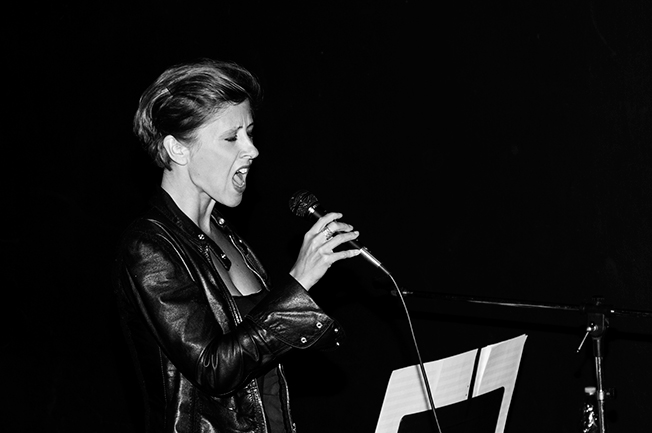
Sophie Dunér is a singer, songwriter, composer, arranger and visual artist from Sweden who has lived and performed in the United States and Spain. Originally a jazz singer, her writing and performing have evolved into a unique style of wild, risky, passionate and exhilarating music for vocals and string quartet.

www.sophieduner.com