I was delighted to have the opportunity to attend some of the events and concerts at the inaugural London Piano Festival, conceived and directed by pianists Katya Apekisheva and Charles Owen. For the opening edition of the festival, the directors invited artists who they admired and worked with personally. As Charles and Katya stated in the Festival programme:

“Pianists meet each other far too rarely in the real world, mostly at auditions and competitions when we take our first steps in the music profession, and then at each other’s concerts. The professional soloist’s life is, by its very nature, a demanding and often solitary one. [The festival] is especially designed to bring these soloists together…..”

And it was perhaps a mark of the organisers’ success in achieving this aim that so many eminent pianists and music lovers were in the audience for the concerts, including Stephen Hough and Alexandra Dariescu, amongst others.

img2171sim-canetty-clarkecurated
Katya Apekisheva and Charles Owen

The festival was held in the stylish, contemporary concert spaces at London’s Kings Place, fast becoming a popular hub for culture and arts in the newly-redeveloped area around King’s Cross station. The sense of “music by friends and for friends” was very clear from the warm atmosphere in and out of the concert halls, and the two-piano gala concert on Saturday evening, which was at the heart of the festival, was a wonderful celebration of musical friendship and collaboration. I attended two concerts with pianist friends, always enjoyable as we discussed what we had heard during the intervals and after the events. As one of my pianist friends remarked when I met her for the two-piano gala concert, “I feel completely intoxicated by music!”. I can think of no better endorsement for this wonderful weekend of piano music.

My reviews are on the Bachtrack.com site – follow the links below to read them:

‘Liszt’s b minor Sonata – from exuberance to asceticism’: lecture by Alfred Brendel and performance by Denes Varjon

A feast of phenomenal pianism: two-piano gala concert


jakubhr_852420ar20-20please20credit20zbynek20maderyc20-20resized
(photo credit: Zbynek Maderyc)

Who or what inspired you to take up conducting and pursue a career in music?

There were lots of influences. Examples of many famous and less famous conductors. Among all, I’d mention the American Leonard Bernstein and in my own country Jiří Bělohlávek, whose conducting I could observe personally. It happened when I was a teenager. I found out for myself then that I wanted MUSIC to be a central point of my life. My psyche and specific talents somehow indicated conducting would be the best path, although at that time I could imagine to go into many other professions.

Who or what were the most important influences on your musical life and career?

Definitely my parents and grandparents at first (even though no one in my family is a professional musician), then my music teachers (especially my trombone and other brass instruments teacher at a primary art school Jiří Vrtek who was also a very skilled and passionate leader of many sorts of wind bands in which I played already as a kid), then the conductor of my student symphony orchestra in Brno Tomáš Krejčí who gave me my first, highly desired conducting opportunities and found me a conducting teacher – and finally aforementioned Jiří Bělohlávek with whom I studied at the Academy of Performing Arts in Prague after I had graduated from what we call “gymnasium” (a grammar school in English). And obviously a lot of splendid (and less splendid) recordings – LPs, cassettes, later CDs.

What have been the greatest challenges of your career so far?

There is a lot of details which I cannot mention. Difficult to choose. Some of my “jump-in” experiences (Carmen or La bohème without rehearsals), some of the difficult operas, even if rehearsed (Mihalovici’s Krapp or The Last Tape, for example), some of the contemporary premieres (lately Olga Neuwirth’s percussion concerto Zero-Zone, for instance), first Le Sacre also wasn’t as easy. These particularities shouldn’t cover the substantial challenge, though: to find the most direct and inspirational way how to communicate with every orchestra one leads so that both the players and the audiences are enriched and happy…

Which performance/recordings are you most proud of? 

I think both Má vlast recordings I’ve made so far – the first with The Prague Philharmonia, taken live in 2010 at the Prague Spring Festival, and the second the brand new now with the Bamberg Symphony – are both quite representative. That’s as for recordings. I cannot say about the performances. There were too many (and too many details!) which I really loved. I was rather proud as I graduated ambitiously from the Academy in 2004, performing my beloved Asrael Symphony by Suk by heart. I kind of tasted where my abilities could go.

Which particular works do you think you perform best?

Works with great intelligence and highly emotional contents.

How do you make your repertoire choices from season to season?

It’s always a complex decision. I’m personally putting a great deal of new pieces for me to learn each season, to make progress in my knowledge (and enjoyment) of a wide repertoire. “My” orchestras (such as Bamberg now) have their own portfolios with which I’m working closely and sensibly. As soon as the main focuses are clear, I’m also trying to enable myself (and my orchestra[s]) to get deeper in the pieces – and that means repeating them, also at various places. And I have been trying to find the right balance for years now between orchestral stuff and opera. Some seasons are more operatic, some less. (I think my programmes are very well balanced in terms of Czech/Slavic/European/international music now. The same for all possible styles, even if, roughly put, years 1750–1950 prevail.)

Do you have a favourite concert venue to perform in and why?

Several of them. I would definitely mention some of the older halls in Europe and America, above all my national “home” at Rudolfinum in Prague, Musikverein in Vienna, Concertgebouw in Amsterdam or Severance Hall in Cleveland. And then some of the newer marvels: Suntory Hall in Tokyo and the Symphony Hall in Osaka, Philharmonie in Berlin, Gewandhaus in Leipzig, the new Helsinki Music Centre, the Los Angeles Walt Disney Concert Hall… I like my professional home in Bamberg, too. And I’m looking forward to performing at the Philharmonie in Paris where I haven’t been on stage yet. I liked it in the audience a lot.

Who are your favourite musicians?

So many that it wouldn’t fit on one page.

What do you consider to be the most important ideas and concepts to impart to aspiring musicians?

Never to stop working hard – but in a relaxed manner. And to be personal – without wilfulness.

What about your new position at Bamberg excites you the most?

The amazing and open-minded musicality of the players there – combined with great characters (in playing/music and in psychology). And the city’s devotion to culture.

What is your idea of perfect happiness?

A complete balance – of mind (brain), emotions and spiritual connections, of work and doing nothing, of pleasing myself meaningfully and serving others, of Dionysian and Apollonian……And that also accompanied by sounds of blissful music.

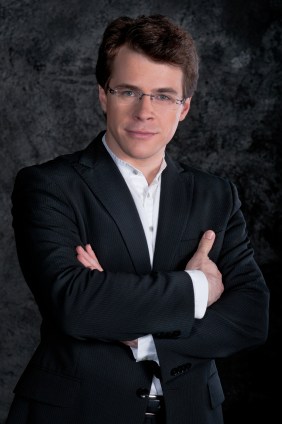
Born in the Czech Republic and described by Gramophone as ‘on the verge of greatness’, Jakub Hrůša is Chief Conductor of Bamberg Symphony, Permanent Guest Conductor of the Czech Philharmonic, Principal Guest Conductor of Tokyo Metropolitan Symphony Orchestra (TMSO), and served as Music Director and Chief Conductor of PKF–Prague Philharmonia from 2009 to 2015.

He is a regular guest with many of the world’s greatest orchestras. Recent highlights have included Bohemian Legends and The Mighty Five – two major series specially devised for the Philharmonia Orchestra; a two-week focus on Martinů and Roussel for Orchestra Philharmonique de Radio France; and performances with the Leipzig Gewandhaus Orchestra, The Cleveland Orchestra, Vienna Symphony, DSO Berlin, The Philadelphia Orchestra, and Los Angeles Philharmonic. Last season, he made his débuts with the Royal Concertgebouw Orchestra and Filarmonica della Scala.

www.jakubhrusa.com


“Marginal Gain Learning” (MGL) is a training concept employed by the British cycling team which has reaped brilliant rewards, as their success in both the London and Rio Olympics has demonstrated.

The concept was developed by the team’s coach Dave Brailsford, who believes that by breaking down and analysing every tiny aspect of a cyclist’s performance and then making just a 1% improvement in each area, the cyclist’s overall performance can be significantly enhanced. This approach included obvious things like adjustments to the cyclist’s diet, the weekly training regime, the ergonomics of the bicycle seat. But it also included tiny, less obvious details such as the kind of massage gel the cyclists used, or the thickness of the fabric of their racing skinsuits. Brailsford and the team searched for 1% improvements everywhere and this approach resulted in Bradley Wiggins winning the Tour de France in 2012, the first British cyclist to do so, Chris Froome winning it in 2013, 2015 and 2016, and an impressive medal haul by Britain’s track cyclists at the London and Rio Olympics.

This “aggregation of marginal gains” approach is incredibly simple and very effective – as Team GB’s success attests – and it can be used in any learning/teaching environment as it is highly adaptable and easy to implement. In short, it provides a tool for sustained improvement: from musicians looking to improve their overall performance, to students improving their learning and teachers enhancing their pedagogical skills. I have used concepts drawn from MGL in my teaching and also in my own practising and performing.

Learning music is hard: from the junior student faced with just three or four lines of music to the advanced pianist embarking on a full-length piano sonata or multi-movement work, the learning and upkeep of all those notes is a daunting prospect and requires many hours of consistent, thoughtful practise. For me, MGL is a way of “being kind” to yourself as a musician while also enabling one to practise and process music in a meticulous and mindful way. The trouble is, we tend to define achievement through one significant moment – learning a whole page or movement of a piece of music, for example – and underestimate the value of making small improvements on a daily basis which accumulate to create a significant whole.

For the musician, the MGL approach can reap important rewards. As a teacher, I encourage students to focus on very small aspects of their pieces at a time. We might take a single phrase and look at things such as shape, dynamics, articulation, mood. Each aspect is examined, played, evaluated, adjusted and re-evaluated. The various elements are then gradually aggregated and eventually the student plays the whole phrase with all the elements present. What might appear to be an overly nitpicking approach results in the student gaining security in the all notes and nuances of that phrase. And anything learnt in one phrase or section of a piece of music can be applied elsewhere, within the same piece or in other works. In this way, one creates a “knowledge bank” of information and details in music, while the process of MGL becomes almost habitual through repeated use. Because the student has been encouraged to work through this process slowly and carefully, they gain confidence in their abilities to apply the knowledge gained elsewhere in their music without constant reiteration from the teacher.

In order to achieve this, brain, eyes and ears must be engaged at all times – and it’s amazing how many musicians don’t actually listen to themselves as they play! – to assess what one sees and hears and to make small adjustments based on that judgement. Evaluation, reflection, adjustment and re-evaluation are important elements in the process and I am careful to ensure that students understand what they are doing and why. What is so satisfying about this method is that it produces noticeable progress through small increments which aggregate to create meaningful overall improvement. It also enables students to work (practise) independently because they have the knowledge and confidence to understand what needs to be practised and how. Thus, they come to their next lesson knowing they have made progress, which is one of the best motivators I know to continue practising!

I use the same approach in my own study and learning of complex/advanced repertoire and have found that it results in my ability to learn music more quickly and more accurately. It has made me more alert to the details and subtleties in a score, which in turn allows me to play with greater confidence, expression and musicality. I find the process of evaluation, reflection and adjustment deeply satisfying as the rewards are consistent and noticeable. The MGL concept can be applied in performance too as one makes small adjustments, evaluations and improvements each time the programme is performed.

On a more general level, one can apply MGL to aspects such as warm up exercises, noticing and reacting to tension when one plays, practising a phrase slowly and relishing the beauty of it, and playing in a non-judgemental way. The positive adjustments one makes are small but significant, and in this way MGL complements a mindful approach to practising and playing.

Mindfulness and Piano Playing


Who or what inspired you to pursue a career in music?

Hmm…that’s hard to say. I think by the time I knew I wanted to music I hadn’t really met anyone or seen any concerts – I just knew that I loved playing the piano and making up little tunes. It wasn’t really until I found Jazz that I knew exactly what it was that I wanted to be doing. Before that I was quite unfocused and split my time between doing the grades and playing music from musicals and coming up with my own arrangements of them. My old piano teacher used to give me hell for not playing what was on the page, but I think that I’d always enjoyed playing around with music made the transition into Jazz piano at the age of fifteen more comfortable.

Who or what are the most significant influences on your musical life and career?

My classical piano teacher at Guildhall, Laura Roberts, has probably had the biggest influence on my musical life. She’s been a close friend and ally over the years and even though we rarely see each other now she still has a big influence over me. She pulled me out of so many bad habits at the piano – before I met her I really had very little idea of how to play the piano properly so she really turned my life around. I’m still trying to work on the simple ideas she presented me ten years ago.

For Jazz if I had to name one figure it would be Keith Jarrett. He was my first real love in music and the first pianist I ever heard. I’d never listened to any famous classical pianists before, or really even any piano music in general and when I first heard Jarrett it was mind-blowing and I devoured everything I could get my hands on. What can I say about Jarrett that hasn’t already been said! To me he’s the biggest musical genius of all time. 

Other than Jarrett there came a time in my life around the age of 21 where I felt like the African-American lineage of Jazz Piano had a greater pull for me. Before then I was quite into the Bill Evans – Brad Mehldau – ECM sound, and I still love that, but the Duke Ellington, Thelonious Monk, Wynton Kelly, Herbie Hancock lineage really took over at some point. Its all beautiful and it ultimately all comes from the same place but I always want to keep on working on what is a Black American art form. Even though my own music comes from a lot of influences outside of Jazz I won’t ever stop trying to get together what Charlie Parker and Bud Powell were doing in the 1940s.

What have been the greatest challenges/frustrations of your career so far? 

I think anxiety has held me back massively. Its only been in the last two years where I’ve felt happy on stage. I used to be a nervous wreck and it showed. That’s really held me back and I feel like I need to make up for lost time but I’m generally a lot happier and settled than I was in my early and mid-twenties.

How would you characterise your compositional language?

I would say that the music I’ve written over the last four or five years has come from not thinking of tonality or chords. None of the music from my new record has any chord symbols in it. I wanted to get away from the sound that I felt that I’d heard too much of in the London Jazz scene – music which has been clearly written with a single melody line over a set of sometimes quite bleak chords. Kenny Wheeler has been a huge influence on a lot of people in London but I had to get as far away from that sound as I could. When I write music these days the composition is first and the improvising is second. At some point I’ll go back to writing very small compositions that serve as vehicles for improvising but right now with my band Klammer the music is about the compositions.

How do you work?

I work very slowly, which is of great annoyance to me. I know some people who can write several tunes in one sitting, but I don’t think that works for me. I’ll write a couple of bars and then I’ll forget about it for days on end, and then come back to it and add a few more. I’d like to get things out faster but sometimes I think leaving things can cause you to come back afresh and take the music somewhere else. 

Often I think its helpful to know what you want to write before you start. That’s worked well for me in the past where I’ve wanted to write the fast tune/the ballad/the straight 8’s odd time tune, but these days I just sit and see what comes out.

Who are your favourite musicians/bands/composers?

Modern musicians/bands that pose a huge influence on me these days are Jason Moran, Django Bates, Matt Mitchell, Steve Lehman, Steve Coleman, Radiohead, Animal Collective, Deerhoof, John Hollenbeck, Wayne Shorter, Steve Reich, Liam Noble, people like that. I love hip hop, techno, ambient, singer-songwriter music too and it all runs together.
And from the past – Thelonious Monk, Stravinsky, Ravel, Bach, Schubert, Billie Holiday, Mahler, Messiaen.

What is your most memorable concert experience?

Seeing the Wayne Shorter Quartet playing music from outer space in 2006 at the Barbican Centre. It was without doubt the most incredible music I’ve ever heard. People in the audience were screaming during the encore, it was so super-charged. There’s a recording of it out there somewhere…That band is on the farthest outer edge of what’s possible. No one is doing what they can.

Do you have a favourite concert venue to perform in and why?

Ronnie Scott’s. It took me a long time to make peace with the piano – that piano kicked my ass! I had to really learn how to play grand pianos and its only been in the last two years where I’ve felt comfortable playing one – but now I love playing there. The atmosphere and sound are perfect and I would play there every week if I could. I’ve had some great gigs there recently with Leo Richardson’s Quartet and it just feels like the perfect place for that music.

What do you consider to be the most important ideas and concepts to impart to aspiring musicians?

Be friendly. Get your social skills together. Never, ever rely on what you perceive to be as your talent, its not enough. When I was younger I didn’t feel confident in some social situations and used to hope that I could just get by on my playing. You can’t – you have to go out there and meet people and make friends.

For Jazz musicians I’d say get as much together as you can. Don’t just do one thing, get it ALL together. It’s all as equally important and the more you have in your tool box the more exciting your improvising will be. It’s not fun when you know how someone is always going to sound. Jazz should be the sound of surprise. Tape yourself. Play classical music too, its all in there.

Other than that just practice as much as you can, see as much of life as you can and don’t worry if things don’t happen straight away. Never get lazy or complacent. When I was younger I noticed that some older musicians who I used to worship had done so and I vowed I would never slack off. The only person who can help you get better is yourself.

Where would you like to be in 10 years’ time? 

Still practicing and trying to get better. I still feel like a beginner and I still don’t feel like I’ve achieved anything and I don’t really want that feeling to go away. It keeps you moving. That said, if I’m still doing what I’ve done over the last few years in ten years time I’ll be very happy. I’d just like to do more of it and eventually move into teaching at one of the music colleges. I love this life and I just want it to last a long, long time!

Rick Simpson’s new album with his band Klammer is available now on the Two Rivers Records label

Rick Simpson is based in London playing a wide variety of music, and leads his own group playing original jazz music. Rick is a regular performer at Ronnie Scott’s, the 606 Jazz Club, Pizza Express Dean Street, The Vortex, The Bull’s Head, and he has appeared at larger UK venues such as the Royal Festival Hall and the Purcell Room. In 2008 Rick won a Yamaha Scholarship Prize for Outstanding Jazz Musicians. A recording of Rick’s band was put on the front cover of Jazzwise Magazine.
Since graduating from the Guildhall School of Music and Drama in 2008 he has performed with musicians such as Christian Scott, Eric Harland, Joe Sanders, Michael Janisch, Ernesto Simpson, Martin Speake, Earl Burness Travis, Stan Sulzmann, Jeff Williams and Brandon Allen as well as younger musicians in London. Rick plays in the ensembles of Jay Phelps, Tim Thornton, Tommy Andrews, Leo Richardson, Paul Riley, and US Jazz Singer Hailey Tuck amongst others

Rick also teaches on the prestigious MEhr Clef courses alongside Stan Sulzmann, Steve Waterman, Alan Barnes, Malcolm Edmonstone Mark Hodgson, Lee Gibson, Ursula Malewski and Martin France.

www.ricksimpsonjazz.com