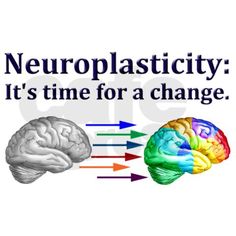
cf3a43f548ef0b0425f8af95032b8849Whenever we have a thought or physical sensation thousands of neurons are triggered and get together to form a neural network in the brain. “Experience-dependent neuroplasticity” is the scientific term for this activity of continual creation and grouping of neuron connections which take place as a result of our personal life experiences. With repetitive thinking, the brain learns to trigger the same neurons each time, and neuroscientists and psychologists have found that the brain can be “trained” to build positive neural traits from positive mental states. The trouble is, the brain tends towards the negative: it is very bad at learning from good experiences and very good at learning from bad ones. This negativity bias was very important in keeping our ancestors alive during times of great hardship and danger, but in our 21st-century brains it can be a block that prevents positive experiences from becoming inner strengths which are built into our neural structure.

As musicians most of us are very familiar with “the inner critic”, that destructive voice within that can sabotage a practise session or performance and damage our self-esteem with negative self-talk. The ability to self-evaluate one’s playing and performance and give oneself critical feedback is of course very important: it enables us to practise effectively and mindfully, it encourages humility in our work and tempers the ego. Equally, we should be able to accept criticism and feedback from teachers, mentors, colleagues and peers, provided it is given in the right way. But if our own self-criticism, and/or the comments of others, is repeated too often we can fall into a spiral of negativity.

From the teacher who continually undermines the student with negative feedback to the inner critic which constantly comments adversely on one’s playing, chipping away at one’s self-confidence, these repetitive detrimental experiences encourage negative neural traits which in turn build a negative mental state – and with repetitive thinking, the brain learns to trigger the same neurons each time. So if you continually dwell on self-criticism, anxieties about your abilities, your lack of confidence or a teacher’s negative comments, your mind will more easily find that part of your brain and will quickly help you to think those same negative thoughts again and again.

An example – the piano student who constantly self-criticises her own playing. The student in question is in her mid-teens, a bright, enthusiastic, engaged and confident young person who is not only a sensitive pianist but also a talented violinist and who is developing into an intelligent and expressive musician. Each lesson usually begins with the student playing one of the pieces or studies she is working on for her Grade 8 exam. She plays well, taking note of expression and tempo markings, dynamics, articulation, but almost every slip is met with profuse apologies or restarts, and as the music progresses, the errors increase. Her performance usually ends with her saying “I’m so sorry! That was awful! I played terribly today” – or words to that effect. Despite her teacher’s (me) reassurance that she played well, that there is noticeable improvement, etc., she continues to berate herself for her lack of ability. She recently performed in a school concert, playing with great poise and apparent confidence. Yet no sooner had she replaced her violin in its case, than the negative self-crticism and worrying about the quality of her performance began. Later, at the drinks reception following the concert, many members of staff and friends told her how beautifully she’d played, how much they had enjoyed her performance, but she continued to accentuate the negatives.

Sadly, this circle of negativity is not helping this student. She veers between believing she is a good musician (which she is) and that she is a terrible musician (which she isn’t). Because of the reiteration of negative messages, via her own inner critic and (I suspect) a parent with very high, or unrealistic, expectations, the circle continues, preventing her from becoming the poised and confident musician I believe she can be.

It upsets me to see my wonderful student struggling with so much negativity, much of which is self-generated (I’m no psychologist but I can guess at some of the roots of her issues because I recognise them from my own lack of confidence as a teenage pianist which I carried with me into adulthood). It’s quite clear, to me at least, that her negativity is self-perpetuating and in order for her to move forward the cycle needs to be broken. I am working with her to help her understand how to turn her negative thoughts into positive ones, using some of the techniques below.

Break the negative cycle and turn “I can’t” into “I can”

  • Banishing the inner critic is a key act in encouraging a more positive mindset. Acknowledge that your inner critic exists and then literally “show it the door” by imagining you are ushering the horrid creature out of your mind.
  • Attach a positive thought to a negative one: “I played that passage incorrectly, but I understand why I made a mistake so I know how I can put it right“.
  • Exchange perfectionism for excellence. Perfection is unrealistic and unattainable, excellence is achievable. Strive for excellence in your own work by setting yourself realistic goals and standards (these can be set in consultation with a teacher or mentor).
  • Draw confidence from the positive endorsements and feedback from trusted teachers, colleagues, peers, friends and family. If it helps, write these comments down in a notebook and refer to them when you feel anxious or nervous.
  • If your teacher is continually critical despite your best efforts to play well, it is perhaps time to seek a new teacher. Few students will progress well if they feel constantly put down by a teacher or coach.
  • Approach practising, lessons and performances with an “I can!” attitude rather than “this is going to go wrong”. Try not to set up a negative feedback loop before you play, but instead draw confidence from previous good experiences (a lesson where you know you played well and your teacher offered praise and positive feedback, or a performance where you received compliments from the audience or another musician whose opinion you respect).
  • Draw confidence in an exam or performance situation from knowing you have done the right kind of work in your practising and that you are well-prepared
  • Try the Buddhist practice of “wise effort”. This is a habit of letting go of that which is not helpful, or is negative, and cultivating that which is positive and helpful. (It is related to mindfulness and NLP).
  • Spend time with friends and colleagues whose company is positive and inspiring.
  • Above all, allow the mind to focus on and remember the good stuff. Just as thoughtful repetitive practising leads to noticeable improvement at the piano, so repetitive positive thinking brings a more positive, cheerful mindset, which will in turn have a positive effect on your playing and your general attitude to your music making.


Further reading/resources

How Complaining Rewires your Brain for Negativity

The Perfect Wrong Note

Music from the Inside Out

How Positive Thinking Rewires Your Brain
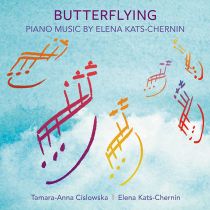


368630Andrew Eales of Pianodao nominates ‘Butterflying’ by Elena Kats-Chernin
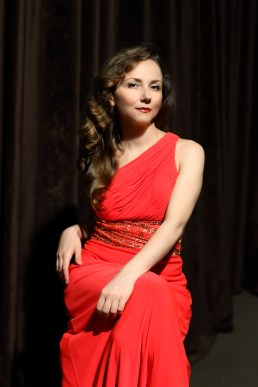
Elena Kats-Chernin (born 1957) is an Australian composer, originally from Uzbekistan (at the time part of the Soviet Union). Kats-Chernin has won numerous prizes, and her music was featured in the opening ceremony’s of the 2000 Sydney Olympic Games and the 2003 Rugby World Cup. Her output includes 6 operas, the popular ballet Wild Swans, numerous orchestral and instrumental works, film scores and a large amount of piano solo music.

Butterflying, from ABC Classics, brings together 30 of her piano compositions, performed by Tamara-Anne Cislowska, who is also joined by the composer for some duets.

Elena Kats-Chernin’s pieces vary considerably in style, but in all cases her music is contemporary in mood and accessible to all. Perhaps the best known piece included here is the Eliza Aria. Even more wonderful in my view is the title track, which makes a flowing prelude to the collection:

https://open.spotify.com/track/1IhrJd4Av1XQvZeEp4Lab4

Or check out the characterful Russian Rag in A minor: 

https://open.spotify.com/track/6czSZ7ljwRhvekcHiboe7Q

Compare and contrast these two pieces, and you will get an idea of the delightful range of music included. Rather than listen to the album to reflect a particular mood, this is a good collection to live with, and different tracks are likely to speak to you from one day to the next.

Butterflying is a 2CD set, and is also available as a digital download from iTunes, which is significantly more cost effective.

For those who wish to play these pieces for themselves, the sheet music book Piano Village, recently published by Boosey and Hawkes, includes most of the solo pieces from the recording, although in some cases they are in simpler versions.

I have reviewed the sheet music collection on the Pianodao website here.


marianna-photoWho or what inspired you to take up the piano, and pursue a career in music? 
I was born into a musical family and was surrounded by music all the time when I was growing up. Both of my parents are musicians, therefore it was assumed I would follow the same path. They only asked me if I wanted to play piano or violin, and I picked piano. Honestly, I never regretted my choice. I started my piano lessons under my mother´s guidance, and continued until I was 17 years old, when I began my education at the Royal College of Music in London, studying with wonderful Irina Zaritskaya.

Who or what have been the most important influences on your musical life and career? 

When I moved to Spain with my family, I met the pianist Krystian Zimerman, and was inspired by his interpretations of Chopin’s Ballades and Concertos, and Liszt Sonata. I also had a chance to hear him live several times in my hometown in Spain performing with orchestra. He introduced me to music I had never heard before, and I was so stunned by its beauty that I was desperate to get those scores out and start learning. I think I sight-read everything we had at home, and it got to the point that my mother had to hide music from me, as I did not want to practice works she assigned. That was probably the time when I realized I wanted to devote my life to music. I always felt that knowing that pianist at that age was crucial for my development. Later, as I grew up, my attention shifted to other musicians. I admire Grigory Sokolov. I should not dare to say he is my influence, but he is the type of musician whose artistry resonates with me most. He fills each note with meaning when he plays, each silence has a meaning, and each note has its beginning and its end! Every single phrase is preciously delineated, well thought and deeply felt. His musicianship is so powerful that he takes control over you and is capable of hypnotizing you. He neither tries to impress, but remains authentic. I think his performances are transcendental experiences, at least for me, and he is an artist who speaks from his truest self.

What have been the greatest challenges of your career so far? 

I think everybody has to go through some challenges, but personally I tend to be quite private about difficulties I go through. What I can share, perhaps, is that I learned how to remain true to myself no matter what others think of me and expect from me. I found it quite challenging because I am a vulnerable person. When you are surrounded by many musicians and participating in competitions, the pressure grows even greater. Very often your thoughts can be scattered around in your mind about other contestants, and whether the impression you left on the jury was positive or negative. With a bit of experience I realized that all these thoughts are very distracting, they separate you from who you are, and don’t let you express yourself authentically. Eventually, during my competition performances, I was able to attain the freedom I feel when I perform any public recital.

Which performance/recordings are you most proud of?  

I am not sure the word “proud” is the most appropriate; I am a perfectionist and always feel I can do better. However, I would probably say that I am happy with my most recent album dedicated to Rachmaninoff.

Tell us more about your new recording…

The album features Variations on themes by Chopin and Corelli. I was dreaming about this project because Rachmaninoff is a composer whose music I find very close to my heart and my soul. I have to say that I had an absolutely awesome team: I was lucky to work with an amazing producer Elaine Martone, who was extremely supportive, encouraging and inspiring during the recording sessions. Chelsea VandeDrink is a fantastic recording engineer who did her work fabulously, and Anilda Carrasquillo created a booklet I could only dream about. I felt that it was a very strong team, and it was an excellent experience to work with these people, with whom I created a strong bond and most importantly, a lasting friendship. This CD was possible thanks to the Cincinnati World Piano Competition, which I won in 2013.

What is the particular appeal of these works by Rachmaninoff for you? 

I have always felt a close relationship with this composer, and considered recording some of his compositions a long time ago, but then in my twenties discovered his Variations on a Theme of Chopin Op.22, a work that unfortunately is not often performed. I was fascinated by the incredible variety of moods and emotions Rachmaninoff reveals in this music, as well as by the way he transforms the theme throughout the composition, making it barely recognizable. It is a work with endless possibilities for a pianist to display his or her mastery.

I often think that composition’s fate grows from the roots. What I mean in this case is that the work had a very moderate reception when Rachmaninoff premiered it in 1903 in Moscow. The preludes Op.23, written during the same summer, enjoyed a bigger success, and his other major hits, like his second sonata, or the second concerto, for example, completely overshadowed this composition. Even though nowadays you may find a few recordings, I feel pianists are afraid of its length and that it might not be an easy piece for the audience. This set of variations lasts about half an hour, but isn’t the Liszt Sonata thirty minutes long? Any late Schubert sonata would be even longer! When I performed this work in the semifinals of Seoul International Piano Competition in 2008, one jury member asked me at the end of the competition why I chose this piece and told me that it is inappropriate for a competition, and that instead I should have played the second sonata. I made to the finals anyway, but am still puzzled why this composition is not appreciated. It is an actual gem in the piano repertoire!

Regarding the Variations on a Theme of Corelli I have to say that at the time I was making my decision what else would go together with Chopin variations, it happened I was working on Corelli variations, and thought both sets would work greatly together. Thirty years separate both pieces and they are incredibly different. The Corelli Variations exhibit a stylistic growth and some kind of a structural compactness: he expresses his ideas in a more concise way, somewhat similar to a mature person who prefers to speak less, but whose choice of vocabulary is very accurate. I do love this composition, but in a different way.

Which particular works do you think you play best? 

Works that speak to me emotionally. But not necessarily has to be from the same period. I played Scarlatti sonatas that were very precious to me. I felt a particular affinity with Haydn Andante and Variations in F minor that I recorded for NAXOS a few years ago, for example. My attention usually shifts to different composers at different periods of my life. There were years when I felt too attached to Chopin, but thought I would never understand Schumann for his crazy and hectic romanticism. A few years later I felt I only wanted to play Schumann, and it was never enough of him. To name a few that deeply belong to my heart: Schubert Sonatas D.845 and D.959, Schumann F sharp minor Sonata Op.11, Brahms Intermezzi Op.117, Liszt Sonata, Debussy Preludes Book II, obviously Rachmaninoff, including the second Sonata, Prokofiev Sonata No.8 Op.84, among many others.

How do you make your repertoire choices from season to season? 

I feel that every time I go through a difficult internal process before I make my repertoire choices. I always play what I want, what I like most and what I feel is right for me at this moment. What it means is that for some reason, on some kind of subconscious level, a particular piece rings my doorbell. It happens when I constantly hear this music in my head, and it does not cease until I take the score and start learning it. It is as though the piece was being chosen by itself, asking to be played. I find it very interesting. And what is even more surprising is that I usually never misunderstand the signal. If I feel the need to play a particular composition, it means I feel something very special for it, a very strong emotional connection. I should probably say I am lucky, because I usually build my own recital programs, however I wish I had the same freedom to choose concerti I want to play with orchestras.

I have also had other experiences. I forced myself to play something that did not seem the right choice, and all of a sudden, when the work began, I realized that I made a huge discovery, a work that I never thought I would enjoy became one of my favourites.

My former teacher Boris Berman told me one day: “Try to learn to love a piece you do not like.” At that time I did not understand how that was possible, I neither wanted to try. I guess now I know what he meant.

Do you have a favourite concert venue to perform in and why? 

I can name several venues where I felt particularly good. A concert hall in Malaga, Sala Maria Cristina was a very special venue where I played all Schumann recital. I loved their Steinway, and the decoration of the hall and its acoustic were very inspiring. I enjoyed immensely performing at Weill Hall in New York, as well as remember wonderful experiences performing at the Mozarteum in Salzburg and Minato Mirai Hall in Yokohama.

Favourite pieces to perform? Listen to? 

This questions is partially related to my choice of repertoire. I prefer to perform works that are emotionally intense and that speak to me most. Compositions I choose to play become my favourite pieces to perform. I do like listening to music, in fact I only listen to classical music, and I should probably feel ashamed that I do not listen to anything else. It all depends on my mood. One day I might want to hear a Baroque ensemble, another evening I want to listen to Schubert’s Lieder or Brahms, or may be Haydn’s symphonies.

Who are your favourite musicians? 

If we talk about living pianists, I would name Grigory Sokolov, Murray Perahia, Mitsuko Uchida, Radu Lupu, Evgeny Kissin, András Schiff.

What is your most memorable concert experience? 

I have several. I will never forget my experience performing Brahms d minor piano concerto with Kazufumi Yamashita and Sendai Philharmonic Orchestra in the final round of Sendai International Piano Competition in 2010. It is an exceptionally rare experience when you feel that the orchestra, conductor and yourself blend into one organic whole, and music drives you with its force somewhere beyond reality. And I give thanks to this conductor for making me feel that way. A similar experience occurred performing Chopin e minor concerto with Stamatia Karampini, she made me to forget that I was not playing alone, and with Chopin that is really dangerous, because the conductor and the orchestra have to be constantly alert, Chopin´s rubato is unpredictable and too fragile to foresee. I have also enjoyed tremendously performing with Roberto Trevino and Cincinnati Symphony, and with Carlos Prieto and David Danzmayr and Louisiana Philharmonic. My solo memorable experience was probably my Weill Hall debut and a recital I performed in Baltimore with Schubert A major Sonata D.959, a work I have a very intimate connection with; in fact all Schubert occupies a very special place in my heart. I am not sure what happened that evening, but I was watching my hands and thought I am witnessing my own playing. My intensions were shaping phrases with no effort, and music was being created in the moment. That state of mind is not something you can experience every time you go to play on stage.

What do you consider to be the most important ideas and concepts to impart to aspiring musicians? 

I think the most important advice I would give is to stay true to yourself, avoid being influenced by others and do not give up.

Where would you like to be in 10 years’ time? 

I am not sure I can answer this question. I like the idea of not knowing what is ahead in my life. I have learned not to rush things, and that everything comes at its right time. I try to enjoy living in the present moment.

What is your idea of perfect happiness? 

To feel internal harmony and see my family healthy and happy. 

What is your most treasured possession? 

The ability to feel and understand music.

What do you enjoy doing most? 

Playing the piano.

What is your present state of mind? 

I feel pretty balanced and in peace with myself.

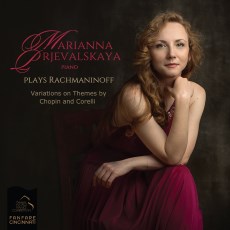
cincinnati_disk_230Marianna Prjevalskaya’s all-Rachmaninoff CD is available now. The recording features two works for solo piano: Variations on a Theme of Chopin, Op.22, and Variations on a Theme of Corelli, Op.42. (Fanfare Cincinnati FC-008) Marianna Prjevalskaya plays Rachmaninoff
Born to a musical family, Marianna benefited from early lessons with her mother from age six, her principal mentor for more than eleven years. She continued her studies at the Royal College of Music in London with Irina Zaritskaya and Kevin Kenner. In 2003 Marianna moved to the United States where she joined the Toradze Piano Studio at Indiana University. She also holds an Artist Diploma and Master of Music from Yale School of Music, where she studied with Boris Berman. Currently Marianna is a doctoral candidate at Peabody Conservatory of Music where she studied with Boris Slutsky. At diverse festivals, she has studied with renowned pianists such as Liliya Zilbernstein, Emmanuel Ax, John O’Conor, Leon Fleisher, Choong-Mo Kang, Richard Goode, Peter Frankl and Piotr Paleczny, among others.

www.prjevalskaya.com

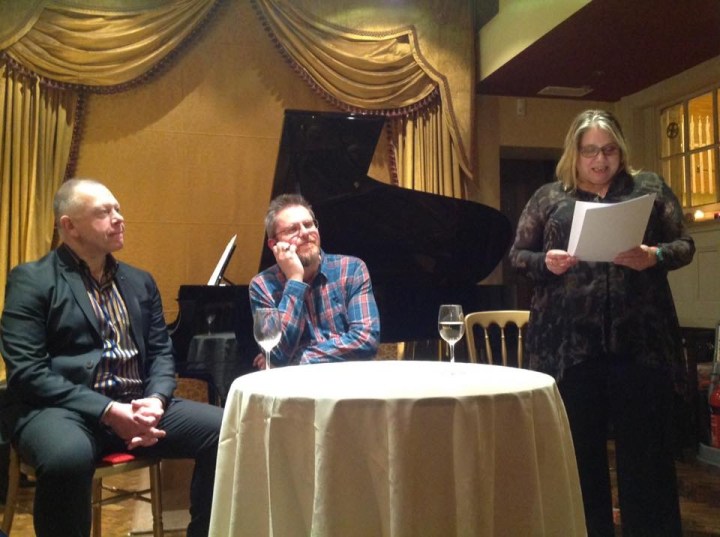
This week I hosted and spoke at ‘Writing the Piano’, an event I conceived out of the Music into Words project which I launched with some blogging colleagues in February 2016. The purpose of the event was to explore writing about the piano, piano playing, pianism…..with presentations by Graham Fitch, Andrew Eales and myself and a Q&A session with the audience. Because the focus of the event was the piano, I invited pianist Elspeth Wyllie to give a short recital to open and close the event, which turned the evening into something really special.

The presentations were varied and interesting, with each of us giving an overview of how and why we decided to start writing a blog. As Andrew said, “if you are posting or commenting on Facebook or Twitter, you are writing”, and he highlighted the fact that the internet and social media has made writing possible for everyone. Deciding to create a blog is just an extension of this activity.

Videos/transcriptions of Andrew’s and Graham’s presentations will follow shortly.

A lively Q&A/discussion session followed our presentations, with questions ranging from “how long do you spend at the computer as a blogger and does this affect your piano playing?”, to how to get new music heard and programmed in concerts, learning from listening at concerts (something I will cover in a future blog post), reviews and how to write about a negative concert experience in a sympathetic way, and how reviews should be seen as a way of encouraging people to come to concerts.

I would like to thank Elspeth Wyllie for performing a beautiful selection of music by Nicholas Sackman, Gabriel Fauré and Peter Maxwell Davies, and my colleagues/friends Graham Fitch and Andrew Eales for their insightful contributions, to the audience who helped make the event so enjoyable and stimulating, and to Glenn and Daniel at the 1901 Arts Club for making everyone feel welcome and, as always, creating a convivial, relaxed atmosphere. The club, whose ethos and ambiance is very much in keeping with that of the 19th-century European cultural salon, seems just about the perfect place to host such an event: if you have suggestions for a future event along the same lines, do get in touch.

Graham Fitch’s blog Practising the Piano (from here you can access Graham’s eBook and new Online Academy)

Andrew Eales’ blog Piano Dao

Elspeth Wyllie, pianist

1901 Arts Club

Transcription of my presentation at Writing the Piano:

People have been writing about the piano for almost as long as the instrument has existed, from early treatises on technique to manuals of exercises, student guides, pianist autobiographies, pianists writing about other pianists or the great works in the piano literature, and novels about pianists and piano playing. It’s a mark of our ongoing fascination with the complexity, beauty and appeal of the instrument that so much has been written – and continues to be written – about the piano. Today the piano seems to be more popular than ever, as evidenced by the wealth of study books, technique manuals, glossy magazines for pianists and piano lovers, books by and about pianists, and of course blogs on the piano, piano playing, piano teaching – and myriad other subjects more or less related to pianists, the piano and its literature. We will be exploring some of this tonight.

I met the three people here with me tonight – Elspeth, Graham and Andrew – via the Internet. Elspeth and I met through Twitter, I met Andrew via Facebook, and Graham via his Practising the Piano blog which I discovered in 2010 shortly after I starting my own blog. Without the internet there would be no blogs and no community of bloggers and readers. The internet is a wonderful resource for pianists and musicians in general and can be a force for good in forging relationships and creating communities and forums where like-minded people can exchange ideas.

What is a blog?

I am sure most of you understand what is meant by the word blog. The word itself is a shortened form of “weblog”, and a blog is a website containing a writer’s or group of writers’ own experiences, observations, opinions, etc., and often having images and links to other websites. It differs from a website in that the content is regularly updated, whereas a website is often static, and it is usually interactive so that readers can leave comments and engage in discussion with the author and other readers. In effect, a blog is more like a magazine or journal with regularly changing content.

Why a blog?

When I first started The Cross-Eyed Pianist, I did so without any expectation of gaining readers or followers. My main motivation for writing CEP a means of recording my own thoughts about the music I was playing, studying and hearing at concerts. In effect, it initially began as a kind of informal practise diary: rather than hunt around my piano room for a notebook each time, I could record ideas and thoughts about the music in one place – a blog. I had returned to the piano after a break of nearly 15 years, and I was rediscovering repertoire I had learned and enjoyed as a teenager, as well as exploring new repertoire.

img_5371

L to R: Graham Fitch, Andrew Eales & Frances Wilson (The Cross-Eyed Pianist)

Since my teens, I’ve been interested in writing about music, about the process of learning and playing certain repertoire, what the music of Bach, Schubert, Chopin, Debussy or Debussy feels like under the hand and the emotional responses it provokes in us, and I have long been fascinated by the pianist’s special connection to the instrument and the feel of certain chords, passages or entire pieces under the fingers and hand. Some years before I started the blog, I interviewed a concert pianist and asked him what it “felt like” to play Chopin’s B-flat minor Piano Sonata. He replied that it was “horrible”, that one felt “utterly exposed”, “like having one’s entrails picked over in public”. This is partly because in the final movement there is literally nowhere to hide: it’s a whirlwind of unison notes of unvarying and unremitting tempo and dynamics, an elusive, enigmatic stream of musical consciousness. The words he used to describe this music are those more usually applied to the human body, particularly the body in pain: visceral, gut-wrenching (painful, stomach-turning, extremely unpleasant or upsetting) – but they perfectly describe the music: the final movement is painful – its briefness, the swirling motif that turns back on itself and never seems to fully free itself of its tethers, the unsettling notation

It is things like this which fascinate me as a pianist and a writer, and the blog became a way of exploring them more deeply.

So I wrote about these things, and gradually people began to take notice of my blog, read and comment on my posts, and even sign up to follow the site. It took a few years to become established: it now enjoys an average readership of 20,000 visitors per month.

Through the blog I have made connections, made new friends in the piano and music worlds, become a concert reviewer, and I now feel part of an important and vibrant community whereas previously I felt rather alone with just the piano and dead composers for company……

And this brings me to what is, for me – and I suspect many other pianists – one of the primary reasons why I think blogs such as Graham’s, Andrew’s, and mine, and many many others, together with the spin-offs they create (Facebook groups, piano meetups, courses etc), are so important for us as pianists:

Playing the piano can be a very solitary activity. In fact, I enjoy the loneliness but it is also important to meet other pianists, share ideas, go to concerts and so on. A blog can provide a bridge from the lonely piano room to a community of other pianists and piano teachers – online and in real life.

Writing about the piano is not easy – how to explain the activity, both physical and emotional, of being a pianist, the complexities of piano technique or particular genres or styles of piano music in a way that is engaging, comprehensive and intelligent takes a certain skill. In my articles about piano playing and piano music, I write entirely from my own perspective and experience. These are my own observations and I make no claims to be right, nor an authority.

It seems that the piano can exert an almost mystical attraction over us, an inexplicable magic which draws us back to the instrument time and time again. I have tried to explore and explain this in some of my writing – what are the psychological and emotional factors which motivate us to spend hours and hours conjuring sounds out of that big black box of wood and wires. What motivates some of us to perform, why people go to hear live concerts and the special fascination with the pianist alone on the stage…..

I’m an avid concert goer, and as a reviewer, I get to combine two activities which I love – going to concerts and writing about music! In my reviews of piano concerts, I try to approach the subject from a non-specialist angle, to recreate in words the sense of being there at the concert with me. In order to do this, I write less about the performer’s technique or artistry per se, and choose instead to use descriptive words or metaphors which are not necessarily directly related to the piano or music. It’s not easy to capture in words something so elusive, and personal, as music, and the piano offers so many sonic possibilities that a single word such as “staccato” or “legato” is simply not sufficient to describe that sound

The piano is an instrument which can whisper, stutter, jangle, chime, pulse, throb, hum, spiral, clatter…… phrases and melodies sing, spool, meander, scurry, tumble, question, breathe…… chords declaim, shout, growl and float.

And here, just a few examples from actual reviews which describe both the sounds the performer makes and the manner in which he or she makes them:

“scurrying and spidery, metallic, stamping, tinkling, growling, manic.” (from my own review of Maurizio Pollini in the Boulez 2nd Sonata)

“Each and every note placed with thought and imagination”

“Tense, heavy-handedness”

“Trudging through the music”

“Aristocratic subtlety”

“Mumbled into the piano with blurry pedaling”

Many of the words used to describe the piano are drawn from other walks of life – art or nature, for example – to create metaphors for the experience of hearing and playing the piano.

And sometimes it’s almost impossible to describe what one has heard: words like “Intense, profound, breathtaking, spellbinding” seem inadequate in the face of truly exceptional piano playing.

The blog is now a huge part of my musical life. I love being part of an online community of like-minded people, and I relish the exchange of ideas that comes from people commenting on my posts. My writing, concert-going, teaching, and playing all feed into my own musical landscape, creating a wonderful continuous circle of stimulation and inspiration.

And the name? Well, surely that is obvious? I am a pianist who also happens to be cross-eyed!

For more on reviewing piano concerts, do listen to this podcast which I made for Bachtrack.com a couple of years ago


