Completed by Michelle Fleming, 2nd Violin of the Carducci Quartet
The Carducci Quartet are
Matthew Denton, Violin
Michelle Fleming, Violin
Eoin Schmidt-Martin, Viola
Emma Denton, Cello
Who or what inspired you to pursue a career in music?
I think we were all inspired by family members really.
Emma comes from a rather musical family and her grandmother, Anita Hewitt-Jones, who was a cellist, teacher and composer, began teaching Emma cello from the age of three.
Eoin was inspired by his grandfather, who was an traditional Irish fiddler.
I was inspired by my older siblings, who were all learning the violin – I think my parents got good value out of those little violins as all five children had their turn playing them!
Matthew’s parents were music teachers but he was particularly drawn to the violin when he heard the sound a busker was making on the street one day.
When it came to making a decision to make quartet playing our careers, Eoin and I were hugely influenced by the Vanbrugh Quartet, who were quartet-in-residence at University College Cork when we were growing up. We had, and still have immense admiration for them. For Matthew and Emma, studying in London and working closely with the Amadeus and Chilingirian Quartets while they studied in London was a very inspiring time. They had been playing in a quartet together since their early teens and those years in London really developed their love of the genre.
What have been the greatest challenges of your career so far?
I think that the years immediately following graduation from music college are tough. We had come together from the Royal Academy, Royal College and Royal Northern College of Music and so we didn’t immediately have the strong support of any institution. Shortly afterwards, we became Bulldog Fellows and then Richard Carne Fellows at Trinity Laban and with the help of those managed to launch our career by winning the Kuhmo Chamber Music Competition in Finland and the Concert Artists Guild International Competition in New York.
We had made a decision to only work as a quartet and avoid taking on freelance work individually and so the pressure was on to make a living as a quartet. As we are two married couples, we had no other income except for the quartet work so we were highly motivated!
Which performance/recordings are you most proud of?
A particular highlight for us was our Shostakovich15 project, in which we performed 10 complete cycles of Shostakovich’s 15 Quartets all around the world in 2015. It was very rewarding and absolutely fascinating to have Shostakovich as such a focus throughout that year. We still love each and every one of the quartets and always relish the opportunity to perform them.
Aside from that, we have had some wonderful opportunities to perform at some of the best chamber music halls in Europe and further afield and those are always exciting events…Carnegie Hall, Concertgebouw, Wigmore Hall etc…each of them has a very special atmosphere.
Recordings wise, we have done some lovely recordings for Signum in the last few years. We are really proud of our Shostakovich disc and are looking forward to recording the next instalment soon. We have had a wonderful time recording with some amazing musicians too – Nicholas Daniel, Julian Bliss, Emma Johnson, Gordon Jones and others.
Which particular works do you think you perform best?
Because of our immersion into the Quartets of Shostakovich a couple of years ago, we do feel an affinity for that music. We also play a lot of British and contemporary music and have been lucky enough to have had some fantastic works commissioned on our behalf. We do feel lucky to play a huge variety of repertoire though. We enjoy all sorts. We have always held Beethoven’s cycle up as the pinnacle of the quartet repertoire and find the works endlessly fascinating.
How do you make your repertoire choices from season to season?
We have our own wish list which we combine with special requests we receive from concert organisers. It means we end up with quite a diverse mix of repertoire, and we do enjoy that.
Do you have a favourite concert venue to perform in and why?
We have some favourites, but they are quite varied – Highnam Church in Gloucestershire has an interesting history as it was Parry’s family’s church and we hold our annual festival there. Matthew and Emma were married there almost 20 years ago so it holds particularly fond memories for them. We always enjoy Wigmore Hall…the acoustic there has to be our absolute favourite and the audience is so warm and enthusiastic about string quartets.
Who are your favourite musicians?
It is difficult to choose! We have been influenced by so many from the past and from the present! We do feel honoured to collaborate with some older musicians whom we use to listen to as students.
What is your most memorable concert experience?
I think it has to be 9 August 2015, the 40th anniversary of Shostakovich’s death, when we performed all 15 of his quartets at the Sam Wanamaker Theatre, Shakespeare’s Globe in London. We had four concerts with no more than an hour in between each and the same audience with us from 11am until we finished at about 9pm. It was indescribable really – the intensity, the special rapport the audience had with us, the support, the elation and the fatigue at the end of it all! I think it took us about a week to get over it! We will never forget it and even now, two years on, we meet people who say, “I was there, at the Sam Wanamaker Theatre for Shostakovich15!”, and there is a connection there, as if we are forever kindred spirits!
What advice would you give to aspiring musicians?
Like every other area, the arts are becoming increasingly competitive and it isn’t easy to know how to get where you want to be. I suppose our advice would be to look at your strengths and think about all the possible paths you can take in order to make your career a success. Think outside the box. You will quite likely end up including many different elements to be a good musician. For us, the combination of performing, recording and educating provides us with a wonderful variety.
Described by The Strad as presenting “a masterclass in unanimity of musical purpose, in which severity could melt seamlessly into charm, and drama into geniality″, the Carducci Quartet is recognised as one of today’s most successful string quartets.
www.carducciquartet.com

 A Pianist’s Alphabet has lain rather fallow for the past few months but it’s back again now to ponder the eternal question of Why? (Do we do it?). When this Alphabet is complete, it is my intention to continue the series, returning to the letter A. If you would like to contribute to A Pianist’s Alphabet, please contact me
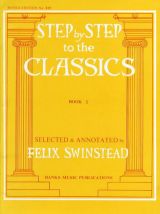 As children, I suspect many of us didn’t really question “Why?”. Perhaps we were simply pushed, gently or otherwise, by parents. As I recall (and I was only about 5), I was encouraged to learn the piano. I liked the instrument – my grandfather played the piano and I used to enjoy sitting next to him as he played, as well as rummaging through the piano stool, which contained old Methodist hymn sheets, music hall songs and albums like ‘Hours With the Masters’ and ‘Step by Step to the Classics’ by Felix Swinstead. As I grew up, I developed a very strong attachment to the piano: as an only child it provided a place where I could escape and create my own fantasies and stories, losing myself in music and my imagination for hours at a time. In addition, I was a dedicated student, who practised regularly and carefully and who progressed through the grade exams with relative ease. Now, as an adult who has returned to the piano after a long absence (some 20 years), it is my life and I would be bereft without it.





 The Cross-Eyed Pianist