Acclaimed left-handed pianist Nicholas McCarthy shares some of his favourite pianists and pieces, including some tracks from his new album Echoes
To submit your mixtape, click here

Acclaimed left-handed pianist Nicholas McCarthy shares some of his favourite pianists and pieces, including some tracks from his new album Echoes
To submit your mixtape, click here
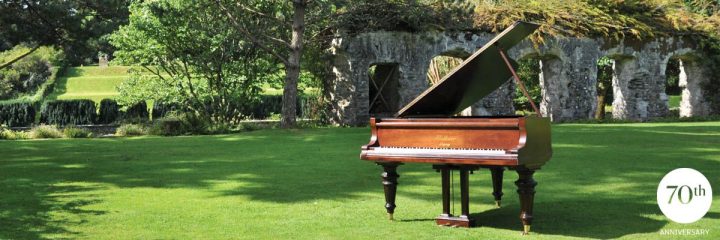
For musicians, professionals and amateurs alike, the name Dartington evokes magical memories of intense and inspirational music-making in a beautiful secluded enclave of Devon near Totnes.
A Medieval manor, former home of John Holand, replete with a great hall and verdant grounds, provides the setting for a busy month of concerts, masterclasses, courses and significant interactions between musicians. Friendships at forged in Dartington’s special atmosphere and for many it is the highlight of their musical year.
Since its foundation in 1948, thousands of participants have shared in Dartington’s magic, from renowned musicians such as Imogen Holst, William Glock (the first Artistic Director), Peter Maxwell Davis, Nadia Boulanger, Richard Rodney Bennett, Anne-Sophie von Otter, Alfred Brendel, Natalie Klein, and Tamara Stefanovich (to name but a few) to keen amateur musicians who go to learn, be inspired to play at the highest possible level, mingle with other musicians and like-minded people, and thoroughly immerse themselves in its compelling and diverse community of performers, composers and thinkers. For many it is a wonderful musical “retreat”, and some return year after year.
Music of all sorts pervades the place for those summer weeks – as you walk into the mediaeval courtyard, you hear random snatches of music coming through the windows: the choir rehearsing a Bach Passion in the Great Hall, a string quartet practising late Beethoven in an upstairs room, a duo practising a cello sonata.
This year marks the 70th anniversary of Dartington International Summer School (DISS). Since its creation in 1948, DISS has a long-standing and consistent dedication to music and musical innovation, and it quickly became a meeting ground for those keen to explore a new musical landscape. Stravinsky visited in 1957, and its composition classes have featured Harrison Birtwistle, Alexander Goehr, Hugh Wood, and Cornelius Cardew, all of whom testified to the summer school’s ever-increasing value in the musical world.
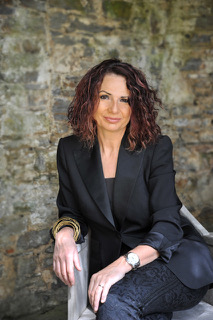
Since 2015 DISS has been led by Joanna Macgregor’s artistic vision. Under her directorship, the summer school has expanded its scope to include poetry, dance, improvisation and film, and to re-establish opera, world music and jazz within a core programme of classic, chamber and contemporary music. This year’s tutors and visiting artists include Imogen Cooper, Jane Glover, Felicity Lott, Tom Randle, Adrian Brendel, folk duo Harbottle & Jonas, Trio Gaspard and the Heath Quartet, and composers Eleanor Alberga, Oliver Knussen and Freya Waley-Cohen. The detailed public concert schedule for the Summer School & Festival offers over 100 concerts this year.
So what makes DISS so special? I spoke to Julian Davis, a retired professor of endocrinology and talented advanced amateur pianist, to get a first-hand flavour of the Dartington experience……
A week at DISS involves music-making throughout every day – for an amateur like myself, it gives the opportunity to aspire to play at the highest possible level, to mingle with a wide variety of musicians, ambitious and often very accomplished amateurs, emerging young professionals, and long-admired performers. The day can start with solo practice, Tai chi on the lawns, or just breakfast with old or new friends – singers, pianists, cellists, conductors… From 9 to 5 the day is full of workshops, master-classes, chamber music coaching, and of course the chance to just sit outside in the Devon sunshine enjoying tea and cake. And then there are concerts at 5pm, 8pm and 10pm, followed by late night conversations at the bar.
Chamber music has long formed a big part of the Dartington experience: from fun play-throughs of well-known pieces, to intensive coaching on major challenges. A recent highlight for me was learning the Ravel piano trio with two friends, with coaching sessions every day for a week… and discovering that a work that had seemed impossibly difficult was finally coming within our reach – at least in principle!
As a pianist I have learned a huge amount from master-classes and workshops – they mix relaxed informality with the tension of playing in front of others. You join in, proud to have worked hard to prepare pieces for the week, but acutely aware of the deficiencies that remain! But the coaching is superb, with patient good humour and the aspiration to turn the music-making into something special. Sitting in workshops with fellow-performers is fun: after a week all of us have had our playing scrutinised, discussed, enhanced and enjoyed, and a strong camaraderie develops.
The Friday night final concert usually involves the big choir and Dartington Festival Orchestra in the Great Hall. Gazing around the faces in the choir and the audience, I have the sense that everyone there has achieved something personally important during the week, be they professional performers, doctors, lawyers, mathematicians, teachers, scientists, accountants, writers… Dartington provides a rich musical experience that benefits from its scale and ambition, with exciting programmes and internationally renowned performers. But it has also fostered many friendships across generations and across diverse professional lives, forgetting the boundaries between amateur and professional, so that all that matters is the music-making: serious, fun, and life-enhancing.
For more about the 2018 Dartington International Summer School, please visit www.dartington.org/whats-on/summer-school
I am grateful to Julian Davis for his detailed and enthusiastic account of his experiences at DISS
An aura of concentrated stillness descends over the London Coliseum as the opening measures of Philip Glass’s opera Satygraha are sung, simply and eloquently, by tenor Toby Spence. He is M.K. Gandhi: dressed in a formal dark suit, he is a young lawyer in South Africa, not yet the stoic nonviolent activist, the “Mahatma”, in his distinctive white dhoti.
Satyagraha, a sanskrit word meaning “truth force”, is a meditation on the early life of Gandhi when, as a lawyer working in South Africa in the early years of the twentieth century, he encountered racial discrimination: his response was the development of non-violent protest as a political tool. This central narrative feels appropriately topical in our troubled times of suspicion towards migrants, refugees, people of colour and those of different faiths, and this gives Satyagraha a relevance and immediacy which makes it all the more compelling.The attendant presences through the three acts of Tolstoy, the Bengali poet Tagore, and Martin Luther King respectively remind us of the wider influences and connections of Gandhi’s story and his philosophy.
Phelim McDermott’s gorgeously theatrical production, first staged at ENO in 2007 (when it broke box office records for modern opera), is a feast for eyes and ears, and the combination of a visually arresting set, enhanced by puppetry, film and projections, and Glass’s haunting, mesmeric soundscape make this quite unlike traditional operas. In fact, someone on Twitter compared it to Parsifal and while I have never seen Parsifal, I can appreciate the comparison: the length, the scale, the absorbing narrative and the sense of a whole art work – the Wagnerian Gesamtwerk. And in mixing the sacred text of the Bhagavad Gita with the real life incidents of Gandhi’s formative experiences in South Africa, the opera also has the feel of a grand oratorio.


If you saw ENO’s Akhnaten, also directed by Phelim McDermott, many of the tropes will be familiar: the slow motion and long ritualistic set-pieces, the visual and poetic allegories. These all inform and enhance the narrative – and you need it because the libretto is in Sanskrit and there are no surtitles! (But thankfully comprehensive programme notes, which made for interesting reading on my homeward train journey afterwards.)
The ENO chorus is on superb form, as always, and the orchestra was masterfully and sensitively directed by Karen Kamensek, a Glass specialist, who brought colour and vibrancy to Glass’s spooling repetitions and piquant harmonic shifts.
The entire experience was profound, moving and very beautiful.
Performances continue at ENO until February 27 — details here.

Edited highlights, especially for piano fans…..
A welcome return by Russian pianist Igor Levit, whose Beethoven cycle at Wigmore Hall received huge acclaim. He will give a series of concerts on variations including Bach’s ‘Goldberg’, Beethoven’s ‘Diabelli’, and Rzewski’s The People United Will Never Be Defeated
Other pianists appearing in the 2018/19 season include Lars Vogt, Richard Goode, Thomas Ades, Alexander Melnikov, Sir Andras Schiff, Elisabeth Leonskaja, Angela Hewitt, Marc-Andre Hamelin, Jonathan Plowright, Jeremy Denk, Lucas Debargue and Evgeny Kissin
Plus special birthday concerts for Emmanuel Ax (70), Christian Blackshaw (70), Piotr Anderszewski (50)
Full details of the 2018/19 Season will be available from April when the complete season brochure is published. Meanwhile, download the season preview here




 The Cross-Eyed Pianist