Pity Pachelbel’s Canon in D, beloved of A Certain Classical Radio Station and many a bride who has selected it for her wedding music (I had this piece at my wedding, played so badly by the village organist it was rendered unrecognisable!) . It’s heard so often, it’s received with groans of  “Oh no, not that again!” whenever it is played.

People accuse this music of being clichéd or boring, but it is neither of these things if played well. It’s musically interesting, apparently simple yet sophisticated: a repeated pattern (“ostinato”) in the bass, initially heard unadorned by solo cello/continuo, forms the foundation for a work which grows in texture and drama, alternating between fast and slow notes, two- and four-bar units, and major and minor chords. The interplay and overlap between the upper voices (three violins) create complex harmonies, including some piquant crunchy disonnances. The “ostinato” or ground bass is a popular device – taken up by Bach, Haydn, Mozart, Chopin (Berceuse) and Bill Evans (Peace Piece) and many others. I’ve even heard Pachelbel’s ground bass in a song by a Hip Hop band which my son likes.

Last week I attended a candlelit concert at St Martin-in-the-Fields, given by members of the LMA Orchestra. The enjoyable programme focussed on music by Bach and Vivaldi, including Bach’s wonderful Double Concerto for Two Violins, Air on a G-string, and Pachelbel’s Canon in D. There were only seven players, and, apart from the cellist and harpsichordist, they performed standing up, which immediately lent a different dynamic to the music and its performance. This was noticeable in every piece, but I was particularly interested to hear, and see, how they would approach Pachelbel’s Canon. We were sitting close to the musicians, in the side pews, which gave us a good view of how they interacted, physically and musically. They leaned into the music, gestured towards one another as the theme was passed between them, bringing greater clarity, vibrancy and emotion to the musical lines. It was almost as if they were drawing a diagram of the structure of the music through their movements. It was a refreshing take on this well-known piece and I heard it afresh, appreciating its sophistication. In addition, the entire programme was beautifully played, every line crisply articulated, finessed and refined. And by standing to perform, the musicians lent a greater sense of the energy of ensemble playing to their performance.

I had a similar experience with another very well-known piece which has been subjected to many rather clichéd readings and which gained huge popularity after ice skaters Torvill and Dean used it in their ice dancing sequence at the 1984 Winter Olympics – Ravel’s Bolero, also a work which uses an ostinato device (the repeating rhythmic figure in the snare drum). I learnt the piano 4-hands transcription some years ago and, while this wasn’t the best rendering of the music, in doing so I really appreciated Ravel’s skill in creating and sustaining drama. As in Pachelbel’s Canon, the ostinato figure brings a hypnotic atmosphere to the music, while the melody is passed amongst different instruments (also as in the Pachelbel), continually re-orchestrating the theme. The work has a constant crescendo, rising to an extreme fortissimo climax in C major. The trick is to not to peak too early, so to speak, but to sustain the rising sense of drama over the course of some 15 minutes of music. Done well, it’s mesmeric and engrossingly sensuous.

There’s a good reason why these works, and others which suffer from over-playing on the radio or in concert, are so popular: they are really great pieces, whose popularity does not mean they are “bad music”. And when they were first written these works were not considered ubiquitous or clichéd, but fresh, different and exciting.

Guest post by Douglas MacGregor

My mother died when I was only seven years old, but I never grieved. It was not until twenty-five years later that all that suppressed grief hit me. The experience took over my life for a year and, as a musician and composer, I naturally turned to music to help me through.

At the same time, I was doing a Masters in ethnomusicology at SOAS and I completed my dissertation in the cross-cultural role of sacred music in grief and death rituals where I linked the ‘dual process’ psychological model of bereavement to musical practices around the world.

The culmination of these two experiences – one highly personal and emotive, the other more objective and researched-based – led me to found a new project called Songs of Loss and Healing, which aims to explore further the connection between music, loss, grief and healing.

Music and loss 

The link between music at times of death is virtually ubiquitous: from David’s biblical dirges and the myth of Orpheus to modern pop music, from hymns and requiems to traditional laments, folk songs and ritual musical practices the world over. Ethnomusicologist Steven Feld even pondered whether some of the earliest forms of music would not have been primitive polyphonic laments upon death.

Through my research, however, I noticed that despite the ubiquity of the link between music, loss and grief, very little was actually understood about the role of music. We might all have an inkling of how music has helped us with our own losses, but there is very little formalised or academic knowledge, especially when it comes to what is happening on the emotional and psychological level. Non-academically, there also seems to be little music-related information or guidance for those in times of loss save for a handful of articles and a few playlists.

In traditional societies, music has almost always been tied to rites and ritual surrounding death. It often harnesses raw emotion and channels it into the ritual outcome, bringing communities together in shared sentiment around collectively held beliefs in death and the afterlife. Numerous ethnographic studies indicate that many of these musical ceremonies have a very real psychological effect in helping the participants cope with loss and grief.

The Yolngu, aboriginal people in Northern Australia, for example, have highly performative musical funeral rites that last for two weeks. Women spontaneously start singing weeping songs upon a death and, over the coming days, these songs turn into personalised narratives of the deceased taking in kinship and ancestral connections and totemically related landscape. These rites lead the bereaved along a path from raw emotional outpouring to a culturally negotiated grief, separation from the dead and re-integration of bereaved back into society. Remembrance is then possible through such songs of place and kinship.

In modern Western societies, many have turned away from traditional systems of belief as funerals, grief and remembrance become ever more personalised and idiosyncratic. But this does not necessarily mean that people have found equivalent replacements, especially so when it comes to overwhelming experiences of grief.

Indeed, many taboos on death and grief persist, and the belief that grief is or should be highly personal leaves many alienated and suffering alone. Furthermore, low death rates mean that many have little or no experience of death while the secularised individualism of West often means for fragmented communities and scattered families. When death does strike, individuals and families may simply lack the necessary tools, community or guidance.

Music’s Role 

Music, however, is one of the most powerful tools we have in times of loss. Understanding the role it can play can help artist and listener better utilise and direct this power.

Firstly, music is a legitimate space for grief – even extended forms of grief that last long after society deems it acceptable to talk about. Art has always been a space that can communicate past taboo, express the unsayable, give new perspective and open dialogue.

Music therapists have long known that music can help externalise hidden feelings, help regulate emotion, and give that emotion direction. Furthermore, in music, emotion can be communicated, allowing for a sharing of experience – it shows us we are not alone in our internal worlds and can bring us together. Music can also simply allow us to feel a connection with someone lost and remember them.

Music is so fascinating as it finds itself on the border between articulable and the inarticulable elements of consciousness; on one hand, the intellectual and narrative, and on the other, the emotional experience, the subconscious or the soul. Especially in times of loss when we may most keenly feel our emotional undercurrents, music helps us connect with and discover ourselves. It can potentially bridge the gap between intellectual and emotional responses.

My personal experience

When I experienced delayed grief quarter of a century after my mother died, music not only helped me discover, explore and express what was just beyond my conscious view – grief, trauma, half-forgotten memories, intangible senses of place and presence – it also helped me to process those feelings, gain ownership of them, and direct them gradually towards a place of healing.

By the “end”, I had written 7 pieces of solo guitar music, manifestations of and meditations on grief, memory and healing. Each piece is being recorded and filmed in a different specifically chosen non-studio location. The pieces are being released each month along with an accompanying text designed to contextual the music and explore the role music played for me.

Songs of Loss and Healing

It seems to me, however, that a much wider conversation needed to be had and much more exploration to be done. The project Songs of Loss and Healing aims to open up that conversation, to explore this musical connection further, and simply to reach people through music.

In the modern world, our relation to death and grief is changing. With that, musicians and composers should be at the forefront, engaging with, responding to and re-interpreting the ancient link between music and death. For readers of this blog, it might be of particular interest, for example, to see a classical pianist such as Igor Levit in his new album ‘Life’ talk so directly about his personal grief and remembrance through classical music.

In grief, the more we discover and accept, and the more we allow ourselves to feel non-judgmentally, the more likely we are to experience grief as healing. Whether we want to feel and express the existential torment of grief or whether we would like to spiritually re-connect to the departed through song, music, with its keys to the transcendent and to our emotional inner-worlds, is uniquely placed to help us cope with loss. Music can be a consolation, but it can also be much more.

Songs of Loss and Healing aims toexplore and spur this on with a series of interviews, articles, podcasts, releases and collaborations across genres and cultures. It also aims to develop a community engagement angle by providing online resources, organising events, and raising awareness on the potential of music in grief.


Songs of Loss and Healing is still in the early and exploratory stages. Right now, we are looking for artists with relevant experience who would like to contribute or be featured.  

Links: www.songsoflossandhealing.com


Douglas MacGregor is a composer and guitarist. Read more


a23_inumvx_2019-01-05-17-00-29Who or what inspired you to take up composing, and pursue a career in music?

I was always drawn to music from a very young age. We used to live in Poland when I was about five or six, and the house we rented had a piano in it. Even though I didn’t know how to play, I would spend hours trying to reproduce the music that I heard on TV, or write tunes to go along with my favourite books and stories. Soon after I started taking lessons, and when I realised writing music for films and for stage was an actual, real job, well, my heart was set on it.

Who or what were the most significant influences on your musical life and career as a composer?

Film and theatre music has always been a huge influence on my life. I didn’t listen to a lot of classical music, so I was mainly introduced to the orchestra by way of the screen and the stage. Bernard Hermann had a big impact on me as a child, as did Franz Waxman, Alfred Newman, Dimitri Tiomkin, John Williams, and Alan Silvestri…to name just a few! My parents also had some cassettes of Offenbach operettas which we used to listen to in the car on repeat, so that also really drew me towards the operatic voice. Later, at music college, I was thrown in at the deep end and discovered the world of contemporary classical music. As you can imagine this was quite a change from John Williams and Offenbach! It was a complete revelation for me, opening up a world of textures and sounds I had never even considered.

What have been the greatest challenges/frustrations of your career so far?

Probably the greatest challenge in my work is convincing directors and producers to fund recording with live musicians, particularly on smaller-scale film projects with very small budgets. A lot of film music is produced electronically with instrumental samples, which can be a great tool for demonstrating ideas or mocking up sketches for editors. But even though there is a huge industry in place working to produce some very refined orchestral samples, nothing compares to real musicians. Without them, the music is simply two-dimensional. It lacks humanity.

What are the special challenges/pleasures of working on a commissioned piece?

The greatest pleasure is that it will actually be heard by an audience! As a film composer, we produce huge amounts of material that does not necessarily see the light of day: different sketches, pitches, or music for scenes that end up on the cutting-room floor… So it’s nice to work on something with the knowledge that it will be performed or broadcast. From a more practical point of view, film and TV work always provides a certain framework that music has to fit in to, and I really enjoy being creative within the architecture of the visuals. Often these projects have extremely tight deadlines, and I strangely find something extremely exciting and, ultimately, gratifying about pushing oneself creatively when working to the clock.

What are the special challenges/pleasures of working with particular musicians, singers, ensembles and orchestras?

I’ve been very lucky to work with some fantastic musicians and I particularly value the common understanding that builds over years of working performers again and again. It really is unique. I guess there are challenges to that relationship too: remaining rigorous and not getting lazy with my notation…!

Of which works are you most proud?

I’m particularly proud of my score for Amma Asante’s new feature film ‘Where Hands Touch’, which comes out in the UK on 10 May. It was the first feature I scored and so it holds a very special place in my heart. I also really love working on a series of comedic operettas I’ve been writing for the past ten years which, although something of a side project compared with the film and TV work, are still very dear to me. They are tremendous fun to develop and extremely liberating. I aim to write a new show every couple of years. My current one is called Pygmalion 2.0, a one-woman opera about a scientist trying to engineer a better generation of men using artificial intelligence.

How would you characterise your compositional language?

As you’d probably guess from my first answer, I’d say my musical language is first and foremost cinematic: tonal, narrative and melodic.

How do you work?

I write every day but ideas and projects tend to get finished in focused bursts. As for a particular piece, I work things through mostly in my head so will spend an awful lot of time thinking about a piece of music, envisioning it. Then I move to paper, rather than the piano; I find that if I move to the piano too quickly things can easily get altered by my fingers, which will automatically go into a certain key or add musical idioms that aren’t necessary. So I make it a rule never to play through anything I have in mind until I have written the core of it out on paper first. That way the idea feels somehow truer to its conception.

Who are your favourite musicians/composers?

That’s a hard question. It’s an ever-changing list really, I listened to a lot of Takemitsu over Christmas. I also love Xenakis, Reich, Ravel, Chopin. I’m writing an EP for trombone, viola, and electronics at the moment, and I tend not to listen to any music in the weeks surrounding a project. Instead, during those time sI like to research traditions of music that have been lost. At the moment I’m looking at musical traditions in ancient Greek drama and what modes and scales might have sounded like 2500 years ago.

As a musician, what is your definition of success?

This is a difficult one to define, I suspect for many other artists too. Often it can be blurred with external perception and audience validation, so for me the important thing is to focus on having personal pride in what I do.

What do you consider to be the most important ideas and concepts to impart to aspiring musicians?

A strong work ethic and, above all, perseverance. It’s an industry which can be truly gruelling and often completely contradictory in its nature: one day it feels meritocratic, the next it’s about who you know and not the music you make. Maybe because of this it can be easy to get swayed by hype and trends – but the constant in any musician’s life has to be one’s work, and one’s voice.

What do you enjoy doing most?

I love improvising along to narratives, and one of my favourite ‘exercises’ is to put books up on the music stand and improvise on the piano while reading them. At the moment I do this with a Belgian comic book series called Yoko Tsuno.


Anne Chmelewsky is a composer and writer for screen and stage. 

Anne composed the score for Amma Asante’s feature film Where Hands Touch, (TIFF 2018). Past projects include the music for Mark Weeden’s feature film Only People (2018), Sofian Khan’s Do We Belong (The Atlantic Selects 2018) and An Act of Worship, (Field of Vision 2017), as well as the Emmy & Golden Globes nominated Derek (dir. Ricky Gervais, Netflix / C4).

Her third opera ‘Pygmalion 2.0’ has been developed with the support of the PRS foundation, and is currently previewing in the UK. Her second opera, The Looking Screen, was performed extensively both throughout the UK and internationally, as well as broadcast on UK TV and radio. She has also written for The Independent and The Huffington Post. 

Read more

8-16 June 2019 – Clarendon Muse, Watford, Hertfordshire

The inaugural Master Music Piano Festival & Competition takes place across two weekends in June 2019 at Clarendon Muse in Watford and aims to promote local talent by offering young musicians a superb platform to experience and participate in fine music-making.

Featuring a set of unmissable recitals by leading young pianists of their generation including Ji Liu, Nicholas McCarthy, Artur Cimirro and Michael Harvey. The Master Music Festival will also host competitions scheduled for all ages and levels of performance ability together with a special Children’s Concert. Alongside much-loved core repertoire, the featured artists will also showcase their own new compositions and arrangements with their published sheet music available.

The Festival is the brainchild of Benjamin Williams, Director Of Master Music Publications, a new publishing house designed to promote original compositions, transcriptions, interpretative editions and educational resources by the world’s finest contemporary musicians. As well as the beautifully produced environmentally-friendly scores, Master Music Publications offers a wealth of additional information, biographies, context and a link to an online study guide with useful tips, videos and a discussion section.

Festival Programme:

Nicholas McCarthy – Piano Recital – June 8th, 7pm

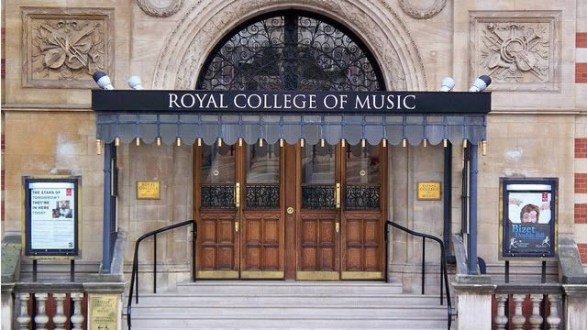
British pianist, Nicholas McCarthy was born without his right hand and only began to play the piano at the age of fourteen. He went on to study at the prestigious Royal College of Music in London, becoming the first left-hand-only pianist to graduate in the college’s history. A passionate educator and motivational speaker, McCarthy champions left-hand alone repertoire, music that developed rapidly following the First World War as a result of injuries suffered on the battlefield. Expect an awe-inspiring recital of repertoire ranging from Bartok to Gershwin via Scriabin and Strauss. Notes McCarthy: “I’m absolutely thrilled to be part of the first Master Music Festival and to be able to play alongside other esteemed artists from the piano world. As one of the few disabled artists in the classical industry, it gives me great pleasure to be able to share the music that I love so much with new audiences and hopefully even inspire people along the way”.

Artur Cimirro – Piano Recital – June 9th, 7pm

Brazilian pianist, Artur Cimirro enjoys an eclectic career as a composer, arranger, writer and art critic. He has composed works for piano, orchestra, choir, chamber ensemble, opera and ballet and his transcriptions and arrangements, dedicated to the left hand, deal with the exploration of new horizons in piano technique. They include notably ambitious projects, such as Liszt’s 12 Transcendental Etudes for the Left Hand Alone. As part of his recital, Cimirro will present a striking array of his own compositions and arrangements.

Michael Harvey – Piano Recital – June 15th, 7pm

A compelling and sensitive musician with a rare combination of intelligence, flair and charm” is how acclaimed pianist Leslie Howard described pianist, composer and teacher, Michael Harvey. Harvey has dazzled audiences at prestigious venues around the world with his virtuosic technique, individual sound and charismatic personality. His recital is bound to offer pianistic brilliance, creative sensitivity and a kaleidoscope of colours. Says Harvey: “I am looking forward to communicating with the audience at the inaugural Master Music Festival by sharing stories, pieces and some of my own compositions, several of which will be world premieres!

Ji Liu – Piano Recital – June 16th, 7pm

Praised by Pianist Magazine for his “sensitive and unpretentious musicality” and described as “a major talent” by Classical Source, Chinese pianist, Ji Liu has positioned himself as one of the brightest stars in classical music today. In addition to topping the classical charts on numerous occasions, he also delights audiences around the world, from the Royal Albert Hall in London to Carnegie Hall in New York with his thoughtful and intelligent recitals. Be sure to expect a sensational evening of music making at the highest level. Ji Liu commented: “It is my great privilege to work with Master Music Publications and to be involved with the very first festival. It is encouraging to see both new and core classical music presented in the festival and how they can meet and support each other. I very much look forward to sharing my musical thoughts and performing for everyone.

Children’s Piano Concert – June 8th, 3pm

This eagerly anticipated children’s concert will feature pianist Ji Liu, who will perform a collection of fun pieces for piano, including Schumann’s Kinderszenen and a narrated solo piano performance of Prokofiev’s popular ‘Peter and the Wolf’. This will be an enjoyable, educational event for children.

Piano Competitions – June 8th 4-6pm and June 15th – 2-6pm

On June 8th and 15th, the festival will feature piano competitions for all ages and abilities. Each participant will receive valuable and constructive written feedback. Medals, certificates and prizes up to £150 will be awarded to participants who achieve 1st, 2nd and 3rd place. The adjudicator will be Steinway and Classic FM/Global artist, Ji Liu. Entry forms are available here

Benjamin Williams, Director Of Master Music Publications added: “It has been very exciting and a great privilege for me to bring these incredibly talented international artists together for this unique festival that all can enjoy”.

Venue: Clarendon Muse, 70 Rickmansworth Rd, Watford WD18 7JA

Full details of the festival