
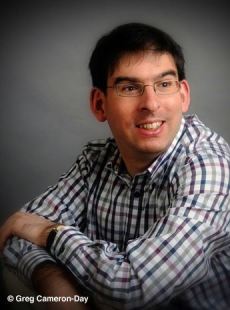
 The Weymouth Lunchtime Chamber Concerts, the brainchild of pianist Duncan Honeybourne, were launched at the Weymouth Arts Centre in the summer of 2002. Familiar with the concept of regular lunchtime concerts from his own professional touring, Honeybourne had returned to his home town earlier that year and longed to bring regular high quality lunchtime concerts to his own corner of Dorset. He was also keen to establish a platform for chamber music partnerships with friends, to invite friends and colleagues to explore the area, to promote young artists and to try out his own solo programmes. He wanted to build up a loyal audience willing to trust his artistic judgement and give unusual repertoire a hearing as part of a regular series.
The Weymouth Arts Centre had earlier been a setting for some of Duncan’s own teenage successes. He had played concertos there, with Angela Nankivell conducting the Arts Centre Orchestra, and it was with Angela – a much-loved and much-missed driving force in Dorset music – that he now drew up a plan for action. Angela, a musician and teacher of rare quality, was by this time – in retirement from the Dorset Music Service – immersing herself in helping the Weymouth Arts Centre evolve and grow, and Duncan tells the story of the chance conversation in which the idea of the Lunchtime Chamber Concerts was born. One day he drove into the car park opposite the Arts Centre and, whilst searching for a parking space, he spotted Angela walking across the car park -with a question for him. “I’m glad I’ve seen you”, she exclaimed. “I’m trying to help the Arts Centre find ways to increase their profile and get people in. Have you got any ideas?” “Yes!” replied Duncan without hesitation. “Why don’t you start a lunchtime concert series?” “Good idea”, said Angela. “Would you like to run it? I’ll do the admin and you can do the artistic side.” By the time he had parked his car, a new strand of Duncan’s future work was sealed. “I had been thinking how much fun it would be to start something like that”, he remembers. “It was something that had to be done, and it was just the right moment in my life for it.”
“We decided to try a summer series on all the Thursdays in August that year,” Duncan recalls. “I gave the first one myself, on the 1st August, and a wonderful team of ladies prepared refreshments. We were gratified by the good turnout, and we decided to make it a regular thing. I was young then, and bursting with ideas. Almost too many ideas! But I’d never have imagined then that we’d still be going now, 17 years later. A lot of water has flowed under the bridge, but the central ideas and priorities have remained unchanged.
Duncan says that several of his own philosophies have been hard-wired into the raison d’etre of the concert series. “Firstly, I abhor the snobbery, elitism and exclusivity which so often attaches itself to classical music. I wanted to create a cosy, welcoming and all-embracing atmosphere, and always to present the music in such a way as everyone felt comfortable, involved and valued. The artists almost always talk to the audience, telling them their own feelings about the works. I’ve always been passionate that you don’t have to have any kind of background in music to get something out of it. It’s all about how you deliver and contextualise it. This sense of dialogue, of our sharing the works we love, aims to foster that very ethos”.
“We’ve also tried to keep admission costs low,” says Duncan, “because we don’t want money to be a bar to anyone coming to enjoy first class professional music. South Dorset isn’t the wealthiest of areas these days, and I don’t want my concerts to be the preserve of a privileged few, just because they’re the only people who can afford to come. Music provides spiritual and emotional nourishment – just look at what they do in that amazing world of music therapy – and I want that to be on offer to all who would like to be part of the experience.”
Duncan’s second objective has been to support young musicians at the beginning of their careers – “I was one myself, in fact, when I started the whole thing”, he observes with a laugh – and to present a wide and challenging range of music, stepping far beyond the established and well-loved masterpieces of the baroque, classical and romantic repertoire. “The old favourite pieces are there, of course”, he is quick to reassure, “but we are able to take far bigger risks in our regular series than the average music club or concert society would be able to do.” Duncan points out that the concerts receive no outside funding, being entirely dependent on the current modest £5 admission charge.
After less than two years in their original home, the concerts had to move to a new venue. The Weymouth Arts Centre closed in 2004 and, after a few concerts at Weymouth College, the series moved permanently to St Mary’s Church in September that year. “The church is a beautiful setting for music and is ideally located in the town centre. We have had a wonderfully fruitful and happy relationship with our hosts there for some 15 years now”, Duncan tells us. “Initially we took the old Arts Centre piano to St Mary’s but, in 2007, the Weymouth and Portland Piano Association purchased a new instrument, a Yamaha, which is now housed at St Mary’s Church. And we are lucky enough to be able to use the piano for our concerts. People are constantly remarking on the wonderful setting and piano, and how fortunate we are to have such an ideal set-up. It’s warm and welcoming, and I try to make the concerts like that, too.”
As well as championing young artists and encouraging unfamiliar repertoire, Duncan has always sought to feature living composers and new music in the series. He has frequently played, recorded and broadcast contemporary piano music at home and abroad, and he has brought a taste of this activity to South Dorset – “in small doses, carefully chosen! I’m mindful that many people can be suspicious of contemporary music per se but, by choosing it with care, programming it with sensitivity and having it eloquently introduced by living, breathing composers at the top of their game, I try to demystify it and engage new enthusiasts. And we’ve had some very distinguished composers visiting us over the years.” At one of the first concerts at St Mary’s 15 years ago John Joubert, the late South African-born composer best known for his choral music and with whose piano music Duncan is closely associated, introduced several of his own works. “That was a unique opportunity for us all to hear a titan of his age talking about what fired his creative passions, what he wanted audiences to listen out for and what he hoped they’d get out of his music.” Other visitors have included Grammy-nominated Dobrinka Tabakova, now the BBC Concert Orchestra’s Composer in Residence. “At the very first concert, Andrew Downes was in the audience to listen to his First Piano Sonata, and Andrew – for many years Head of Composition at the Royal Birmingham Conservatoire – has been with us on many occasions since, so that’s a very special association too.” But it wasn’t a composer who contributed what, for Duncan, was one of the most memorable and moving verbal additions to the series: “In 2006 we invited Christopher Finzi, son of the composer Gerald Finzi and a distinguished musician himself, to a concert on the very day marking the 50 th anniversary of Finzi’s death. I asked him if he would be willing to say a few words to the audience, and he responded with the most wonderful, touching reflection on his father’s personality, musing on what Finzi senior would have thought of the modern world had he come back to see how life had changed. That was a special moment, and a little bit of history was made here in Weymouth.”
Among many other highlights of the first ten years was a special celebrity concert in January 2006, when oboist George Caird and cellist Jane Salmon joined Duncan for a recital of which the Dorset Echo wrote: “The three played as well as I have heard anywhere, and to a packed house.”
Tragedy struck in 2011 when Angela Nankivell died after a long illness. “She shouldered the weight of the administrative burden, which was considerable, and was a wonderful musician and a good friend. I miss her very much, and when she was ill I wondered whether we’d be able to continue”, admits Duncan. Fortunately, his colleague and friend Jean Shannon, formerly General Administrator of the Scottish Baroque Ensemble and other premier professional organisations, came to the rescue and has been Concerts Manager for the past nine seasons. “Jean really saved the series,” Duncan tells me, “and I owe her a huge debt. Jean has organised concerts for decades at the South Bank and other London venues, and she knows her job inside out and at the highest level. I could never have coped with the organisation, but Jean put an immense amount of work in and helped us to build on the structure that Angela had already set in place. We streamlined the planning process to 10 concerts per year – previously we’d had more – and we managed to build up our audiences further. Jean created a website, an electronic mailing list and regular reminder bulletins, and our audiences shot up. They usually number between 50 and 80 people these days.”
Most of the concerts since the early days were recorded by Ridgeway Radio for broadcast in Dorset County Hospital. “They have a tremendous archive”, remarks Duncan, “and I’m thrilled that we have a new association with Ridgeway Radio’s upgraded successor, Dorchester’s community FM radio station KeeP 106. It’s tremendously energising to be ever-evolving, constantly refreshing ideas – and that’s how we have to be to survive and grow.”
Duncan has continued to play in most of the concerts and especially relishes the opportunity to take part in rewarding chamber music projects. In 2014-15 Duncan was joined by Catrin Win Morgan, violinist in the renowned Brodowski Quartet, to play the complete violin and piano sonatas of Beethoven and Brahms in a series of concerts spanning the whole season. And in 2013-14, Duncan and three colleagues formed the Wessex Piano Quartet for a year-long residency, exploring works for this well-loved combination of piano and strings by Faure, Howells and Dvorak and returning in later seasons to play Mozart, Brahms and Taneyev. And, in a collaboration with the Royal Academy of Music, a memorable concert saw Duncan joining forces with four senior students to play Schubert’s Trout Quintet. Every Christmas is marked by a special seasonal concert, often featuring Vaughan Williams’ Fantasia on Christmas Carols, and one year the actor Freddie Fox – once a pupil of Duncan’s at Bryanston School -contributed Christmas readings and reflections to a specially – devised programme entitled “A West Country Christmas.”
Duncan now teaches piano at Southampton University and Sherborne School, and maintains an active profile as a performer. His solo performances are broadcast regularly on radio networks worldwide, and his recording career, which sees his 14 th disc released later this year, reflects the long association with British piano music for which he is best known. But the Weymouth Lunchtime Chamber Concerts remain a focus of special pride to him, and his deep roots in Dorset central to his life and work. “I was born here, and my father’s family have lived here for centuries. My great-great-great grandfather was the Weymouth town bailiff in the 1850s, and I can trace my ancestors back to the 16th century and beyond in the surrounding towns and villages. I love giving something back to Dorset, and it’s a privilege to be able to live in this beautiful place still. There’s work still to be done in building new audiences, and it’s no easy task getting new generations in. But I’m determined to keep this particular cultural flame burning here.”
The 2019-20 season of Weymouth Lunchtime Concerts opens on Wednesday 25th September, and is brimming with delights. Duncan’s own piano trio gives two recitals (on 25th March and 17th June) following its launch in the series two years ago, and the 250th anniversary of Beethoven’s birth in 2020 is commemorated in a year-long feature, Beethoven 250. “We’ll be featuring violin sonatas, cello sonatas, the “Archduke” trio, and I’ll be playing Beethoven’s last three piano sonatas in May 2020. It’s a very exciting project,” remarks Duncan.
“In 2022 we’ll have been going for 20 years,” muses Duncan, “and we’re getting to the stage now where performers who are now established tell me that they gave one of their first concerts for us, and what a pivotal experience it was for them. I believe we still have a role to fulfil, and it’s invigorating and challenging to look forward.”
All concerts start at 1pm at St Mary’s Church, St Mary Street, Weymouth, Dorset DT4 8PU





 The Cross-Eyed Pianist