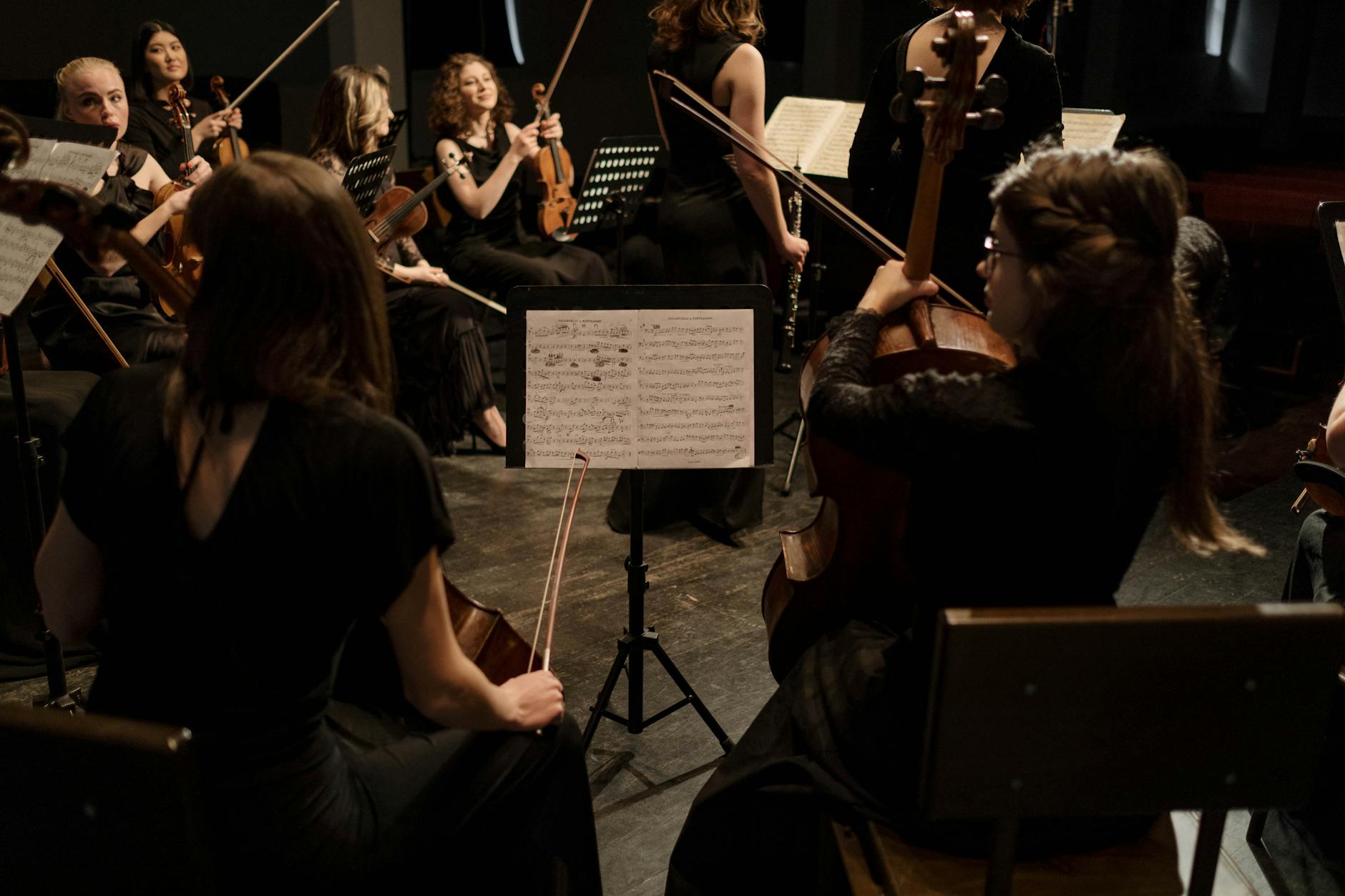
There is more to being a musician than simply creating and/or performing music.
Musicians are here to educate too. They are the professionals, the experts — and they should share their knowledge and wisdom with the rest of the world. It is a duty for them. The listeners in fact do not know as much they think they do, and musicians are here to help guide them towards what is true. Musicians should promote quality and help the listeners distinguish their taste. In the cultural world, the musicians’ role is of utter importance, as musicians are also educators.
In fact, musicians are on a constant mission. They are indeed, all in their own ways, educators, whether they do it consciously through teaching, or unconsciously by the mere act of composing and performing their music. Each work, each performance is an opportunity to educate the listeners. To promote new sounds and ideas. Musicians spend a lifetime understanding the language of music, the history of music and deciding what the future of music is. They are the direction-takers and decision-makers, and they should remain as such. For music is to grow and develop, to uncover new territories, to surprise and discover the unknown. And somehow resist the human nature of wishing for comfort and repetition; even in art.
Therefore, musicians should not create what the listeners want; this is a mistake that is done too often. Musicians must not bend to the wishes of their listeners. They must not accept familiarity and repetition of ideas. Musicians should carefully decide what material to create; what message and information, as well as emotion, to bring to the listeners. Their role is of utmost importance. They are the drivers of music progress. They are the bringers of novelty.
To learn, listening is not enough. One has to practice and devote. And sacrifice. And it is in the sacrifice that musicians do — the sacrifice of time, energy and attention — that they automatically become leaders and influencers. It is this sacrifice which places the true musicians in front of their audience. Music takes devotion. And if the price is high, the reward is immense.
Today the concept of musicians as educators is more important than ever as they often forget that they are first and foremost artists — rather than perhaps industry actors. Their role is to create, perpetuate, educate and through this improve the cultural world. Their role is to guide and lead.
Doug Thomas is a Franco-British artist based in London.
His main medium of expression is music; since founding NOOX — or North of Oxford St., his own production studio — in 2015, Doug has composed, performed, recorded and produced multiple projects, both featuring his own music and other artists’ too. Additionally, he has worked with multiple independent labels and collaborated with artists from other disciplines.
An aspiring polymath, Doug also ventures in the world of visual arts, through photography and various sketching works. He also designs his own project’s artworks and images. Finally, Doug writes articles, reviews and often interviews his musical peers.
Doug is a lover of food and drink, and this often appears in his universe too.
“Music allows me to express ideas and feelings in a unique way. Each piece I compose is an attempt in finding balance between intellect and beauty, within the limits of my own language and experience. More than a language, music is a way to engage with the above.”
Playing Debussy on his Blüthner was a ‘head-spinning experience’ – guest article by Michael Johnson
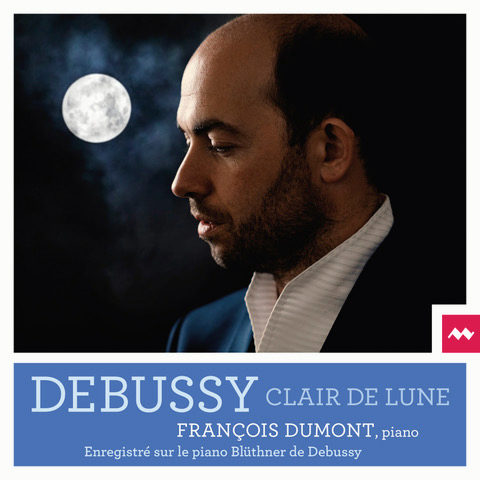
French pianist François Dumont has still not quite recovered from ‘the excitement, the anxiety’ of playing “Clair de Lune” on Debussy’s own Blüthner piano in a remote French museum.
Dumont is one of the select few pianists ever allowed to touch the instrument, now fully restored and in mint condition. It was his credibility as a Debussy player that persuaded museum management to grant access.
Dumont has just released his new CD of Debussy piano music (Clair de Lune LaMusica LMU035) played on the vintage Blüthner at its resting place in the Labenche Museum in Brive-la-Gaillarde, not far from Bordeaux.
He recalled in our interview (below) how it felt to press a few keys the first time. ‘I sat down and timidly put my fingers on the keys… and it was just magical!’
The sound is indeed unique to the modern ear, a resonance intentionally soft and continuous, unlike the more glassy pedaled attacks of a Steinway grand. Dumont says changing to a nineteenth-century Blüthner is fascinating and deeply satisfying musically. Personally, I grew accustomed to his recording only after four or five hearings.
He puts the Blüthner to work on selected parts of Debussy’s Bergamasque Suite, Estampes, and Children’s Corner. His sensitive playing is as touching in the pianissimo as in forceful fortissimo. He recalled for me that he did several takes of “Clair de Lune” before he was satisfied. ‘I repeated it until I found the ethereal colours, the warmth of the melody I was looking for,’ he said.
Dumont thus joins a stellar group of established Debussy interpreters from the twentieth century and more recently performers such as Daniil Trifonov, Angela Hewitt and Steven Osborne. A busy recording artist, he has made about 45 CDs across a wide range of repertoire..
Dumont’s talent is in great demand in Europe where he maintains a punishing schedule of solo recitals and ensemble dates, as well as chamber orchestra works, in the United States, Latin America, China, Japan and South Korea.
Here are excerpts from our email exchanges about the new Debussy CD and the original Blüthner piano featured on it:
How long had this ancient Büuthner piano been idle? Shouldn’t it be falling apart?
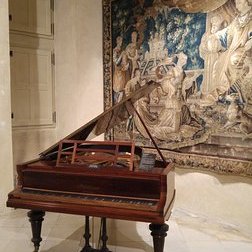
Debussy bought the Blüthner in 1904 and kept it until his death in 1918. It was acquired by the Labenche Museum in Brive in 1989 and was fully restored, keeping the original strings and most of the original action
Are you the first pianist to be granted access to it?
There have been some others but very few. For me, it was an unbelievable privilege – a head-spinning experience – to have had access to it.
How were you chosen?
One needs to have real credibility and experience in playing Debussy to get the authorization. The museum generously offered me the use of the piano for the CD.
What is your memory of first sitting down and touching the keys? Were you nervous, excited, worried, afraid?
I will never forget that moment. I had travelled all the way from Lyon, over four hours by car, just to try the piano for an hour. I was very excited but also anxious. How would it sound, in what state would I find it? Would I feel comfortable creating my own sounds? I was afraid of being disappointed. I didn’t quite know what to expect.
It must have been a kind of electric feeling.
Yes, I sat down and timidly put my fingers on the keys… and it was just magical! I played my whole program without stopping. I was completely drawn to the originality and variety of colours.
Did you feel a spooky connection with Debussy, his ghostly presence hovering over you?
Yes, I suddenly felt I was transported to Debussy’s time, hearing the sounds as he was hearing them, playing the instrument he was playing. It is actually quite intimidating. Just imagine, some of the works on my CD, like “Children’s Corner”, were probably composed on this very instrument. A considerable amount of his music was seeing the first light of day on that Blüthner. It must have been like a laboratory for him.
How has the Blüthner design evolved since the 1850s?
The design and mechanics have indeed evolved, together with the sounds aesthetics, style and repertoire. Of course there is the question of parallel strings; now Blüthner uses crossed strings, like almost all modern manufacturers.
Why is the “fourth string” so important?
One of the specifics of the Blüthner piano is that string, called the Alicot. In the high register, instead of three strings, you find a fourth one that is not struck by the hammer. It resonates freely, by sympathy. creating a richness of color and vibration across all 88 keys.
How do you rate the Bluthner compared to the more dominant brands?
One has to remember that at Debussy’s time Blüthner was one of the most prominent brands, together with Bechstein, Erard and Pleyel. I find that Debussy’s Blüthner has a very beautiful range of colors, from bright to mellow to dark. It offers much more individuality than many modern instruments.
But isn’t it a smaller model, intended for the salon, not the concert stage?
True, when it comes to dynamic power you cannot compare it to today’s main brands. It is a chamber instrument, not even a half grand. It suits perfectly the room where it is now, surrounded by the museum’s beautiful tapestries.
What is the real value of the fourth string?
I am very seduced and intrigued by it, as it adds an element of resonance, a way of blurring the sounds, in the good sense. It is ideal for, let’s say, Romantic or Impressionistic music. I am not sure it would suit Baroque or Classical repertoire as well.
Does this fourth string alter other aspects of your playing, such as pedaling, control of dynamics or intense listening as you play?
Absolutely, many aspects are affected. Principally, you actually don’t need heavy pedaling, as you have a natural aura around the sounds. So you can keep precise pedaling, or sometimes experimentiation, to create really astonishing, impressionistic effects.
Don’t you have to work hard to control the sound you produce?
Yes, you have to listen very attentively, as the resonance is sometimes unpredictable. It is quite capricious, so you constantly need to adapt, which is artistically challenging but also very inspiring.
What musical qualities have you been able to draw from the Blüthner that you could not create with, say, a Steinway?
Well, the Steinway is so perfect, even, smooth and powerful at the same time, with absolute tone control. Debussy’s Blüthner is quite the opposite – capricious, uneven, with a very different character to each register. There is always a surprise with the Blüthner, which creates an element of risk which artistically pushes you to go further. For “Clair de Lune”, which we recorded at night, I had to do several takes till I found the ethereal colors, the warmth of the melody I was looking for. This piano has a unique vibration and warmth. You can really make it sing.
How did the piano affect your interpretations of the three Debussy cycles you chose for your CD?
I felt I was inspired to be freer, with more personal rubato and more creative with colors. On this piano you can really paint the tones.
But you cannot push it to produce, for example, the Russian School of “fast and loud”?
No, it cannot provide huge power but you can achieve many pianissimo dynamics, and subtle changes of sound and articulation. I also realised that some of colors were quite bright and contrasted, not just the pastel qualities usually associated with Debussy. This instrument taught me a different aesthetic, and pushed me toward greater flexibility and individuality.
Will other pianists be tempted to apply for access ?
Yes, I am sure that other pianists will be tempted by this wonderful adventure which brings us closer to Debussy and gives some insight into the interpretation of his works.
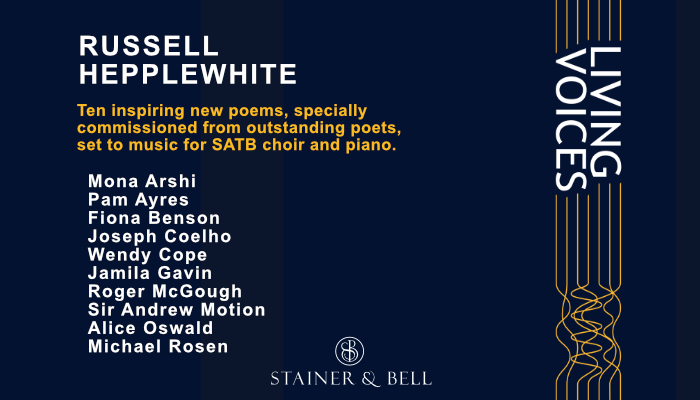
Living Voices is a new collection of ten inspiring choral pieces composed by Russell Hepplewhite. This innovative project brings together the talents of Hepplewhite and ten of Britain’s most outstanding contemporary poets, each commissioned to create poetic responses to our world today.
The idea for Living Voices originated with Russell Hepplewhite, who invited the poets to offer their diverse reflections on the nuances of modern life. The resulting poems explore a wide spectrum of human experience – birth and death, youth and age, sickness and health, landscape and memory. The emotional scope of the collection is equally varied, encompassing pieces that are light-hearted and comic alongside those that are profound and moving.
Accessible and rich in expression, Hepplewhite’s music proves a perfect partner for these contemporary texts. Drawing on his extensive experience writing for the theatre, his compositions aim to translate the poets’ messages into a vibrant collective choral sound. Living Voices promises to engage anyone drawn to the telling interaction of contemporary life and art.
The ten distinguished poets who have contributed to this unique collection and the titles of their commissioned works are:
Mona Arshi – Tender
Pam Ayres – Leaving
Fiona Benson – Three Trees/Angel
Joseph Coelho – The Diarist’s Pages
Wendy Cope – I Wake
Jamila Gavin – Song of Flight
Roger McGough – The Good Ship Attenborough
Andrew Motion – ‘from: Gravity Archives’
Alice Oswald – Riddle
Michael Rosen – True Story
Ten selected choirs around the UK will each give the world premiere one of these new choral works over the coming months. The project has been funded by private donations and support from the Finzi Trust.
Performances:
5th AprilI Wake by Wendy Cope, Exeter Festival Chorus, St Peter’s Church, Budleigh Salterton
10th May Leaving by Pam Ayres, Gloucester Choral Society, Gloucester Cathedral.
17th May The Diarist’s Pages by Joseph Coelho, Highgate Choral Society, St Michael’s Church, Highgate
14th June‘from: Gravity Archives’ by Andrew Motion, Wimbledon Choral Society, Wimbledon High School
21st June True Story by Michael Rosen, Epsom Choral Society, St Andrew’s Church, Cheam
26th JuneRiddle by Alice Oswald, Whitehall Choir, St Andrew Holborn
5th JulySong of Flight by Jamila Gavin, Birmingham Bach Choir, Malvern Priory
5th JulyTender by Mona Arshi, Divertimento, St Nicholas Church, Warwick.
5th July The Good Ship Attenborough by Roger McGough, Hexham Orpheus Choir, Hexham Abbey
12th July Three Trees/Angel by Fiona Benson, Voices of Hope, Alnwick Playhouse.
This collection promises to be a significant addition to the contemporary choral music repertoire, offering pieces that are both musically engaging and thematically relevant to modern audiences. The music will be published by Stainer & Bell in summer 2025.
The Cross-Eyed Pianist is free to access and ad-free, and takes many hours every month to research, write, and maintain.
If you find joy and value in what I do, please consider making a donation to support the continuance of the site





 The Cross-Eyed Pianist