
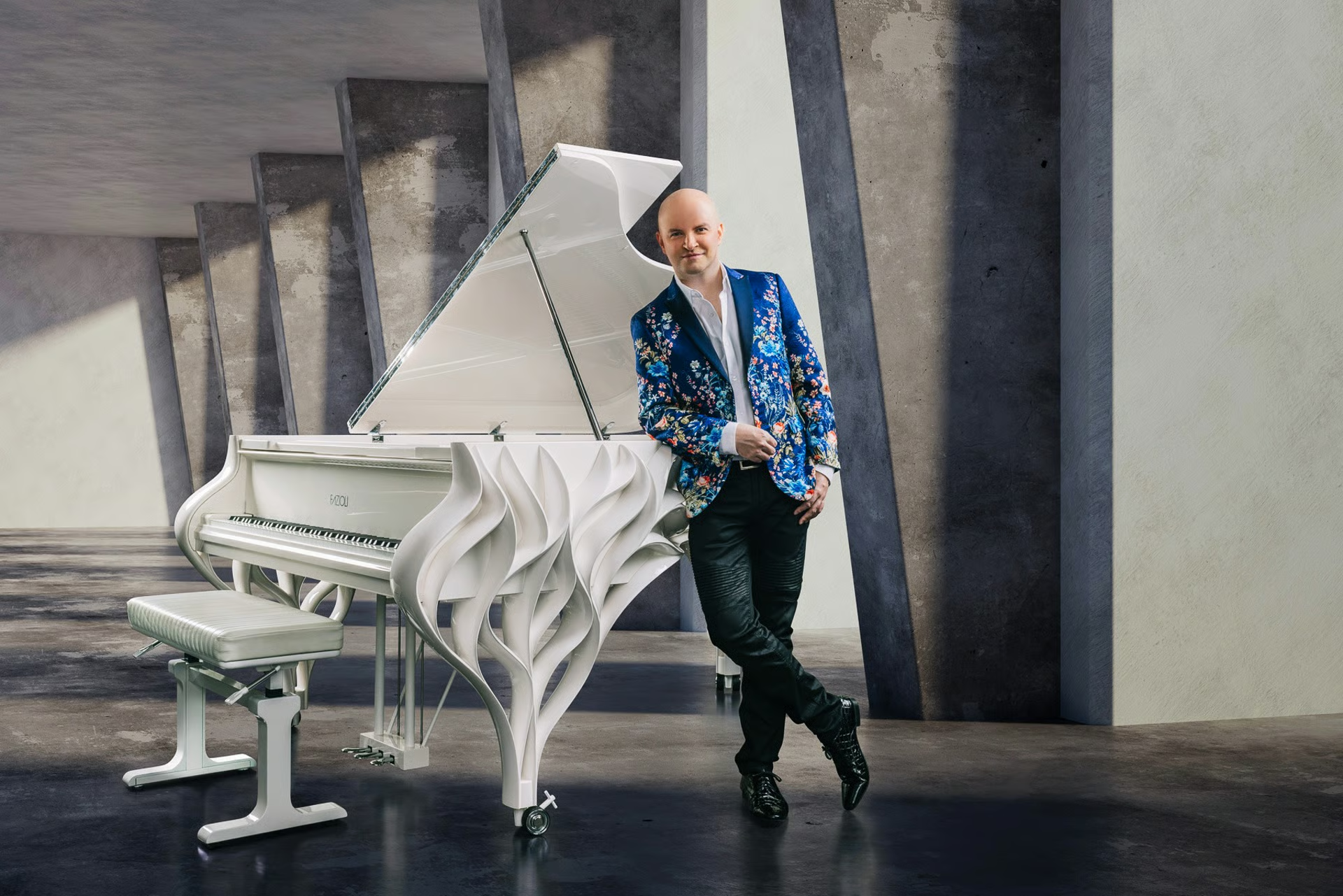
Guest post by Martin Mayer
It took nearly 30 years to get here: the tail-end of another successful 20-city concert tour across China’s top performance halls, thousands of eager fans embracing a cross-cultural meeting through music. And for all the lessons, the endless gigs, and the gambles I took to start my career – all of it nearly ended in less than 30 seconds.
It was just another post-tour early wakeup call. The two-hour show had ended at 10 pm, with multiple standing ovations – the audience wouldn’t let me go. To be on a stage speaking only through music has always been my dream.
That night, I signed every autograph and took every selfie requested for as long as the fans were there. As I write this now, I hold onto that joy – because in a matter of hours, my world would be turned upside down.
It was nearly 2:00 am when I got to my hotel room – too much adrenaline to sleep. I packed and braced for a 5:30 am wakeup: a flight to Guangzhou for a layover, then the long-haul home to Vancouver.
Once in Guangzhou, an airport shuttle picked me up for a nearby hotel where I’d catch a few hours of sleep.
I never made it to that hotel room.
As the shuttle pulled away, the driver slammed on the brakes – a pedestrian had darted across the road. No seatbelts. I flew straight into my luggage, hands stretched out to brace myself. Natural human reaction. For a pianist, an absolute nightmare.
Within seconds: immense agony. Left hand – dislocated 5th finger jutting outward at a 90° angle. Right hand – sprained 4th finger.
At the hotel, at least 20 staff were waiting, alerted by radio. Three cars stood by to rush me to priority ER. I had to fight – in a language I didn’t speak – to stop the doctor from reinserting the bone without X-rays. My tour manager had flown back to Beijing, so I called him in a panic. He tried to explain my profession. They didn’t quite get it. Writhing in pain, I pulled out my phone and held up a tour poster. I’ve never seen people look so shocked. The nurse called out and seven additional people filled the room.
What followed: X-rays, local anaesthesia in both hands, warm compresses, injections, a rush of documents – because I had seven hours before an international flight and two more airports to navigate. Nothing touched the pain or the anxiety. I was alone and vulnerable, in a place where only the hotel staff spoke English. I made both flights, collapsed into my lay-flat seat, and awoke what felt like five minutes later in Vancouver.
Getting off that plane was the start of a five-year journey: 233 medical appointments, a major surgery, a traumatic incident involving a doctor charged with my care, and a rotating door of specialists trying to piece together what had really happened. My family doctor of 16 years wrote it off – no imaging for six months, just pain medication that did nothing. Like handing someone Tylenol for a broken leg. I fired him. My new family doctor actually saw me through to the other side.
It took nearly 4 years to get the diagnosis: the impact had compressed the thoracic outlet – the space between my first rib and collarbone where veins, arteries, and nerves travel into the arms and hands. Surgery to remove the rib was the only fix.
What nobody tells you about an odyssey like this is just how much it impacts your mental health and sense of self and worth. More than once, I was ready to walk away from everything. Music, which had defined me for nearly three decades, became something I couldn’t even listen to. Too painful a reminder of what I might never get back. Over those five years, I questioned everything about who I was as an artist – and there were times I wasn’t sure that person was coming back. Or whether I even wanted to. This broke me more than anything before, because it was who I had been for my entire life up until then. My partner carried me through the darkest of it – certain of my return when I no longer was. The doctors, family and friends who refused to let me disappear mattered more than they’ll ever know.
I learned a great deal – some of it I wish I’d found far earlier:
Treat your body as an elite athlete would. Because when you consider how we use our bodies to make music, that’s exactly what we are.
Practicing alone is not enough. Take care of the rest of your body, too.
Warm up before you play – every time. Stretch, warmup, stretch, warmup, repeat.
After a long break, start lower than you left off. A runner who finished a marathon three weeks ago doesn’t restart at race pace. Neither should you.
If it hurts, stop. Stretch, rest, ease back in – don’t push through it.
Most doctors don’t understand what musicians go through. Call yourself an elite athlete. They’ll understand a tennis player tearing their ACL far sooner than a pianist with nerve entrapment in their elbow.
Find specialists who work with musicians – a hand therapist, physiotherapist, and hand surgeon. They should be part of your team.
Be your own best advocate, and don’t give up.
I went from not being able to hold a teacup after my accident, to 5 years of doubting whether I’d ever be able to play. And I am playing again. Did it come easy? Definitely not. Do I play better because of adjusting my technique and how I hold my body better? Absolutely!
What you do now will keep you stronger and healthier in the long run. We’re always taught how to practice and how to play – what’s been missing is how to take care of the parts of us that make it all possible: our body and our mind.
In the music industry, there is a stigma that once you are broken, you can never heal or get back to what you were doing. I am proof that is not the case. And the more we raise our voices when we overcome the impossible, the more we can squash that stigma.
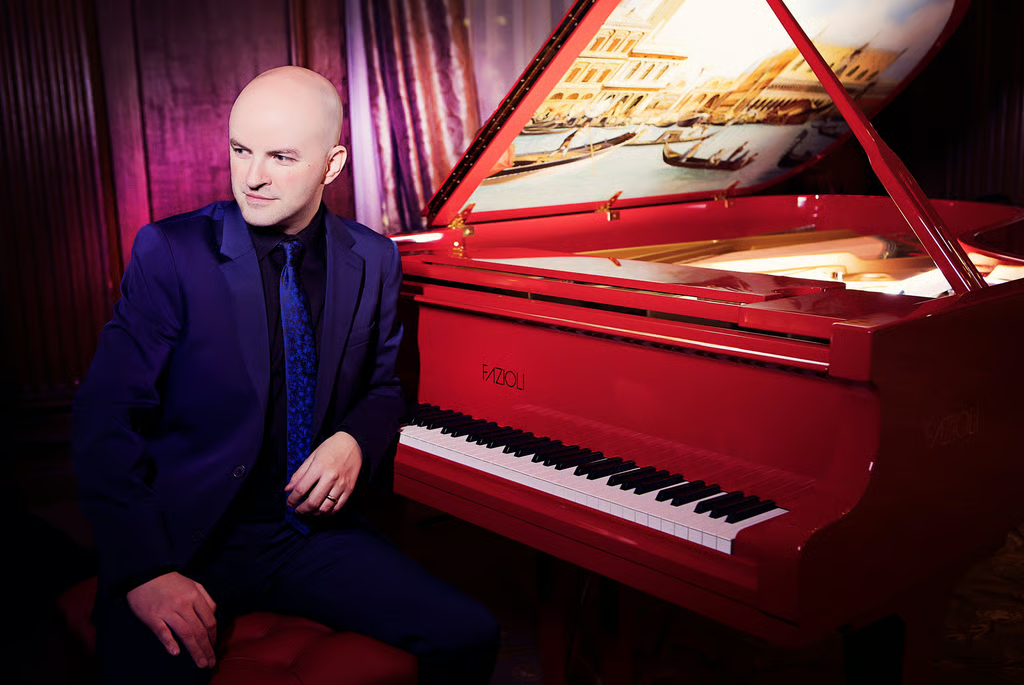
Martin Mayer is a Canadian pianist and composer.
Read an interview with Martin here
Resources for musicians:
BAPAM Medical Charity for Performing Arts
Specialist Musicians Health Services
Discover more from The Cross-Eyed Pianist
Subscribe to get the latest posts sent to your email.




 The Cross-Eyed Pianist