
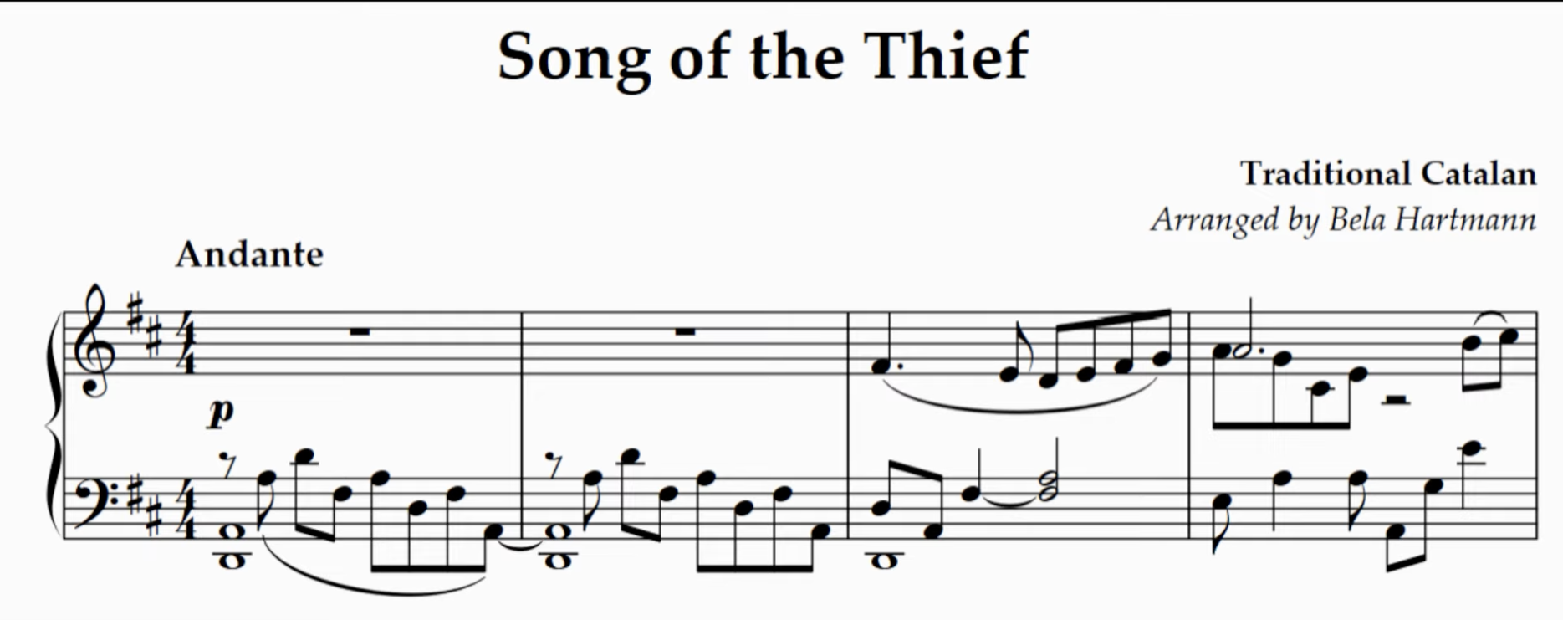
Nine Piano Pieces for the Right Hand Alone for advanced pianists by Béla Hartmann
In piano literature, works for the left hand alone have a more familiar history – often born of necessity after injury. Paul Wittgenstein, for example, famously commissioned left-hand concertos from Ravel and Hindemith. Perhaps the most famous music for left hand alone, apart from Ravel’s concerto, is Scriabin’s Prelude and Nocturne for the Left Hand, Op. 9
In his new book, pianist and pedagogue Béla Hartmann places the focus on the right hand, explaining that it “has had very little time spent on it, probably because it enjoys the bulk of our attention in normal piano music. It is certainly true that amongst pianists it is the right hand that must often take a sabbatical or retire completely due to overuse, misuse or pure bad luck, thereby leaving the left hand to keep the show going on by itself. However, the left hand suffers its fair share of injuries and it would seem a shame to neglect those occasions where the right hand may need or deserve to take a solo role.”
Hartmann himself suffered an injury to his left hand, which prompted him to explore create new music for those in need of some right handed challenges.
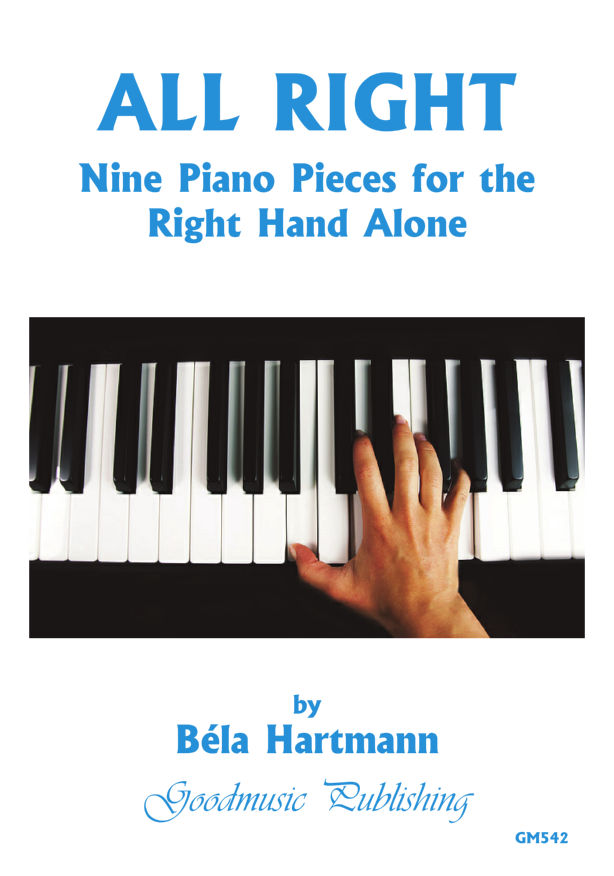
‘All Right’, a collection of nine piano pieces for the right hand alone, serves both a practical and artistic purpose: it fills a gap in the repertoire and challenges pianists to think differently about technical and expressive possibilities. This suite of nine miniatures is arranged in approximate order of difficulty – Consolation; Chase; Valse Fugitive; Menuet; March; Elegy; Song of the Thief; Etude; Prelude – and each piece has a distinct character, with widely varying styles. For example there’s a classical minuet and trio, a romantic virtuoso showpiece, elegiac moments, and more playful or introspective pieces.
Each piece cleverly balances technical demands with virtuosity and expression, making this music both instructive and enjoyable to play. Often, the right hand is both soloist and accompanist, and the fact that one hand is playing isn’t always obvious – or always foregrounded. Some pieces are energetic (Prelude, Chase), requiring nimble fingers and agility. Others test other techniques such as pedalling (Consolation) where notes in the lower register must be sustained below a chordal motif in the treble (itself a test in legato chord playing). Valse Fugitive, meanwhile, has contrasting articulation in the treble and bass, while other pieces require spread notes/arpeggiation and large leaps.
These pieces are far more than technical exercises. In fact, in their structure and style, they owe something to Chopin’s Études in that they offer the pianist attractive, imaginative and well-crafted music which also tests various pianistic skills. They offer real musical content for both student and teacher, which is rich, varied and emotionally engaging, and could also serve in therapeutic or adaptive contexts, for example, when a pianist’s left hand is injured or needs rest.
‘All Right’ is available from Good Music Publishing where you can view sample pages, listen to audio examples and order the music.
This site is free to access and advert-free, and takes many hours each month to compile and edit. If you find value and joy in this site, please consider making a donation to support its continuance:
Discover more from The Cross-Eyed Pianist
Subscribe to get the latest posts sent to your email.




 The Cross-Eyed Pianist