
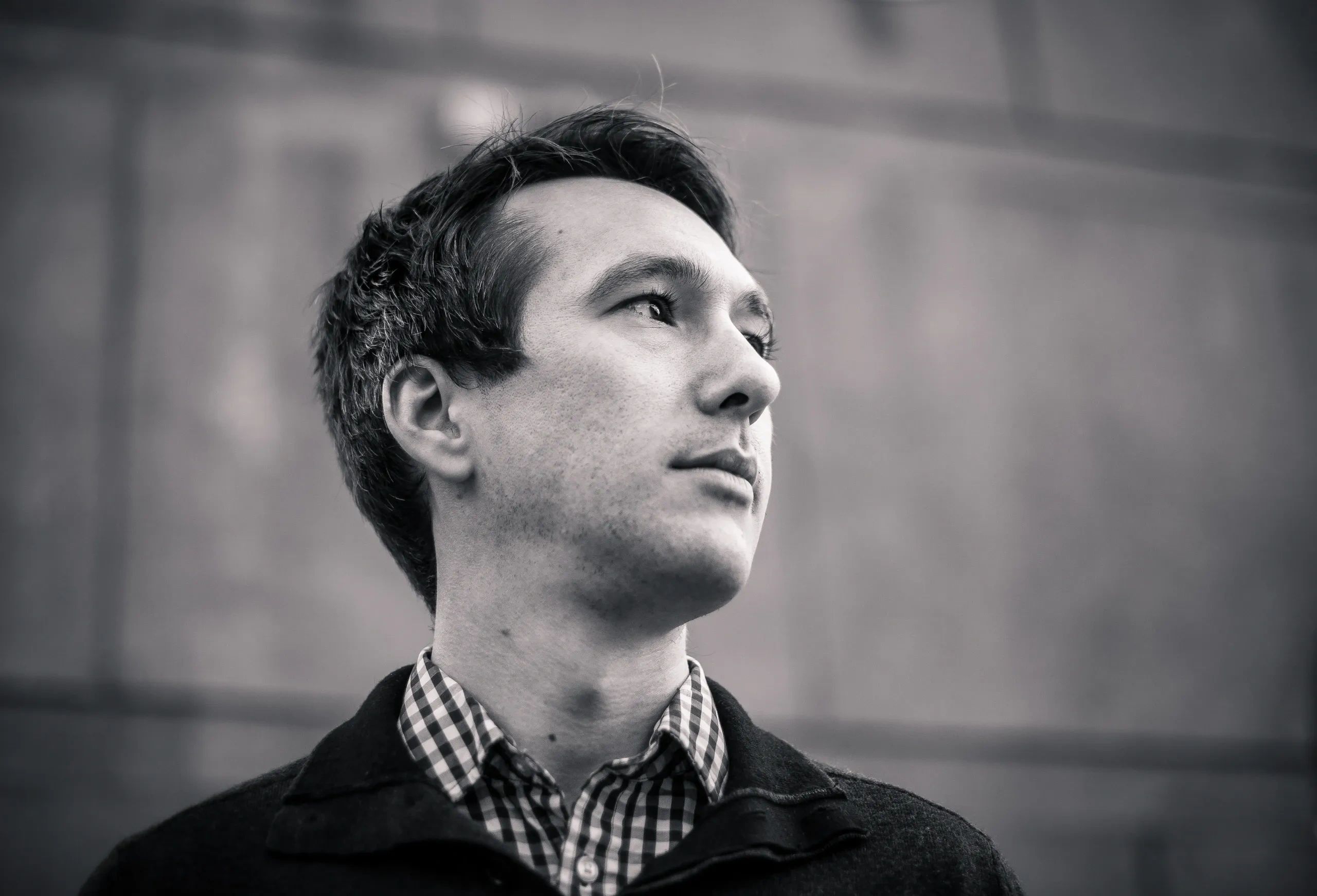
An interview with composer Russell Hepplewhite
What was the initial inspiration behind the Living Voices project?
Firstly, I love working with words – almost all the music I compose is to be sung. I’d been talking with the publishers Stainer & Bell about a new collection of choral works for a while, and so I began thinking about texts. I came to the realisation that I’m not really interested in setting words by deceased poets anymore – it’s too one-sided with no possibility of collaboration! Instead I wanted to create a connection with living writers, to communicate and work together; to better understand their words with honest conversations about their intentions; and to hear their responses to my music. So the idea was born – and the next step was to find the ten poets I most wanted to work with, and to see if they might be interested in being part of the project. The final step was to choose a theme, and so I decided to go for as broad a subject as possible, to enable as wide a variety of responses as I could obtain. I therefore asked each poet to write about something connected with ‘life,’ and said they could choose to write in any style and with any tone.
Tell us more about the process of selecting the ten poets and how their diverse writing styles/voices and perspectives informed the overall collection?
I simply selected truly brilliant writers that I really wanted to work with. All the writers share something – an ability to write directly, with laser-like clarity, and also a sense of accessibility. I’m interested in poetry that can be understood on first hearing/reading, but that also has more layers to be appreciated upon further exploration. Setting the various poems was fascinating, because I could see whether my own compositional style changed according to the poet that I was setting. I like to think the collection has lots of variety within it as a result of this approach, but that it all still sounds like my music.
How did you approach setting the texts to music for SATB choir and piano, particularly considering the range of themes/emotions explored in the poems?
When I was setting the texts, it was all about the words. So I read the poems, re-read several times, worked out the underlying tone or emotion, and then without any further ado, began setting them. With everything I compose the very first step is the absolutely crucial one – if I can’t find a way in then nothing else can follow; whereas once the piece is underway it becomes like a game of chess – a series of next moves to be made. So, with each poem I was looking for that first step – and mostly this happened very quickly – in the case of some poems it was a couple of chords I liked, with others it was a rhythmic pattern to fit a specific pair of words for example. Something that did surprise me on this journey though was how my appreciation of the poems changed and grew as I went along. At some stage, I can honestly say that each of the ten poems has been my personal favourite.
How has your other choral and opera writing informed your compositional approach/choices for Living Voices and the aim to create a “vibrant collective choral sound”?
With this collection I worked hard to create pieces that are colourful and imaginative, but fundamentally I wanted to do justice to the original poems. The aim was to compose music that would be accessible to the vast majority of choirs, but that still has enough challenges to keep everyone interested. I guess my other work has just made composing a lot easier since I have strategies and familiar processes which I adopt when composing. I also no longer feel any pressure about what I compose – I just write what I want to listen to, and hope others will feel the same.
Given the themes of Living Voices encompass aspects of modern life such as birth, death, youth and memory, what do you hope audiences will take away or reflect upon after experiencing these pieces?
I hope people can relate to both the words and the music, and to appreciate how the two fit together. Some of the texts pack a profound punch on first reading, such as Joseph Coelho’s ‘The Diarist’s Pages’ which tackles the idea of things in life coming round in circles, while others take a more light-hearted approach to make an equally significant point – I’m thinking of Roger McGough’s ‘The Good Ship Attenborough,’ for example, where the climate emergency is explored courtesy of a particularly playful approach.
And what do you hope choirs will take away from singing these pieces?
Goes without saying really, but I want people to enjoy singing them, and to get involved with the ambition of the collection – if they like singing one of the works I really hope they will be inspired to learn another one!
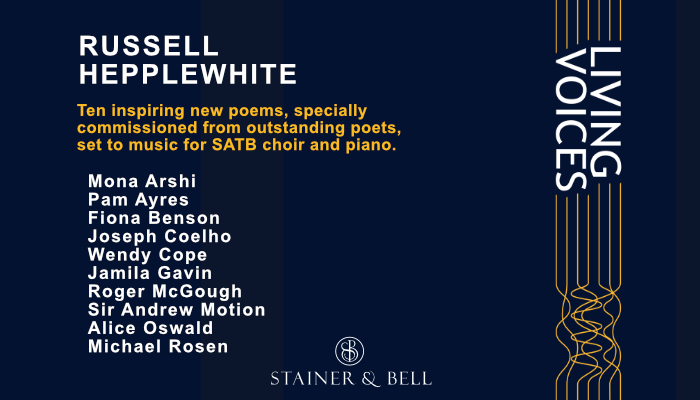
Living Voices is a new collection of ten inspiring choral pieces composed by Russell Hepplewhite. This innovative project brings together the talents of Hepplewhite and ten of Britain’s most outstanding contemporary poets, each commissioned to create poetic responses to our world today.
Find out more here
Discover more from The Cross-Eyed Pianist
Subscribe to get the latest posts sent to your email.




 The Cross-Eyed Pianist
[…] Read an interview with Russell Hepplewhite about Living Voices […]