
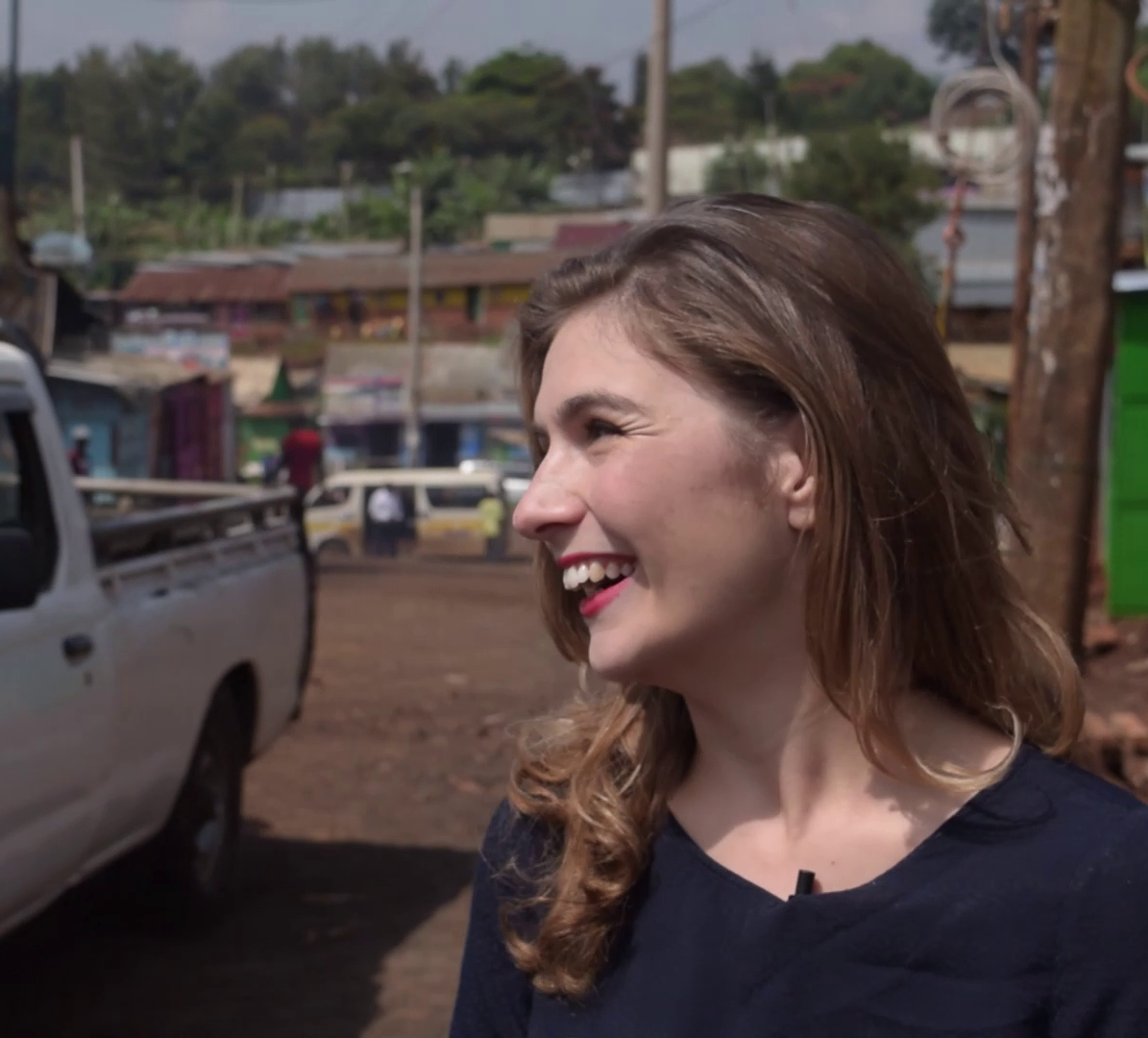
Guest post by Cordelia Williams
You are somehow there when Bach was composing this piece, and you are working with him, and then you forget everything that is around the area you are living in; you’re somehow there, with your hero, your mentor… I don’t want to play notes, like a robot, I want each note and each rhythm to mean something or, to like, touch someone’s heart.
Teddy Otieno, 2021, Nairobi
Arriving in Nairobi, Kenya, on New Year’s Day 2021 for six months of performing, masterclasses, filming a documentary, and escaping London lockdown with my young family, I had no idea what to expect of the pianistic landscape. I’d previously played Rachmaninov’s Paganini Variations with Nairobi Symphony Orchestra (a roughly equal mix of Kenyan and expat amateurs – Kenya has no professional orchestra) and given piano recitals in the city; this time I planned to work as much as possible with aspiring young pianists and learn a bit more about what provision there may be for advanced piano studies in Kenya. I was set up to work with the charities Ghetto Classics and Art of Music Foundation, and also had funding from the Royal Philharmonic Society’s Enterprise Fund to make a film about the young classical musicians I met there. I’m generally fascinated by other people’s lives, so I was excited to learn how the experience of aspiring Kenyan musicians might compare with my own.

It was a wonderful experience to make that film (available online – watch below). The musicians I worked with, mostly self-taught, made me feel inspired and quite naïve. We take so much for granted in Europe. We may complain about a lack of interest from the wider public but we nevertheless have a strong classical music infrastructure: institutions and established paths of support for talented youngsters. Benaars, who wanted to be a full-time pianist but was instead studying as an economist, told me with wonderful understatement “There are lots of people who want to study music but the financial prospects are rather grim, you know. The parents talk them down.” There was simply no money available in classical music in Kenya. The possibility of making a living as a performer, he said, “is really clearly out of the picture”, and because of that there is no-one able to guide younger students in the discipline and dedicated technical work required of a soloist. Benaars again: “I wish I’d just had that… someone not just challenging me, you know, but insisting.”
There is wonderful musical outreach work going on in Kenya, not least Ghetto Classics, which takes music and self-belief into the most underprivileged areas such as Korogocho slum in Nairobi. The ABRSM graded exams are also very popular and highly respected. Everyone I spoke to, though, agreed that there is little tuition available from the higher grades onwards, other than occasional masterclasses from visiting professionals such as myself. As a result, there is a lack of consistency and a lack of awareness as to what effective practice entails. David Ralak, a violinist then aged 28, explained “learning this instrument is really difficult if you don’t really meet a teacher face to face, because some things you hear them describing… it’s not as easy. You know, they describe them very easily because they do them very easily. But then, when you try and do it, there seems to be a whole layer of information missing. I knew what I had to do. It’s either I find money and go to Europe… or I just figure it out myself.” David is the one person I met who is just about managing to squeeze out a living as a musician: performing, coaching through various organisations, founding a string quartet (which plays at functions) and teaching privately a lot. After a fluke chance to attend a summer school in the UK a decade ago, he decided to devote himself to the violin and ‘figure it out himself’. But this is a very lonely path, every day is a struggle to survive, and it takes an incredibly unusual person to make it work. (Watch David’s story below)
In the first class I gave in Nairobi I had an inkling I’d found someone else quite unusual. Teddy Otieno (quoted above) was 19 and had come through the Ghetto Classics scheme in Korogocho, initially learning tuba because that was the instrument no-one else wanted to play. He had no piano, instead practising whenever he could at a community centre and teaching himself the piano using online videos. These were his first ever regular piano lessons, but I immediately noticed his natural musical instinct and passion, and astounding focus and determination to learn. Talking about his dream to perform as a soloist, he said “It makes me hopeless somehow, because there’s no-one to look up to in terms of that level right now… Because no-one is bothered on what to do. Like how much practice one needs to put in to the piano.” We worked together on Bach, Chopin and Debussy, and after my return to the UK he continued sending me videos of his playing for feedback and practice tips. I was excited to see his potential and his self-motivation. I persuaded Teddy to apply for conservatoire, just to see what would happen, and by the spring he had been accepted on a scholarship to study piano at the Royal Birmingham Conservatoire, something which he had never dreamed could be possible. After an immense effort to fundraise the remaining international fees, living costs and flights, he moved to Birmingham in September 2022 and is now starting his second year.
This summer I returned to Nairobi to continue teaching and performing, interested to see all these musicians again. There is a new express road in Nairobi which has improved daily life there no end. There were many more participants in the masterclasses now (42 registered to attend, giving me an enjoyably busy time), quite a few of them students of Benaars and Teddy. I also learnt about two new piano shops open in Nairobi.
What was really noticeable was the number of classical music events happening: during the time I was there the newly established (and self-run) Junior Chamber Orchestra gave two concerts, Mendelssohn’s Hymn of Praise was performed at the cathedral, and there was a concert called ‘The Opera Experience’, as well as the two concerts I gave. Violinist Ken Mwiti has, since my last visit to Nairobi, set up a flourishing musical booking agency, booking classical musicians for concerts as well as functions. Ken is studying music business as well as teaching violin, performing himself, and running his agency. I also heard word of plans for a new concert hall in Karen, a leafy area of Nairobi comparable to Richmond. I hope that however this hall is run will allow for budding musicians to perform more regularly in public, building their experience and their ambition for excellence.
It feels like a new era in the life of classical music in Kenya. A small number of Teddy’s generation, including his twin brother Lameck (viola), are currently embarking on musical studies in America, thanks to the support of sponsors in the States. A very eloquent and thoughtful friend of mine (Lemuel Agina, who was behind the camera for the documentary I made) told me it feels like Nairobi’s classical musicians have been working towards level 10 for a long time, and over the last year or two have had a real feeling of achievement and excitement at the way things are going – they’re finally at 10! But now it’s like starting again at 11, working towards 20… There is still, in some quarters, suspicion towards any kind of ‘instrumental music’ i.e. classical music, not surprisingly with some undertones of ‘colonial beef’, as Lemuel tactfully put it. There is certainly a lack of respect for classical performance – for example, the kind of quiet setting for a concert that we would take for granted in the UK – and familiar ideas of elitism. But Teddy for one is full of hope for the future and for what more he can learn this year, and next year, and the following year…
David, the violinist, has been following a hard path for many years now, with no support and little recognition. We performed together last month and his playing has deepened and matured to an extraordinary extent since I last played with him in 2021. However, even though the environment in Kenya is changing, he has felt frustrated by the lack of measurable progress, the lack of ‘give’ from the world he is trying to make his way in. He had been considering a move abroad to refresh his energies, which would be a real loss for Nairobi. But I was delighted to hear, when I spoke to him again last week, that a surprising number of concert opportunities have recently arisen (as well as a prestigious teaching position at an international school), and he is now feeling more hopeful about the viability of his performing career. Although it feels slow to those individuals making their way, he concedes that the public music scene is changing remarkably quickly. I feel confident that as the next serious young musicians like Teddy and David emerge, their paths will be that much smoother, and more encouraging – I am already excited about my next visit.
Teddy and Cordelia will be featured in a BBC Radio 4 documentary ‘How to Spot Potential’ every morning at 9.45am from 30 October.
Cordelia Williams’ new album on SOMM Recordings, Cascade, featuring music by Beethoven, Schumann and Prokofiev is out now: https://somm-recordings.com/recording/cascade/
Polish-Welsh-English pianist Cordelia Williams is recognised for the poetry, conviction and inner strength of her playing and the depth of her interpretations. She has performed all over the world, including concertos with the English Chamber Orchestra (in Mexico City), City of Birmingham Symphony Orchestra and Royal Philharmonic Orchestra (at Barbican Hall, London), as well as recitals at Wigmore Hall, Royal Festival Hall and Beijing Concert Hall. She broadcasts regularly for BBC Radio 3.
Discover more from The Cross-Eyed Pianist
Subscribe to get the latest posts sent to your email.




 The Cross-Eyed Pianist