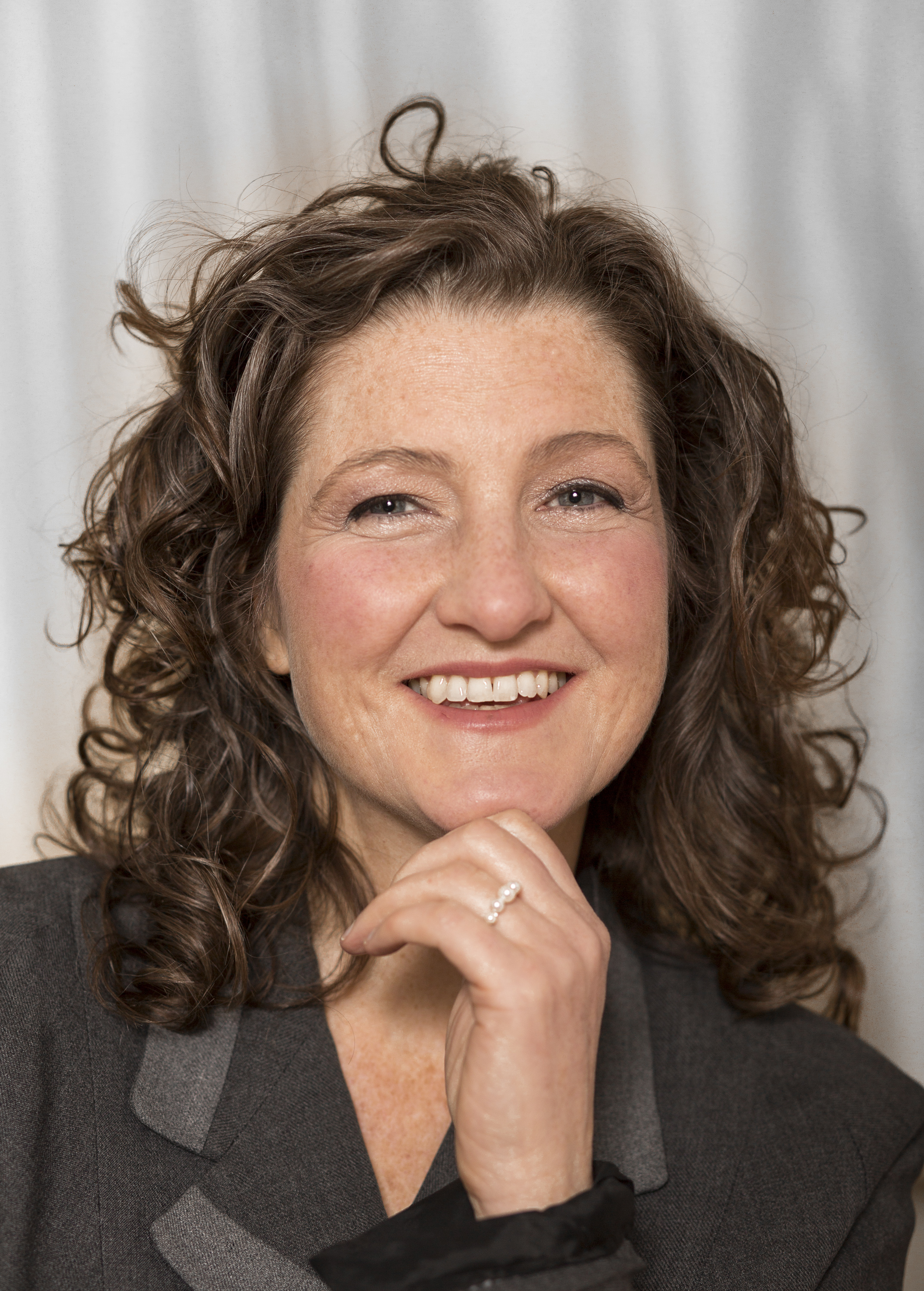
Jocelyn Pook (image credit: Matthew Andrews)

Who or what inspired you to take up composing and make it your career? 

I came from a family in which music and art was important. To this day I don’t know how my mother, a single woman raising 3 children with no money, managed to pay for piano lessons for all of us, but I’m glad she did. There were free violin lessons offered at my primary school so I took up the violin when I was 8, then changed later to viola. I had inspiring and encouraging teachers along the way, in particular my first piano teacher Jean Marshall who also encouraged my early interest in composing.

Who or what are the most important influences on your playing/composing? 

I used to compose simple songs on the piano as a child, but it didn’t occur to me to take this further, and when I went to music college it was as a performer, studying viola and piano. After I left, I began working as a professional viola player – sometimes performing in theatre companies and pop bands. Seeing how untrained musicians, some of whom couldn’t even read music, were able to compose, inspired me and gave me confidence, so that when small composing opportunities subsequently came my way – such as writing music for my quartet, or a friend’s video, a colleague’s dance piece, etc. – I seized the opportunity.

What have been the greatest challenges of your career so far? 

I am usually filled with trepidation at the start of every new project. Each feels like the biggest challenge at the time. My last piece, Hearing Voices, a song cycle for voice, orchestra and recorded voices, was the first commission for symphony orchestra (for the BBC Concert Orchestra) so that was a big challenge.

What are the particular challenges/excitements of working with an orchestra/ensemble? 

Working with a symphony orchestra was exciting because there are so many possibilities of texture and timbre and combinations of instruments. It’s fun to play with large forces, especially percussion and brass sections which I have less experience of using, and it’s always so thrilling when you hear it all come alive.

Which recordings are you most proud of?  

My albums Flood, Untold Things and Desh.

Do you have a favourite concert venue? 

No, there are many I love!

Who are your favourite musicians? 

Yehudi Menuhin, Daniel Barenboim, Nigel Kennedy and Gustavo Dudamel are amazingly talented artists whose passion for music has inspired and communicated so widely. And they don’t shy away from ethical and moral issues.

Plus, singers such as Kathleen Ferrier and ones I’m lucky enough to work with: Melanie Pappenheim, Natacha Atlas, Tanja Tzarovska, Manickam Yogeswaran, Parvin Cox and Lore Lixenberg.

What is your most memorable concert experience? 

A gypsy ensemble that played in our living room in Serbia.

Tell us about your upcoming performances at Tête à Tête Opera Festival?

Tonight my multimedia song-cycle Hearing Voices will be performed at the festival at King’s Place. I first performed the piece in 2012 and have reworked it for a second performance this year. I’ll be joined again by director Emma Bernard and mezzo-soprano Melanie Pappenheim for this performance in addition to Laura Moody, Susi Evans and Preetha Narayanan. The piece focuses on the topic of mental health and I used recordings of my mother, Bobby Baker and Julie McNamara as well as videos by Dragan Aleksic. It’s a very personal piece for me as my family have been touched by mental illness for three generations.

Tomorrow night is my vocal work Anxiety Fanfare and Variations which is also about mental health. I’ll be joining the Nottingham People’s Choir and my Jocelyn Pook Ensemble to perform the work with soloists Donna Lennard, Melanie Pappenheim, Jonathan Peter Kenny and Richard Morris. Anxiety Fanfare looks at the day-to-day feeling of anxiety which affects so many people now.

What else do you have coming up?

The west-end play King Charles III is transferring to Broadway in October at the Music Box Theatre which is hugely exciting – I’m off to New York for rehearsals in September. It was a great project to work on and it’s amazing to see how far it’s come, I can’t wait to see what the American audiences think too!

What is your most treasured possession? 

My daughter.

What do you enjoy doing most? 

Writing music and spending time with family and friends

What is your present state of mind? 

Pretty chilled out considering I’m writing this on a flight back from China!

Further information/links:

The DESH soundtrack is available on CD now on Pook Music (PM001) and the single ‘Hallelujah’ is available to download on iTunes.  DESH returns to Sadler’s Wells in June for a third run after a sell-out world tour.

Jocelyn Pook’s next collaboration with Akram Khan, iTMOi, will be performed at Sadler’s Wells Theatre in London, Tuesday 28 May – Saturday 1 June.

The Brodsky Quartet and singer Lore Lixenberg premiere a new song cycle, which includes music by Jocelyn Pook, at Drapers’ Hall on Monday 24 June as part of the City Of London Festival.

To find out more information about Jocelyn Pook, visit her website www.jocelynpook.com

Best known for her score for Stanley Kubrick’s Eyes Wide Shut, Jocelyn Pook is an award-winning composer who writes music for film, television, theatre, dance and the concert platform.

Jocelyn graduated from the Guildhall School of Music and Drama in 1983, where she studied the viola. She then embarked on a period of touring and recording with artists such as Peter Gabriel, Laurie Anderson and PJ Harvey and as a member of the Communards. She has also toured extensively with The Jocelyn Pook Ensemble, performing repertoire from her albums and music from her film scores. For her music-theatre piece Speaking in Tunes she won a British Composer Award and, for the National Theatre’s production of St Joan, she won an Olivier Award. Jocelyn has worked with a variety of acclaimed choreographers including, most recently, Akram Khan Company on the contemporary solo work DESH. Jocelyn has established an international reputation as a highly original composer of screen music following her score for Eyes Wide Shut, which won a Chicago Film Award and a Golden Globe nomination. Other film scores include: The Merchant of Venice starring Al Pacino (Dir: Michael Radford), Time Out (L’Emploi du Temps, Dir: Laurent Cantet) and Brick Lane (Dir: Sarah Gavron). She also contributed a piece to the soundtrack of Gangs of New York (Dir: Martin Scorsese).

Jocelyn has composed scores for television shows and commercials, and was nominated for a BAFTA for Channel 4’s The Government Inspector (Dir: Peter Kosminsky). With a blossoming reputation as a composer of electro-acoustic works and music for the concert platform, Jocelyn continues to celebrate the diversity of the human voice. Her work Mobile was a commission from the BBC Proms and The King’s Singers and is a collaboration with the Poet Laureate Andrew Motion. Portraits in Absentia was commissioned by BBC Radio 3 and is a collage of sound, voice, music and words woven from the messages left on her answerphone. Ingerland, Jocelyn’s first contemporary opera, was commissioned and produced by ROH2 and performed in the Royal Opera House’s Linbury Studio Theatre in June 2010 to wide acclaim. Jocelyn has chaired and been a judge on various panels including the British Composer Awards, Ivor Novello Awards and BBC Proms Young Composers Competition.

How long have you been playing the piano? 

33 years, since age 12, sparked off by a friend in the first year at Lancaster Grammar School. I didn’t so much as touch a piano before this and took little active notice of any music, although I remember my father playing records of ‘Your Top 100 Tunes’ and Beethoven symphonies and concertos throughout my childhood. I have no doubt it laid a subliminal seed of love for classical music.

What kind of repertoire do you enjoy playing, and listening to? 

I enjoy listening to more styles than I play. For example the style of Bach ‘eludes’ me, but I do enjoy listening to him and I always play a handful of the 48 for the excellent musical and technical discipline of it. I like everything from Clementi to living 21st century composers, with most of the romantics and certain 20th C composers (Kabalevsky) being particular favourites. I’m particularly keen on Grieg because I love that type of culture and country too, and he’s so accessible in ‘easy bites’ yet can be challenging.

I enjoy listening to various Jazz styles, and like to play Scot Joplin (excellent technical discipline and easily accessible style) but true Jazz mystifies me to play. I think movie music is a tremendous medium and I enjoy making my own transcriptions of it as a counterpoint to the ‘serious stuff’. The act of doing this is great for musicianship, having to be sensitive to elements of harmony, melody, texture, instrumental colour and what techniques are idiomatic for piano.

How do you make the time to practise? Do you enjoy practising? 

I’m fortunate in that I effectively work only part-time as a freelance piano teacher, and am a carer for my Down Syndrome son. I can quite easily get on with practise when he’s playing on the floor nearby, and even if my other young son is in the house. In this way I did 3-4 hrs per day for the last several years, but have reduced it a lot lately – wanting to give them more attention before they grow up! I manage at least an hour nevertheless. I’d describe it as enjoyable with a strong element of frustration!

Have you participated in any masterclasses/piano courses/festivals? What have you gained from this experience? 

 At college (RWCMD) I had masterclasses with Michael Ponti and Peter Donohoe. I played the Polonaise in A flat for Peter, and even today vividly remember his key pieces of advice and his demonstration of it. I think there is nothing so useful as simply ‘hearing’ a top pianist up close. Nowadays I play in most of the Eccle Riggs masterclasses, 3 times per year. It focuses the mind on preparing repertoire and is a very intensive dissection of whatever qualities are lacking in my playing (plus the odd good thing!).

If you are taking piano lessons what do you find a) most enjoyable and b) most challenging about your lessons? 

I have never taken lessons as such since finishing music college at 24, apart from the above masterclasses. I’m now 45 and feel I should be artistically mature enough to know what I’m doing, with the prompts from those top professionals at the classes and self-discovery being enough. If they’re not, then I believe nothing much else would help! It ultimately has to come from within.

What are the special challenges of preparing for a piano exam as an adult? 

I haven’t done any since my LTCL and LWCMD at college, but contemplate an FTCL, or FRSM or something. I’d be much more painfully aware of any shortcomings and probably know in my heart whether I was good enough before I even stepped in there. That’s the difference.

Has participating in masterclasses enhanced any other area of your life? 

Yes. Simply meeting many interesting new people, but also seeing that certain top professionals are very human! Not only that they share struggles or mishaps of their own, but they are rounded people with hobbies outside music! In fact this is probably vital to being a rounded musician.

Do you play with other musicians? If so, what are the particular pleasures and challenges of ensemble work? 

Only a bit (should ideally do more!) – the solo stuff demands so much time and is the ultimate medium for me, the piano being the solo instrument par excellence. I find accompanying a singer particularly challenging, and very effective in drawing out more musicianship from me (supporting a melody line, rhythmic discipline with flexibility, learning to ‘sing’ on the piano). It’s a challenge and a pleasure at the same time to have to ‘give and take’ on ideas for interpretation. This is one reason why I prefer solo playing – I can have it my own way! I feel the piece is mine, regardless of how good my performance is or isn’t.

Do you perform? What do you enjoy/dislike about performing? 

Yes, as much as I can get and/or find time to prepare for!  I enjoy the feeling of sharing my ideas on great music, and the intensity of the experience. There’s the allure of ‘risk sport’ about it, especially as I try to memorize everything. The fear of forgetting it my main dislike, which takes a lot of emotional energy (especially leading up to the performance), but that’s kind of a masochistic pleasure too.

What advice would you give to other adults who are considering taking up the piano or resuming lessons? 

Do it, and don’t be negative about how much talent you think you’ve got – much of it is just a matter of practise, working on the right things and loving the music – but don’t let it consume you either!

If you could play one piece, what would it be? 

It always was the Liszt B minor, but I learnt it last year, although it’s really still a work in progress (probably always will be!). The Chopin Etudes (as a cycle), as I think if you can play those you can play anything. They’re an acid test of just about any aspect of technique you could need. Those things that they don’t give you, I’m sure could be inferred from the lessons learnt in doing them. I see them therefore as nothing less than my nemesis and/or the gateway to virtuosity.


Phillip Fawcett LWCMD LTCL

Piano Week is a new non-residential piano course for children and adults, set in the beautiful north Wales countryside near Bangor.

The initiative of pianist Samantha Ward, Piano Week offers courses for pianists of any age and ability. Participants will have the opportunity to perform on a beautiful Steinway grand piano in Powis Hall at Bangor University, as well as benefitting from one-to-one tuition, masterclasses and faculty recitals. The area also offers an abundance of other activities, from hill-walking in the stunning Snowdonia National Park, dry-slope skiing and go-karting.

Faculty includes: Samantha Ward, Chenyin Li, David Daniels, Maciej Raginia, Sachika Taniyama, Vesselina Tchakarova. The course is sponsored by Blüthner pianos.

Dates: 5th – 9th August 2013

Course fee: £395 per participant

Further information & bookings: www.pianoweek.com

www.samanthaward.org

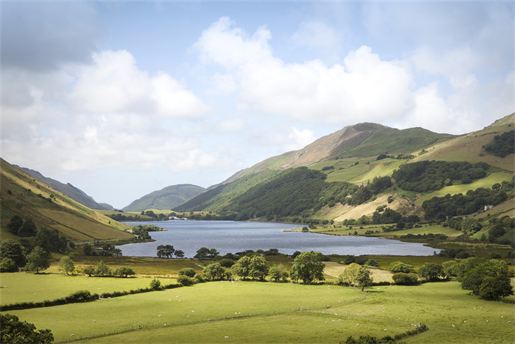
Tal y Llyn, Snowdonia, North Wales

Despite the rather glib title, there is a serious intent behind this post. As someone who has taken two performance diplomas in fairly quick succession (less than 18 months apart), I want to offer some advice and support to those who are preparing for diplomas.

First and foremost, don’t be under any illusions about these music diplomas. The first, Associate level diploma is not a simple step up from Grade 8 – and the Licentiate is not a simple step up from Associate (a glance at the repertoire list will confirm this). My teacher was quick to point this out to me from the outset and continued to do so right up until the day I played my LTCL programme to her 10 days before the exam (she regularly examines and adjudicates at this level, and higher, and I fully trust her judgement on this issue). Diplomas are professional qualifications and require a professional approach and preparation.

Repertoire: you can select repertoire from the syllabus, or choose a mixture of own-choice and repertoire from the syllabus, or a programme entirely comprised of own-choice repertoire. Be sure to have your programme approved well in advance if you are including any/all own-choice repertoire. Select repertoire which you like – after all, you are going to spend a long time with these pieces (up to 2 years, or more, depending on your learning rate) – and steer clear of pieces which you think will impress/please an examiner (Chopin Ballades, the well known Études etc. – examiners hear a lot of these!). Select pieces which interest and excite you, but be sure to choose a programme which reflects a variety of styles, moods and tempi, and showcases your strengths. You should also consider how the pieces work together as a programme (I put all my pieces into a Spotify playlist to hear how the pieces worked as a programme). The programme does not have to be chronological, and indeed some contrasts can add an interesting angle to a programme.

Practising: taking a diploma teaches you how to practise deeply and thoughtfully, and you need to get into good, consistent practising habits from the get-go. I practised every day for at least 2 or 3 hours, starting at 8am for c1.5 hours and then doing another session after lunch. If I knew I wasn’t going to have time for a full practise session, I made sure I covered the things which needed the work (cadenzas, memory work). Learn how to dissect the pieces to spotlight which areas need the most attention and ruthlessly stick to a plan. I kept a detailed practise diary in which I noted 1) what I planned to achieve each day and 2) what I actually achieved.

Musicianship: I was praised for this aspect in my LTCL recital (and a colleague who heard my programme a month before the exam also highlighted it). This is perhaps the most difficult aspect to learn, or be taught, and in my own case, I felt it came from a deep knowledge and appreciation of every single note of every single piece in the programme. I did a lot of background reading and further listening, and really steeped myself in the repertoire, as well as understanding the historical, literary and social contexts surrounding the works and their composers. For anyone studying Rachmaninoff, for example, the recordings of him playing his own piano music are invaluable and fascinating (available on YouTube and Spotify).

Performance practice: get as much performance experience in as possible in advance of the exam. This can include performing at home for friends and family, taking part in local music festivals, courses, and other performance platforms, or organising a concert in a local venue or for a music society. Having a dress rehearsal (in the outfit I intended to wear for the exam) was really helpful: it highlighted areas which needed tweaking or adjusting, it was a dry run for the page-turner, and it helped to allay performance anxiety. It is also important to practise being a performer: how you behave before an audience is often very different to how you work at home alone. You are judged on your stagecraft as well as your playing in a Diploma recital.

Playing through the entire programme: at least a month before the exam, get into the habit of playing the complete programme through every day without stopping to correct mistakes. At Associate level, the programme lasts for c40 minutes, double the length of the pieces for Grade 8, and this can take some stamina if you have no previous experience of playing for that length of time. Playing through also allows you to judge how long the pauses should be between the pieces. For example, I wanted to segue straight from the fading final low D of Takemitsu’s Rain Tree Sketch II into Mozart’s Rondo in A minor K511, but there needed to be a longer pause between the end of the Liszt (Sonetto 104 del Petraca) and the Rachmaninoff E-flat Étude-Tableau. Demonstrating that you have thought about this is another important aspect of programme planning and musicianship.

Programme notes and timings: Don’t leave writing the programme notes until the last minute. Take time to write the notes in a considered way and avoid overly high-blown musicologist-speak language and exhaustive musical analysis. The style of programme note you might read at a concert at the Wigmore is what you should be aiming form. Be sure to include accurate timings for each individual piece as well as for the complete programme. Remember, you can be marked down for inaccurate timings.

Different pianos, different places: don’t confine your practising to your own piano. Get in as much practise as possible on a variety of grand pianos (there are practise rooms in and around London which offer baby grands right up to full-size concert Steinways – go and play all of them!). If you have been used to practising on an upright, a grand can feel very different at first. Also, you need to know how to respond to a variety of acoustics and room sizes.

Be over-prepared: this is the single most important experience I drew from the first diploma and applied to my preparation for the Licentiate. On the day of the exam, I felt on top of every single piece and I knew that any slips would not throw me off course or upset me. However, being over-prepared should not equate to over-practised and in the final weeks before the exam, be careful not to over-practise as this can kill a piece and allow strange new errors to creep in which are then difficult to erase. You need to go into the exam feeling you have something extra to give on the day.

Keep body and brain rested: in the last 24 hours before the exam, allow yourself time to rest body and brain. We often forget how much mental effort is involved in playing the piano. If the head is fresh, the body will respond accordingly. Get a good night’s sleep, and avoid alcohol and rich food. On the day of the exam, do some light practising, and allow yourself plenty of time to get to the exam centre.

And after the exam? Don’t post-mortem your performance. What’s done is done, and the best thing you can do is move onto new repertoire or return to favourite pieces. Above all, enjoy playing the piano!

(I offer consultation lessons for people preparing for advanced grade exams and diplomas, including advice on repertoire and coping with performance anxiety. Further details on my website).

More on diplomas here:

Why take a music diploma?

